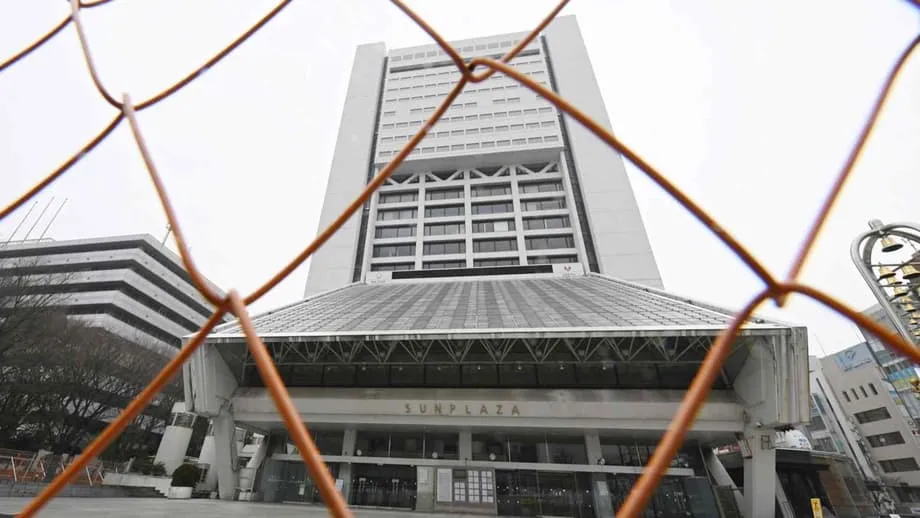
Too Few Workers to Build What Japan Needs
Nearly 70% of Japan's large and midsize construction companies say they cannot accept new large construction projects in fiscal 2026 because they lack workers. Unfilled orders have reached a record of more than 15 trillion yen, roughly $103 billion, leaving factories and commercial buildings waiting even when customers want to invest.
Contents
- Too Few Workers to Build What Japan Needs
- An Aging Workforce With Too Few Replacements
- Why More Demand Cannot Fix the Bottleneck
- Higher Costs Are Squeezing Smaller Businesses
- Foreign Workers Are Filling Part of the Gap
- The Dates Behind the Workforce Challenge
- Machines Help Less Experienced Workers Do More
- Drones and Robots Take On Site Work
- The Same Pressure Extends to Farms and Transport
- What Japan's Experience Means for Other Economies
- The Bottom Line
As of January 22, 2026, the shortage is constraining both private and public investment. Construction, long a pillar of Japan's economic expansion after the war, has become a bottleneck for growth. Analyses put the economic opportunity lost to the labor crunch at the equivalent of 2.6% of Japan's gross domestic product, or GDP, the value of goods and services produced by the economy.
Japan's builders face a problem that money and demand alone cannot solve. Companies that would normally compete for government infrastructure contracts and commercial development deals are refusing bids because they cannot assemble the workforce needed to finish the jobs.
Logistics centers and semiconductor factories are among the projects facing delays. Logistics centers help move and store goods, while semiconductor factories support the production of chips vital to Japan's technological competitiveness. A shortage on building sites therefore affects investment far beyond construction itself.
The backlog also shows how the shortage spreads through the economy. Customers have projects they want built, but contractors have limited capacity to deliver them. Orders accumulate, investment waits, and the economic activity that would follow completed buildings is delayed.
An Aging Workforce With Too Few Replacements
Japan's population has been declining continuously since its peak in 2008. Low birth rates and an aging population are reducing the number of people available to work, while increasing spending associated with old age. The resulting pressure reaches the labor market, public finances and the country's economic influence.
Construction is especially exposed to this change. More than 36% of its workers are over 55, and the number entering the industry under the age of 29 has fallen substantially. As experienced workers retire, companies lose both people and the skills those people developed over many years.
Japan faces a projected shortage of 3.4 million workers by the end of this decade and 11 million by 2040. Those estimates concern the broader workforce. They describe a lasting imbalance between the workers the economy needs and the people available to fill those jobs.
Fewer young people are entering employment to replace retiring baby boomers. For construction companies, that makes recruitment a continuing constraint rather than a temporary difficulty that disappears when the next group of school leavers arrives.
Rural areas are losing population faster than urban centers. This creates a geographic mismatch: an area may need construction workers even as its local pool of potential employees shrinks. Major cities also face acute shortages of skilled tradespeople, so the problem extends beyond communities losing residents fastest.
A smaller population of working age also reduces economic productivity and tax receipts. At the same time, spending related to aging rises. That combination leaves the government with fewer resources to encourage employment or support social security, adding financial pressure to the shortage of workers.
Why More Demand Cannot Fix the Bottleneck
The Bank of Japan increasingly identifies chronic labor shortages, rather than stagnant demand, as a main reason for weak economic activity. The difference matters: an economy with too few customers faces a different problem from one with customers waiting but too few workers to serve them.
Japan spent decades battling deflation, a persistent decline in prices. Its current shortage of workers is creating pressure in the opposite direction. Employers competing for scarce staff face higher wage costs, while limited production capacity can push prices upward.
Naoki Tamura, a Bank of Japan board member described as hawkish, meaning inclined toward tighter monetary policy to contain inflation, linked the shortage of capacity to price pressure:
My view is that ... the output gap is already in positive territory in reality and the lack of supply capacity is exerting upward pressure on prices,
The output gap compares what an economy produces with what it can sustainably produce using its workforce and other resources. A positive gap means demand is pressing beyond that sustainable capacity. Tamura's view is that Japan's practical limits are already tight enough to put upward pressure on prices.
Factories, hotels and restaurants, as well as builders, are struggling to operate at their potential because they cannot find enough workers. The constraint changes the policy outlook: measures intended to encourage spending encounter businesses that already have customers but lack the staff to expand.
Japan is consequently moving away from a problem defined mainly by weak demand toward one shaped by limited supply. Construction makes that change particularly visible because a delayed building holds up the investment and activity planned for it.
Higher Costs Are Squeezing Smaller Businesses
Corporate bankruptcies involving debts of at least 10 million yen totaled 828 in April, the highest figure for that month in 11 years. The April figure was presented without a year. Failures were concentrated mainly among smaller companies with weak business foundations, whose revenue was squeezed by rising prices and higher labor costs.
Construction accounted for 152 bankruptcy cases, an increase of 4.1% from the previous year. Companies face pressure when they cannot pass rising labor costs on to clients or cannot recruit enough people to operate.
The shortage therefore affects firms in different ways. A large contractor may decline a new project because its existing workforce is fully committed. A smaller business may struggle to survive when the cost of keeping staff rises faster than the money it receives from customers.
Higher wages are part of the competition for limited labor. For companies already operating with little financial room, that competition can make a viable order harder to deliver profitably. Rising prices add another strain at the same time.
Foreign Workers Are Filling Part of the Gap
Japan has gradually shifted from a restrictive approach to foreign labor toward a more open, though cautious, policy. The number of foreign workers rose from just under half a million in 2008 to 2.3 million in 2024, an increase described as fourfold.
Despite that growth, foreign nationals still account for only about 2% of the population and labor force, compared with an OECD average of 10%. The OECD is the Organisation for Economic Co-operation and Development, a group of countries whose economic conditions and policies are often compared.
The Specified Skilled Worker System, introduced in 2019, allows Japan to admit foreign nationals who are ready to work and have an intermediate level of skills. It targets industries with severe shortages, including construction, nursing and manufacturing.
Japan also plans to replace the Technical Intern Training Program with the Employment for Skill Development Program starting in 2027. The planned change aims to improve conditions and help retain foreign workers.
Research by the Japan International Cooperation Agency estimates that Japan will need 4.19 million migrant workers in 2030 to sustain economic growth. At the current pace of growth in their numbers, the country would still face a shortage of 770,000 workers.
Recruitment is only part of the task. Language barriers and cultural differences can make it harder for foreign workers to settle into workplaces and Japanese society. Retaining people is therefore closely tied to the conditions they encounter after arriving.
Reliance on foreign labor also remains politically sensitive and difficult to organize. The rising number of workers has helped fill vacancies, but the projected gap for 2030 shows how much further recruitment and retention would need to go to meet the estimated requirement.
The Dates Behind the Workforce Challenge
Japan's construction bottleneck sits within a sequence stretching from population decline to changes in labor policy and future workforce projections. The main dates show why companies are making decisions about 2026 projects while the country's response extends into the following decade.
- 2008: Japan's population reached its peak. Foreign worker numbers stood at just under half a million.
- 2019: The Specified Skilled Worker System began admitting workers into industries facing severe shortages.
- 2024: Foreign worker numbers reached 2.3 million.
- Fiscal 2026: Nearly 70% of large and midsize construction firms say they cannot accept new large projects.
- 2027: The Employment for Skill Development Program is scheduled to replace the Technical Intern Training Program.
- 2030: Japan is projected to face a shortage of 3.4 million workers. Research estimates a need for 4.19 million migrant workers, with a shortfall of 770,000 at the current pace of increase.
- 2040: The projected shortage across Japan's workforce reaches 11 million.
The schedule places immediate pressure on companies alongside reforms intended to improve recruitment and retention over a longer period. Technology is the other major response already being developed on construction sites.
Machines Help Less Experienced Workers Do More
Japan's construction industry is adopting i-construction, a government supported initiative that uses information and communications technology to increase productivity. Its purpose is to help a limited workforce complete more work.
Komatsu, a leading construction equipment manufacturer, is developing ICT Construction Equipment designed to assist operators rather than replace them entirely. Bulldozers and excavators use sensors and GPS, the satellite positioning system, to guide work.
Carving a precise slope once required years of experience. Machine guidance allows a worker with less experience to perform such a task, helping younger recruits become productive sooner and narrowing the skills gap left by retiring veterans.
The value of that approach lies in combining a person's decisions with a machine's guidance. Construction companies still need operators, but equipment can reduce how much experience an individual needs before taking on certain demanding tasks.
Japan's aging population is shaping this direction of innovation. Companies are using technology to increase what each available worker can accomplish, responding to a shortage that recruitment alone has not resolved.
Drones and Robots Take On Site Work
Partnerships between Japanese companies and Silicon Valley startups have brought drones into construction surveying. The drones create three dimensional maps of sites, sharply reducing the time needed to survey them.
Obayashi Corporation has developed autonomous hauling robots that move materials around construction sites and can use elevators on their own. Such machines reduce the need for people to carry out repetitive or dangerous transport tasks.
Drones and autonomous vehicles are becoming more common on building sites. Together with guided construction machinery, they address different parts of the same capacity problem: surveying land, shaping it and moving materials all require time and labor.
The construction response combines assistance for workers with automation of selected tasks. Equipment that guides an operator helps preserve practical capability as veteran workers leave. Robots that transport materials release people from work that machines can undertake independently.
The Same Pressure Extends to Farms and Transport
Japanese agriculture faces an average farmer age of nearly 70. Autonomous tractors and monitoring by drones are among the technologies being adopted as the sector confronts its own aging workforce.
Transportation is testing platooning technology to address a shortage of drivers. In a platoon, trucks follow one another autonomously, reducing the driving work required across the group.
Japan is drawing on its reputation for precision manufacturing to develop technologies shaped by demographic change. Construction equipment, autonomous farm machinery and transport systems all respond to a common need: maintaining activity when fewer people are available to do the work.
The country is also selling these solutions abroad to nations facing similar aging trends. Its shortage of workers is creating a market at home for automation while encouraging products that may find buyers in other economies.
What Japan's Experience Means for Other Economies
Europe and North America also face tight labor markets as their populations age. Japan's demographic pressures are especially severe, but the difficulty of filling vacancies is relevant to other advanced economies.
The McKinsey Global Institute estimates that GDP in advanced economies could have been substantially higher in 2023 if employers had filled their excess job vacancies. The finding connects unfilled jobs with economic output that employers could otherwise have produced.
Japan's experience brings that lost activity into concrete view. More than 15 trillion yen in unfilled construction orders represents projects waiting for capacity, while the projected workforce shortage points to continuing pressure beyond the current backlog.
Foreign recruitment and automation address different parts of the problem. Immigration increases the pool of available workers; guided machinery and autonomous systems increase what people and equipment can accomplish together. Japan is pursuing both while relying on a skilled workforce that is growing older.
Success would help the country maintain investment and build its position in global markets for automation and eldercare. Failure to close the capacity gap would leave the stagnation visible in rejected construction projects as a lasting economic constraint.
The Bottom Line
- Nearly 70% of large and midsize Japanese construction firms say labor shortages prevent them from accepting new large projects in fiscal 2026.
- Unfilled construction orders exceed 15 trillion yen, roughly $103 billion. Analyses estimate lost economic opportunity equivalent to 2.6% of GDP.
- More than 36% of construction workers are over 55, while the number of younger recruits has fallen.
- Japan faces projected workforce shortages of 3.4 million by 2030 and 11 million by 2040.
- April recorded 828 corporate bankruptcies involving debts of at least 10 million yen, including 152 construction cases.
- Foreign workers numbered 2.3 million in 2024. Research projects a shortage of 770,000 migrant workers against the estimated requirement for 2030.
- A replacement for the Technical Intern Training Program is scheduled to begin in 2027.
- Guided machinery, drones and autonomous hauling robots are helping construction companies work with fewer people.