New Statistics Reveal Local Dominance
When Singapore’s Trade Minister Gan Kim Yong recently released data on retail business ownership, the numbers painted a picture of a market firmly in local hands. The figures, sourced from the Accounting and Corporate Regulatory Authority, showed that Singapore residents own nearly 90 percent of registered retail businesses in the city-state. Specifically, locals held 89.7 percent, or 40,931, of the roughly 45,600 registered entities as of early January. In stark contrast, Chinese nationals accounted for only 3 percent, or 1,390 businesses, followed by Malaysians and Indians who each owned roughly 0.9 percent.
Despite these clear numerical advantages for locals, the announcement sparked a fierce debate online and among analysts. The discourse has centered on a disconnect between the raw data and the daily reality of consumers. While Singaporeans may own the vast majority of business licenses, the visible footprint of foreign brands often feels overwhelming to the average shopper. This perception gap has fueled concerns about whether foreign giants are silently squeezing out small, home-grown enterprises.
The Visibility Bias of Prime Locations
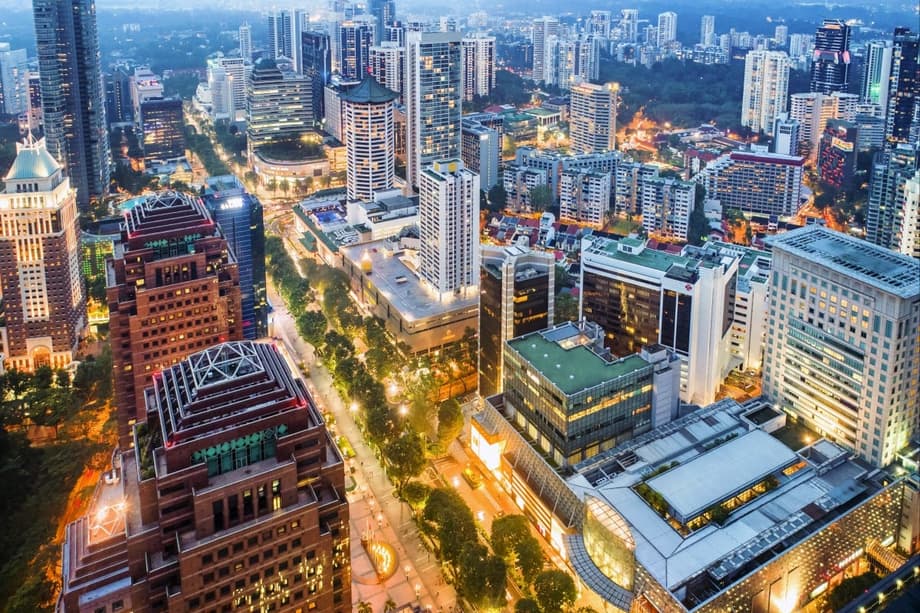
Observers note that the debate stems from a difference in scale and visibility. While thousands of local businesses may operate as small sole proprietorships or neighborhood shops, foreign chains often possess the capital to secure high-footfall locations. Brands like Chagee, Luckin Coffee, and Scarlett supermarket have become ubiquitous in prime districts and malls. Their aggressive expansion and prominent storefronts create an outsized presence that can warp public perception, leading some to believe that foreign entities dominate the market despite the statistical reality.
Analysts suggest that because these foreign chains occupy premium real estate in shopping belts and central business districts, they capture a disproportionate amount of consumer attention. A shopper walking down Orchard Road or through a busy MRT station is likely to encounter a Luckin Coffee or a Chagee far more frequently than they would a small, local beverage stall tucked away in a quieter neighborhood. This visibility gap creates an illusion of market dominance that is not fully supported by the ownership data, yet it points to a genuine competitive pressure regarding prime commercial space.
The Ground Reality: Rising Costs and Displacement
Beneath the statistics and visibility arguments lies a more tangible struggle for local small businesses. The cost of operating in Singapore has been climbing, driven by inflation and supply chain challenges that have affected economies globally. For small retailers, these pressures are often acute. A recent example highlights the fragility of the local sector. BubbleCute, a home-grown beverage brand, closed its sole outlet in Tampines Mart, a heartland shopping center, after two decades of operation. The company cited a rent increase of about 30 percent as the primary driver for its closure.
“It’s genuinely challenging for local small businesses to last long term,” said a spokesman for BubbleCute. “The environment in Singapore can be tough, especially with rising operating costs and rental pressures.”
What followed BubbleCute’s departure is illustrative of the broader trend. The unit was promptly taken over by Luckin Coffee, a major Chinese chain. This exchange serves as a microcosm of the anxiety felt by many local entrepreneurs. Foreign retailers, often backed by substantial corporate capital or deep-pocketed investors, can tolerate losses better and absorb higher rents more easily than their local counterparts. While this brings efficiency and often lower prices for consumers, it risks hollowing out the local retail ecosystem, replacing diverse neighborhood businesses with standardized global brands.
The Double-Edged Sword of Foreign Investment
The influx of foreign retailers presents a complex economic picture. On one hand, increased competition generally benefits consumers through lower prices, better service, and greater variety. Chen Liang, an associate business professor at the Singapore Management University, argues that the entry of foreign firms encourages local businesses to improve their value proposition, efficiency, and service quality. The expansion of these businesses can also lead to productivity gains through knowledge transfer and supply chain upgrades.
However, this intense competition has downsides. Increased demand for retail space inevitably drives up rents, pressuring small local businesses that operate on thinner margins. There is also a broader concern about the long-term impact on entrepreneurship. Retail is often the most common entry point for individuals seeking to start a business and achieve upward mobility. Linda Lim, professor emerita of corporate strategy and international business at the University of Michigan, warns that a bleak picture for local retailers might discourage new entrepreneurs.
“It also cuts off a channel of upward mobility, a different pathway to success, or the dream of being one’s own boss,” Lim noted regarding the displacement of local firms.
Furthermore, unhappiness among some Singaporeans regarding immigration levels could influence consumer sentiment. As the country becomes more cosmopolitan, local brands may face headwinds if consumer loyalty shifts toward established international names, potentially threatening the preservation of local food heritage and cultural identity.
Singapore’s Position in a Shifting Global Economy
To understand why foreign chains are so eager to enter Singapore, one must look at the broader economic framework. Singapore maintains an open, heavily trade-dependent economy that plays a critical role in the global supply chain. According to the U.S. Department of State, the country supports predominantly open investment policies and a robust free market economy. Foreign investors regularly cite transparency, business-friendly laws, and a strong intellectual property regime as attractive features. This environment has made Singapore a magnet for foreign direct investment (FDI), with U.S. FDI in the city-state totaling $309 billion in 2022.
Globally, FDI trends are shifting. While global flows fell by 11 percent in 2024, there is a surge in investment toward “future-shaping” industries like data centers, semiconductors, and electric vehicles. However, the retail sector remains a key battleground for establishing brand presence in Southeast Asia. Singapore often serves as a “showcase” market for multinational corporations aiming to prove their concepts before expanding further into the region. The country’s high disposable income and strong currency make it an attractive, albeit competitive, testing ground.
Recent regulatory changes also reflect the government’s awareness of these dynamics. In November 2023, Singapore introduced a new investment screening mechanism empowering the Ministry of Trade and Industry to designate entities as critical to national security interests. While this primarily targets strategic sectors like telecommunications and banking, it signals a nuanced approach to balancing openness with control.
Regional Context and Policy Responses
Singapore is not alone in navigating these challenges. Across Southeast Asia, nations are grappling with how to attract foreign capital while protecting domestic interests. Thailand, for instance, saw a 125 percent surge in foreign investment in the first eight months of 2025, driven largely by Japanese, Singaporean, and American firms. Vietnam is rapidly positioning itself as a hub for information and communication technology, attracting massive sums for data centers and digital infrastructure. India continues to liberalize its FDI policies to draw manufacturing and services away from China.
In this competitive regional landscape, Singapore must remain vigilant about its retail sector. The government has acknowledged the difficulties faced by local enterprises. Minister Gan highlighted several existing support schemes, such as the Productivity Solutions Grant, which provides funding for automating processes and adopting IT solutions. The government also supports initiatives like Design Orchard, a mall dedicated to showcasing over 80 local brands, allowing tenants to save costs through shared facilities.
Despite these efforts, experts argue that grants alone are not a panacea. Professor Chen Liang notes that while grants are useful for capability building, they do not solve the fundamental issues of rent and footfall volatility. More targeted interventions, such as rental subsidies for heritage businesses or flexible leasing experiments, have been proposed. Others suggest that policies should focus on preventing the “hollowing out” of retail ecosystems in neighborhood areas, ensuring that local character is preserved amidst the march of globalization.
What to Know
- Singapore residents own 89.7 percent of registered retail businesses, while Chinese nationals own 3 percent.
Foreign chains like Luckin Coffee and Chagee occupy high-footfall areas, creating a perception of dominance despite lower ownership numbers.
Rising rents and operating costs are forcing local businesses, such as the beverage brand BubbleCute, to close.
Experts warn that while foreign competition boosts efficiency, it may discourage local entrepreneurship and threaten cultural heritage.
The Singaporean government offers grants and platforms like Design Orchard to support local brands, though analysts suggest more direct measures like rental subsidies may be needed.