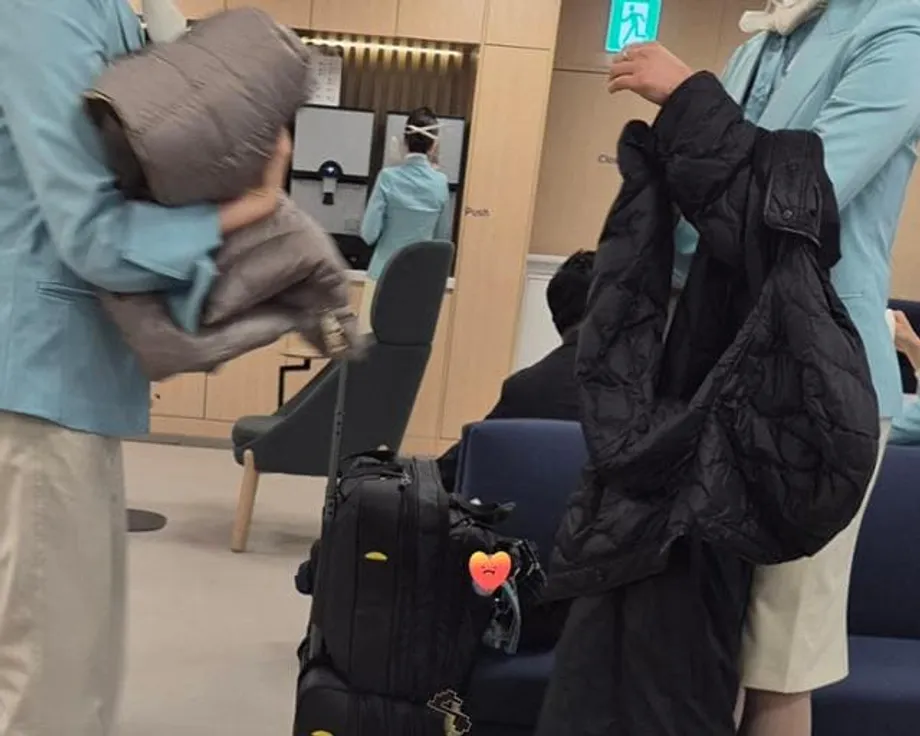
A uniform commute with nowhere to change
At South Korea's Incheon International Airport, which serves more than 70 million passengers annually, flight attendants travel to work in thin uniform jackets and low shoes that leave their ankles exposed even during freezing winter weather. Behind the polished appearance is a practical problem: airlines do not provide adequate changing rooms and secure storage for their belongings.
Contents
- A uniform commute with nowhere to change
- What happens when changing rooms are missing?
- Asiana's move removed an existing facility
- A voluntary commute or a practical requirement?
- Why the union connects clothing to safety
- Where workplace law leaves a gap
- The earlier struggle to wear trousers
- What the merger means for working conditions
- What workers are asking airlines to provide
- The Essentials
As of January 22, 2026, the dispute has become particularly sharp at Asiana Airlines. The carrier previously provided personal lockers and coat hangers, but removed those facilities following its merger with Korean Air and its move from Terminal 1 to Terminal 2. Asiana says space constraints required it to give priority to essential facilities. Its cabin crew union says a place to change and store clothing belongs among those essentials.
Korean Air, the country's largest carrier, says dedicated changing facilities were never in place at its operation. The problem therefore extends beyond budget airlines to carriers that promote premium service and high employee standards.
Airport trains carry travelers alongside crew members already dressed for duty. Their appearance can suggest a deliberate commitment to an airline's image, yet aviation industry insiders describe a more straightforward explanation: without somewhere suitable to change, many attendants have little practical choice but to put on their uniforms at home.
The disagreement reaches beyond comfort. Asiana's union argues that workers who spend a long commute shivering may arrive physically depleted before taking responsibility for passenger security and emergency evacuations. The dispute brings together workplace facilities, uniform rules, legal protections and a history of crew members campaigning for clothing that lets them do their jobs safely.
What happens when changing rooms are missing?
Flight attendants must manage their personal belongings alongside the equipment and clothing they need for duty. A changing room lets them arrive in clothes suited to the weather, put on their uniform at work and leave their outdoor clothing somewhere secure. Without that space and storage, the transition from home to work becomes an individual logistical burden.
Workers say they are often expected to reach the airport already dressed for duty. Those who try to change after arriving frequently have to use public restrooms. Such facilities lack the hygiene, privacy and space needed to prepare comfortably for a long flight.
A restroom also does not solve the storage problem. Crew members still need to manage the clothes and belongings they brought with them. The lack of lockers leaves them responsible for carrying and keeping track of those items alongside their professional gear.
Many modern workplaces provide a designated area for employees to change from everyday clothes into work uniforms. For the attendants affected at Incheon, that basic arrangement is absent. Their working day can consequently begin with exposure to the cold well before their flight duties start.
Asiana's move removed an existing facility
Asiana previously stood apart by providing its crew with personal lockers and coat hangers. Those amenities gave staff a practical way to separate their commuting clothes from their work attire and store belongings before a flight.
The airline eliminated those facilities after its merger with Korean Air and its relocation from Incheon's Terminal 1 to Terminal 2. Asiana attributes the decision to limited space, saying essential facilities had to take priority in the new location.
For employees, the change meant losing an arrangement they had already relied on. Korean Air's position is different: when questioned about dedicated changing rooms, it said such facilities had never existed. Together, the two situations show both a longstanding absence at one carrier and the removal of existing amenities at another.
The merger is therefore part of the working conditions debate as well as a corporate integration process. Crew representatives are concerned that bringing the operations together could mean adopting the less generous standard instead of retaining facilities that had made the start of the working day easier.
A voluntary commute or a practical requirement?
Asiana says it does not technically require employees to commute in uniform. Its explanation is that attendants can change elsewhere, and the airline provides storage bags when needed. Under that position, arriving already dressed is not a formal instruction.
Kwon Soo-jung, head of the Asiana Airlines labor union, disputes the practical meaning of that explanation. The union argues that without a dedicated private place to change, wearing the uniform from home becomes a requirement in everyday life, whatever the written rules say.
A storage bag can hold clothing, but it cannot give someone privacy to change or take the place of a locker. The union regards using a public restroom to get ready for professional duties as an unacceptable burden on staff.
Kwon criticizes the failure to secure sufficient space as evidence that management is paying too little attention to the cabin crew's working environment. Asiana describes a shortage of room and a need to prioritize facilities; the union argues that preparing safely and privately for work should itself be a priority.
The dispute turns on what employees can reasonably do, rather than simply what an airline formally permits. Being allowed to change elsewhere offers limited help when the workplace lacks a suitable location and secure storage.
Why the union connects clothing to safety
Flight attendants are responsible for passenger security and emergency evacuation, duties that demand physical stamina and the ability to act effectively in a crisis. Kwon asks whether crew members drained by a long, cold commute can fully protect passengers when an emergency occurs.
Cold exposure can reduce dexterity, slow reactions and cause physical fatigue. Dexterity means the ability to make controlled movements with the hands and fingers, something crew members need when operating safety equipment. Physical stamina matters when helping passengers leave an aircraft.
The union's argument is that preparation for those duties begins before boarding. Arriving cold and uncomfortable can affect a worker's physical readiness, so a warm place to change should be considered part of workplace safety rather than an optional employee benefit.
Kwon, speaking as the head of the Asiana Airlines labor union, described the demand for changing space in those terms:
"Installing a small changing space is not a welfare perk. It is directly linked to industrial safety. Workers must not be treated like cargo again," said Kwon Soo-jung.
Workers and safety advocates connect the provision of facilities to the standards airlines expect cabin crew to maintain. Airlines depend on attendants being ready to operate equipment and manage evacuations; the union says their working environment should support that readiness from the beginning of the day.
Where workplace law leaves a gap
Labor experts point to the Occupational Safety and Health Act as part of the explanation for the standoff. Under the current framework described in the dispute, employers must install changing facilities for workers engaged in tasks specifically defined as hazardous.
Firefighting and handling toxic chemicals clearly fit that category. The framework does not adequately address occupations in which the problem comes from environmental exposure or the physical demands of wearing a required uniform.
For flight attendants, the concern is the combination of mandatory work attire, winter commuting and the absence of somewhere suitable to change. Labor advocates argue that the narrow legal standard lets airlines avoid providing facilities that employees would expect in many other industries.
Yoon Ji-young, head of the civic group Workplace Bullying 119, says workers required to wear uniforms should be guaranteed a dignified place to change. She regards exposure to the cold and a lack of privacy as forms of workplace neglect that existing protections do not fully address.
Yoon called for shortcomings in those protections to be corrected:
"If there are gaps in the law or institutional framework, they must be addressed and corrected," said Yoon Ji-young.
Advocates are seeking revisions to occupational safety standards to cover roles in which mandatory uniforms create physical hardship or privacy risks. Their argument is that rules for hazardous or difficult work must also reflect conditions in service jobs, including aviation, where staff work under considerable pressure.
The earlier struggle to wear trousers
Kwon's campaign for changing facilities follows an earlier fight over what female cabin crew could wear on duty. In 2014, attendants won the right to wear trousers instead of skirts after years of protest against restrictive dress rules.
The campaign reached the National Human Rights Commission, which helped validate the workers' complaints. Kwon led that movement and became the first female attendant at Asiana to board a flight wearing trousers in January 2014.
The chronology connects the earlier clothing campaign with the present facilities dispute:
- During a struggle lasting three years, female attendants pressed for the right to wear trousers rather than skirts.
- In January 2014, Kwon became the first female Asiana attendant to board a flight wearing trousers.
- Following the merger with Korean Air and the move from Terminal 1 to Terminal 2, Asiana removed the lockers and coat hangers it had provided.
- By January 22, 2026, the union was pressing for sufficient changing space and storage for cabin crew.
Kwon's stated motivation remains practical: clothing should be safe and suitable for work. Emergency evacuations and security duties require functional attire, rather than uniforms designed primarily around appearance. The earlier campaign also taught workers that securing basic changes could require sustained pressure.
What the merger means for working conditions
Asiana's removal of lockers has become a concrete example of employee concerns during the integration with Korean Air. A facility that once existed has disappeared, leaving staff to handle preparations and storage themselves.
The union fears that working conditions could move toward the lowest standard across the combined operations. Korean Air's statement that it never had changing facilities makes that concern especially direct: the absence of a facility at one carrier can become the experience of employees who previously had it at another.
Incheon presents an image of modern efficiency and international connectivity. The daily sight of attendants traveling in clothing unsuited to winter exposes a gap between that public image and the arrangements available to some of the workers who keep air services running.
Healthcare and public safety offer the comparison raised in this debate: nurses do not commute in scrubs, and firefighters do not travel to their stations in protective gear. Changing facilities in those fields support a safe transition between personal travel and professional duties. Crew advocates want airlines to recognize the same need.
What workers are asking airlines to provide
The Asiana union continues to seek the restoration of facilities and sufficient space for attendants to change and store their belongings. Kwon regards that provision as a basic part of treating employees with dignity, rather than leaving them to manage like cargo.
The union argues that the cost of a small changing area is negligible compared with the value of crew members arriving comfortable, rested and ready for safety duties. Its demand addresses both parts of the problem: somewhere private to put on a uniform and somewhere secure to leave personal clothing.
Asiana maintains that space constraints drove its decision and that employees are not formally required to commute in uniform. Korean Air says dedicated changing facilities were never provided. No date has been given for restoring Asiana's lockers or providing the changing space sought by the union.
For attendants, the immediate issue remains practical. Without a suitable place to change, a uniform needed for work also becomes the clothing worn on a cold journey to the airport. The dispute asks airlines to treat preparation for duty as part of the working environment, alongside the safety responsibilities they assign to cabin crew.
The Essentials
- Incheon International Airport serves more than 70 million passengers annually, while many flight attendants commute in uniform without adequate changing rooms or storage.
- Korean Air says dedicated changing facilities were never in place at its operation.
- Asiana removed personal lockers and coat hangers following its merger with Korean Air and its move from Terminal 1 to Terminal 2, citing space constraints.
- Asiana says commuting in uniform is not mandatory and offers storage bags when needed. Its union says the lack of private changing space makes the practice a practical requirement.
- Union leader Kwon Soo-jung links changing facilities to physical readiness, workplace safety and passenger protection.
- Yoon Ji-young of Workplace Bullying 119 calls for gaps in legal protections to be corrected for workers required to wear uniforms.
- Kwon also led the campaign for trousers and became the first female Asiana attendant to board a flight wearing them in January 2014.