Indonesian Central Bank Prioritizes Currency Stability Over Growth
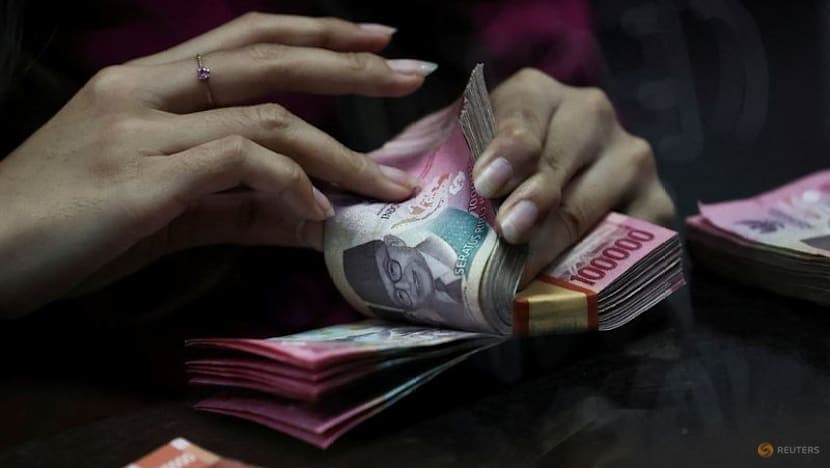
Bank Indonesia has maintained its benchmark interest rate at 4.75% for the fourth consecutive month, prioritizing currency stability amid the rupiah’s slide to record lows and growing concerns over fiscal discipline and central bank independence. The unanimous decision by the central bank’s Board of Governors comes as Southeast Asia’s largest economy grapples with mounting pressure on its currency, which touched an all-time low of 16,985 per US dollar in intraday trading on Tuesday, surpassing levels last seen during the Asian Financial Crisis.
- Indonesian Central Bank Prioritizes Currency Stability Over Growth
- Currency Pressure Mounts Amid Global Uncertainty
- Lending Rate Transmission Problem Challenges Policy Effectiveness
- Fiscal Concerns Add to Economic Headwinds
- Central Bank Independence Under Scrutiny
- Economic Outlook and Future Rate Path
- Global Context and Regional Comparisons
- The Bottom Line
The central bank has paused its easing cycle since October, shifting focus from supporting economic growth to stabilizing the rupiah, which has fallen approximately 3.5% over the past year, making it one of Asia’s worst-performing currencies. Governor Perry Warjiyo emphasized that the current focus remains on keeping the rupiah stable while maintaining room for future monetary accommodation should inflationary pressures remain contained.
“The persistent depreciation pressure we’ve seen on the currency… has not allowed BI any wiggle room in the near term to try and support growth,” said Lavanya Venkateswaran, senior ASEAN economist at OCBC Bank.
All 26 economists surveyed by Reuters from January 13 to 19 expected Bank Indonesia to leave its benchmark seven-day reverse repurchase rate unchanged at 4.75% on January 21, with the overnight deposit and lending facility rates also remaining steady at 3.75% and 5.50%, respectively. This unanimous forecast reflects the market’s understanding of the challenging balancing act facing Indonesian policymakers.
The decision follows a series of aggressive rate cuts between September 2024 and September 2025, during which Bank Indonesia reduced its main interest rate by a cumulative 150 basis points. However, the easing cycle has now been put on hold as currency pressures have intensified, forcing the central bank to reassess its policy priorities.
Currency Pressure Mounts Amid Global Uncertainty
The rupiah’s recent slide to record lows has been attributed to a combination of global and domestic factors. Geopolitical turmoil and higher US tariffs have increased global uncertainty, sending the dollar higher and triggering capital outflows from emerging markets. This external pressure has been compounded by domestic concerns over Indonesia’s fiscal position and questions surrounding the central bank’s independence.
ANZ Research estimates that overseas investors pulled approximately $6.5 billion from Indonesia’s sovereign bond market last year and remained mostly net sellers over the past six months. These persistent foreign outflows have significantly contributed to the currency’s weakness, forcing Bank Indonesia to conduct multiple interventions in the currency market.
ING Think noted that the rupiah was the weakest currency in the ASEAN-5 region last month as global risk-off sentiment exerted downward pressure on the rate-sensitive rupiah. The central bank has likely intervened both in the spot and non-deliverable forward (NDF) markets to contain volatility, with Governor Warjiyo confirming that BI has intensified efforts to defend the rupiah in offshore and onshore markets.
Despite these interventions, the currency has struggled to find its footing, touching levels not seen since the Asian Financial Crisis of the late 1990s. This development has raised concerns among investors and policymakers about the potential for broader economic instability if the depreciation spiral continues unchecked.
Bank Indonesia has maintained that the rupiah exchange rate is predicted to be stable, supported by the central bank’s commitment to maintaining stability, attractive yields, low inflation, and Indonesia’s economic growth prospects. However, the market reality has painted a different picture, with the rupiah remaining under persistent pressure despite these assurances.
Lending Rate Transmission Problem Challenges Policy Effectiveness
A significant challenge facing Bank Indonesia is the limited pass-through of its earlier rate cuts to commercial lending rates. Despite cutting policy rates by a cumulative 150 basis points since September 2024, bank lending rates have fallen by only 24 basis points to 8.96% through November from 9.20% at the start of 2025.
This disconnect between policy rates and actual lending costs has undermined the effectiveness of monetary easing, leaving businesses and consumers facing borrowing costs that remain stubbornly high. Bank Indonesia has repeatedly urged commercial banks to lower borrowing costs and has offered additional reserve requirement cuts for banks that reduce lending rates more aggressively.
However, credit demand remains weak, suggesting that even if lending rates were to fall more substantially, the impact on economic activity might be muted. Businesses appear to be in a wait-and-see mode, with Governor Warjiyo noting that banks have approved lending commitments worth 2,372 trillion rupiah ($144.41 billion) that have not been utilized, indicating weak demand rather than supply constraints.
The transmission problem has become a key factor in Bank Indonesia’s policy calculus. With limited room to cut rates further without risking additional currency weakness, and with commercial banks failing to pass on existing cuts, the central bank finds itself in a difficult position where traditional monetary tools are proving less effective than desired.
“Banks have approved lending commitments worth 2,372 trillion rupiah ($144.41 billion) that have not been utilised,” said Governor Perry Warjiyo, indicating weak credit demand rather than supply constraints.
The finance ministry has also weighed in on the issue, with Finance Minister Purbaya Yudhi Sadewa criticizing Bank Indonesia for keeping banking liquidity “dry,” which has restricted bank lending. The government moved more than $12 billion of government funds from the central bank to commercial banks to be used for loans, in an apparent attempt to stimulate lending activity.
Fiscal Concerns Add to Economic Headwinds
Economists have pointed to concerns over Indonesia’s fiscal position as an exacerbating factor in the currency’s weakness. Investors worry that President Prabowo Subianto’s populist spending plans, implemented since he came to power in 2024, could undermine fiscal credibility that the country has worked hard to establish over the past two decades.
The 2025 budget deficit stands at 2.92% of GDP, the widest in at least two decades outside the pandemic years and perilously close to the statutory cap of 3% of GDP. This expansion comes as President Prabowo pursues ambitious spending initiatives, including free school lunch programs estimated to cost around 2% of Indonesia’s GDP.
Fitch Ratings affirmed Indonesia’s investment grade credit rating but warned of the fiscal uncertainty that lies ahead. The rating agency highlighted President Prabowo’s decision to scrap value-added tax (VAT) this year, which results in a revenue loss of approximately 0.3% of GDP, adding to fiscal pressures.
ING Think estimates that the announced spending on priority projects could result in the fiscal deficit to GDP ratio expanding to 2.8% of GDP in 2025, compared to 2.3% in 2024. This widening deficit comes at a time when government debt to GDP, while still manageable at 40% and the lowest compared to the rest of ASEAN, is trending upward.
External government debt has remained stable at relatively lower levels of 11.5% of GDP, providing some buffer against external shocks. However, the combination of a widening fiscal deficit and persistent current account pressures has raised questions about Indonesia’s ability to maintain its hard-won reputation for fiscal prudence.
Bank Indonesia’s growth forecast for 2026 stands between 4.9% and 5.7%, while the government’s official growth target is 5.4%. Finance Minister Purbaya Yudhi Sadewa has suggested that a 6% growth rate should be achievable this year to enable growth to remain on track to hit Prabowo’s ambitious target of 8% by 2029.
Fiscal Implications for Monetary Policy
The expansionary fiscal stance presents challenges for monetary policy coordination. As the government pursues growth through fiscal stimulus, the central bank faces conflicting mandates that require careful balancing. On one hand, lower interest rates would support government borrowing and economic growth objectives. On the other hand, maintaining attractive yield differentials is crucial for supporting the currency and preventing capital flight.
This tension has become more pronounced as global interest rate dynamics shift. With the US Federal Reserve potentially resuming its rate-cutting cycle, Indonesian policymakers may find temporary relief from pressure on the rupiah, potentially creating room for future monetary easing. However, any easing would need to be carefully calibrated to avoid triggering renewed currency weakness.
Adam Ahmad Samdin, economist at Oxford Economics, provided context on the outlook: “We are still expecting two more cuts before they reach the terminal rate, even though fiscal policy may have temporarily boosted some economic activity. Structurally, consumption still remains quite soft.”
Central Bank Independence Under Scrutiny
Adding to the complex mix of economic challenges are growing concerns about the independence of Bank Indonesia. These concerns have been triggered by several developments, including a “burden sharing” deal that will see BI help fund state programmes and ongoing parliamentary discussions about changes to existing legislation that could expand the central bank’s mandate.
Parliament is considering amendments that could strengthen the requirement of Bank Indonesia to support economic growth and give it the power to recommend the removal of the bank’s governor. Such changes have raised alarms among investors who value central bank independence as a bulwark against political interference in monetary policy decisions.
The situation has attracted global attention, coming at a time when central bank independence is under pressure in various parts of the world, including repeated attacks on the Federal Reserve by political leaders in the United States. The Indonesian case is particularly noteworthy given the country’s history of economic crises and the reforms implemented in their aftermath to strengthen institutional frameworks.
“The question for investors isn’t whether Indonesia wants growth, but whether it can balance that against currency stability. The rupiah remains the main pressure point, since the country still relies heavily on imports and foreign capital,” said Howe Chung Wan, head of Asian fixed income at Principal Asset Management.
Market scrutiny has intensified following the nomination of President Prabowo’s nephew, Thomas Djiwandono, for a deputy governor post at Bank Indonesia. The appointment has drawn particular attention, with economists and market participants debating its implications for perceptions of the central bank’s independence.
Permata Bank’s chief economist Josua Pardede noted that family ties between a president and a central bank policymaker inevitably bring governance considerations into focus, regardless of professional qualifications. In financial markets, perception matters as much as legal mandates, and investors may demand higher risk premiums if they believe the central bank could be influenced to keep interest rates lower than warranted.
Market Reaction to Independence Concerns
The rupiah extended its losses on Tuesday following news of the nomination, weakening to around 16,955 per US dollar, its lowest level on record. Analysts attributed this decline partly to renewed concerns over central bank independence alongside persistent fiscal worries. The currency has fallen steadily this year, making it the second-worst performer in Asia after the Indian rupee.
Harry Baskoro, a Jakarta-based independent economist and former central banker, emphasized that the key issue is whether institutional guardrails are effective in monetary policy decisions. He warned that Indonesia’s credibility with investors and rating agencies depends on maintaining a visible distance between fiscal authority and monetary policy.
Finance Minister Purbaya Yudhi Sadewa has sought to downplay concerns about government interference, describing the replacement as a routine process and insisting there is no government interference in monetary policy. “BI is independent. We handle fiscal policy, they handle monetary policy,” he told reporters, dismissing talk of government encroachment as “mainly speculation.”
Despite these assurances, markets remain skeptical. Michael Wan, senior currency analyst at MUFG, noted that the markets perceive the nomination, rightly or wrongly, as a potential impact on BI’s independence. This perception has been reflected in currency movements, with MUFG forecasting that the rupiah may depreciate to 17,000 per US dollar in the first three months of the year.
Economic Outlook and Future Rate Path
Despite the current challenges, the overall economic outlook for Indonesia remains relatively positive compared to many emerging market peers. The economy is expected to have grown about 5% in 2025, with similar expansion projected for 2026. Inflation is forecast to stay within the central bank’s 1.5%-3.5% target range through 2026, providing some room for monetary policy accommodation if currency pressures ease.
Commercial bank non-performing assets (NPAs) have been declining consistently, coming off COVID-19 peaks of 2.3% in December 2020 to 1.5% in December 2024. This improvement in banking sector health provides a solid foundation for credit expansion once demand strengthens and lending transmission improves.
The recent rise in manufacturing PMI offers a glimmer of hope, though analysts caution that this increase may be due to higher exports from restocking ahead of tariff escalations rather than reflecting a sustainable improvement in manufacturing growth. Weak retail sales growth continues to reflect tepid consumption, highlighting the structural challenges facing the Indonesian economy.
A majority of economists, 12 of 23, expect Bank Indonesia to cut rates by 25 basis points to 4.50% by the end of the first quarter, while 11 forecast no change. A similar proportion, 12 of 22 economists, expect rates to fall to 4.25% by the end of the second quarter, while ten see either smaller cuts or no change. The median forecast shows rates holding at 4.25% for the rest of 2026.
ING Think has revised its expectations, now forecasting only two more cuts of 25 basis points each in 2025, taking the BI rate to 5.25% this year. The rate cuts are expected to be pushed to the latter part of the second and third quarters as more clarity emerges on global tariff situations and their impact on trade flows.
Global Context and Regional Comparisons
Indonesia’s monetary policy challenges must be understood within the broader global context. The return of dollar strength in the near term is likely to be the dominant factor impacting emerging market currencies, including the rupiah. Although Indonesia is relatively less exposed to US tariff risks compared to some Asian neighbors, any escalation in trade tensions is likely to keep Asian currencies under general pressure.
From a domestic standpoint, several risk factors will keep Bank Indonesia on edge, forcing it to remain cautious with further rate cuts. A wider current account deficit as external demand weakens, combined with a higher fiscal deficit from President Prabowo’s fiscal expansion plans, is unlikely to support the rupiah in the medium term.
Foreign direct investment (FDI) inflows fell sharply in the fourth quarter of 2024 and are unlikely to improve significantly amidst trade tensions and an uncertain investment climate. This reduction in long-term capital inflows makes Indonesia more dependent on potentially volatile portfolio investments, increasing vulnerability to sudden shifts in investor sentiment.
Despite these challenges, Indonesia maintains certain advantages compared to regional peers. Government debt to GDP at 40% remains the lowest compared to the rest of ASEAN, providing fiscal space if needed to support the economy during periods of stress. External government debt has also remained stable at relatively lower levels of 11.5% of GDP, reducing vulnerability to external shocks.
“When the trade-offs between growth and currency stability become more explicit then BI will need to make harder choices,” said Chris Kushlis, chief EM macro strategist at T Rowe Price.
Indonesia’s macroeconomic stability places it in a relatively strong position compared to many emerging markets. The fiscal deficit, government debt, current account deficit and inflation remain at low and stable levels by historical standards. These fundamentals provide a buffer against external shocks and suggest that the current challenges, while significant, may be manageable with appropriate policy responses.
The Bottom Line
- Bank Indonesia maintained its benchmark interest rate at 4.75% for the fourth consecutive month, prioritizing currency stability amid the rupiah’s slide to record lows.
- The rupiah touched an all-time low of 16,985 per US dollar in intraday trading on Tuesday, surpassing levels last seen during the Asian Financial Crisis.
- Bank Indonesia has paused its easing cycle since October after cutting rates by a cumulative 150 basis points between September 2024 and September 2025.
- Foreign investors pulled approximately $6.5 billion from Indonesia’s sovereign bond market last year, contributing to currency weakness.
- Bank lending rates have fallen by only 24 basis points to 8.96% despite 150 basis points of policy rate cuts, highlighting transmission problems.
- The 2025 budget deficit at 2.92% of GDP is the widest in at least two decades outside pandemic years and close to the statutory 3% cap.
- Concerns about central bank independence have grown following the nomination of President Prabowo’s nephew for a deputy governor position.
- A majority of economists expect rate cuts of 25 basis points by the end of the first quarter, with further easing possible if currency pressures ease.
- Indonesia’s economy is expected to grow approximately 5% in 2026, with inflation forecast to remain within the central bank’s target range.