The End of Tactical Surprise
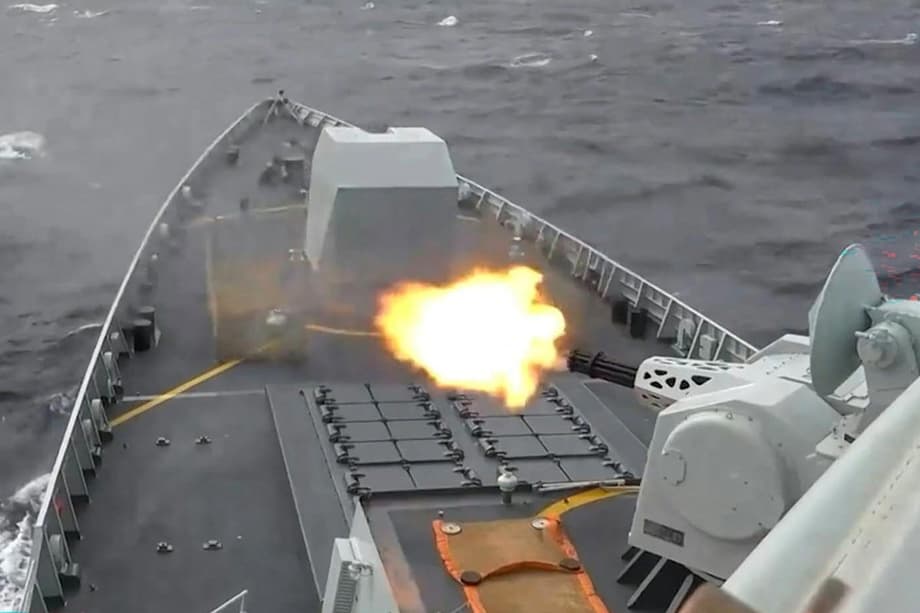
The People’s Liberation Army recently launched its large-scale military drills around Taiwan, codenamed Justice Mission 2025, with the intent of testing operational readiness. According to a report by the Beijing-based defense think tank Lande, the exercise began on December 29 with no prior warning. Despite the attempt at secrecy, the response from the United States and Japan was immediate. The report highlights that this swift reaction underscores the constant presence of the two militaries in the region and their ability to detect and track Chinese maneuvers as they happen. Analysts argue that the PLA must factor this multi-dimensional surveillance into its planning if it hopes to carry out a surprise attack across the strait.
The Lande report details that when the two-day PLA exercise commenced, US and Japanese spy planes diverted from routine patrol routes to circle the nearby areas or launched specific sorties to the drill zones. The aircraft identified included the US MQ-4C Triton drone and the Japanese Falcon 2000MSA surveillance plane. The data was derived from open-source flight path tracking, which revealed the quick positioning of these assets. This incident serves as a case study for the current security environment, suggesting that the era of secret mobilizations in the Taiwan Strait is effectively over. For Beijing, the challenge is no longer just about executing complex maneuvers, but doing so under the unblinking eye of adversary intelligence networks.
The immediate detection of these drills points to a sophisticated and persistent web of surveillance that envelops the region. It is not limited to the aircraft sighted during the exercise. The network encompasses satellites, undersea sensors, ground-based radar stations, and cyber intelligence tools. The US Navy operates a robust fleet of surface combatants and submarines in the area, all equipped with advanced sensors. Japan contributes significantly through its early-warning radars and Maritime Self-Defense Force patrols. This surveillance is multi-dimensional, tracking not just ships and planes, but also electronic emissions, missile launches, and communication patterns. When the PLA began its drills, US and Japanese assets were likely analyzing spikes in radio traffic and the activation of fire-control radars to piece together the Chinese order of battle.
Japan’s Strategic Evolution
Japan’s active role in monitoring the PLA drills reflects a significant shift in its national security posture. For decades, Japan’s Self-Defense Forces operated under a strictly defensive interpretation of its constitution. However, a report by the Center for Strategic and International Studies highlights that Japan’s National Security Strategy, approved in December 2022, clarified the country’s intention to make a full-fledged contribution to the defense of Taiwan. Tokyo now recognizes that peace and stability across the strait are indispensable for its own security and prosperity. This shift moves Japan from a passive observer to a primary frontline actor in any Taiwan contingency.
Under its new defense buildup program, Japan is focusing on seven critical areas to enhance its warfighting capabilities. These include standoff strike capabilities, integrated air and missile defense, and unmanned assets. The acquisition of standoff strike capabilities is particularly significant. It involves introducing long-range anti-ship and land-attack missiles. While Japan maintains these weapons are for counterstrike purposes, they fundamentally change Tokyo’s offensive reach, allowing it to target threats deep inside enemy territory. This capability is viewed as a necessary response to the vast missile arsenals of China and North Korea. The integration of these capabilities into the broader US alliance framework creates a seamless defense network that complicates Chinese planning.
Japan’s commitment extends beyond hardware to deep operational coordination with the United States. The two allies are reportedly formulating a new operation plan specifically for contingencies across the Taiwan Strait, building upon existing plans for the Korean Peninsula. In the event of a conflict, Japan would provide critical bases to US forces. Locations such as Misawa, Yokota, and Kadena air bases, along with naval facilities like Yokosuka and Sasebo, would serve as launchpads for operations. Japan has invested heavily in ballistic missile defense systems to protect these bases, ensuring they remain operational under attack. This logistical and strategic integration makes the surveillance network particularly resilient, as data flows seamlessly between Japanese and US commanders.
The PLA’s Tactical Adaptation
Recognizing the transparency imposed by US and Japanese forces, the PLA is adapting its tactics. Analysts note that recent Chinese exercises reveal a shift toward large-scale, integrated joint operations. Historically, PLA exercises tended to emphasize individual service capabilities. However, since 2022, the force has normalized joint combat readiness patrols and major exercises specifically targeting Taiwan. These operations differ from tactical drills, adopting campaign-level scenarios aimed at rehearsing joint operations against large islands. The PLA has started categorizing exercises by echelon, emphasizing realism and standardizing large-scale annual drills.
A noteworthy development is the expansion of operational scope. While the Eastern Theater Command generally leads these exercises, the scope now spans the Yellow Sea, East China Sea, Taiwan Strait, and South China Sea. This reflects the PLA’s evolving concept of joint operations involving multiple theater commands. Command and control over these dispersed assets is centrally managed through the Central Military Commission Joint Operations Command Center. This structure tests how well post-reform PLA command systems can function across theaters. Additionally, the inclusion of the China Coast Guard in exercises marks a significant expansion. By deploying coast guard vessels for harassment operations, China blurs the line between military and law enforcement actions, adding a layer of complexity for adversaries trying to discern intent.
These developments pose direct challenges to regional defense strategies. While the coordination of different seas remains a foundational principle, such military actions trigger anxiety among neighboring states. To mitigate the risk of third-party involvement, China seeks to frame its activities as strictly targeting Taiwan independence forces. However, given rising tensions, regional actors increasingly view these moves through a lens of strategic opposition. The PLA’s ability to integrate different services and theater commands suggests an effort to overwhelm adversary surveillance networks through volume and complexity, rather than relying on stealth.
The Two-Theater Challenge
While the focus remains on the Taiwan Strait, Japan faces the complex challenge of a two-theater commitment. Its security obligations now encompass both the Korean Peninsula and the Taiwan Strait. North Korea poses a persistent threat with its nuclear arsenal and ballistic missile program. Estimates indicate that North Korea possesses approximately 20 nuclear weapons and sufficient fissile material for dozens more. Pyongyang has also steadily improved its missile capabilities, deploying solid-fuel missiles that reduce launch times and increase survivability. This northern threat complicates Japan’s ability to focus entirely on Taiwan.
In a conflict scenario, North Korea might act as a diversionary force for China. Beijing could encourage Pyongyang to create tension on the Korean Peninsula, drawing US and Japanese assets away from the Taiwan Strait. For instance, North Korean ballistic missile submarines, despite being noisy, could threaten Japan’s southern islands or the US mainland, forcing the diversion of critical anti-submarine warfare assets. Similarly, North Korea’s development of long-range cruise missiles forces Japan to keep air defense systems pointed west, potentially weakening coverage in the southwest. This strategic dispersion is a deliberate goal of Beijing’s planning, leveraging its partnership with Moscow to stretch adversary resources thin.
Chinese academic and military elites are acutely aware of Japan’s shifting role. Contrary to some Western doubts about Japan’s willingness to fight, many Chinese analysts anticipate Japanese military intervention. They view Japan as a robust logistics hub for the United States, providing critical support such as surveillance, refueling, and medical evacuation. This expectation has led Beijing to incorporate Japan into its deterrence strategies. Chinese assessments suggest that Japan’s involvement would be contingent on US commitment, but they expect Tokyo to follow Washington’s lead. Some Chinese analysts have explored scenarios where the PLA might strike Japanese bases to neutralize them as staging grounds, while others focus on the economic leverage China holds by potentially cutting off sea lanes vital for Japan’s trade.
Expanding the Circle of Defense
The surveillance network around Taiwan is expanding beyond the US-Japan bilateral framework. A budding trilateral security partnership involving the Philippines is emerging. The Philippines sits on the southern flank of the Taiwan Strait, and the Bashi Channel separating Luzon from Taiwan is a critical maritime choke point. Control of this channel is essential for any naval blockade or reinforcement operations. The United States, Japan, and the Philippines have been deepening defense cooperation through joint exercises and table-top simulations.
In 2024, the trilateral partners conducted their first-ever humanitarian assistance and disaster response exercise during the annual Balikatan drills. They also established a Multinational Coordination Center to streamline operations. While these are framed as disaster response exercises, the logistical frameworks and command relationships developed are directly applicable to military contingencies. The Philippines has publicly stated its readiness to evacuate its citizens from Taiwan in the event of war. To facilitate this, Manila has established a Coast Guard station on Itbayat Island and increased military exercises with partners.
This trilateral cooperation creates a more comprehensive surveillance and response web. It expands the range of radar and patrol coverage, making it harder for PLA forces to operate undetected. The Enhanced Defense Cooperation Agreement between the US and the Philippines allows American forces access to bases in northern Luzon, significantly enhancing the ability to project power toward the Taiwan Strait. By institutionalizing these relationships, the three allies are ensuring that a response to a crisis in the Taiwan Strait can be swift and coordinated. The ability to conduct Noncombatant Evacuation Operations (NEO) is a critical component of this planning, ensuring that civilians can be removed safely if tensions escalate into open conflict.
Official Reactions and Strategic Posturing
US officials have openly acknowledged the intensified monitoring of Chinese activities. Defense Secretary Lloyd Austin, speaking from Yokota Air Base in Japan, stated that the Pentagon is keeping a close eye on security conditions in and around Taiwan. He noted that the People’s Republic of China has been the US military’s pacing challenge for the last four years. Austin emphasized that the US remains focused on Chinese coercive actions in the region and will continue to monitor activity to ensure the status quo in the Taiwan Strait is maintained. His comments highlight the strategic priority the US places on maintaining a clear picture of Chinese military movements.
The dynamics of surveillance often lead to direct encounters. In April 2024, China criticized a US Navy surveillance flight through the Taiwan Strait. A statement from the PLA Eastern Theater Command called the transit of the P-8A Poseidon aircraft provocative. The US 7th Fleet countered that the transit demonstrated the United States’ commitment to a free and open Indo-Pacific and was conducted in accordance with international law. Such incidents illustrate the friction inherent in the constant monitoring of the region. The US maintains it flies, sails, and operates wherever international law allows, while China views these transits as provocations that threaten peace and stability.
For Taiwan, the visible presence of allied surveillance assets provides a measure of security. The immediate detection of the Justice Mission 2025 drills proved that Taiwan is not facing the threat alone. The integration of Japanese and Philippine capabilities into the broader US strategy further strengthens this security umbrella. The situation in the strait has evolved into a high-tech standoff of observation and counter-observation. The PLA is learning to operate under the gaze of US and Japanese sensors, while those sensors work to peel back every layer of Chinese operational secrecy. As military technology advances, this contest of awareness will likely define the early stages of any future conflict in the region.
The Bottom Line
- The PLA’s Justice Mission 2025 drills were detected immediately by US and Japanese surveillance assets, including the MQ-4C Triton drone and Falcon 2000MSA, highlighting the loss of tactical surprise.
- Japan has shifted its security posture to actively defend Taiwan, acquiring standoff strike capabilities and deepening operational coordination with the United States.
- The PLA is adapting its tactics by shifting toward large-scale, integrated joint operations involving multiple theater commands and the China Coast Guard.
- Japan faces a two-theater security challenge, needing to maintain vigilance against North Korea while preparing for contingencies in the Taiwan Strait.
- A trilateral security partnership between the US, Japan, and the Philippines is expanding, utilizing humanitarian exercises to build frameworks for potential military evacuations and responses.