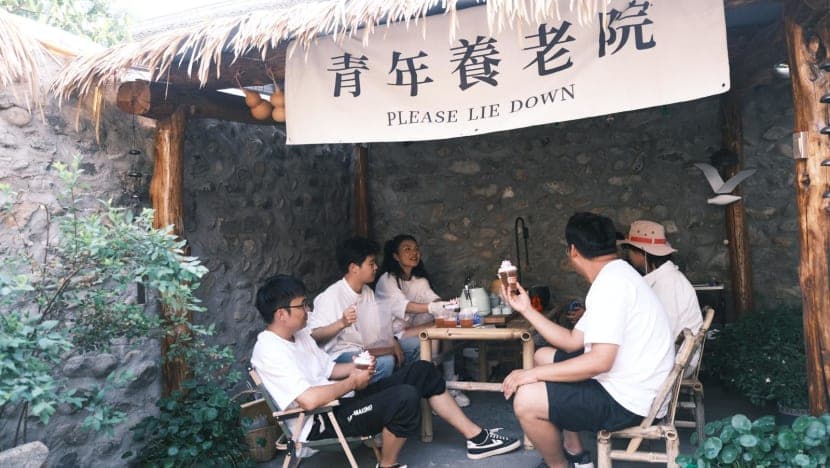
A New Kind of Retirement for a Generation Under Pressure
Retirement homes have traditionally been associated with the elderly and long-term care patients. However, a new phenomenon has emerged in Asia post-pandemic, where facilities marketed as “youth retirement homes” are attracting people in their twenties to mid-forties. These establishments offer affordable short-term stays ranging from weeks to months, located in suburban or rural areas with scenic natural surroundings. Despite the retirement label, they function more like retreats and wellness centers, providing communal living spaces with activities such as meditation, painting, farming and shared meals.
- A New Kind of Retirement for a Generation Under Pressure
- From China to Southeast Asia: A Growing Movement
- Life Inside a Youth Retirement Home
- The Perfect Storm: Why Young People Are Opting Out
- The Digital Nomad Connection
- Cultural Differences: China vs. Malaysia
- A Business Model Under Scrutiny
- The Bigger Picture: China’s Demographic Challenge
- What Experts Say About the Trend
- Key Points
The term “youth retirement home” is a literal translation from Chinese expressions like “qing nian yang lao yuan” and “qing nian liao yang yuan.” These facilities provide a social space for young residents to pause, slow down and recalibrate away from the pressures of modern urban life. The emergence of such homes offers insight into what drives demand and the predicaments faced by young people in countries like China and, more recently, Malaysia.
From China to Southeast Asia: A Growing Movement
The trend began in China, with facilities initially established in late 2022 in Jiangmen, Guangdong and Xishuangbanna, Yunnan. By the end of 2024, there were over 2,000 such facilities spread across 20 provinces in China. On RedNote, a popular Chinese social media app similar to Instagram, the hashtag “qing nian yang lao yuan” has accumulated nearly 10 million views, indicating significant public interest in the concept.
In December 2025, Malaysia’s first youth retirement home was reported to have opened in Gopeng, Perak. The facility was started by a 25-year-old whose family runs a nursing home, marking the first known expansion of this concept beyond China. The social media reaction to the Malaysian facility was mixed, with critics dismissing participating youths as “snowflakes” while others expressed sympathy, noting that they were stressed, tired, overwhelmed or burnt out.
Life Inside a Youth Retirement Home
The daily experience at these facilities varies but typically follows a slow-paced, communal rhythm. Su Cong, a 29-year-old Beijing tech worker, discovered one such retreat through a social media advertisement promising “a temporary retreat, a fresh start, a mental adjustment, a healed soul.” After requesting permission to work remotely, he subleased his city apartment and moved to the Guanye Youth Retirement Village, located in the rural mountains near Yesanpo National Park, about a three-hour drive from Beijing.
Su pays approximately $420 per month for room and board, which is cheaper than his monthly rent in Beijing. His days now involve morning check-ins with his Beijing office followed by a schedule he sets himself. He often takes afternoon breaks to nap or wander around the village. The facility organizes activities for residents including painting, horseback riding and hiking along the nearby river and mountains. While Su participates in some activities, he particularly enjoys the networking opportunities and socializing that happen after dinner.
“It’s like a utopia,” Su said. “I’m able to completely disconnect from work mode.”
Wang Dong, another resident at a similar facility in Dali, Yunnan province, has not worked for months and has no immediate plans to return. The 29-year-old spends his days visiting temples, practicing traditional tea preparation, going on outings with new friends or simply relaxing. “All of us have different things going on at any one time and we need to pay attention to our present moment,” Wang said. “It’s been very meaningful for me to experience things during this period that can’t be judged in material terms.”
The Perfect Storm: Why Young People Are Opting Out
The emergence of youth retirement homes shares common drivers across countries, though the specific motivations vary based on local contexts. Globally, young people are shifting away from the belief that work defines personal success, instead prioritizing work-life balance. Generation Z, born between 1997 and 2012, tends to value meaningful work and flexibility, while millennials, born between 1981 and 1996, often value self-employment and new types of work. Sabbaticals and career breaks have become normalized and prioritized as essential for maintaining personal wellbeing.
China’s situation presents additional context-specific factors that have accelerated this trend. These facilities emerged in response to rising youth unemployment and intensifying competition in urban life, both of which worsened following the COVID-19 pandemic. Chinese youth unemployment reached 18.8% in August 2024, the highest since new record-keeping began. For educated young people, the situation is particularly challenging as a record 11.8 million college graduates entered the labor market in 2024, intensifying competition and leading to what economists describe as a “devaluation” of college degrees.
This environment has given rise to a new vocabulary among young Chinese workers. The term “neijuan” or “involution” describes working harder for little to no gains. “Tangping,” or “lying flat,” became ubiquitous as a term for opting out of the rat race, similar to the American concept of “quiet quitting.” “Bailan,” or “let it rot,” spread as an even more pessimistic reflection of giving up altogether.
Jenny Chan, associate professor of sociology at Hong Kong Polytechnic University, described the situation: “The competition is just overwhelming. Economic anxiety among my students is growing. Even with formal education credentials, the tangible difference between candidates is quite minimal now.”
The Digital Nomad Connection
The rise of remote work, freelancing and digital nomadism has significantly sustained the demand for youth retirement homes. One facility in China reported that about 30% of its residents are digital nomads. The combination of affordable rentals and a communal lifestyle appeals strongly to this group, who can maintain their professional responsibilities while escaping the urban environment.
Dong Xue’s story illustrates this dynamic. The 28-year-old had worked as an interior designer in Beijing for five years when she felt her career had plateaued. She quit at the end of last year and started freelancing, but longed for a quiet place to retreat. She signed up to volunteer at a youth retirement home, spending two hours daily on chores such as clearing tables, tidying common areas and making beds. Her two-month stay proved physically and mentally healing. An instructor of standing meditation practices helped adjust her spine from long hours at a desk, and a tarot card reading convinced her not to give up on her career path. She returned to Beijing at the end of August to search for full-time work.
“After staying for a while, it gave me the motivation to start fresh,” Dong said. “But if I stay too long, I might get too immersed in this way of life.”
Cultural Differences: China vs. Malaysia
While the concept has spread from China to Malaysia, the underlying drivers and demand appear fundamentally different. In China, youth retirement homes respond to a systemic youth crisis characterized by high unemployment, intense competition and economic disillusionment. The facilities serve as coping mechanisms allowing young people to pause momentarily and seek psychological respite. Many residents find solidarity, emotional support and valuable experience during their stays.
Malaysia’s case presents a different picture. The Gopeng operator shared that his motivation was to offer an escape for burnt-out youths like himself. Despite initially announcing bookings would be open until March 2026, the facility later announced a hiatus until further notice. This single case suggests that the drivers and demand for such facilities in Malaysia are not directly comparable to those in China. In Malaysia, these facilities appear closer to short-term holiday stays, relating more to lifestyle tourism than to the systemic youth crisis evident in China.
Nevertheless, the fact that the Malaysian operator intentionally marketed the facility as a youth retirement home on social media signals direct referencing of the Chinese phenomenon. This cultural influence may have been facilitated through the prevalence of Chinese social media use in Malaysia. With more than 2.5 million users, Malaysia represents the second largest market for RedNote outside China and Taiwan.
A Business Model Under Scrutiny
As the trend grows, questions have emerged about the long-term sustainability of the youth retirement home business model. In China, observers have pointed out that the model may be unsustainable without proper governance and regulation. The emerging industry requires attention to professional licensing, operational standards and consumer rights protection, particularly given its heavy reliance on unregulated social media marketing.
Wei Zhizhong, chief psychological counsellor at Guangzhou’s Yiweiduxin Psychology Counselling Clinic, offered a critical perspective. He described youth retirement homes as commercial projects aimed at allaying the anxiety of specific groups and meeting their psychological needs. Fuelled by subculture and social media, they have become emerging consumer products for society to cope with excessive anxiety.
However, Wei cautioned that these solutions often provide only temporary relief from anxiety and do not tackle the root of the problem. He compared youth retirement homes to getting a massage when feeling unwell, noting that while the treatment can provide temporary relief from physical fatigue, it cannot fundamentally improve physical well-being. Similarly, youth retirement homes can only offer temporary psychological relief and cannot address the long-term challenges and anxieties young people face.
With proper regulatory oversight, this emergent industry could establish a niche at the intersections of tourism, wellness, housing and social care for youths. Without such frameworks, concerns persist about consumer protection, operational quality and long-term viability.
The Bigger Picture: China’s Demographic Challenge
The youth retirement phenomenon occurs against a backdrop of profound demographic challenges in China. Within two decades, China’s retirement-age population is projected to surpass the entire population of the United States. By 2040, an estimated 402 million people, or 28% of China’s population, will be over sixty years old. This trend means the end of China’s comparative advantage in cheap and skilled labor and presents the daunting financial challenge of caring for a rapidly aging population.
China’s pension system faces significant strain. A 2019 report by the Chinese Academy of Social Sciences warned that as the worker-to-retiree ratio declines, the National Social Security Fund would likely be depleted by 2035. The system faces two formidable challenges: relatively high statutory employer pension contribution rates and fragmented administration by provincial governments.
This demographic reality contrasts sharply with the youth retirement trend. While young people seek temporary escapes from economic pressure, the broader system grapples with supporting an aging population with fewer workers contributing to pension funds. The situation creates a complex dynamic where youth unemployment coexists with pension system sustainability concerns.
What Experts Say About the Trend
Experts offer varied perspectives on the youth retirement home phenomenon. Lu Boke, owner of the Wen Chao commune in Xishuangbanna, Yunnan, views the trend positively. The 32-year-old, who previously engaged in youth community work, established the center in October 2022 to provide a retreat-like comfortable environment at the lowest possible cost. He hoped young people would exchange ideas, interact and inspire one another.
“The trend actually reflects the higher aspirations of China’s new generation,” Lu said. “They are not passively swept forward by life or simply following traditional social norms and life trajectories. They need and are willing to come to a place like this to rest and adjust, so they can restart from a better place.”
Chung Chi Nien, chair professor at Hong Kong Polytechnic University, emphasized the economic drivers. “It is not surprising that young people are choosing to retreat or retire to the countryside as it has become very challenging to find a job, especially good jobs in top-tier cities,” he said.
Wei Zhizhong stressed that the key to truly overcoming anxiety lies in positive action and persistent effort. “It’s like regular physical exercise, it’s only through consistent exercise that fitness and health can be strengthened and youths can truly improve their self-worth and mental resilience,” he said.
Key Points
- Youth retirement homes offer affordable short-term stays for people aged 20-40 in rural or suburban locations
- China has over 2,000 such facilities across 20 provinces as of late 2024
- The trend emerged in late 2022 in Jiangmen and Xishuangbanna, spreading internationally to Malaysia in 2025
- Key drivers include work-life balance shifts, remote work capabilities and youth unemployment
- China’s youth unemployment reached 18.8% in August 2024, a record high
- Terms like “lying flat” and “let it rot” reflect disillusionment with intense competition
- Approximately 30% of residents at some facilities are digital nomads
- The Malaysian model differs significantly from China’s, being more lifestyle tourism-oriented
- The phenomenon occurs against China’s backdrop of aging population and pension system challenges
Experts question the business model’s sustainability without proper regulation