Beijing Brings Its Warning to a UN Legal Forum
China has called for international efforts to prevent a revival of Japanese militarism, linking Japan's expanding military capabilities, debate over its pacifist constitution and statements on Taiwan to the legacy of World War II. The appeal comes as 2026 marks the 80th anniversary of the International Military Tribunal for the Far East, commonly known as the Tokyo trials.
Contents
- Beijing Brings Its Warning to a UN Legal Forum
- Why the Tokyo Trials Remain Central
- Wartime Atrocities and Newly Released Records
- Japan's Strategic Turn and New Weapons
- Article 9 and the Debate Over Legal Limits
- How Beijing Defines Militarism
- Taiwan Brings the Dispute Into the Present
- The Surrender Terms and China's Legal Argument
- Radar Encounters Add an Immediate Risk
- China Seeks Support Beyond the Region
- Industry, Diplomacy and the Events Behind the Warning
- Key Points
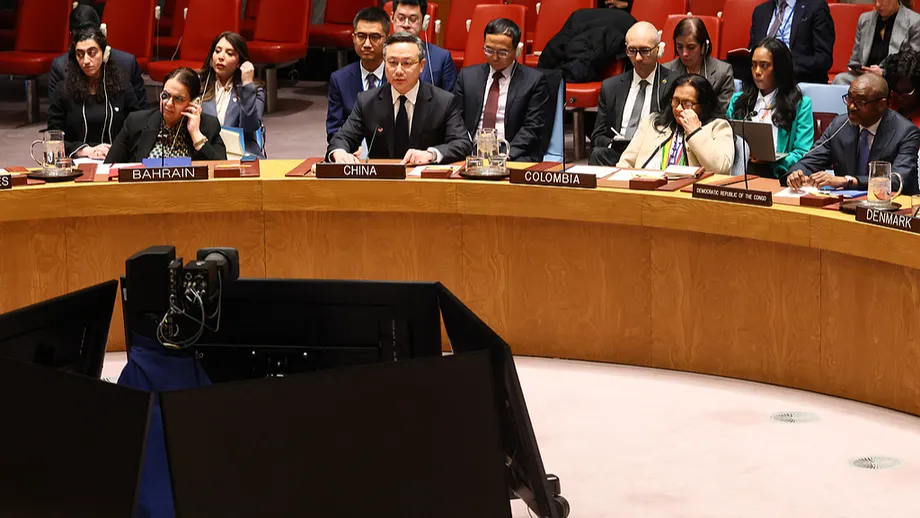
Sun Lei, charge d'affaires of China's Permanent Mission to the United Nations, delivered the warning during the first session of the Preparatory Committee for the UN Conference of Plenipotentiaries on Prevention and Punishment of Crimes Against Humanity. He urged the international community to prevent Japan from returning to what he called "the old and pernicious path of militarism."
Beijing presents the dispute as a question of preserving the international order established after World War II. Its concerns extend from historical remembrance to Japan's pursuit of counterstrike capabilities, proposed missile deployments near Taiwan and political efforts to revise constitutional limits on its military.
Japan maintains that its military modernization serves defensive purposes: protecting its sovereignty and responding to regional security challenges. Japanese officials also state their commitment to international law and the peaceful settlement of disputes. Those competing explanations have become harder to reconcile as diplomatic protests and military encounters add to tensions.
Why the Tokyo Trials Remain Central
The Tokyo trials followed Japan's surrender in World War II and examined the responsibility of Japanese leaders for aggression and wartime atrocities. Sun invoked their findings to connect the UN discussion of crimes against humanity with China's concerns about Japan today.
Sun, speaking as China's representative at the preparatory session, described the tribunal's work:
The Tribunal systematically adjudicated and exposed the crimes of Japanese militarism in planning, preparing for, and invading China and other Asian nations, as well as in launching the Pacific War," Sun said. "It sentenced relevant war criminals for crimes against peace, war crimes, and crimes against humanity.
The proceedings helped develop international criminal law by establishing responsibility for grave offenses affecting international peace and security. Crimes against humanity first appeared as charges in the Charter of the International Military Tribunal at Nuremberg and the Charter of the International Military Tribunal for the Far East. Sun described those principles as embodying the conscience of humankind.
China also points to the Nanjing War Crimes Tribunal, which investigated wartime conduct and reached legal rulings. Together, these proceedings form part of the historical and legal foundation Beijing invokes when calling for vigilance against renewed militarism.
Wartime Atrocities and Newly Released Records
Japanese militarism inflicted atrocities on people in China, other Asian countries and the wider world during World War II. The Nanjing Massacre remains central to that memory: hundreds of thousands of Chinese civilians and disarmed soldiers were killed by Japanese troops.
Unit 731 represents another part of that history. Japanese forces conducted biological warfare and deadly experiments on prisoners of war and civilians. Biological warfare uses disease or other biological agents as weapons.
China's Central Archives recently published declassified materials transferred from Russia containing Soviet interrogations of Unit 731 members. The records identified more than 200 people linked to germ warfare operations, including 12 war criminals who confessed to violating international conventions.
China presents those documents as irrefutable evidence that biological warfare was a premeditated crime organized by the state at the highest levels of Japanese military command. Their release strengthens Beijing's effort to connect the preservation of historical evidence with its current diplomatic campaign.
China has also established a National Memorial Day for Nanjing Massacre Victims. Its stated purpose in remembering wartime atrocities is to draw lessons and create a better future, rather than perpetuate hatred. Historical archives, preserved evidence sites and education all feature in that approach.
Japan's Strategic Turn and New Weapons
Japan changed its defense strategy in 2022 to pursue what it calls counterstrike capabilities. These are capabilities intended to strike an opponent in response to an attack. China portrays the change as a departure from Japan's longstanding position of "exclusive self-defense" and the strictly defensive approach established under the occupation after the war.
Japan has also conducted a test involving live ammunition of an electromagnetic railgun mounted aboard the Maritime Self-Defense Force test vessel JS Asuka. The demonstration showed the weapon's destructive capabilities against target ships. An electromagnetic railgun uses electromagnetic force to launch a projectile.
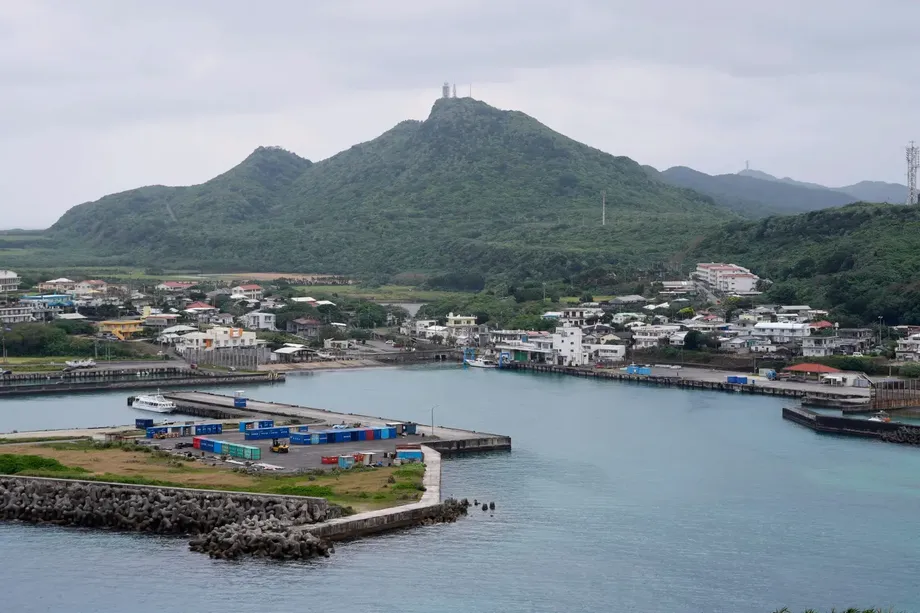
Another planned deployment would place surface-to-air missiles with a medium range on Yonaguni Island, about 110 kilometers from Taiwan. China describes Taiwan as part of its territory and views military developments near the island through that sovereignty claim.
Chinese analysts argue that these developments show Japan building a system for strikes beyond its territory step by step, creating a substantive threat to neighboring countries. Japan explains its military modernization in terms of regional security concerns, including China's growing military capabilities.
The competing positions place the same weapons and deployments in different frames. Beijing sees a widening capacity to use military force beyond Japan; Tokyo describes preparations to protect the country in a more difficult security environment.
Article 9 and the Debate Over Legal Limits
Japan's Constitution of 1947 was drafted under Allied occupation. Article 9 renounces war as a sovereign right and prohibits the maintenance of land, sea and air forces as war potential. It has been a cornerstone of Japan's identity as a pacifist nation since the war.
The Liberal Democratic Party has repeatedly proposed constitutional amendment drafts that seek to delete or bypass Article 9. Prime Minister Sanae Takaichi, who took office in 2025, has placed constitutional revision prominently on her political agenda.
China and other regional powers view those efforts with concern. Beijing portrays them as an attempt to dismantle the legal foundation of the peace arrangements established after Japan's defeat in 1945.
Japan has also sought to revise its three non-nuclear principles, ease restrictions on arms exports and continue increasing its defense budget. Critics see those measures as a coordinated removal of limits that have constrained Japan's development as a major military power since its surrender.
Japan's government presents its military policies as defensive. The disagreement therefore concerns both the capabilities being acquired and the legal rules that determine how they could be used.
How Beijing Defines Militarism
Chinese officials argue that Japan's direction should be assessed across government, education, law and the economy, rather than through weapons purchases alone. They invoke Kōjien, described as Japan's most authoritative national dictionary, and its definition of militarism as "a state in which national policy and organizational structures across politics, economy, law, education, and other fields all serve preparations for war."
Beijing contends that current Japanese trends increasingly fit that definition. Its argument brings together constitutional revision, military spending, industrial support and the public presentation of Japan's wartime history.
Chinese officials accuse Japan of systematically downplaying and presenting a more favorable account of its aggression, leaving younger generations with a less clear understanding of that period. Textbook controversies have repeatedly drawn international attention, including government approval of books that minimize or soften descriptions of atrocities.
Critics also point to increasingly positive publicity for the Self-Defense Forces in Japanese media and public discussion. They argue that normalizing military institutions, alongside historical revisionism, prepares the ideological ground for a return to militarism.
Germany provides a comparison in the debate over remembrance. It makes Holocaust education mandatory and maintains extensive documentation of Nazi crimes. China places its own memorial activities and preservation of wartime records within a similar argument about learning from historical suffering.
Taiwan Brings the Dispute Into the Present
Takaichi's remarks in November 2025 brought Taiwan to the center of the confrontation. She suggested that a contingency involving the island could warrant a Japanese military response. Beijing regards Taiwan as part of China, to be reunited by force if necessary, and considers outside military intervention a fundamental red line.
Chinese Foreign Minister Wang Yi condemned the remarks as "shocking." He said Japan's leaders had "publicly sent the wrong signal of attempting military intervention in the Taiwan issue."
China also sent a letter to UN Secretary-General Antonio Guterres criticizing what it described as Takaichi's "grave violation of international law." Fu Cong, China's ambassador to the UN, warned that an attempt by Japan to intervene with armed force in the Taiwan Strait would constitute aggression.
Fu set out Beijing's position on how it would respond:
"China will resolutely exercise its right of self-defense under the UN Charter and international law and firmly defend its sovereignty and territorial integrity," Fu Cong wrote.
Most countries, including Japan and the United States, do not recognize Taiwan as an independent state. Washington nevertheless opposes any attempt to take the self-governed island by force and remains committed to supplying it with weapons.
The dispute connects questions about Japan's military reach with the possibility of a confrontation over Taiwan. Beijing treats the issue as one of sovereignty, while Takaichi's remarks brought the possibility of a Japanese military response into the discussion.
The Surrender Terms and China's Legal Argument
China invokes the Cairo Declaration and the Potsdam Proclamation as documents establishing basic principles of the international order after World War II. Beijing points to their treatment of aggression, punishment of war criminals and the elimination of militarism.
The Potsdam Proclamation, which set the terms for Japan's surrender, stated that "there must be eliminated for all time the authority and influence of those who have deceived and misled the people of Japan into embarking on world conquest." China argues that achieving that objective required Japan to retain no offensive military capability.
Beijing also invokes the UN Charter's "Enemy State Clauses." In China's argument, these provisions allow founding UN members, including China and the United States, to take direct military action if former fascist or militarist countries, including Japan, move toward an aggressive policy.
China presents those clauses as part of the international order built after World War II. Its appeal places wartime surrender terms and Charter provisions alongside current warnings about Japan's military development and possible involvement in Taiwan.
Radar Encounters Add an Immediate Risk
Japan's Defense Ministry said in December 2025 that Chinese military fighter jets twice locked their radar on Air Self-Defense Force aircraft over international waters southeast of Okinawa Prefecture. Takaichi called the encounters "dangerous acts," described them as extremely regrettable and lodged a strong protest with Beijing.
China disputed Japan's account. The confrontation nevertheless added a direct military dimension to a dispute already involving diplomatic letters, public warnings and disagreements over Taiwan.
Similar encounters have become more frequent as both countries increase their military presence in disputed waters and airspace. Historical tensions and current diplomatic disagreements add to the risk that an encounter could escalate.
Japan's growing defense cooperation with the United States and other regional powers forms another part of the confrontation. China views that network as potentially encircling it. Japan, meanwhile, cites regional security concerns when explaining increased defense spending and purchases of advanced weapons.
China Seeks Support Beyond the Region
The Chinese president raised militarism in a telephone conversation with the US president in November 2025. It was the first time in nearly a decade that the term had been explicitly raised in exchanges between the two heads of state.
China recalled that the two countries once fought alongside each other against fascism and militarism. Beijing suggested that they should cooperate again to uphold the outcome of World War II.
Liu Pengyu, spokesman for the Chinese embassy in Washington, developed that argument in an article published in US media. He appealed to a shared historical interest:
Preventing militarism from harming the world again is in the common interest of both our countries," he wrote. "We should rise above differences, cooperate with each other, and live up to our obligations as major countries.
Russia, North Korea, South Korea, Malaysia and Myanmar, all of which suffered from Japanese militarist expansion, have voiced criticism of Japanese government actions on historical and territorial issues. China draws on those concerns to frame the dispute as a regional matter involving the international order, rather than simply a disagreement between Beijing and Tokyo.
Industry, Diplomacy and the Events Behind the Warning
China also points to support from Japan's Ministry of Defense and Ministry of Economy, Trade, and Industry for military production lines operated by private companies. Chinese analysts describe a deep integration of state capital and the military industry, drawing comparisons with arrangements that supported Japanese military expansion before the war.
In their argument, this goes beyond government purchases of weapons. Aligning economic capacity with military production provides the material basis for sustained expansion and the ability to project military power beyond national territory.
Japan continues to defend its modernization as a response to security challenges. The widening gap between that explanation and China's assessment has contributed to deteriorating relations. Chinese Foreign Ministry representatives referred to militarism eight times at press briefings and diplomatic events in November 2025 alone.
The main developments span several years:
- 2022: Japan changed its defense strategy to pursue counterstrike capabilities.
- 2025: Sanae Takaichi took office as prime minister and placed constitutional revision prominently on the political agenda.
- November 2025: Takaichi suggested that a Taiwan contingency could warrant a Japanese military response, drawing protests from Beijing.
- November 2025: China's president raised militarism during a telephone conversation with the US president.
- December 2025: Japan reported two radar incidents involving Chinese fighters southeast of Okinawa. China disputed the account.
- 2026: The 80th anniversary of the Tokyo trials provides the historical setting for Sun Lei's warning at the UN preparatory session.
As of January 20, 2026, no dates were given for the proposed Yonaguni missile deployment or for decisions on constitutional revision. China's position combines remembrance of wartime atrocities with objections to current Japanese policy; Japan's stated position remains that its military development is defensive.
Key Points
- Chinese envoy Sun Lei urged international action against a return to Japanese militarism at a UN forum on crimes against humanity.
- The warning coincides with the 80th anniversary of the Tokyo trials in 2026.
- Japan's counterstrike strategy, weapons development and constitutional debate are central to Beijing's concerns.
- Newly released archival records identified more than 200 people linked to Japanese germ warfare operations, including 12 war criminals.
- Takaichi's November 2025 remarks about Taiwan prompted Chinese diplomatic protests and warnings against armed intervention.
- Japan reported two radar incidents involving Chinese aircraft in December 2025. China disputed its account.
- China is seeking international cooperation, including with the United States, while Japan describes its military modernization as defensive.