What happened near Okinawa
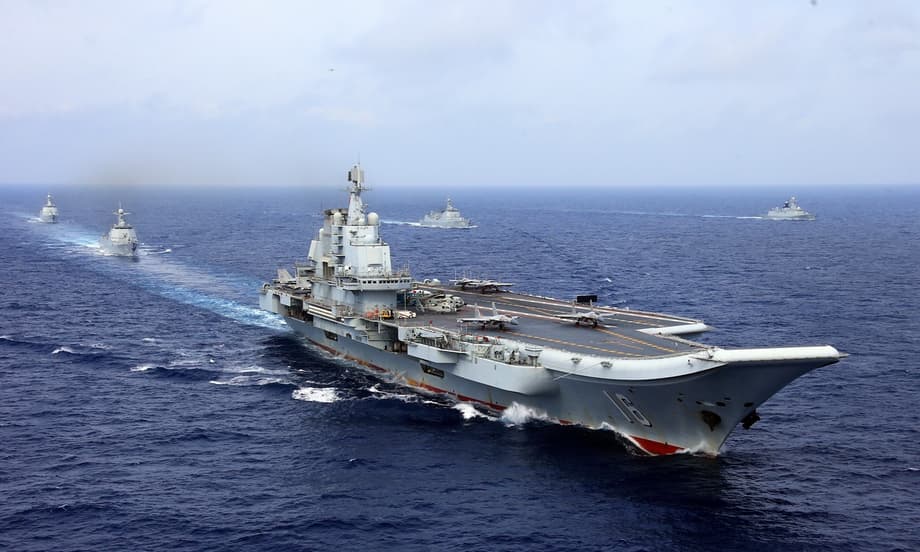
Japan says the Chinese aircraft carrier Liaoning conducted carrier based flight training in the Pacific near Okinawa, operating with the large destroyer Nanchang and two guided missile destroyers identified by hull numbers 117 and 124. The activities included repeated launches and recoveries of carrier aircraft. Tokyo described the movements as the first confirmed operations by a Chinese carrier group near Japan since China entered a three carrier era, with the new Fujian on sea trials joining Liaoning and Shandong as part of a growing fleet.
- What happened near Okinawa
- Who was involved and where the ships went
- Why the Miyako and Okinawa corridors matter
- What Beijing says about the drills
- How Tokyo and allies are responding
- A pattern of carrier activity around Japan
- Risks, rules, and deconfliction at sea and in the air
- What it means for regional security
- What to Know
The exercises quickly drew diplomatic friction. Japan protested that Chinese J 15 fighters locked radar on Air Self Defense Force F 15s that were monitoring the carrier group southeast of Okinawa. Beijing rejected the claim, said the training was routine and lawful, and urged parties not to overreact. The episode underscored a familiar dynamic around Japan’s southwest islands, where Chinese, Japanese, and allied forces frequently shadow one another in international waters and airspace.
The radar incident
Japan’s Defense Ministry reported two separate events on the same day in which PLAN J 15 fighters directed fire control radar at JASDF F 15s over international waters southeast of Okinawa. In one case, the radar illumination reportedly continued for about 30 minutes. No damage or injuries were reported, though the ministry called the action dangerous and said it exceeded what is necessary for flight safety. Japanese fighters had scrambled in response to frequent launches from the carrier and were conducting standard monitoring in the area.
Chinese officials disputed Japan’s account and said the Liaoning group had announced training in a defined area. Tokyo acknowledged a prior notice but said the information lacked specifics on location, airspace and timing, and that no formal notices to air missions were issued to support safe deconfliction. The friction echoed earlier disputes over how far normal surveillance can approach a carrier during flight operations.
Japan’s defense minister, Shinjiro Koizumi, publicly criticized the radar illumination and said Tokyo had lodged a strong protest.
“This radar lock on incident constitutes a dangerous act that exceeds the scope necessary for the safe flight of aircraft. We have lodged a strong protest and demand steps to prevent a recurrence.”
Who was involved and where the ships went
Japan tracked the Liaoning carrier group as it operated in the Philippine Sea and then sailed northwest between Okinawa and Miyako Island toward the East China Sea. The formation included the carrier Liaoning, the Type 055 destroyer Nanchang, and two Type 052D destroyers identified as Xining, hull number 117, and Kaifeng, hull number 124. A large replenishment ship, Hulunhu, supported the group. The Japan Maritime Self Defense Force destroyer Teruzuki and maritime patrol aircraft, including a P 3C Orion, shadowed the Chinese ships while Japan’s air force scrambled fighters as launches from the carrier increased.
Over the course of about a week at sea, Japanese tallies put total sorties from the carrier’s aircraft and helicopters at more than two hundred, with about fifty takeoffs and landings observed over one weekend period. The main operating box lay near Oki Daito Island in the Philippine Sea, a location often used by carriers to fly cyclic training without infringing on territorial waters. The group later transited back toward the East China Sea after completing the drills.
Why the Miyako and Okinawa corridors matter
The Miyako Strait, a gap between Okinawa’s main island and Miyakojima, is a key deep water passage connecting the East China Sea to the wider Pacific. It is international water and international airspace. Chinese task groups use this corridor to reach the Philippine Sea for far seas training. Japanese and allied forces track these movements closely because the strait sits near critical sea lanes and within range of Japan’s southwest islands. The area is also a common transit route for Chinese and Russian joint patrols, which further elevates alert levels in Tokyo.
ADIZ rules and international airspace
An Air Defense Identification Zone, or ADIZ, is a warning area where a state requests that aircraft identify themselves. It is not sovereign airspace. Flights through an ADIZ do not violate international law by themselves. Japan routinely scrambles fighters when foreign military aircraft enter its ADIZ without providing identification, especially when those aircraft launch from carriers near Okinawa. Deconfliction for large scale drills usually includes notices to mariners and notices to air missions, which help civilian traffic route around training boxes. Japan said the information from Beijing for the latest training was insufficient to avoid hazards, which left both sides arguing over how close is too close for routine surveillance of a carrier in flight operations.
What Beijing says about the drills
Chinese officials framed the operations as regular training conducted within the bounds of domestic and international law. Beijing’s message stressed a defensive national defense policy and urged other countries not to exaggerate the drills.
China’s Foreign Ministry spokesperson Lin Jian urged restraint and defended the legality of the operations.
“China follows a defensive national defense policy. Our navy and coast guard conduct activities in accordance with domestic law and international law. There is no need for overreaction or groundless accusations.”
Senior Captain Wang Xuemeng, a spokesperson for the Chinese Navy, emphasized that the carrier operations were routine and not directed at any country.
“These were routine training activities that did not target any specific country. The exercises were planned and conducted to improve the forces’ capabilities in far seas operations.”
Chinese military commentators argued that Japan frequently amplifies normal PLAN activity to justify its own military expansion, and questioned why similar attention is not paid to allied operations in the same waters.
How Tokyo and allies are responding
After the radar lock on claim, Tokyo lodged a formal protest and demanded measures to prevent a repeat. Japanese leaders said the government would respond calmly and resolutely while maintaining vigilance around the southwest islands. Japan’s defense minister also said Tokyo would press Beijing for more comprehensive notification for drills that bring carrier based aircraft into busy airspace near the Ryukyus.
Allied contacts accelerated around the same time. The U.S. Secretary of Defense and Japan’s defense minister spoke by phone to discuss Chinese military activity and broader regional security, with both sides affirming the role of the alliance. Separately, the U.S. Air Force flew B 52 bombers alongside Japanese F 15 and F 35 fighters in a visible demonstration following Chinese and Russian long range flights around southern Japan. These bomber task force missions are periodic and aim to show readiness and allied coordination.
Concern extended beyond Japan. The Philippines publicly warned that radar lock by Chinese fighters on Japanese aircraft is dangerous and risks miscalculation in crowded international airspace. Manila called for restraint and adherence to international law. Arsenio Andolong, a spokesperson for the Philippine Department of National Defense, issued a pointed reminder.
“The use of radar against an aircraft conducting lawful operations has no place in international airspace. We support transparency, restraint, and adherence to international law over intimidation and provocation.”
A pattern of carrier activity around Japan
Japan’s Ministry of Defense has tracked a steady expansion of Chinese military activity around the Japanese archipelago. The ministry reports more frequent flights and sailings over the Pacific east of Taiwan and Okinawa, more diverse routes for UAVs between Okinawa and nearby islands, and an uptick in activity around the median line in the Taiwan Strait. It also cites China’s larger budget and rapid naval modernization, including more modern destroyers, frigates, and submarines.
The Liaoning has drilled south of Okinawa and east of Taiwan in the past. In 2022, an eight ship group led by the carrier conducted intensive flight operations in the western Pacific while Japanese forces shadowed the formation with warships and patrol aircraft. The Type 055 destroyer Nanchang has repeatedly escorted Liaoning, underscoring how the PLAN pairs its large surface combatants with the carrier for air defense and command and control.
China now operates two active carriers, Liaoning and Shandong. The third carrier, Fujian, has been running sea trials, while Beijing has signaled ambitions for even more complex blue water operations. Chinese sources have highlighted dual carrier training in late 2024 in the South China Sea and, this year, simultaneous training in the wider Pacific. Tokyo’s monitoring of these events points to a navy that is testing its ability to operate beyond the second island chain for longer periods and with larger air wings.
Risks, rules, and deconfliction at sea and in the air
Radar lock on by a fighter’s fire control system is not a weapon release. It is an escalation because it signals that weapons can be guided to a target with little delay. Pilots treat it as a threat and begin defensive measures. During crowded monitoring of a carrier in flight operations, distance and geometry change quickly as jets cycle through launch and recovery. This is where clear training boxes, prior notices, and disciplined radio procedures help avoid misjudgment.
There are established norms for encounters at sea and in the air. Many Pacific navies endorse the Code for Unplanned Encounters at Sea, which encourages professional conduct for surface ships. A similar set of best practices has been discussed for military aircraft, though not universally adopted. When large exercises occur near busy air routes, notices to mariners and notices to air missions help civilian and military traffic avoid conflicts. Japanese officials say the latest information from Beijing lacked detail on the exact airspace and timing, while Chinese officials say advance notice was provided and that foreign aircraft came too close to a training area. That gap in expectations is where miscalculation can occur even if both sides intend to avoid a crisis.
Technical friction is only part of the picture. Beijing wants to normalize far seas carrier operations, including in waters near Japan’s southwest islands. Tokyo wants to keep the skies safe while asserting its right to monitor foreign forces in international airspace. Both sides can limit risk by passing precise notifications, respecting safe distances around carriers during recoveries and launches, and maintaining reliable hotlines between operational commands.
What it means for regional security
The latest Liaoning patrol shows how routine Chinese carrier activity near Okinawa has become. Hundreds of sorties, complex escorts, and extended operations in the Philippine Sea signal a navy growing more comfortable in the open ocean. Japan’s quick protest, the U.S. bomber flights with Japanese fighters, and statements from partners such as Australia and the Philippines show a parallel trend, a tighter allied response network geared to visible activity in the western Pacific.
For Tokyo, the stakes are local and strategic. The Miyako and Yonaguni corridors are near small Japanese islands and vital shipping lanes. Tension rises when military aircraft pass close to those islands day after day. Strategically, the operations play into debates over defense spending, air and missile defense in the southwest, and the role of Japanese forces in a Taiwan crisis. For Beijing, sustained far seas patrols aim to create habits of presence beyond the first island chain and to complicate allied surveillance. Each side is watching how the other handles close range interactions and whether the balance of presence is shifting.
What to Know
- Japan tracked the Chinese carrier Liaoning operating near Okinawa with escorts, conducting repeated carrier flight operations in the Philippine Sea.
- Tokyo protested that Chinese J 15 fighters locked radar on Japanese F 15s during monitoring flights southeast of Okinawa; Beijing denies this and called for calm.
- The Liaoning group included the large destroyer Nanchang, two Type 052D destroyers, and a support ship, and it transited between Okinawa and Miyako Island.
- Japan counted dozens of launches over a weekend and more than two hundred sorties over the week as the carrier operated near Oki Daito Island.
- Chinese officials said the drills were routine and legal, while Japan said prior notice lacked sufficient detail for safe deconfliction.
- Allied coordination followed, including a U.S. bomber flight with Japanese fighters and diplomatic consultations on regional security.
- The episode fits a longer trend of expanding Chinese military activity around Japan and more frequent carrier operations beyond the first island chain.
- Risk stems from close range encounters during carrier flight operations, which both sides can ease through precise notifications and disciplined conduct.