The $80 Billion Rout
Indonesian markets convulsed in late January as a catastrophic sell-off erased nearly $80 billion in value, sending the Jakarta Composite Index (JCI) plummeting nearly 9 percent in a single trading session. The panic, triggered on January 28, represented the culmination of months of mounting anxiety over governance standards, fiscal discipline, and the erosion of institutional independence in Southeast Asia’s largest economy. The crash compounded an already dire situation for the Indonesian rupiah, which had touched historic lows against the dollar just one week earlier, breaching 17,000 rupiah per US dollar for the first time since the devastating Asian financial crisis of 1998.
The immediate catalyst for the January 28 bloodbath came from MSCI, the influential index provider whose classifications guide trillions of dollars in global investment flows. The company issued an extraordinary warning that Indonesia faced potential downgrade from emerging-market status to frontier-market classification, a move that would force passive investment funds to divest from Indonesian equities en masse. The announcement triggered a stampede, with investors dumping 45.5 trillion rupiah (approximately $3.4 billion) in shares on that day alone, leaving the JCI down 7.4 percent by the closing bell.
When Index Providers Raise the Alarm
MSCI’s threat struck at the heart of long-standing concerns about market transparency in Indonesia. The index provider specifically cited worries about the “investability” of local shares, particularly regarding the accuracy of free float calculations. Free float refers to the percentage of a company’s shares that are publicly traded and available for purchase by ordinary investors, as opposed to those held by insiders, controlling families, or strategic partners who do not regularly trade their stakes.
Under current regulations, Indonesian listed companies must maintain a free float of just 7.5 percent, among the lowest requirements in major emerging markets. Critics have long alleged that many firms artificially maintain this threshold through nominee arrangements and opaque ownership structures, resulting in shares that technically count as publicly available but effectively remain under tight control by small groups of wealthy individuals. This concentration creates vulnerabilities to price manipulation and sudden volatility, precisely the risks that MSCI identified as grounds for potential reclassification.
The distinction between emerging and frontier markets carries enormous financial consequences. Emerging market status grants access to vast pools of passive capital that track MSCI’s benchmark indices, while frontier classification relegates countries to a riskier, less liquid category dominated by specialized investors. A downgrade would trigger automatic selling by exchange-traded funds and institutional portfolios that mandate emerging market exposure, potentially locking Indonesia out of global capital flows for years.
The Martabe Seizure
Compounding the market panic, state intervention in the resource sector delivered a harsh blow to investor confidence on the same day as the MSCI warning. Indonesia’s sovereign wealth fund, Danantara, announced the forced transfer of the Martabe gold mine, a flagship asset of PT United Tractors, to a state-owned entity. The move shocked the investment community because United Tractors represents a subsidiary of PT Astra International, one of Indonesia’s largest and most diversified conglomerates, and a bellwether stock heavily held by foreign portfolio managers.
The expropriation appeared to bypass standard legal procedures, sending alarm bells through boardrooms regarding the sanctity of contracts and property rights in Indonesia. A Jakarta-based business consultant who maintains regular dealings with state-owned enterprises described the action in stark terms, speaking on condition of anonymity due to the sensitivity of the matter.
Such a move is a unilateral expropriation without due process. This is like shattering Indonesia’s reputation for legal certainty.
Legal experts anticipate significant blowback from the seizure. Maurice Maulana Situmorang, a senior lawyer and partner at Dentons HPRP, warned that the government faces a high probability of litigation and international arbitration regarding the Martabe mine. He emphasized that specific contractual terms, legal provisions, and procedural safeguards must be observed before any rights revocation can legally proceed.
The Martabe incident fits a broader pattern of increasing state intervention in strategic industries, raising concerns that Indonesia may be retreating from market-oriented policies toward resource nationalism and arbitrary administrative actions. For foreign investors, the gold mine seizure represents a tangible example of the risks associated with concentrated ownership structures and weak institutional checks on executive power.
Central Bank Independence Under Siege
While the market grappled with MSCI’s warnings and the mining seizure, political developments at Bank Indonesia further eroded confidence in the country’s monetary institutions. On January 27, Parliament appointed Thomas Djiwandono, Deputy Finance Minister and nephew of President Prabowo Subianto, to serve as senior deputy governor of the central bank. The appointment came despite widespread criticism that the move would undermine the institution’s independence and force premature pro-growth policies to support the President’s ambitious target of 8 percent annual economic growth before his term ends in 2029.
The nomination of Mr. Thomas, which the President had advanced earlier in January, sent the rupiah into freefall between January 19 and 20, crashing to nearly 17,000 rupiah per dollar. This historic low represented an erosion of market confidence comparable to the 1998 Asian financial crisis, when the currency peaked around 16,800 to the dollar. While administration officials have argued that the rupiah depreciated by only around 4 percent against the dollar over the past year, economists note this figure obscures the currency’s true weakness.
Wijayanto Samirin, a senior economist at Paramadina University, pointed out that the US dollar itself had weakened by roughly 10 percent against major global currencies over the same period. This implies that the rupiah’s intrinsic value has effectively plummeted by approximately 14 percent when measured against a basket of trading partners. Dr. Wijayanto stressed the fundamental link between central bank credibility and currency stability.
The credibility of the rupiah is highly dependent on Bank Indonesia. If Bank Indonesia is neither credible nor independent, the same will be true for the rupiah.
Criticism of the central bank’s objectivity has intensified following recent policy shifts deemed submissive to fiscal needs. The institution has cut interest rates earlier than economic conditions warranted and engaged in monetary financing through money printing, reversing two decades of orthodox monetary policy that prioritized inflation control and stability over short-term growth stimulation.
The High Cost of Populist Promises
The institutional tremors rocking Indonesia’s financial markets occur against a backdrop of severe fiscal strain. The 2025 budget deficit has swelled to nearly 3 percent of gross domestic product, the legal limit established by Indonesian law, while state revenue continues to fall short of targets. This precarious position stems largely from President Prabowo’s flagship campaign promise: a free nutritious meal program for students and pregnant women that launched in January 2025 with a first-year price tag of approximately 50 trillion rupiah.
The program, designed to combat stunting affecting more than 20 percent of Indonesian children, has stumbled through a crisis-ridden rollout. Implementation has been plagued by funding delays, logistical failures, and a spate of food poisonings at schools. By mid-2025, the program had reached only five million students nationwide despite targeting 17.5 million children, according to finance ministry data. Multiple schools reported students suffering from stomach ailments, diarrhea, and vomiting after consuming government-provided meals.
Investigative reports have revealed additional concerns regarding the program’s administration, indicating that several catering partners appointed to supply the meals were supporters of President Prabowo during his election campaign, raising nepotism allegations. Agus Pambagio, a Jakarta-based public policy expert, characterized the program as rushed and poorly planned.
Japan and India have been doing it for decades. If we want to do it just like them within a few months, it’s suicide. We can’t let fatalities happen.
Budgetary pressures extend beyond the meal program. Massive defense spending to modernize military equipment and the continued capital-intensive construction of Nusantara, the new capital city mega-project, have further strained public finances despite a notable lack of private investor interest in the planned city. The combination of expanded social spending, military procurement, and infrastructure white elephants has left the government with minimal fiscal flexibility to respond to market shocks.
Institutional Erosion and Accountability
The crisis claimed its first high-profile casualties on January 30, when Financial Services Authority chairman Mahendra Siregar, his deputy Mirza Adityaswara, and Indonesia Stock Exchange chief Iman Rachman simultaneously tendered their resignations. The coordinated departures signaled deep institutional distress within the regulatory apparatus tasked with maintaining market integrity and investor protection.
These resignations occurred within a broader context of declining governance standards that predates the current administration but has accelerated in recent years. The Organized Crime and Corruption Reporting Project shortlisted former President Joko Widodo for its 2024 “Corrupt Person of the Year” award, citing systematic dismantling of anti-corruption mechanisms and normalization of nepotism. A People’s Tribunal held at the University of Indonesia in mid-2024 indicted the previous government on nine charges including corruption, collusion, and the commercialization of natural resources through poorly regulated mining permits.
Environmental advocates have documented the consequences of weak oversight in the extractive sector. According to the Indonesian Forum for the Environment (Walhi), approximately 283,000 hectares of forest, an area four times the size of Jakarta, disappeared throughout 2025 to make way for extractive businesses. This environmental degradation parallels the economic destruction wrought by governance failures, as both reflect a pattern of state capture by narrow interests operating with minimal transparency or accountability.
Government Response and Lingering Doubts
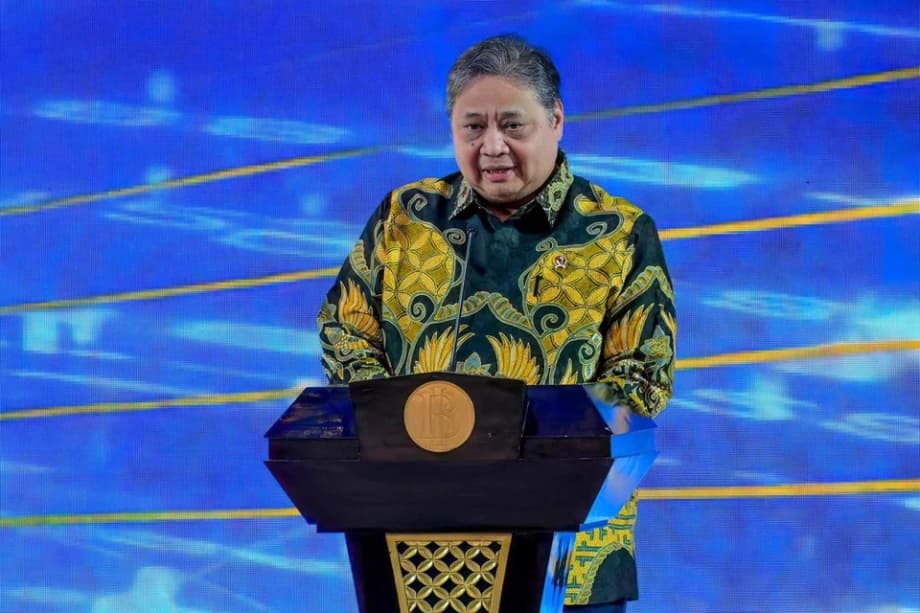
Faced with collapsing markets and evaporating investor confidence, Coordinating Minister for Economic Affairs Airlangga Hartarto convened an emergency media briefing on January 30 to outline stabilization measures. He promised new reforms to deepen the stock market, including doubling the required minimum free float for listed companies from 7.5 percent to 15 percent by March. Additionally, the government plans to allow pension and insurance funds to invest up to 20 percent of their portfolios in equities, compared to the current 8 percent cap, potentially directing billions in domestic institutional capital toward listed shares.
Mr. Airlangga highlighted that the JCI had rebounded on January 30, and stressed the government’s commitment to market stability. He defended the economic fundamentals of Indonesia, noting that coordination between fiscal and monetary authorities remained functional. However, markets remain skeptical that administrative tweaks can address the fundamental governance deficits that triggered the crisis. The forced resignation of regulatory leadership, the continued presence of political appointees at the central bank, and the unresolved status of the Martabe mine all suggest that structural reform remains elusive.
The crisis has exposed the fragility of Indonesia’s market economy when confronted with political interference and weak rule of law. While short-term technical measures may stabilize indices temporarily, the flight of $80 billion in capital reflects a deeper judgment by global investors about the trajectory of Southeast Asia’s largest economy. Without credible commitments to central bank independence, transparent ownership structures, and respect for property rights, Indonesia risks a sustained period of capital flight that could undermine its ambitions for rapid growth and development.
The Essentials
- The Jakarta Composite Index plunged nearly 9 percent on January 28, triggered by an MSCI warning about potential downgrade from emerging to frontier market status
- Indonesia’s sovereign wealth fund seized the Martabe gold mine from PT United Tractors, raising legal certainty concerns and fears of arbitrary expropriation
- President Prabowo’s nephew, Thomas Djiwandono, was appointed senior deputy governor of Bank Indonesia, undermining central bank independence and sending the rupiah to historic lows
- The government’s free nutritious meal program, costing 50 trillion rupiah annually, has faced implementation failures, food poisonings, and nepotism allegations
- Financial regulators including the Financial Services Authority chairman and Indonesia Stock Exchange chief resigned on January 30 amid the crisis
- The government has proposed raising minimum free float requirements from 7.5 percent to 15 percent to address MSCI concerns about market transparency
- The 2025 budget deficit has reached nearly 3 percent of GDP, the legal limit, driven by populist spending, defense procurement, and new capital city construction