The Fall of an Untouchable General
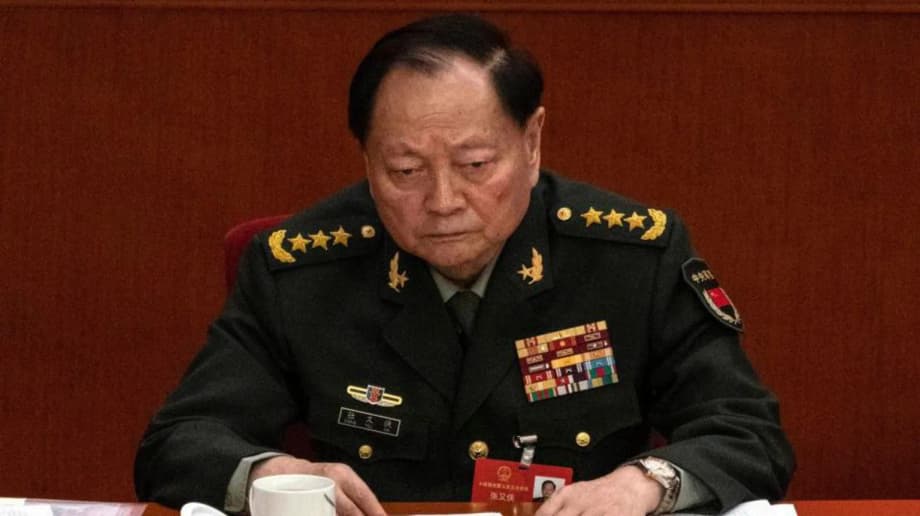
The military establishment of China has been thrown into turmoil following the stunning announcement that General Zhang Youxia, the highest ranking uniformed officer in the nation, has been stripped of his position and placed under investigation for serious violations of discipline and law. The Defense Ministry issued a terse statement on Saturday confirming that Zhang, who served as the senior vice chairman of the Central Military Commission, faces accusations alongside General Liu Zhenli, chief of the Joint Staff Department. At 75 years old, Zhang represented a rare breed of military leadership, having survived numerous previous purges that claimed two defense ministers and dozens of senior officers over the past three years. His sudden fall from grace marks a dramatic escalation in the campaign by President Xi Jinping to reshape the armed forces, striking down an officer once considered immune from political retribution due to historic ties to the Communist Party elite.
The official announcement offered no specific details regarding the alleged misconduct, employing the standard euphemism for corruption and political disloyalty that accompanies such investigations. However, the severity of the action became clear when the Liberation Army Daily published a front page editorial declaring that Zhang and Liu had seriously betrayed the trust of the Communist Party Central Committee and trampled upon the authority of the Central Military Commission. Such language typically precedes criminal prosecution and lengthy prison sentences in the political system of China, where investigations of this nature almost never result in exoneration. The speed of the dismissal also surprised observers, as Zhang had appeared at official functions as recently as one month prior, giving no outward indication of impending trouble. The fall of such a senior figure suggests that the campaigns against corruption of recent years have entered a new and more aggressive phase.
The Decimation of the High Command
The purge has effectively collapsed the leadership structure of the Central Military Commission, the powerful party body that exercises supreme command over the two million active duty personnel of China. When the current commission was appointed during the 2022 Party Congress, it comprised seven members tasked with overseeing military strategy, procurement, and operations. Now only two individuals remain in active service: Xi Jinping himself, who holds the chairmanship, and General Zhang Shengmin, a career political commissar who previously managed the corruption investigations within the military. This reduction represents the most severe institutional weakening since the Cultural Revolution, when the commission effectively ceased functioning following the mysterious death of Marshal Lin Biao in 1971.
The concentration of power in so few hands carries significant historical weight. During the 1980s, Deng Xiaoping maintained control over the nation solely by retaining the chairmanship of the Central Military Commission, demonstrating the supremacy of this body within the Chinese political structure. That the current president now governs the military with only one other voting member, and that member lacks significant operational command experience, creates an unprecedented command structure. The editorial in the Liberation Army Daily made clear that the purge extends beyond simple corruption charges, accusing the generals of creating political problems that weakened the absolute leadership of the party over the military. This framing suggests the investigation touches upon questions of loyalty and political reliability rather than merely financial misconduct.
Lyle Morris, a senior fellow at the Asia Society Policy Institute, described the situation in stark terms regarding the stability of the armed forces.
The PLA is in disarray. The military of China now has a major leadership void. This move is unprecedented in the history of the Chinese military and represents the total annihilation of the high command.
Princeling Ties and Political Betrayal
Zhang Youxia belonged to an elite class of Communist Party royalty known as princelings, the children of revolutionary heroes who fought alongside Mao Zedong to establish the People’s Republic. His father, a senior officer in the Northwest Army, served closely with Xi Zhongxun, the father of Xi Jinping, during the civil war years of the 1930s and 1940s. This connection created a bond between the families that extended across generations, with Zhang and the current president likely knowing each other since childhood. Such ties typically provide ironclad protection within Chinese politics, where loyalty to the revolutionary bloodline carries immense weight.
Xi demonstrated apparent trust in Zhang by retaining him well beyond the standard retirement age of 70, renewing the vice chairmanship in 2022 despite advanced age. At that time, many analysts viewed Zhang as the most important military ally of the president, a competent professional who could provide advice grounded in actual combat experience. The decision to purge him now, when he could have been allowed to retire gracefully at the upcoming Party Congress, sends a chilling message throughout the ranks. Jonathan Czin, a former senior CIA analyst who focused on Chinese elite politics, described the development as marking a profound shift in the political landscape.
Zhang’s removal means that truly nobody in the leadership is safe now. This is really almost Shakespearean. This is somebody that Xi has had a decadeslong relationship with.
The message echoes clearly through the officer corps: personal history and family connections no longer provide protection against the scrutiny of the president. This realization likely generates significant anxiety among senior commanders who must now question whether their own positions remain secure. The case also recalls other fallen allies of the president, including former Foreign Minister Qin Gang and Liu Yuan, the son of former president Liu Shaoqi and a childhood friend who was forced into retirement despite early support for efforts against corruption.
Espionage Allegations and Strategic Disagreements
While authorities in Beijing have released no public evidence supporting specific charges against Zhang, intelligence briefings and diplomatic sources have suggested several possible motivations for the purge. The Wall Street Journal reported that Zhang faces accusations of leaking classified information regarding the nuclear weapons program of China to American officials, allegedly during a 2024 meeting with former National Security Advisor Jake Sullivan. Other allegations include accepting substantial bribes in exchange for promoting officers to senior positions, particularly within the military procurement system that has become a focal point of previous investigations involving hundreds of thousands of officials.
Beyond questions of corruption or espionage, analysts suggest the purge may stem from fundamental disagreements regarding military strategy, specifically preparations for a potential conflict over Taiwan. According to analysis from the Pacific Forum, Zhang considered the goal of Xi Jinping to achieve full military readiness for a Taiwan invasion by 2027 to be unrealistic and dangerous. The general allegedly advocated for extending the timeline to 2035, allowing additional years for modernization and joint operations training. If accurate, this disagreement would constitute a direct challenge to Xi in a domain where absolute obedience is demanded. The assessment of Zhang carried particular weight given his unique status as a combat veteran who understood the brutal realities of warfare firsthand, unlike most current commanders who have only trained for theoretical conflicts.
The Combat Experience Vacuum
The removal of Zhang and Liu eliminates the last senior commanders in the Chinese military who possess genuine battlefield experience. Zhang earned his commission during the bloody 1979 border war with Vietnam, a conflict that saw China suffer heavy casualties during a brief but intense campaign. He subsequently distinguished himself during additional clashes in 1984, demonstrating tactical competence that led to rapid promotion through the ranks. This combat background made him exceptional within the modern PLA, which has not fought a major war in over four decades and is dominated by officers who rose through bureaucratic and political channels.
Liu Zhenli brought his own operational credentials as a former commander of special operations forces and leader of the PLA Ground Force. In his most recent position heading the Joint Staff Department, he oversaw the command, control, communications, computer, intelligence, surveillance, and reconnaissance systems that form the backbone of modern warfare. His removal deprives the military of technical expertise essential for coordinating complex operations across multiple domains. Christopher Johnson, a former CIA analyst who now leads the China Strategies Group consulting firm, noted that the president appears to have concluded that problems within the military ran so deep that he could not trust the existing command to cure itself.
The purge leaves the Central Military Commission staffed primarily by political commissars who built careers through loyalty to the president rather than military achievement. Zhang Shengmin, the sole remaining vice chairman, specialized in discipline inspection and political work rather than combat operations. This shift toward political reliability over professional competence could significantly degrade the ability of the PLA to plan and execute complex military campaigns, particularly those requiring rapid adaptation to changing battlefield conditions.
Climate of Fear and Institutional Paralysis
The systematic removal of senior officers has created an atmosphere of fear that threatens to paralyze military decision making. When commanders witness the fall of even the most powerful and well connected figures, they learn to avoid taking initiative and instead wait for explicit approval from the top. Alessandro Arduino, a China security expert at the Royal United Services Institute in London, stated that the purge delivers a clear message regarding priorities within the armed forces.
This is a reminder coming directly from President Xi Jinping that political loyalty stands well before combat readiness. Political disloyalty is a cardinal sin inside the party. And the message is clear: No one is safe.
This climate produces severe institutional dysfunction. Officers who fear investigation become risk averse, unwilling to make decisions that might later be interpreted as mistakes or evidence of disloyalty. The purge also disrupts the informal networks and relationships necessary for coordinating complex operations between different branches of the military. Neil Thomas, a fellow at the Asia Society Policy Institute, predicted that the turmoil will persist for years as the president works to rebuild the command structure with officers who meet strict standards for absolute loyalty.
Consequences for Taiwan and Regional Security
The purge creates contradictory effects regarding the risk of war over Taiwan, with immediate risks decreasing while long term dangers potentially escalate. In the near future, the chaos and leadership vacuum make a major military operation against the island less likely. The president requires considerable time to rebuild the command structure and identify officers who possess both technical competence and absolute political reliability. The organizational friction caused by ongoing investigations slows procurement decisions and disrupts training schedules. Ming-Shih Shen, a researcher at the Institute for National Defense and Security Research in Taiwan, believes China remains unlikely to use force against Taiwan before 2027, as the leadership needs time to reorganize the military and consolidate control.
However, the long term strategic picture appears more alarming. By removing Zhang Youxia, who reportedly urged caution regarding Taiwan timelines and could assess American military capabilities objectively, the president eliminates one of the few voices capable of advising against rash military adventures. Steve Tsang, director of the China Institute at SOAS University of London, warned that the purge significantly alters the decision making dynamic regarding Taiwan.
Removing generals like Zhang means that there will not be any general who would dare to advise Xi against a military adventure when the time comes, and this increases the risk of a miscalculation. Xi will not order an invasion unless he is certain of victory, but no general will now dare to advise caution if Xi asks whether the PLA is now ready to liberate Taiwan for the greater glory of China.
The situation also complicates international crisis management. Zhang had maintained relatively open lines of communication with foreign military officials, meeting with American and other counterparts to reduce miscalculation risks. His replacement by less experienced officers who lack international exposure could increase the danger of unintended escalation during future crises in the Taiwan Strait or South China Sea. The recent release of a new National Defense Strategy by the Trump administration, which shifts focus toward the Western Hemisphere while acknowledging China as a power to be deterred, adds additional uncertainty to the regional balance.
The Bottom Line
- General Zhang Youxia, the highest ranking military officer in China and a close ally of President Xi Jinping, has been purged from the Central Military Commission and placed under investigation for serious disciplinary violations alongside General Liu Zhenli.
- The investigation reduces the Central Military Commission from seven members to just two: Xi Jinping and General Zhang Shengmin, an anticorruption official with limited operational military experience.
- Zhang faces accusations of leaking nuclear secrets to the United States, accepting bribes for promotions, and opposing the aggressive timeline of Xi Jinping for achieving military readiness regarding Taiwan by 2027.
- The removal eliminates the last senior commanders with actual combat experience from the Vietnam War era, leaving the People’s Liberation Army leadership dominated by political commissars who rose through loyalty rather than military achievement.
- The immediate risk of war over Taiwan likely decreases due to leadership chaos and the need to rebuild command structures, but long term risks increase as Xi surrounds himself with officers unwilling to question his strategic decisions.
- The purge signals that absolute political loyalty now outweighs military competence in the armed forces of China, creating a climate of fear that could paralyze operational decision making and increase the risk of future miscalculations.