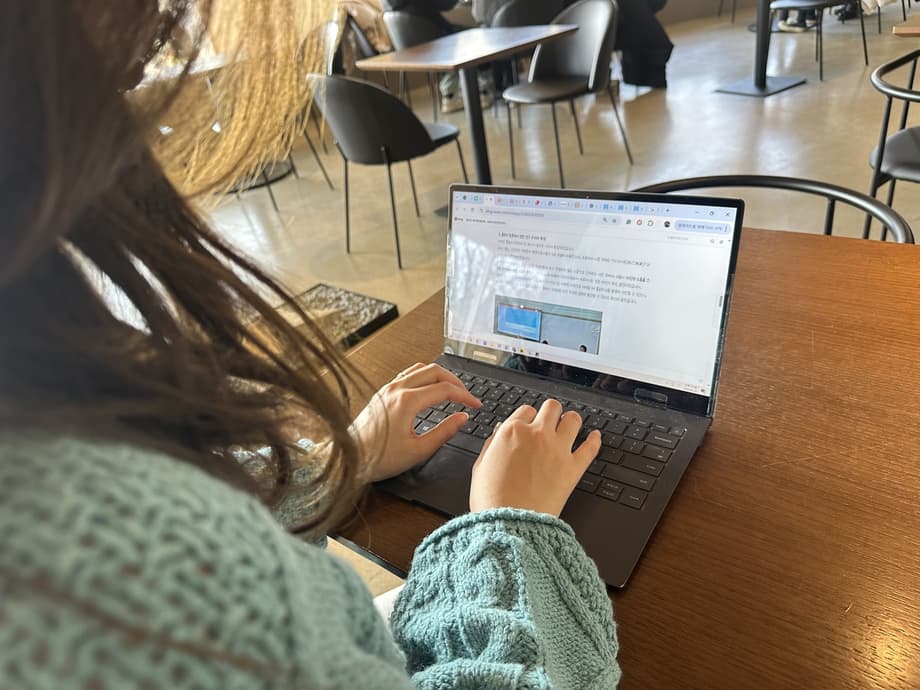
The Rise of N-Jobbers: How Young Koreans Are Revolutionizing Work
When 30-year-old Kim wraps up her full-time marketing job at 6 p.m., her day is only half finished. Three evenings a week, often including weekends, she rushes across Seoul to tutor middle and high school students in English. “I’ve been tutoring for seven years,” she said. “With the 3 million won ($2,074) I earn from my main job, I feel like I’ll never be able to buy a house or start a family. Working one job just doesn’t seem enough for the future anymore.”
- The Rise of N-Jobbers: How Young Koreans Are Revolutionizing Work
- A Nation of Multiple Incomes
- Survival Strategies in a Cost-of-Living Crisis
- Fading Faith in Traditional Career Paths
- Beyond Money: Seeking Fulfillment and Control
- The Cost of Multiple Jobholding
- Global Context and Employer Acceptance
- North Korean Contrast: State Control vs. Market Freedom
- The Future of Work in Korea
- The Bottom Line
For 32-year-old Lee, a salesperson at a major conglomerate, nights are spent on his laptop, uploading and registering Korean beauty products on Amazon. The work is tedious and the platform’s standards demanding, often leaving him stressed. Still, he says he has little choice. “After rent, groceries and the occasional meal out, there’s barely anything left to save,” he said. “This isn’t about ambition. It’s a necessity.”
Kim and Lee are far from outliers. Side jobs, once associated with freelancers or those between jobs, have quietly become a defining feature of young adulthood in South Korea. Financial motivations, lack of trust in the traditional office structure, and even the desire to reinvent themselves or fulfill one’s personal dream are propelling the growing trend of “N-jobbers” — referring to those holding down more than one job.
Nearly half of Korean workers now report having a side hustle, according to a recent survey by job portal Incruit, with participation highest among those in their 20s (55.2 percent) and 30s (57 percent). This phenomenon extends beyond personal anecdotes into concrete data points that reveal the depth of this economic shift.
Data backs the growing reliance on additional income. According to microdata from the Ministry of Data and Statistics, the number of workers with secondary employment, including both regular and temporary employees, reached 404,409 as of October 2025. A survey of 728 adults conducted in December by short-term job search platform NewWorker also showed that 49.5 percent of respondents were engaged in some form of side work, nearly matching the 50.5 percent who said they were not.
Among full-time office workers specifically, 48.4 percent reported having additional work beyond their main job. Experts say the numbers likely underestimate the real scale, as many workers are hesitant to disclose secondary income sources to employers for fear of repercussions.
A Nation of Multiple Incomes
As the number of young Koreans taking on side jobs increases, so has the diversity in the side job market. Opportunities are tailored to digital skills or personal interests and are available online and offline. Side jobs range from one-off paid appearances as wedding guests and private academic coaching to smartphone-based earnings, where an individual can earn a small amount of money by watching advertisements, browsing and physically walking.
With the widespread use of artificial intelligence, many are also seeking YouTube content production, blogging or running online stores to secure supplemental income. “This diversification has been accelerated by social media, which functions as both a marketplace and a learning platform. Workers share tips on app-based earnings, digital sales strategies or content-creation know-how, encouraging more people to try low-barrier forms of additional income,” said a 34-year-old Lee Ji-won, who is earning an extra 1 million won by posting blogs.
On platforms such as Instagram, posts promising strategies to monetize content are ubiquitous. Those who succeed often publish books or build personal brands, becoming minor celebrities within niche communities. The most popular types of work include social media content creation, such as blogging or YouTube (20.2%), with average earnings of about 620,000 won per month, according to one Flea Market survey.
Survival Strategies in a Cost-of-Living Crisis
So what’s behind the surge? Experts point to a disconnect between official inflation and lived reality. While consumer prices rose 2.1 percent last year — the lowest in five years — workers say daily expenses feel far higher.
“The pace of wage growth is not keeping up with the rise in living costs,” said Kim Sung-hee, director of the Institute for Industrial and Labor Policy. “So more workers are adopting the ‘main job plus side job’ model as their default,” he added, predicting that the practice could lead to a long-term transformation in the labor landscape.
Kim’s explanation is supported by KB Financial Group research showing that 54.8 percent of 2,000 salaried workers were engaged in side jobs — up 12.8 percentage points from the same survey in 2022. The most common reasons included saving for emergencies (38.7 percent), using spare time (18.7 percent) and covering living expenses (13.2 percent).
The pressure is particularly acute in Seoul, where consumer prices are high and housing costs are skyrocketing. The average price of an apartment unit in July was 1.46 billion won, according to Real Estate 114. The average Seoul worker’s annual salary is around 48 million won. In a simple calculation, even saving an entire salary for 30 years would barely be enough to buy a home.
Like Kim and Lee mentioned earlier, many salaried workers find it hard to survive in Seoul’s expensive environment. This financial reality has made side hustles less of a choice and more of a necessity for those seeking to maintain a basic standard of living.
Fading Faith in Traditional Career Paths
Beyond financial pressure, experts say the rise of N-jobbers reflects a shift in how young Koreans view work itself. High housing prices, stagnant wages and job insecurity have eroded confidence in the traditional promise that loyalty and long hours will be rewarded with stability.
According to a survey by local think tank 20s Lab on 850 office workers in their 20s and 30s, 36.7 percent of respondents said they do not wish to be promoted to a managerial position. Many cited the stress, workload and performance pressure associated with a promotion as reasons for their reluctance.
The apparent lack of desire for more authority at work was found in a 2023 survey of young workers by job-search platform Job Korea. Of the respondents, 54.8 percent said they do not want to be promoted to an executive position.
“Unlike past generations, young workers now know they can earn income outside the office through social media or e-commerce,” said Kim. “Taking on more responsibility at work is no longer seen as the best or only way to build a stable future.”
This trend extends beyond Korea. Gen Z globally is leading the charge in multiple jobholding, with a February 2023 global survey of 10,000 workers by Kantar showing that 40% of Gen Z workers are combining at least two roles. This reflects a fundamental shift in how younger generations approach work and career development.
Beyond Money: Seeking Fulfillment and Control
For some, the motivation behind side jobs goes beyond financial survival. A growing group of N-jobbers sees multiple jobs as a pathway to self-improvement, personal branding or long-term dreams.
“I realised the company isn’t everything and I needed to invest in myself,” said a 27-year-old professional in Seoul who runs a YouTube channel of some 27,000 subscribers. “My main job alone isn’t enough to prepare for the future. Through my side work, I’m building financial stability and gaining new experiences.”
Kim Sol-nim, 33, writes blogs for hospitals and law firms after returning home from her main job at around 6 p.m. She spends one to four hours daily on side work, earning between 600,000 won and 800,000 won ($430-$575) per month as extra income. “The biggest reason for having side jobs is money,” she told The Korea Herald. “My salary from my main job is not insufficient for my living expenses, but it’s nowhere near enough to buy a house in Seoul.”
Others see side hustles as a way to safely transition from an unsatisfying main occupation to another job they truly enjoy. A 37-year-old engineer at one of Korea’s top conglomerates — who writes under the pseudonym Amtun on the blogging platform Brunch — has tried several side hustles over the years. “I worked really hard, but one day I had a reality check,” she said. “I was running fast in the corporate race, but I was hit by a sense of emptiness.”
She bought an 80 million-won fixer-upper in Gangwon Province and converted it into an Airbnb, earning about 7 to 8 million won a year from it. “This was something I truly enjoyed and found meaningful, so I didn’t feel as tired,” she said.
The Cost of Multiple Jobholding
But the rise of second and third jobs comes at a cost. Young N-jobbers now work an average of 58.7 hours per week, with some clocking nearly 97 hours, according to a report by the Korea Institute of Labor Safety and Health. This represents a significant increase from typical work schedules and raises concerns about health and well-being.
Experts warn this could worsen South Korea’s already chronic burnout problem, deteriorate health and weaken family and social bonds. The long-term consequences of working nearly 100 hours per week include physical exhaustion, increased risk of cardiovascular disease, mental health issues, and strained relationships.
“Trying to maximize income through multiple jobs reflects anxiety about falling behind in a society where economic power is paramount,” said sociology professor Heo Chang-deok of Yeungnam University. “Yet long working hours are reducing productivity and straining relationships. We need to examine whether workers’ wages adequately reflect the value of their labor.”
The Korea Labour Institute underscored the correlation between low-paying jobs and side job engagements. Its analysis revealed that individuals with side jobs earn an average of 13,000 won (US$9.42) per hour, compared to 16,000 won (US$11.59) for those solely reliant on primary employment, highlighting the economic pressures driving this trend.
Global Context and Employer Acceptance
The phenomenon isn’t unique to Korea. Research by Visa shows that 45% of Gen Z now have a side hustle, with over a third (37%) of these having more than one. E-commerce (34%), social media influencers (25%) and passion-based projects (19%) are the top three types of side hustle businesses being run by Gen Z, according to Visa.
Almost seven in ten (69%) of Gen Z side hustlers set up their business with the primary objective of earning extra income, with average earnings from a side hustle being £218.60 per month. However, Visa also finds that over a quarter (27%) began their venture to explore a passion and a similar number (26%) did so to develop their skills further.
Importantly, many employers are becoming more accepting of employee side hustles. “Before the pandemic, workers were less open and willing to talk about anything that could potentially divert energy away from their full-time job, even childcare,” explains Meredith Meyer Grelli, assistant teaching professor of entrepreneurship at Carnegie Mellon University’s Tepper School of Business. “But now, businesses are more empathetic and receptive to the deeper needs and wants of their workers – and that includes passion projects.”
North Korean Contrast: State Control vs. Market Freedom
The situation in neighboring North Korea provides a stark contrast. In the socialist state, the Socialist Patriotic Youth League (SPYL) recently demanded that young people engaged in “aekbeori” work report to assigned workplaces, threatening collective work brigade assignments.
Aekbeori is similar to so-called 8.3 work — people pay a fixed amount of money to their official workplaces so that they can engage in private economic activity, attending their official workplaces only on paper. Many people engage in this sort of work in North Korea, where official workplaces often fail to pay salaries or provide rations.
Young people have fiercely resisted the order, saying assigned workplaces are “a reality only on paper.” “They don’t pay us our wages, so showing up for work will make no difference,” they say. “We have to carry goods for our own businesses to make money.”
Young women even say that “it would be better simply to get married and do business because the SPYL has become too restrictive nowadays.” They see this as a better option because if they quit their assigned workplaces after marriage, they can officially do business in the market without pressure to attend work.
This resistance highlights the fundamental difference between the two Koreas — where young South Koreans have market freedoms to pursue multiple income sources, while North Koreans face state repression of such activities that provide economic independence.
The Future of Work in Korea
As South Korea grapples with an ageing population and slowing growth, the rise of N-jobbers poses difficult questions — not just about work, but about whether a single full-time job can still deliver the security it once promised.
Lee Byung-hoon, honorary professor of sociology at Chung-Ang University, said the phenomenon stems from both financial and cultural factors. “First, people take on side jobs because they are dissatisfied with the income or meaning they get from their main job and want to prepare for something new,” he said. “Second, people no longer see their main jobs as lifelong careers. They’re mentally prepared to leave when the time feels right.”
Lee also pointed to deeper societal roots. “Korea’s education system doesn’t help people figure out what they enjoy. So many only start asking those questions after they’ve entered the workforce,” he said.
The trend is expected to accelerate as technological changes, including the rise of artificial intelligence, continue to reshape employment landscapes. “Unlike in the 20th century, jobs today are less secure and are disrupted by advances like AI,” said Lee. “More people will likely move around based on job opportunities instead of staying with one company for life.”
The Bottom Line
The rise of the N-jobber represents more than just an economic trend; it reflects a generational shift in how young Koreans approach work, life, and financial security. While many are driven by necessity in a high-cost economy, others are seeking fulfillment and building careers outside traditional paths.
As this trend continues, it may force both companies and policymakers to reconsider how work is structured, compensated, and valued in society. The balance between economic survival and quality of life will remain a central challenge for Korea’s workforce of the future.
- Nearly half (48.4-55.2%) of Korean workers in their 20s and 30s now have side hustles
- Average N-jobbers work 58.7 hours per week, with some working up to 97 hours
- Main motivations include financial necessity (82.5%), career change (38.7%), and using spare time (18.7%)
- Popular side jobs include social media content creation (20.2%), e-commerce, and tutoring
- Young workers increasingly reject traditional career ladders, with 36.7% avoiding management positions
- The trend reflects both economic pressures and generational shifts in work attitudes