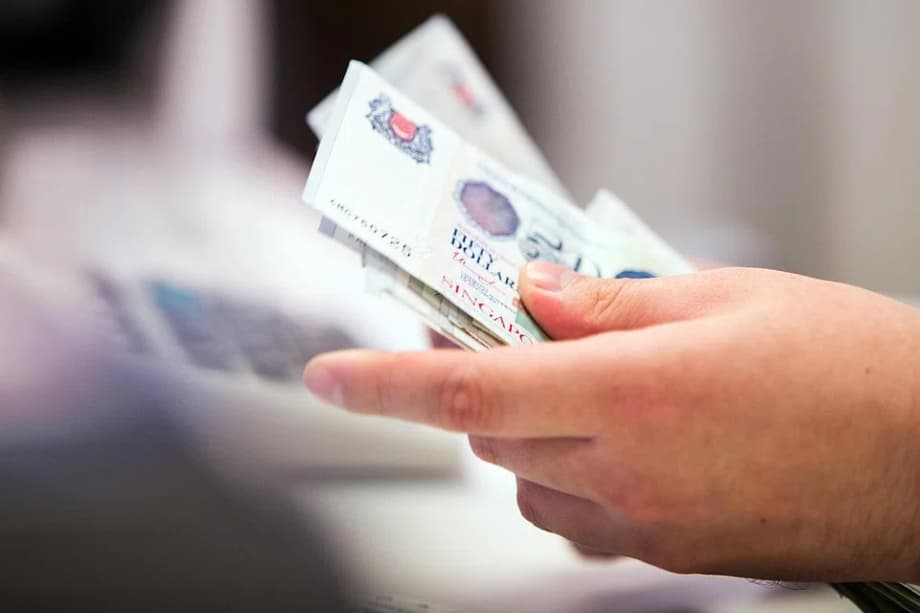
Historic Strength: Singapore Dollar Reaches Highest Level Since 2014
The Singapore dollar has climbed to its strongest level in over 11 years against the US currency, with the exchange rate hitting approximately 1.2678 USD/SGD on Monday, January 26, 2026. This marks a significant milestone for the regional currency, which hasn’t reached such heights since October 2014. The Singdollar’s remarkable surge comes amid a period of heightened global currency volatility, driven by speculation about potential US involvement in Japanese foreign exchange intervention and broader safe-haven flows into Singapore’s financial markets.
- Historic Strength: Singapore Dollar Reaches Highest Level Since 2014
- Global Currency Pressures Drive Singdollar Strength
- Monetary Authority of Singapore Policy Expectations
- Regional Currency Movements Mirror Singdollar’s Surge
- Singapore’s Safe-Haven Appeal Drives Investment Inflows
- Technical Analysis and Market Forecasts
- Key Points
During Monday trading, the USD/SGD pair slumped to as low as 1.2679 at around 10:40 am Singapore time, before recovering slightly to 1.2685 by 1:13 pm. This movement represents a 0.4% gain for the Singdollar against its US counterpart, reflecting growing investor confidence in Singapore’s economic stability and currency management.
Global Currency Pressures Drive Singdollar Strength
The Singdollar’s recent strength can be largely attributed to mounting pressure on the US dollar across global markets. A gauge tracking the US dollar against a basket of major currencies has fallen 0.4% to its lowest level since September, extending last week’s 1.6% decline. This broad-based weakness in the greenback has created favorable conditions for the Singdollar and other regional currencies to appreciate.
The balance of risks may point toward dollar vulnerability and heightened two-way volatility in USD/JPY as markets navigate intervention uncertainty and evolving policy expectations around BoJ policy stance and Japan Prime Minister Takaichi’s fiscal policy.
As mentioned by Lloyd Chan, a foreign exchange strategist at MUFG, the Singapore dollar may strengthen “toward the 1.2600 level in the near term” with further downside in the pair contingent on a sustained breakdown in the US dollar.
The primary catalyst for this global currency shift has been speculation about potential coordination between US and Japanese authorities to intervene in currency markets. Following a rate check on January 23 by the Federal Reserve Bank of New York, traders have interpreted these actions as preparation for potential US assistance in Japanese efforts to weaken the greenback versus the yen. The Japanese currency subsequently surged as much as 1.2% against the US dollar, marking its strongest performance in months.
Monetary Authority of Singapore Policy Expectations
One key factor supporting the Singdollar’s strength has been market expectations that the Monetary Authority of Singapore (MAS) will maintain its current monetary policy stance at its upcoming policy review on Thursday, January 29. Unlike many central banks that primarily use interest rates for monetary control, MAS manages Singapore’s currency through its nominal effective exchange rate (S$NEER), which it allows to move within a policy band.
Analysts from Maybank noted that MAS is in a “comfortable position to maintain its current appreciation policy,” citing steady core inflation as a reason for unchanged policy settings. They expect the central bank to maintain its current policy stance of slight (0.5 per cent per annum) appreciation, which continues to support the Singdollar.
Lloyd Chan from MUFG reinforced this view, stating: “MAS will likely keep its current S$NEER policy setting at the January meeting.” This stability in monetary policy provides a predictable environment that enhances the Singdollar’s appeal to investors seeking reliable returns amid global economic uncertainty.
Maybank analysts pointed out that with the Singdollar’s rally, the Singapore dollar nominal effective exchange rate is trading at about 1.89 per cent above the implied mid-point of the policy band, placing the currency near the top of its estimated trading range. They warned that “further sharp moves to the topside would raise the risk of intervention” by the central bank.
Regional Currency Movements Mirror Singdollar’s Surge
The Singdollar’s strength is not occurring in isolation but as part of a broader trend across Asian currencies. The Malaysian ringgit has advanced to its strongest level since June 2018, while the South Korean won has climbed to its highest level in about three weeks. This synchronized appreciation reflects common factors affecting regional currencies, including speculation about coordinated intervention and shifting global investment flows.
According to sources monitoring the situation, Asian currencies have strengthened significantly as the dollar dropped and markets speculated that the US may join Japan in coordinated foreign exchange intervention. This has simultaneously boosted the yen, Singdollar, ringgit, and won, creating a regional currency rally that extends beyond Singapore’s borders.
The Bloomberg Dollar Index fell 0.4% on Monday, extending last week’s decline of more than 1.6%. This weakness has prompted funds to rotate out of dollar-denominated assets and into Asian currencies, creating a self-reinforcing cycle of regional currency strength.
Channel News Asia reported that several other Asian currencies also strengthened, with the Korean won climbing 1.3% and the Malaysian ringgit advancing to its strongest level since 2018. This broader regional strength has contributed to increased investor interest in Singaporean assets as part of a broader Asian investment rotation.
Singapore’s Safe-Haven Appeal Drives Investment Inflows
Beyond immediate currency movements, Singapore’s status as a safe-haven destination has been a fundamental driver of the Singdollar’s appreciation. Investors have increasingly been attracted to Singapore in recent years for its dividend-heavy stock market, AAA-rated bonds, and relatively predictable government policy. This combination of factors has made Singapore particularly appealing during periods of global economic uncertainty.
The benchmark Straits Times Index is trading at record highs, reflecting strong investor confidence in Singapore’s equities market. This performance, combined with the stable political environment and sound economic fundamentals, has attracted significant foreign capital inflows that naturally support demand for the Singdollar.
Mark Matthews, head of research for Asia at Julius Baer, a Swiss private bank, emphasized Singapore’s status as a “safe harbour” amid a volatile and rapidly shifting macroeconomic environment. He forecasts that the Singapore dollar will appreciate further this year, projecting corporate earnings to grow around 8 percent. With dividend yields for the Straits Times Index around 5 percent, Matthews suggests this combination could provide “an excessive 10 percent return in dollars” for investors.
DBS analysts noted that in contrast to the fiscal uncertainties plaguing other developed markets, Singapore Government Securities have outperformed global peers, attracting “flight-to-quality” inflows from investors wary of the fiscal risks in the US and Europe. This steady demand for Singaporean debt instruments continues to reinforce the Singdollar’s strength.
While artificial intelligence is likely to remain a key performance driver, global policy divergence creates broader opportunities, encouraging diversification both geographically and in terms of sectors.
Bhaskar Laxminarayan, chief investment officer for Asia and the Middle East at Julius Baer, observed that amid geopolitical uncertainty, investors are turning to safe-haven currencies and precious metals. He specifically mentioned that the Swiss franc and Singapore dollar are among safe-haven alternatives to the greenback, noting: “It’s those smaller, non-Group of Seven developed currencies or emerging-market currencies, where there’s a sense of things becoming better, where the central banks themselves increase their allocations the most.”
Technical Analysis and Market Forecasts
Technical analysts suggest that the Singdollar’s strength may continue in the near term, though with potential limitations on further appreciation. DBS sees the currency pair hitting a technical floor, with their model estimating that as the trade-weighted Singdollar is just 0.25 percent away from hitting the policy band’s ceiling, the USD/SGD slide is likely limited to 1.2675.
UOB analysts offered a more bullish technical outlook, noting that “impulsive downward momentum suggests further USD weakness, but deeply oversold conditions suggest any decline could be limited to a test of 1.2675.” They project that the price action continues to suggest that USD remains weak, with the next level to watch at 1.2650.
The current strength of the Singdollar also reflects broader trends in the foreign exchange market, with many analysts pointing to what they describe as a structural shift away from dollar dominance. Julius Baer’s 2026 outlook report suggested: “The US dollar may weaken as slower growth and lower rates reduce the appeal of US assets, with strong outflows from trade deficits and high external indebtedness likely driving the currency lower.”
This structural weakening of the dollar, combined with Singapore’s fundamentally strong position in the global economy, suggests that the Singdollar may maintain its strength even if some of the immediate speculative factors subside. However, analysts caution that further sharp appreciation could trigger intervention by the MAS to prevent the currency from moving outside its policy band.
Key Points
- The Singapore dollar reached its highest level against the US dollar since October 2014, hitting approximately 1.2678 USD/SGD on January 26, 2026
- The Singdollar’s strength is driven by safe-haven flows and speculation about potential US involvement in Japanese foreign-exchange intervention
- The Monetary Authority of Singapore (MAS) is expected to maintain its current exchange-rate settings at its January 29 meeting
- Other Asian currencies including the Malaysian ringgit and South Korean won have also strengthened against the US dollar
- Singapore’s appeal as a safe-haven destination, with its AAA-rated bonds, dividend-heavy stock market, and stable government policy, continues to attract international investors
- The Straits Times Index is trading at record highs, supporting demand for the Singdollar
- Technical analysts suggest further USD weakness could push the Singdollar toward 1.2600, though MAS intervention may limit further appreciation
- The Singdollar has gained about 6% against the US currency over the last 12 months