The New Job That Became a Nightmare
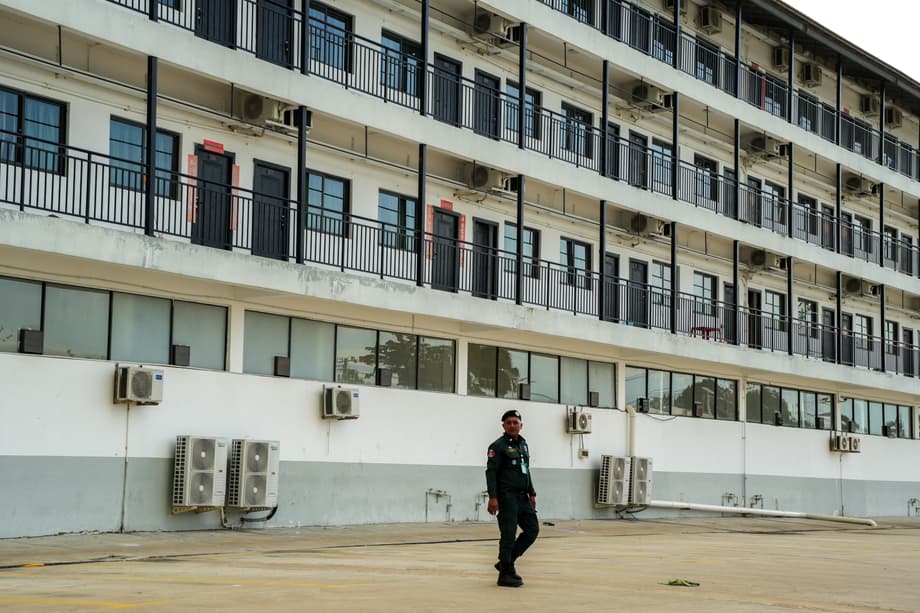
Dex didn’t see himself as a scammer. For the first two months at his new job in Cambodia, he followed orders. Each day, he sat before his screen, firing off scripted messages, moving from one far-away stranger to the next. Seated around him, row after row, were fellow South Koreans doing the same. With his phone and passport confiscated and guards patrolling the fenced compound, escape seemed impossible. And besides, he needed the money.
- The New Job That Became a Nightmare
- The Scale of the Global Scam Industry
- The Mechanics of ‘Pig Butchering’ Scams
- The Human Cost: Victims and Survivors
- The Brutal Reality of Scam Compounds
- Government Response and International Cooperation
- The International Crackdown
- From Scammer to Collaborator
- Following the Money and Seeking Justice
- Key Points
When he had first headed to Cambodia, he thought it was “just a shady messaging job for a stock investment group. I didn’t realize it was an actual fraud,” Dex told CNN. “When I arrived, they said there are two types of scams, romance and stock investment – and they run both.”
Dex, whose name has been changed to protect his identity, had joined the hundreds of South Koreans drawn into sprawling scam networks run by Chinese crime syndicates operating across porous border regions in Southeast Asia. Many, like him, were lured by fake job postings promising quick riches – only to end up trapped and forced to run scams in their native language.
Through them, the scam operations siphoned tens of millions of dollars from South Koreans last year, wiping out savings and ruining lives – just one branch of a multibillion-dollar global scam network that has scalped victims and bedeviled law enforcement around the world in recent years. Now, having escaped, Dex has joined forces with some of the victims of his very compound, to build a case for the prosecution of the ringleaders of the Korean-language scam operation.
The Scale of the Global Scam Industry
The remote and often anarchic border regions of Southeast Asian nations including Cambodia, Laos and Myanmar have become hotbeds of this kind of 21st-century swindle – and business is booming, with multiple compounds opening and relocating as needed.
Southeast Asian scam networks siphoned at least $10 billion from Americans in 2024 alone, according to the US Treasury Department. In 2023, South Koreans lost about $148 million to the operations, the United Nations Office on Drugs and Crime reported. By October 2025, the scale had become even more alarming, with South Korea estimating that around 1,000 of its citizens were working in scam compounds in Cambodia.
“Koreans are highly valued because they work efficiently and hit targets quickly,” Ok Hae-shil, a Christian missionary who has spent 14 years in Cambodia and helped captives return home, told CNN.
South Korean officials believe there are approximately 200,000 workers of various nationalities in these compounds across Southeast Asia, with about 1,000 from South Korea. This staggering workforce contributes to a global crisis that has victimized millions worldwide.
According to The Diplomat, the National Intelligence Service believes there are some 50 scam compounds scattered across Cambodia, with estimates suggesting this number could be as high as 400. The industry has exploded in recent years, particularly after Chinese crackdowns in Myanmar and Laos displaced operations to Cambodia in late 2023 and 2024.
The Mechanics of ‘Pig Butchering’ Scams
Dex was instructed to pose as a woman, chat over messaging apps with male targets, and steer them toward fake stock-trading platforms. This method is known as “pig butchering” – gradually gaining an investor’s trust before stealing their money.
In their first two months on the job, chatters like Dex typically engaged with about 100 people, strictly following scripts to gauge the size of potential victims’ savings. By the third month, the most promising targets – fewer than two dozen – were lured onto the organization’s fake trading platform. Each transfer from a victim was announced with the strike of a massive gong, Dex said. One hit meant roughly $6,900 earned.
Ideal targets were “men in their 50s,” he said. “They generally have accumulated assets, and rarely get the chance to talk to women in their 30s.”
The sophistication of these operations extends beyond messaging. A deep-faked “investment expert,” operated by one of the alleged ringleaders, hosted daily YouTube live sessions with artificially inflated view counts. Team leaders, posing as exchange staff, directed victims to deposit funds into mule accounts whose bank numbers changed constantly, creating a trail that investigators struggle to follow.
The Human Cost: Victims and Survivors
In May 2024, shortly after his 50th birthday, Hoon received a Facebook message from a woman who introduced herself as a 38-year-old beauty shop owner in Seoul. Her profile photo showed a heart-shaped face, dark hair tucked behind one ear.
Hoon – whose name has been changed to protect his identity – told the woman he felt unworthy of her attention, calling himself plain and inexperienced when it came to women like her. When she reassured him, he leaned in further, calling her “far too beautiful for someone like me,” and asking why she would choose to talk to a man with “nothing to offer.”
She answered with affection, calling him her “boyfriend,” and mapping out a future of marriage, a home together and visits to parents. When he floated doubts raised by friends, she urged him to ignore them, insisting their happiness should stay “between the two of us.”
Within weeks, they were sending good-morning and good-night texts. Their chats filled the quiet spaces of his days. He told her about his security job far outside the South Korean capital. She gently teased him for being shy. Then came the invite.
She said she’d been watching live YouTube lectures led by an instructor and sent him screenshots of what she claimed were profits from foreign-exchange trades – hundreds of thousands one day, millions the next – and coaxed him to join, insisting the platform was safe. “There’s even a $300 bonus if you open an account,” she said.
Hoon hesitated. She assured him she had put in $100,000 of her savings and encouraged him to start small: $700 would do. Soon, she connected him with an “assistant,” who added him to a group chat where investors were guided through live sessions and foreign exchange trades.
Hoon wired about $6,800 to a bank account, the first in a series of transfers that would eventually drain $145,000 of his savings. When he realized he was being scammed, the beauty shop owner threatened him over a fake deposit she claimed to have made to his account, before disappearing.
About 3,500 kilometers away, somewhere in Phnom Penh, someone was almost certainly whacking a gong.
The Brutal Reality of Scam Compounds
More than 330 South Koreans went missing in Cambodia last year, and while most have been found, 79 remain unaccounted for, South Korea’s national security director Wi Sung-lac said. Some, Wi added, had knowingly traveled to Cambodia to take part in illicit operations, and even returned after being repatriated.
For some, falling into these networks starts with crippling debt. Park Ki-tae, a debt lawyer advising escapees facing bankruptcy, pointed to the despair among South Korea’s debt-burdened youth. His three recent clients – men in their mid-20s from a province outside Seoul – were drawn in by job ads or friends abroad, only to be “abducted” or “coerced” into online fraud.
“All three were already in debt,” Park told CNN, noting the troubles faced by many younger people domestically. “The desperation makes them vulnerable to these offers that seem too good to be true.”
Many scammers have reported being subject to horrific violence in Southeast Asia’s compounds. Dex said the Korean-run section had “almost no violence,” and he was never beaten. But supervisors warned that underperformers who fell into company debt were “sold” to Chinese groups, where beatings and electric shocks were used.
When he watched one such worker quietly disappear, he swore he would never end up like that. Park Chan-dae, a lawmaker who helped rescue 16 South Koreans from Cambodian scam sites in August and September, said some captives did report brutal treatment.
“They were beaten, faced sexual assault threats and were even subjected to medical exams related to possible organ trafficking,” he told CNN.
According to VnExpress, South Korean victims recount metal pipes and electric torture as standard punishments for disobedience or failure to meet quotas. One victim, a man in his 20s, recalled: “They forced me to wipe the bloodstains off the walls and floor. The smell of blood stayed on my hands for a week.”
Not every captive was so lucky. Last July, Park Min-ho told his family he was heading to a job fair, according to multiple local reports, which his university later confirmed to CNN. Weeks later, the 22-year-old’s body was found inside a car in Kampot province, about 90 miles southwest of Phnom Penh, the Cambodian government said in October. The building where he stayed was identified as a scam compound, with officials saying he died of “a heart attack caused by severe torture,” marked by bruises and injuries across his body.
Authorities have charged three Chinese men and two others in connection with his death. Two accomplices remain at large, according to the Cambodian government. His case became a catalyst for South Korea’s intensified response, forcing an uncomfortable reckoning at home.
Government Response and International Cooperation
By October 2025, South Korea had already repatriated more than 60 citizens detained in Cambodia and banned travel to areas notorious as scam zones. The South Korean Foreign Ministry issued a “code-black” travel ban to parts of Cambodia in the wake of the student’s death, including the Bokor Mountain area in Kampot Province, Bavet City, and Poipet City.
“South Korean nationals visiting or staying in those areas may be subject to penalties under the Passport Act and other relevant regulations,” the ministry said. “Citizens planning to travel to such areas are therefore strongly advised to cancel their trips.”
The scale of the response escalated dramatically in January 2026 when 73 South Korean suspects were repatriated from Cambodia aboard a chartered flight to face questioning at home. It was the largest-ever group return of South Korean criminal suspects, with public outrage over foreign scam compounds having intensified after the student’s death.
According to Yonhap News Agency, the suspects allegedly defrauded 869 South Koreans of about 48.6 billion won ($33 million). Investigators identified seven scam centers in Cambodia linked to the group, which includes a couple accused of extorting roughly 12 billion won from more than 100 victims in romance scams using deepfake technology.
Officials said the pair may have undergone plastic surgery to evade identification. “To evade South Korean authorities, the suspects altered their appearances through plastic surgery while in hiding,” the president’s spokesperson told reporters.
South Korea established a pan-governmental task force in October 2025 following a summit between President Lee Jae Myung and Cambodian Prime Minister Hun Manet. The task force coordinates efforts to combat transnational crime, with plans to intensify efforts to track hidden assets and recover criminal proceeds.
“Through the task force, the government will continue to respond firmly until overseas-based scam operations targeting the Korean people are completely eradicated,” presidential spokesperson Kang Yu-jung said.
The International Crackdown
South Korea is not the only nation trying to combat Cambodia’s scam industry. In February 2025, China led a crackdown on scam compounds in Myanmar and Cambodia. On Tuesday, the United States and Britain imposed sanctions on parts of a Cambodian conglomerate, Prince Group, which they said was running scam networks worldwide.
U.S. federal prosecutors indicted its chairman, Chen Zhi, and seized $15 billion in cryptocurrency that they said were proceeds from his fraud and money laundering schemes. The U.S. Department of Justice called it “the largest forfeiture action” in DOJ history.
The Treasury Department logged a 66% increase in the amount of money U.S. citizens and businesses lost to such scams last year, up to more than $10 billion. Most scam centers are operated out of Cambodia and Myanmar, mainly run by Chinese criminal organizations.
Chen Zhi, the chairman of Prince Group, had previously served as a senior adviser to both Hun Manet and former Prime Minister Hun Sen. Chen continues to deny any wrongdoing, but the U.S. government seized $15 billion worth of crypto assets allegedly linked to scamming profits.
The international response has highlighted the complex web of political and economic relationships that enable these operations to flourish. Cambodia’s extreme economic dependence on China has created political insulation, with China accounting for approximately 50 percent of Cambodia’s foreign direct investment, 44 percent of its external debt, and 49 percent of its imports.
From Scammer to Collaborator
While Hoon worked to recover what he had lost, Dex, now back in South Korea, was still receiving Telegram threats from the syndicate he had escaped. Then he saw a news report about the same trading platform his organization had used to defraud victims.
At the bottom of the story, someone left a comment with their contact details asking anyone with information to come forward. He hesitated, then called. The woman who answered was Clay, a victim who had lost more than $138,000 to the scheme. Her name has also been changed.
Clay, who had been tracking the case, urged Dex to speak with police. At first, he resisted, afraid he’d be treated as a criminal. But in the end, he turned over photos, spreadsheets and chat logs that helped police merge separate complaints into a larger investigation.
“When they started arresting members, the threats stopped,” Dex said.
Officers found more than a hundred linked complaints totaling about 12 billion South Korean won ($8.1 million) in losses. The decision brought months of questioning and sleepless nights but, eventually, progress.
Clay has since brought together a group of defrauded Koreans, including Hoon, who are now pressing authorities to act on what she calls a “global scam crisis.” The members include a mother of two who lost $1 million; a divorced man who lost more than $100,000; and a woman who lost a family member to suicide after they fell victim to a Cambodia-based scam.
Victims like Clay say they eventually realized their losses weren’t isolated mishaps but part of a larger operation. When they compared chat logs and voice recordings, they realized that the same Korean man – alleged ringleader Kang Da-wit – had been appearing under different names across multiple fake trading platforms, serving as the scam’s deepfake broadcast investment expert.
Dex helped verify accounts for Clay. Kang was arrested by Cambodian police in February 2025, and has been repatriated to South Korea, along with his wife. They were among more than 70 South Koreans detained in Cambodia and repatriated over alleged involvement in the network, a return the presidential office described as unprecedented in scale.
Following the Money and Seeking Justice
Victims say they are now pushing for the extradition of the remaining ringleaders – but accountability also means following the money. While investigators have not publicly identified the final destination of the funds, victims like Clay say they are pressing authorities to determine where the money ultimately went.
As The Diplomat reported, the scam industry generates an estimated $12-19 billion annually in Cambodia alone, with government officials profiting directly from the enterprises. This creates a fundamental conflict of interest that makes genuine enforcement nearly impossible without international pressure.
The pattern of victimization reveals what researchers call a “balloon effect” – enforcement in one location simply displaces operations to others. In 2023, when enforcement focused on the Golden Triangle, Laos was the primary hub with 56 South Korean victims. As pressure mounted there, operations shifted to Cambodia, which saw 220 cases in 2024 – a more than tenfold increase from its 2023 baseline of 17 cases.
By 2025, while Cambodia still accounts for the majority of victimized South Koreans (386 cases through September), the balloon was inflating elsewhere: the Philippines recorded its first three victims in five years, Vietnam its first three, and Malaysia its first. Thailand surged from one case in 2023 to nine in 2025.
Perhaps most telling, South Korean police report active investigations in countries that previously had minimal or no exposure: Philippines (14 cases under investigation), China (nine), Thailand (seven), Vietnam (six), and Laos (three).
Today, Dex works long shifts at a car-seat factory. The fear has eased, but his parents still believe he was only traveling in Cambodia. He intends to keep it that way. Meanwhile, Clay and other victims continue their push for accountability, not just for those who committed the crimes, but for systems that allowed such operations to flourish for years with minimal intervention.
Key Points
- More than 330 South Koreans went missing in Cambodia in 2025, with 79 still unaccounted for, highlighting the scale of human trafficking in the region
- Dex, a former scammer who escaped, joined forces with victims to help prosecute ringleaders, demonstrating the complex relationships between perpetrators and victims
- The scam operations use sophisticated “pig butchering” techniques, building trust through romance and investment schemes before stealing victims’ life savings
- South Korean victims like Hoon lost up to $145,000 through these carefully orchestrated scams
- A 22-year-old South Korean student was found dead in Cambodia after being tortured, catalyzing a stronger governmental response
- The Cambodian scam industry involves approximately 200,000 workers across the region, with 1,000+ South Koreans caught in the operations
- South Korea has repatriated 73 scam suspects in its largest overseas transfer of criminal suspects, with the group accused of defrauding 869 victims of about $33 million
- International efforts, including U.S. sanctions against Chen Zhi and the seizure of $15 billion in crypto, represent the largest forfeiture action in DOJ history
- The scam operations exhibit a “balloon effect,” where enforcement in one location displaces operations to neighboring countries, requiring coordinated international response
- Victims are pushing for accountability not just of individual criminals, but of systems and governments that enabled these operations to flourish