A New Religious Symbol at a Contested Frontier
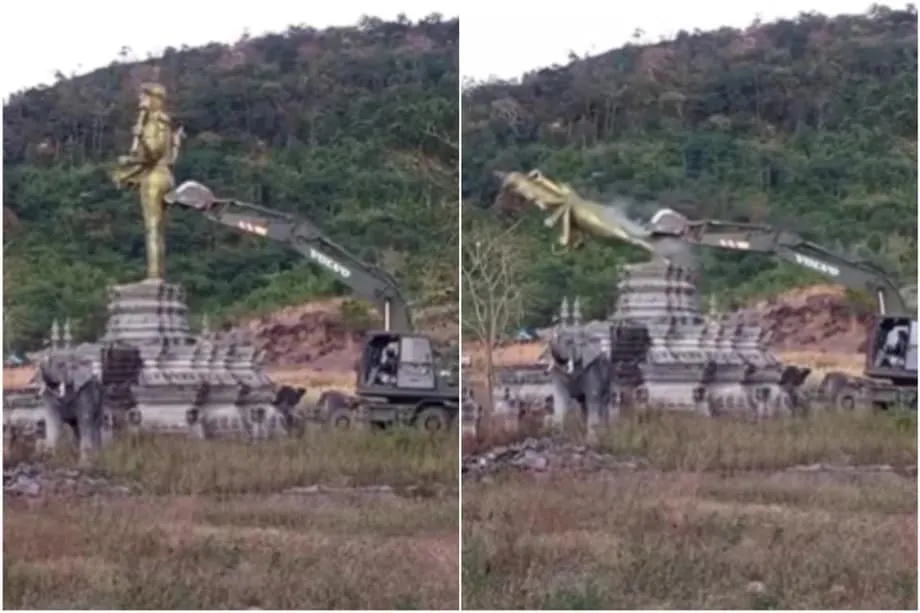
Thailand's army has confirmed that a Buddha statue was installed in January 2026 at the exact spot where Thai forces demolished a statue of the Hindu deity Lord Vishnu weeks earlier. The location, known as An Ma in Thailand and An Ses in Cambodia, is claimed by both countries. The replacement has renewed tensions after three weeks of fighting in December 2025 left dozens dead on both sides.
Contents
- A New Religious Symbol at a Contested Frontier
- How the Vishnu Statue Was Destroyed
- The Buddha Image and Its Installation
- Why Hindu and Buddhist Symbols Matter Here
- A Border Dispute Stretching Back to Colonial Treaties
- December Fighting and the Civilian Toll
- India and ASEAN Call for Restraint
- Trade and Border Livelihoods Under Pressure
- Ceasefire Talks Face Competing Accusations
- Ancient Temples and Shared Heritage
- Key Points
Cambodian officials say the installation violates the spirit of measures agreed upon to reduce tensions under the December ceasefire. Thailand's military rejects that accusation, describing the statue as an expression of religious freedom and a way to support the morale of Thai citizens living in the area.
The Thai army explained its position in a formal response:
This was carried out within the framework of religious freedom and belief, as well as to boost morale among Thai citizens in the area.
The Buddha statue was not intended to insult or undermine the beliefs of any party.
The disagreement centres on both the religious image and the ground beneath it. Thailand presents the installation as an activity within territory it considers its own. Cambodia regards the location as Cambodian territory and sees the change as inconsistent with efforts to calm the border.
As of January 26, 2026, the statue controversy has become another point of friction in a conflict that has displaced hundreds of thousands of people, disrupted trade and drawn concern beyond the two neighbouring countries. Both nations are predominantly Buddhist, yet religious symbols at the frontier have become closely tied to competing claims of national sovereignty.
How the Vishnu Statue Was Destroyed
Thai forces destroyed the Vishnu statue in December 2025. The image had stood near the border for several years and was built in 2014, according to Kim Chanpanha, a government spokesman in Cambodia's border province of Preah Vihear.
Kim condemned the demolition and said the statue stood on Cambodian land in the An Ses area:
We condemn the destruction of ancient temples and statues that are worshipped by Buddhist and Hindu followers. The statue was inside our territory in the An Ses area.
Thai authorities offered a different explanation. They said Cambodian forces had erected the statue on land belonging to Thailand. After Thai forces regained control of the area, the military presented its destruction as an assertion of Thai sovereignty, meaning Thailand's claimed authority over that territory.
Cambodian troops and villagers had regarded the Vishnu image as a guardian watching over the volatile frontier. Its importance therefore extended beyond the physical statue: it had become a spiritual anchor for people living and serving near the disputed border.
The opposing accounts place the same site within two different national claims. Cambodia's condemnation concerns the destruction of a religious image on land it considers Cambodian. Thailand's justification rests on its claim that the land is Thai and that the statue had been placed there by Cambodian forces.
The Buddha Image and Its Installation
Thailand installed the Buddha statue just days after the violence subsided and the ceasefire took effect. Thai military sources described the image as Buddha under the protection of Naga, a significant figure in Buddhist iconography, the use of images and symbols to express religious ideas.
Phra Dhamma Vajiarayankosol, a senior monk from Surin, oversaw the installation. He reportedly said the image was installed to "protect Thai territory." His words connected the ceremony directly to Thailand's territorial claim, alongside the army's explanation that it supported religious freedom and local morale.
Photographs from the installation ceremony showed the Buddha statue placed directly on the remains of the destroyed Vishnu statue. Many observers viewed that placement as a symbolic assertion of dominance rather than an act of religious devotion.
Cambodia's objection focuses on the setting and timing of the installation. A ceasefire had recently stopped deadly clashes, while ownership of the location remained disputed. The replacement of the religious image added a visible assertion of control at a moment when both sides were being urged to reduce tensions.
Thailand's army says the statue was not intended to insult anyone's beliefs. Cambodia's response shows that the dispute involves how an action is understood across the border, as well as how the country carrying it out explains its purpose.
Why Hindu and Buddhist Symbols Matter Here
Thailand and Cambodia are both predominantly Buddhist, but Hindu deities also have a place in religious traditions across the region. The Vishnu statue's importance to Cambodian troops and villagers reflects that shared religious history.
Professor David Chandler, an expert on Cambodian history, explained how the destruction and replacement of religious images can take on political meaning:
In Southeast Asia, Hindu deities like Vishnu have been incorporated into local Buddhist traditions for centuries. The deliberate destruction and replacement of these symbols transforms them from spiritual symbols into political statements.
Chandler's explanation helps account for why replacing a Hindu image with a Buddhist one can provoke anger even between two countries where Buddhism predominates. The dispute concerns a religious symbol associated with a particular community and location, alongside the national claim represented by the replacement.
The Vishnu statue had served as a guardian figure for Cambodian people near the frontier. The new Buddha image, installed under the supervision of a monk who spoke of protecting Thai territory, now carries a different association at the same site. Religious devotion and national authority have become closely connected in the competing explanations.
A Border Dispute Stretching Back to Colonial Treaties
The territorial conflict has roots in agreements between France and Siam, the former name of Thailand. The Franco-Siamese treaties of 1904 and 1907 established the 800-kilometre border along the watershed line of the Dangrek Mountains. A watershed line follows the divide between areas where water drains in different directions.
Ambiguities in the maps left persistent disagreements over the boundary. Those disagreements concern where one country's territory ends and the other's begins, making control of particular sites a recurring source of tension.
Major confrontations occurred in 2008 and 2011. Fighting in July 2025 killed 48 people in what was described as the deadliest conflict in recent years. Another round of violence followed in December, before the latest dispute over the replacement statue.
The main dates show how the religious controversy fits into a much longer territorial conflict:
- 1904 and 1907: France and Siam concluded treaties establishing the border along the Dangrek Mountains' watershed line.
- 2008 and 2011: Major confrontations broke out over the disputed frontier.
- 2014: The Vishnu statue was built, according to Cambodian provincial spokesman Kim Chanpanha.
- July 2025: Border fighting claimed 48 lives.
- December 2025: Three weeks of clashes left dozens dead, and Thai forces destroyed the Vishnu statue.
- January 2026: Thailand installed a Buddha statue at the same site after the fighting subsided and a ceasefire took effect.
Thailand and Cambodia continue to claim historical and legal rights to disputed territory. Temporary agreements to stop shooting address the immediate violence, while the underlying disagreements over colonial boundary demarcation remain unresolved.
December Fighting and the Civilian Toll
The December 2025 clashes were triggered by the death of a Thai soldier following a landmine explosion. Thailand then carried out airstrikes against Cambodian military positions. The fighting lasted three weeks and forced hundreds of thousands of civilians on both sides to seek safety away from the border.
Official figures put the December death toll at more than 40 and the number displaced at nearly one million. Families were separated as communities moved to safer areas, leaving border settlements struggling with the effects of both violence and evacuation.
A fragile ceasefire was brokered by US President Donald Trump and Malaysian Prime Minister Anwar Ibrahim. The installation of the Buddha statue followed the end of the fighting, making Cambodia's complaint about the spirit of the ceasefire central to the current controversy.
The human cost gives the dispute a significance far beyond the two statues. Border residents have faced displacement and family separation while the governments and armed forces continue to disagree about territory, military activity and the meaning of actions taken at contested sites.
India and ASEAN Call for Restraint
India expressed particular concern about the demolition of the Hindu deity statue. Its Ministry of External Affairs condemned the act as disrespectful and said it hurt religious sentiments.
The ministry connected the statue to religious traditions shared across the region and called for respect regardless of territorial claims:
We have seen reports on the demolition of a statue of a Hindu religious deity, built in recent times, and located in an area affected by the ongoing Thai-Cambodia border dispute. Hindu and Buddhist deities are deeply revered and worshipped by people across the region, as part of our shared civilizational heritage. Notwithstanding territorial claims, such disrespectful acts hurt the sentiments of followers around the world, and should not take place.
India urged Thailand and Cambodia to resolve their differences through dialogue and diplomacy, stressing that religious sites and symbols should not become collateral damage in territorial disputes. Its response extended the controversy beyond the immediate border communities to followers who regard the deity as sacred elsewhere in the world.
ASEAN, the regional association that includes both Thailand and Cambodia, has called for restraint and compliance with ceasefire agreements. Its ability to mediate has been limited by the deeply rooted territorial disagreement.
The conflict has also strained diplomatic relations and damaged both countries' international image. Religious leaders and human rights organisations around the world have criticised the use of religious sites and symbols in military operations.
Trade and Border Livelihoods Under Pressure
Trade between Thailand and Cambodia exceeded $10 billion in 2024, with Thailand serving as Cambodia's fourth largest trading partner. Border closures and fighting have disrupted that commerce and damaged local economies that depend on movement between the countries.
Thailand's Ubon Ratchathani province and Cambodian towns such as Poipet are among the places affected. Trade routes worth billions have been disrupted, border crossings remain partially closed, and thousands of migrant workers have been displaced.
Cambodia has begun seeking alternative trading partners as the conflict interrupts business with its neighbour. The economic effects reach beyond national trade figures to communities where commerce and employment depend on access to the frontier.
Families facing evacuation also confront interrupted livelihoods. The dispute combines physical insecurity with reduced access to work and trade, while partial border closures continue to affect local economies on both sides.
Ceasefire Talks Face Competing Accusations
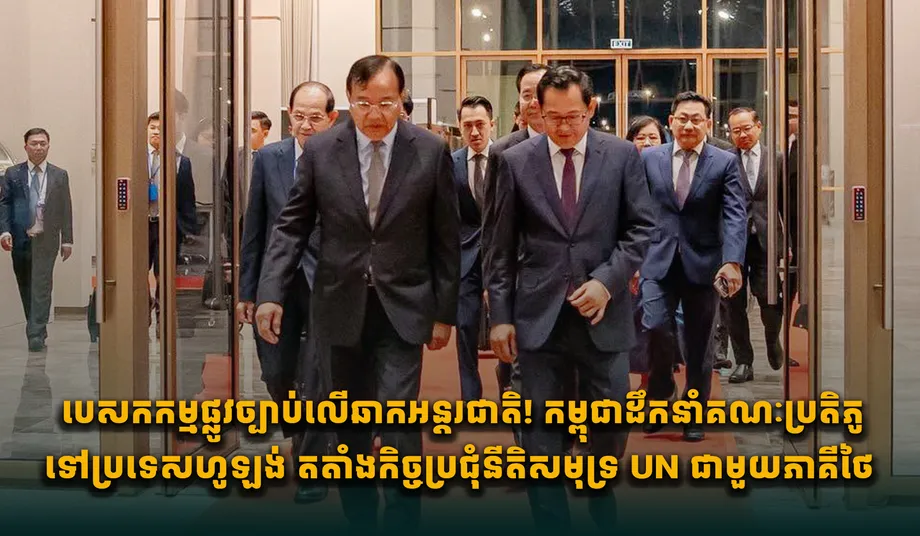
The secretariats of Thailand and Cambodia's General Border Committee, known as the GBC, are meeting in Thailand's Chanthaburi province to draft ceasefire terms. Their effort aims to revive the truce brokered by the United States in July 2025, but persistent disagreements complicate negotiations.
Cambodia initially sought a neutral venue such as Kuala Lumpur. Thailand rejected that proposal, citing security concerns, and insisted on Chanthaburi. The disagreement over where to meet reflects the distrust surrounding the talks themselves.
Thailand alleges that Cambodian forces have violated ceasefire agreements by deploying anti-personnel mines and using temples as military bases. Anti-personnel mines are explosive devices intended to target people. Cambodia, in turn, accuses Thailand of seizing additional border territory and conducting aggressive military operations.
The competing accusations leave negotiators dealing with both military conduct and territorial control. Cambodia's objection to the statue installation adds a dispute over whether a religious ceremony at a contested location is consistent with efforts to reduce tensions.
No date for a further agreement or a final territorial settlement was given. International mediation may be essential, although earlier efforts have had limited success. ASEAN's role remains unclear, and its policy of non-intervention has drawn criticism. China maintains close ties with both countries and could potentially support dialogue, though such involvement also brings concerns about influence over the process.
Ancient Temples and Shared Heritage
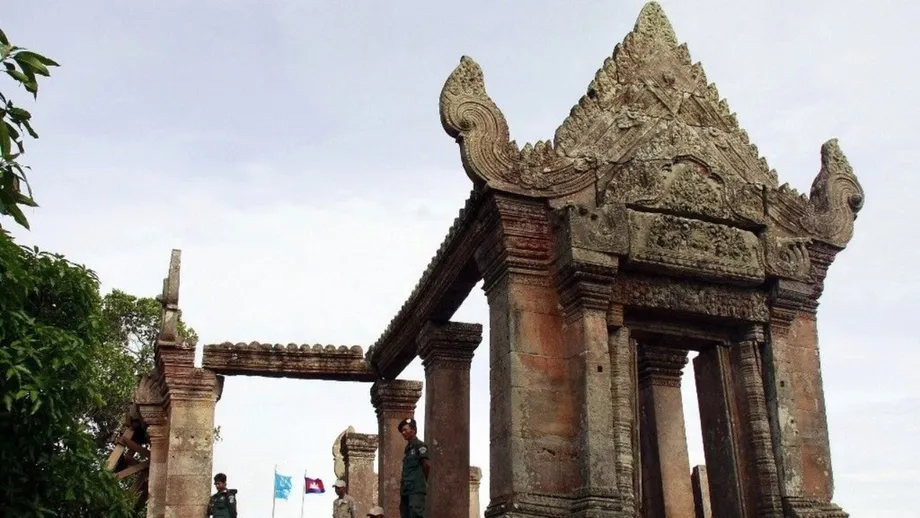
The border region contains ancient temple ruins and religious sites that form part of the cultural heritage shared by Thailand and Cambodia. Preah Vihear temple, a UNESCO World Heritage site awarded to Cambodia by the International Court of Justice in 1962, has been a particular flashpoint.
Historians and cultural preservation experts have expressed concern about damage to ancient sites during military operations. The Vishnu statue was relatively recent compared with those temples, but its destruction has added to concern about religious heritage being used as a pawn in territorial conflicts.
Dr. Helen Ibbitson Jesudason, a Southeast Asian art historian, described the significance of such sites beyond national ownership:
These temples and statues represent not just national heritage but shared civilization across Southeast Asia. When they become targets in territorial disputes, all of humanity loses a piece of its collective memory and spiritual inheritance.
The Buddha statue now stands at a location where religious identity, national sovereignty and territorial rights meet. Thailand describes its installation as an act of faith and support for local citizens. Cambodia sees an assertion at a disputed site that conflicts with the spirit of the ceasefire. Resolving those competing positions requires addressing the territorial disagreement that has repeatedly brought the neighbours into conflict.
Key Points
- Thailand installed a Buddha statue in January 2026 where Thai forces had destroyed a Vishnu statue in December 2025.
- Both countries claim the location, called An Ma in Thailand and An Ses in Cambodia.
- Cambodia says the installation violates the spirit of the December ceasefire; Thailand cites religious freedom and local morale.
- The December fighting killed more than 40 people and displaced nearly one million, according to official figures.
- India condemned the demolition, while ASEAN called for restraint and compliance with ceasefire agreements.
- Trade exceeded $10 billion in 2024, but fighting and partial border closures have disrupted commerce and livelihoods.
- Border committee talks in Chanthaburi face disagreements over territory, mines, military activity and negotiating arrangements.
- The wider territorial dispute has roots in the Franco-Siamese treaties of 1904 and 1907 and ambiguities in boundary maps.