A factory of fraud, and a former worker helping expose it
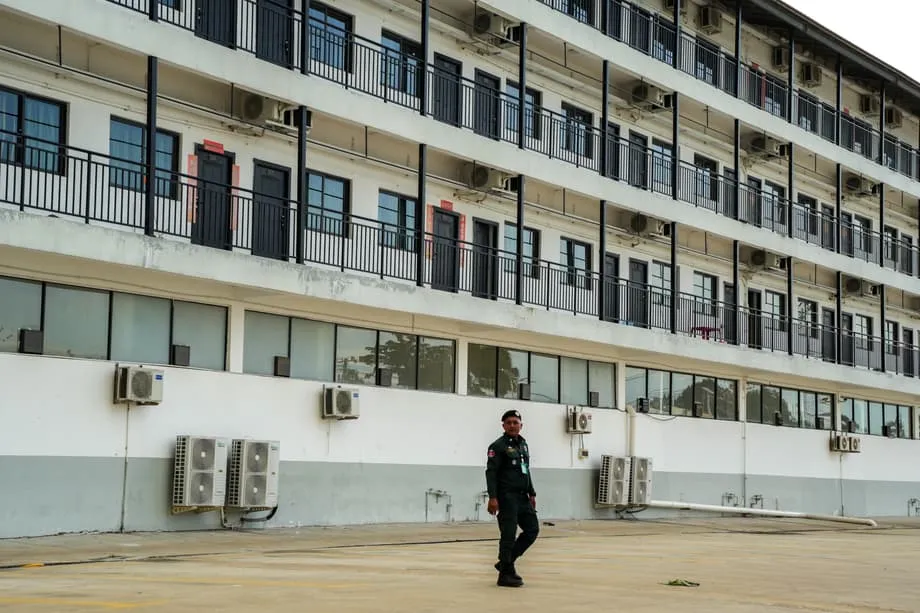
Seventy-three South Korean suspects returned from Cambodia on a chartered flight in January 2026 to face questioning over scams that allegedly took 48.6 billion won, about $33 million, from 869 South Koreans. Investigators linked the group to seven scam centers. It was South Korea's largest return of criminal suspects from abroad, following public outrage over the death of a student tortured in Cambodia.
Contents
- A factory of fraud, and a former worker helping expose it
- How large has the industry become?
- How a conversation becomes a financial trap
- Hoon's supposed romance cost him $145,000
- Debt, confinement and the threat of being sold
- The student's death that intensified the response
- Travel bans, a task force and 73 suspects returned
- International action reaches Prince Group
- Dex and Clay brought separate complaints together
- Why operations keep moving between countries
- Following the money remains central to justice
- Key Points
Behind those figures are people whose roles are harder to separate: victims who lost their savings, workers trapped inside guarded compounds, and recruits who knowingly joined illegal operations. Dex, a South Korean whose name has been changed for his protection, says he entered a job he initially misunderstood and eventually helped victims build a case against its leaders.
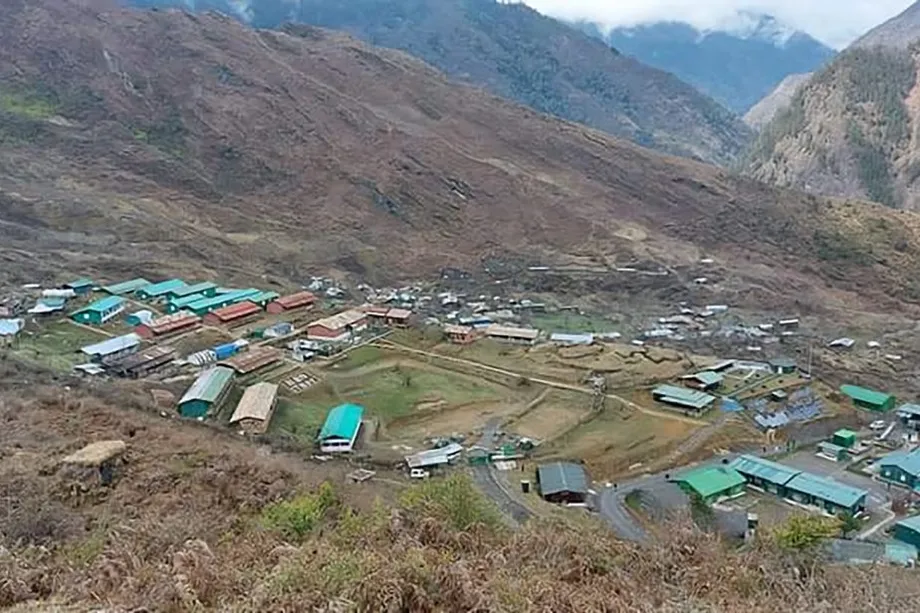
For his first two months in Cambodia, Dex sat among rows of South Koreans sending scripted messages to strangers. Guards patrolled the fenced compound. His passport and phone had been confiscated, escape seemed impossible, and he needed the money.
Dex described what he thought he had agreed to do, and what he learned on arrival:
just a shady messaging job for a stock investment group. I didn't realize it was an actual fraud,
When I arrived, they said there are two types of scams, romance and stock investment – and they run both.
Hundreds of South Koreans have been drawn into networks run by Chinese criminal syndicates across Southeast Asia, often through fake job advertisements promising quick riches. Once inside, many are forced to deceive people in their native language. Their work has taken tens of millions of dollars from South Koreans, emptying savings and damaging lives within a global business worth billions.
Dex eventually escaped. Back in South Korea, he joined people defrauded by his own compound, sharing evidence that helped police connect complaints previously handled separately.
How large has the industry become?
Cambodia, Laos and Myanmar have become centers of online fraud, particularly in remote border areas where authorities exercise limited control. Compounds open, relocate and continue operating as enforcement pressure changes.
The United States Treasury Department said Southeast Asian scam networks took at least $10 billion from Americans in 2024. Its figures recorded a 66% increase in losses suffered by American citizens and businesses that year, bringing the total to more than $10 billion. Most centers operate in Cambodia and Myanmar and are mainly run by Chinese criminal organizations.
The United Nations Office on Drugs and Crime reported that South Koreans lost about $148 million to these operations in 2023. By October 2025, South Korea estimated that around 1,000 of its citizens were working in Cambodian scam compounds. South Korean officials also estimated a workforce of approximately 200,000 people of various nationalities across Southeast Asia, serving operations that have victimized millions worldwide.
Ok Hae-shil, a Christian missionary who has spent 14 years in Cambodia and helped captives return home, explained why operators seek Korean recruits:
Koreans are highly valued because they work efficiently and hit targets quickly,
South Korea's National Intelligence Service believed roughly 50 scam compounds were scattered across Cambodia; other estimates put the number as high as 400. The Cambodian industry expanded particularly after Chinese crackdowns displaced operations from Myanmar and Laos in late 2023 and 2024.
Estimates put the industry's annual revenue in Cambodia alone at $12 billion to $19 billion. Accounts of government officials profiting directly from the businesses point to a conflict between closing the compounds and protecting income from them, making enforcement difficult without international pressure.
How a conversation becomes a financial trap
Dex's instructions were to pretend to be a woman, approach male targets through messaging apps and guide them toward fake stock trading platforms. The method is commonly called "pig butchering": a scammer patiently builds trust before persuading someone to transfer money that will be stolen.
During their first two months, workers like Dex typically contacted about 100 people. Scripts helped them assess potential victims' savings. By the third month, fewer than two dozen promising targets would be steered toward the organization's fake trading platform.
Dex said the preferred targets were "men in their 50s." He explained the reasoning used inside the operation:
They generally have accumulated assets, and rarely get the chance to talk to women in their 30s.
Each successful transfer was announced by striking a large gong. One strike represented roughly $6,900, Dex said. The celebration inside the compound marked money disappearing from somebody else's account.
An alleged ringleader also operated a deepfake "investment expert" who hosted daily YouTube live sessions. Deepfake technology creates an artificial appearance or identity, helping the broadcasts present a convincing instructor. Inflated viewing figures made the sessions seem more popular.
Team leaders posed as exchange employees and told victims where to deposit money. They used mule accounts, bank accounts used to receive and move criminal proceeds, and repeatedly changed account numbers. The shifting destinations made the money harder for investigators to trace.
Hoon's supposed romance cost him $145,000
Hoon, another South Korean whose name has been changed, received a Facebook message in May 2024, shortly after his 50th birthday. The sender presented herself as a beauty shop owner in Seoul aged 38. Her profile photograph showed a heart-shaped face, with dark hair tucked behind one ear.
Hoon told her he felt plain and inexperienced with women like her. He called her "far too beautiful for someone like me" and asked why she would choose a man with "nothing to offer." She reassured him, called him her "boyfriend" and discussed marriage, a shared home and visits to their parents.
When friends raised doubts, she told him to ignore them and keep their happiness "between the two of us." Within weeks, good morning and good night messages filled the quiet parts of his days. He talked about his security job far outside Seoul, and she gently teased him for being shy.
The supposed beauty shop owner then introduced investment lectures on YouTube. Screenshots showed what she claimed were foreign exchange profits, hundreds of thousands one day and millions the next. She assured Hoon that the platform was safe and offered this encouragement:
There's even a $300 bonus if you open an account,
She claimed to have invested $100,000 of her own savings and suggested he begin with $700. An "assistant" brought him into a group chat where participants received instructions during live sessions and foreign exchange trades.
Hoon's first transfer was about $6,800. Further payments eventually drained $145,000 of his savings. When he understood that he had been deceived, the woman threatened him over a supposed deposit she claimed to have made into his account, then disappeared. The compound operating from Phnom Penh was about 3,500 kilometers away from the life the messages had entered.
Debt, confinement and the threat of being sold
South Korean national security director Wi Sung-lac said more than 330 South Koreans went missing in Cambodia during 2025. Most had been found, but 79 remained unaccounted for. Wi also said some had knowingly traveled there to participate in illicit operations, and some returned after being repatriated.
Park Ki-tae, a debt lawyer advising escapees facing bankruptcy, described three recent clients: men in their mid-20s from a province outside Seoul. Job advertisements or friends abroad drew them in before they were "abducted" or "coerced" into online fraud.
Park linked their recruitment to financial desperation among younger South Koreans:
All three were already in debt,
The desperation makes them vulnerable to these offers that seem too good to be true.
Dex said his Korean section had "almost no violence," and he was never beaten. Supervisors nevertheless warned that workers who missed targets and fell into company debt could be "sold" to Chinese groups, where beatings and electric shocks were used. After watching one worker quietly disappear, Dex resolved never to suffer the same fate.
Park Chan-dae, a lawmaker who helped rescue 16 South Koreans from Cambodian scam sites in August and September 2025, described accounts from captives:
They were beaten, faced sexual assault threats and were even subjected to medical exams related to possible organ trafficking,
Other South Korean survivors described metal pipes and electric torture as punishments for disobedience or missed quotas. A man in his 20s recalled being ordered to clean after violence:
They forced me to wipe the bloodstains off the walls and floor. The smell of blood stayed on my hands for a week.
The student's death that intensified the response
Park Min-ho, a university student aged 22, told his family in July 2025 that he was going to a job fair. His university later confirmed that account. Weeks afterward, his body was found inside a car in Kampot province, about 90 miles southwest of Phnom Penh.
The Cambodian government described the case in October. Officials identified the building where Park had stayed as a scam compound and said he died of "a heart attack caused by severe torture." His body bore bruises and injuries.
Authorities charged three Chinese men and two others in connection with his death. The Cambodian government said two accomplices remained at large. Park's case became a catalyst for a stronger South Korean response and a difficult reckoning over citizens traveling into the compounds.
The events unfolded across several periods:
- May 2024: Hoon received the Facebook message that began the scam which took $145,000 of his savings.
- February 2025: Cambodian police arrested alleged Korean ringleader Kang Da-wit. China also led a crackdown on scam compounds in Myanmar and Cambodia that month.
- July 2025: Park Min-ho told his family he was attending a job fair. His body was found weeks later in Kampot province.
- August and September 2025: Park Chan-dae helped rescue 16 South Koreans from Cambodian scam sites.
- October 2025: South Korea intensified its response, including travel restrictions and a government task force.
- January 2026: A chartered flight returned 73 South Korean suspects from Cambodia for questioning at home.
Travel bans, a task force and 73 suspects returned
By October 2025, South Korea had repatriated more than 60 citizens detained in Cambodia. Following the student's death, its Foreign Ministry issued a "code-black" travel ban covering the Bokor Mountain area in Kampot province, Bavet City and Poipet City.
The ministry warned South Korean citizens about entering or remaining in those locations:
South Korean nationals visiting or staying in those areas may be subject to penalties under the Passport Act and other relevant regulations,
Citizens planning to travel to such areas are therefore strongly advised to cancel their trips.
South Korea established a task force bringing together government agencies in October 2025, following a summit between President Lee Jae Myung and Cambodian Prime Minister Hun Manet. Its work includes combating transnational crime, tracking hidden assets and recovering criminal proceeds.
The January return of 73 suspects expanded that response. Among the group was a couple accused of taking roughly 12 billion won from more than 100 victims through romance scams using deepfake technology.
Officials said the pair may have undergone plastic surgery to avoid identification. The president's spokesperson described the alleged attempt to stay hidden:
To evade South Korean authorities, the suspects altered their appearances through plastic surgery while in hiding,
Presidential spokesperson Kang Yu-jung set out the government's stated commitment:
Through the task force, the government will continue to respond firmly until overseas-based scam operations targeting the Korean people are completely eradicated,
International action reaches Prince Group
The United States and Britain imposed sanctions on parts of the Cambodian conglomerate Prince Group on a Tuesday before the January 26, 2026 publication date, saying it operated scam networks worldwide. American federal prosecutors indicted its chairman, Chen Zhi, and seized $15 billion in cryptocurrency that they alleged came from fraud and money laundering.
The United States Department of Justice described the action as:
the largest forfeiture action
Chen, who denies wrongdoing, had served as a senior adviser to both Hun Manet and former Cambodian Prime Minister Hun Sen. The case places allegations of criminal proceeds alongside longstanding political and business relationships.
Cambodia's economic dependence on China forms another part of that setting. China accounts for approximately 50% of Cambodia's foreign direct investment, 44% of its external debt and 49% of its imports. Those connections provide political insulation around an industry largely run by Chinese criminal organizations.
International sanctions, prosecutions and the seizure of assets extend enforcement beyond individual workers. They also target the businesses and money associated with the wider network, while South Korean victims continue seeking the people responsible for their own losses.
Dex and Clay brought separate complaints together
Dex was still receiving threats through Telegram after returning to South Korea. Then he saw a news story about the trading platform his former organization had used. A comment beneath it gave contact details and asked anyone with information to come forward.
He hesitated before calling. The woman who answered was Clay, whose name has also been changed. She had lost more than $138,000 to the scheme and was already tracking the case.
Clay urged Dex to speak to police. He initially refused because he feared being treated as a criminal. Eventually, he handed over photographs, spreadsheets and chat logs that helped officers merge separate complaints into a broader investigation.
Police found more than 100 linked complaints involving losses of about 12 billion won, equivalent to $8.1 million. Dex endured months of questioning and sleepless nights, but the investigation advanced.
Dex described the change after arrests began:
When they started arresting members, the threats stopped,
Clay gathered other defrauded Koreans, including Hoon, to press for action against what she calls a "global scam crisis." The group includes a mother of two who lost $1 million, a divorced man who lost more than $100,000, and a woman whose family member died by suicide after falling victim to a scam based in Cambodia.
Comparing chat logs and voice recordings helped members recognize a shared operation rather than isolated losses. They identified the same Korean man, alleged ringleader Kang Da-wit, appearing under different names across several fake trading platforms as the deepfake broadcast investment expert.
Dex helped Clay verify accounts. Cambodian police arrested Kang in February 2025, and he and his wife were repatriated to South Korea. They were among more than 70 South Koreans detained in Cambodia and returned over alleged involvement in the network, a transfer the presidential office described as unprecedented in scale.
Why operations keep moving between countries
Enforcement has repeatedly pushed operations from one location to another, a pattern researchers call the "balloon effect." Like squeezing one part of a balloon and making another part expand, pressure on one hub can shift activity elsewhere.
In 2023, when enforcement focused on the Golden Triangle, Laos was the primary hub, with 56 South Korean victims. Cambodia recorded 17 cases that year. Its figure rose to 220 in 2024, more than ten times the 2023 total, as operations shifted there.
Cambodia still accounted for the majority of victimized South Koreans in 2025, with 386 cases through September. Other countries also began recording victims. The Philippines reported its first three in five years, Vietnam its first three, and Malaysia its first. Thailand's count rose from one case in 2023 to nine in 2025.
South Korean police reported active investigations in countries previously showing little or no exposure: 14 cases in the Philippines, nine in China, seven in Thailand, six in Vietnam and three in Laos. These figures describe investigations, while the earlier country figures count victims or cases of victimization.
The movement explains why action confined to Cambodia leaves other locations in play. The networks can relocate compounds and recruitment while continuing to contact victims across borders.
Following the money remains central to justice
Clay and other victims are pressing for the extradition of remaining ringleaders. Extradition means transferring a suspect from one country to another to face criminal proceedings. They also want authorities to establish where their money ultimately went.
Investigators have not publicly identified the final destination of the funds. Victims are therefore seeking both prosecutions and a financial trail that could support recovery of stolen savings. South Korea's task force has announced plans to pursue hidden assets and criminal proceeds.
Dex now works long shifts at a car seat factory. His fear has eased, but his parents still believe he was simply traveling in Cambodia. He intends to keep it that way.
Hoon, Clay and the other victims continue seeking accountability for the people who deceived them and for the government and business arrangements that allowed the operations to grow with little intervention. Dex's cooperation has connected the experience inside a compound to the losses outside it, giving police evidence from both sides of the same fraud.
Key Points
- South Korea returned 73 suspects from Cambodia in January 2026. They allegedly defrauded 869 South Koreans of 48.6 billion won, about $33 million.
- Officials estimated around 1,000 South Koreans were working in Cambodian scam compounds by October 2025, within a regional workforce of approximately 200,000 people.
- More than 330 South Koreans went missing in Cambodia during 2025; national security director Wi Sung-lac said 79 remained unaccounted for.
- Romance messages, fake trading platforms, deepfake broadcasts and changing bank accounts helped operators gain trust and collect money.
- Hoon lost $145,000. Clay lost more than $138,000 and worked with former compound worker Dex to help connect victims and evidence.
- The torture and death of student Park Min-ho intensified South Korea's response, including travel bans and a government task force.
- American prosecutors indicted Prince Group chairman Chen Zhi and seized $15 billion in cryptocurrency allegedly connected to fraud and money laundering. Chen denies wrongdoing.
- Crackdowns have displaced operations between countries. Victims are seeking remaining ringleaders and the final destinations of stolen funds.