A Record-Breaking Return to the Past
Hong Kong’s film industry has found an unexpected champion in a time-travel comedy that looks back to its own history. Back To The Past, starring Louis Koo and Raymond Lam, has shattered box office records, becoming the highest-grossing Chinese-language film debut in the city’s history. The film, which premiered on New Year’s Eve, raked in over HK$10.9 million on its opening day alone. By the end of its first week, it had accumulated HK$45.4 million, surpassing previous benchmarks set by hits like The Last Dance and Twilight Of The Warriors: Walled In.
The 107-minute movie has seen similar success abroad, with global takings totaling US$8.2 million so far. It has been distributed to over a dozen countries, including the United States, Canada, Britain and Australia. This commercial performance offers a stark contrast to the general mood surrounding the industry, which has been grappling with plummeting ticket sales and theater closures.
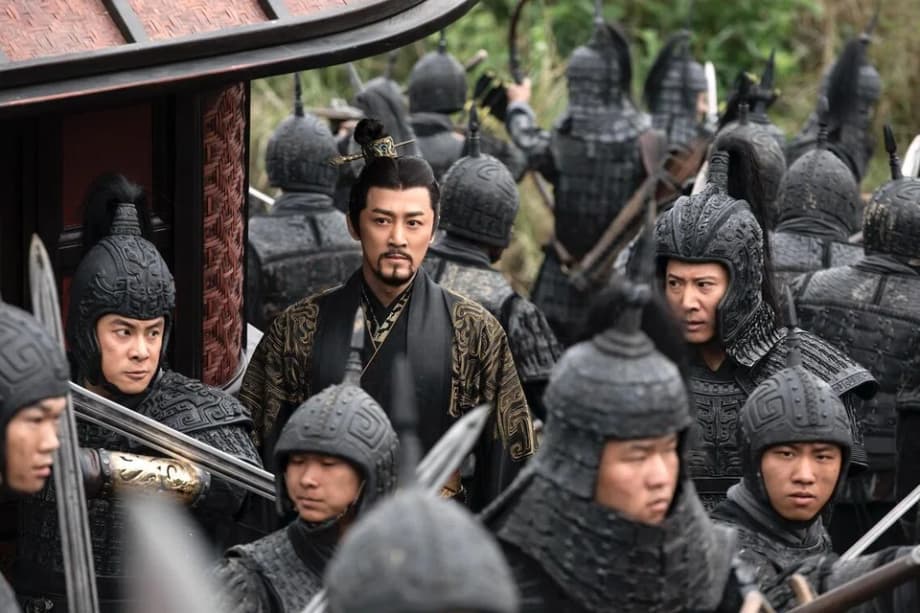
The historical science-fiction comedy serves as a sequel to broadcaster TVB’s wildly popular 2001 drama series A Step Into The Past. It follows the escapades of Hong Siu Lung, played by Koo, a 21st-century policeman tasked with traveling back to ancient China to ensure the coronation of Qin Shi Huang, played by Lam. The film successfully brought back the ensemble cast of the original series, including Jessica Hsuan and Sonija Kwok, tapping into a powerful sense of nostalgia among local audiences.
<
The Harsh Reality of a Shrinking Market
Despite the late-year cheer provided by Back To The Past, the broader statistical picture for Hong Kong cinema in 2025 was bleak. Data from Hong Kong Box Office Limited shows total revenue for the year was approximately HK$1.13 billion, a nearly 16% decline compared to 2024. This drop continues a downward trend, as 2024 had already seen a 6% decrease from the previous year.
The struggle is visible on the city streets as well. At least 10 cinemas have shut down since the start of 2024. The number of operational theaters in Hong Kong now stands at 52, a sharp reduction from the 72 that were open in 1999, even though the population has grown by over 8% in the intervening decades. High rents in the Asia-Pacific region and changing consumer habits have made it difficult for operators to stay afloat following the prolonged closures of the Covid-19 pandemic.
In 2025, not a single Hong Kong film ranked in the year-end top ten overall box office chart. The top spots were dominated by international productions, with the Japanese animated film Demon Slayer: Kimetsu No Yaiba The Movie taking the lead. The highest-grossing local production was the animated feature Another World, which earned roughly one-tenth of what the previous year’s leader, The Last Dance, had achieved.
<
The Double-Edged Sword of Nostalgia
The success of Back To The Past is largely attributed to nostalgia. The film’s ability to transport viewers back to the golden era of Hong Kong television resonated deeply with audiences. A Taiwanese writer behind the popular film critic website Lessons From Movies captured this sentiment in a viral Facebook post.
“The most attractive part of the movie is the familiarity we feel with the return of the original cast… Just seeing them together is enough to bring old fans to tears,” the critic wrote, describing the film as a grand trip back to youth for long-time fans.
However, relying on nostalgia presents a long-term risk. Louis Koo, who also produced the film through his company One Cool Group, has pointed out a “generational gap” in the industry. He noted that audiences are often willing to pay tickets only for familiar faces, creating a high barrier for newer actors to take on lead roles. This phenomenon limits the industry’s ability to refresh its talent pool and evolve with changing times.
Even taking inspiration from the small screen has become harder as local TV drama producers struggle to create fresh content and attract new blood amid declining viewership and rising competition from streaming platforms. It was in part for this reason that veteran actor and director Eric Tsang announced in January that he was stepping down as TVB’s general manager to return to film-making.
<
Behind the Scenes: A Workforce in Crisis
While the stars of Back To The Past celebrate their victory, many behind-the-scenes professionals are facing a dire situation. Director Ho Cheuk-tin, who won the Best New Director prize at the Hong Kong Film Awards in 2023 for The Sparring Partner, has not worked on a film production in almost three years. Despite his early success, investor interest has waned, forcing him to find income elsewhere.
Ho told reporters that his main source of income last year came from appearing on ViuTV drama series and reality shows, rather than directing. He considers himself lucky compared to peers who cannot find alternative work.
“Maybe all films can only start rolling when they receive government investment,” Koo said on a ViuTV program, describing the current climate as “scary.”
The impact extends to crews as well. Curry Hui, a camera technician who entered the industry in 2007, said film productions used to make up 70% of his work. That ratio has dropped to 40%, with television and YouTube videos filling the gap. To sustain his living, he started driving for Uber during the pandemic and continues to do so between film projects.
<
The “Unhealthy” Budget Divide
Rick Lau, a director of photography, observed that the industry has lost its “bread and butter.” He explained that film budgets have become polarized. Productions are either massive blockbusters that employ a small, elite group of people or small-scale projects with very limited budgets.
“This has created an unhealthy industry,” Lau said. The lack of mid-budget films means fewer opportunities for a broad range of professionals to hone their craft and earn a living wage. Cecilia Then, a production manager, noted that basic daily operating costs run about HK$200,000. When budgets fall below this threshold, departments compete for resources, potentially compromising quality and leading to poor reviews. This creates a vicious cycle where poor profits deter further investment.
<
Structural Barriers and Funding Woes
Filmmakers face numerous structural challenges beyond simple market economics. Investors have become “careful with their calculations,” according to producer Angus Chan. Many are hesitant to inject capital into projects that have not already secured government funding through schemes like the Film Production Financing Scheme (FPFS).
While these schemes provide a necessary lifeline, the application process can be lengthy. Authorities often take four to six months to assess pitches, causing delays that can stall momentum. Furthermore, strict regulations regarding filming permits and the use of public spaces have frustrated filmmakers. Director Ho and actor Louis Koo have both called for smoother collaboration with authorities to reduce the administrative burdens that limit shooting time and locations.
There is also the issue of censorship. Recent reports indicate that the Hong Kong Film Awards dropped four titles from the contenders list, prompting concerns about creative freedom and the types of stories that can be told. Such strictures can make investors even more wary of projects that might push boundaries.
<
Regional Shifts and Global Competition
Hong Kong’s struggle is happening against a backdrop of rapid growth in neighboring Asian film industries. Film enthusiasts on social media have noted that South Korea, Indonesia, and Thailand have overtaken Hong Kong in recent years, particularly in the action and genre film sectors.
One Reddit user commented on the decline, asking, “Where is the next Chow Yun Fatt?” Others noted that the new generation of actors often lack the rugged charisma of past stars like Andy Lau or Tony Leung. The global rise of Korean cinema and the high-quality output of Thai filmmakers have raised the bar for what constitutes a successful international Asian film.
This regional competition, combined with the global dominance of streaming platforms, has made it harder for Hong Kong films to capture international attention. Audiences now have access to a vast library of content from around the world, making it essential for local productions to offer something truly distinct to draw people back to theaters.
<
Cultivating the Next Generation
Despite the gloom, there are concerted efforts to turn the tide. Veteran actor and director Eric Tsang announced in January that he would step down as TVB’s general manager to return to film-making.
“Seeing how poorly Hong Kong’s film industry is doing right now, I feel bad that I haven’t contributed to it while at TVB for the past five years,” Tsang said. “I hope to work with the industry’s new directors and producers, mentor them, perhaps share some new ideas.”
Industry initiatives are also focusing on nurturing new talent. The Hong Kong-Asia Film Financing Forum (HAF) recently unveiled its first batch of 17 in-development projects. The forum pairs emerging directors with established producers, such as Stanley Kwan and Anthony Chen.
Projects selected for the forum cover a diverse range of genres and topics, from Sasha Chuk’s drama 131, about a masseuse and construction worker, to Vincci Cheuk’s intergenerational comedy 38.83. These initiatives aim to inject fresh creativity into the industry and prove that Hong Kong cinema can offer more than just trips down memory lane.
The Bottom Line
- Back To The Past broke box office records with an opening day gross of over HK$10.9 million.
- Hong Kong’s total box office revenue dropped nearly 16% in 2025 to HK$1.13 billion.
- Ten cinemas have closed since 2024, leaving only 52 operational theaters.
- Industry veterans cite a generational gap and budget polarization as major challenges.
- Initiatives like the HAF aim to mentor new directors and diversify content.