A January 21 freeze puts Thai migration plans on hold
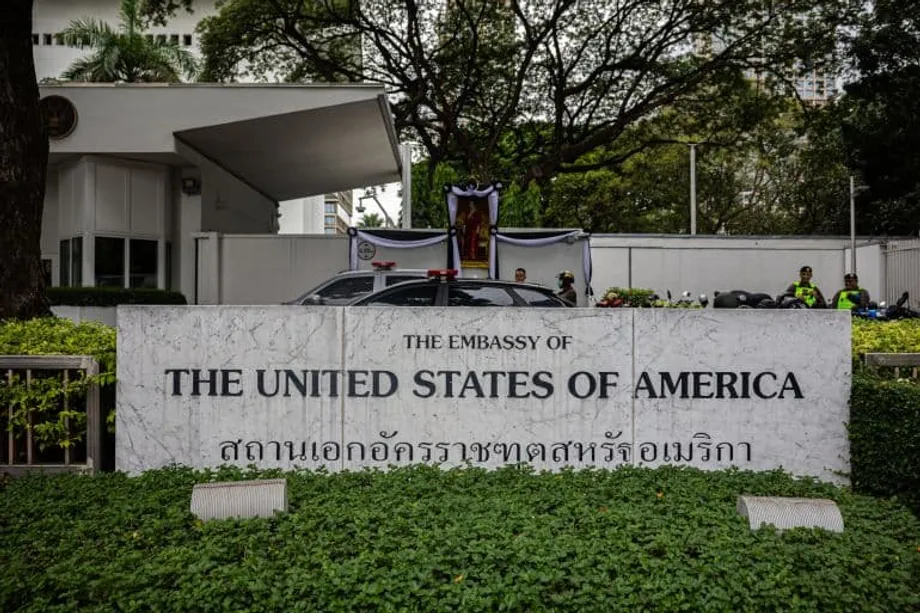
Thailand, one of only two US treaty allies in Southeast Asia, is among 75 countries whose nationals face an indefinite suspension of US immigrant visa processing that took effect on January 21, 2026. As of January 25, Washington had given no timetable for completing its review, leaving people planning permanent moves for marriage, family reunification and work unable to finish those journeys.
Contents
- A January 21 freeze puts Thai migration plans on hold
- Which visas are affected?
- Washington turns to the public charge rule
- Why Thailand's inclusion has caused surprise
- A worker changes course from Wisconsin to Israel
- Bangkok seeks answers from a treaty ally
- The suspension reaches across Asia
- Rights advocates challenge the welfare argument
- Some Thai residents in America support the restrictions
- Visa tensions add to a trade dispute
- The Bottom Line
Khaochat Mankong, a 27-year-old English tutor in Bangkok, had expected 2026 to bring a new life in California with her American husband. She had spent months completing paperwork and navigating procedures at the US embassy before the Trump administration announced the pause.
Khaochat described her surprise at a policy that reached into plans she had expected to complete through established immigration channels.
I'm shocked; I never thought they would interfere with permanent visas or marriage visas. But now everything has to be paused for who knows how many years.
The State Department says the suspension targets countries whose migrants claim welfare benefits at "unacceptable rates." That explanation has prompted anger and confusion in Thailand, where the decision affects thousands of families, workers and students who had viewed the United States as a place of opportunity and stability. Temporary student visas remain outside the suspension.
Thailand's inclusion also creates a diplomatic problem. A country with close economic and security ties to Washington now appears on the same list as nations experiencing war or severe economic distress. For applicants, the immediate concern is more personal: money has been spent, jobs anticipated and family arrangements made, without a date when immigrant visas can again be issued.
Which visas are affected?
The January 21 suspension is among the most expansive restrictions on legal immigration in recent American history. Official statements and a State Department memo describe a pause affecting all immigrant visa categories for nationals of the listed countries.
Employment routes include EB-class visas sought by foreign workers, while family applications cover people seeking to reunite with spouses and dependents. The announcement has also caused concern around K-class spousal and dependent visas, which are central to the family plans described by affected applicants.
Tourist visas in the B-1/B-2 categories, student visas in the F/M categories and temporary work visas such as H-1B are outside the suspension. Thai nationals can therefore continue seeking permission for those temporary purposes while permanent relocation through the affected immigrant visa routes is frozen.
Applicants may still submit forms and attend interviews. Consular officers, however, have been instructed to refuse issuance under Section 221(g) of the Immigration and Nationality Act, a provision covering cases that require additional processing or information. For a couple waiting to live together, completing an interview therefore does not bring the certainty of receiving a visa.
The main dates show how quickly plans changed:
- Before the announcement, applicants including Khaochat had spent months preparing paperwork and arranging moves.
- January 21, 2026: The suspension formally took effect for nationals of 75 countries, including Thailand.
- January 25, 2026: The pause remained indefinite, with no date given for the State Department to complete its review.
Washington turns to the public charge rule
The Trump administration grounds the policy in the "public charge" provision of the Immigration and Nationality Act. This allows the United States to deny entry to someone considered likely to become dependent on government assistance. The rule has existed for decades, but the administration has expanded its definition and enforcement.
Consular officers are instructed to consider age, health, financial circumstances and English proficiency when deciding whether an applicant might ever rely on public benefits. In practical terms, the assessment reaches beyond a person's immediate reason for moving to the United States.
State Department spokesperson Tommy Pigott defended the suspension as a way to protect American resources while officials reassess immigration procedures.
The State Department will use its long-standing authority to deem ineligible potential immigrants who would become a public charge on the United States and exploit the generosity of the American people. Immigrant visa processing from these 75 countries will be paused while the State Department reassesses immigration processing procedures to prevent the entry of foreign nationals who would take welfare and public benefits.
Khaochat argues that her own circumstances should allow her application to be assessed individually. She pointed to her English skills and financial independence when explaining why she found the decision difficult to accept.
If they want to screen people, then test language ability, check financial accounts. I have the language skills, I have money. Why should I be blocked from living with the person I love?
Washington's stated concern is future reliance on public assistance. Khaochat's immediate concern is being prevented from joining her husband despite believing she can meet the financial and language expectations described by the administration.
Why Thailand's inclusion has caused surprise
Thailand is Southeast Asia's second-largest economy and a major US trading partner. Its presence on the list has attracted particular attention because other affected countries include Afghanistan, Somalia and Ukraine, which are experiencing conflict, and Haiti, which faces severe economic challenges.
Pew Research Center figures put the median annual income of households headed by Thai people in the United States at approximately $82,000 in 2023, compared with $75,000 for all US households. The Thai household figure was about $7,000 higher. Median income is the midpoint: half of households earn more and half earn less.
Department of Homeland Security data also indicates that Thailand has a relatively low visa overstay rate compared with many other countries. An overstay occurs when someone remains beyond the period permitted by their visa. The figures point to a record of Thai visitors and immigrants generally complying with the terms of their stay.
Thai immigrants have also built successful businesses after starting in poorly paid restaurant or factory jobs. That history, alongside the income figures, helps explain why the administration's welfare argument has met resistance among people who see the community as economically established.
Washington has not provided a detailed explanation of the criteria that put Thailand on the list. The gap between the economic profile of Thai Americans and the stated concern about welfare dependence has encouraged speculation about whether geopolitical considerations also played a role.
A worker changes course from Wisconsin to Israel
Songtham Artsomjit, a 26-year-old Thai national, had planned to move to Wisconsin through an EB-3 visa for unskilled work. He paid a Thai agency $800 to begin the paperwork and expected to work on an assembly line making flatbed trailers.
Songtham saw the job as a "turning point in life," offering employment and an eventual route to permanent residency. The freeze interrupted that plan and pushed him to seek work elsewhere.
He described the alternative he had accepted after his American plans fell apart.
Instead, I've taken a job in a supermarket in Israel.
Songtham said he feared poverty more than "the risks of war" in the Middle East. His decision illustrates how a restriction on one migration route can change the choices people make about work, income and personal safety.
Thai social media has filled with accounts of lost opportunities and disrupted family plans. Married couples fear indefinite separation, while some parents worry about their children being denied the right to stay in the United States. The absence of an end date makes decisions about employment, housing and family life difficult to settle.
Bangkok seeks answers from a treaty ally
Foreign Minister Sihasak Phuangketkeow, who is also a candidate for prime minister in Thailand's upcoming general elections, met US Charge D'Affaires Elizabeth J. Konick to seek clarification. The Thai government formally expressed disappointment at the decision.
Sihasak questioned the logic of including Thailand, pointing to the contributions Thai nationals make to the American economy and the closeness of the relationship. He warned that the development was not conducive to healthy bilateral ties.
The foreign minister summed up his concern about the diplomatic damage.
These questions are not good for the relationship.
Thailand's formal diplomatic relationship with the United States dates to 1833. The countries cooperated against communism during the Cold War and, more recently, in countering China's influence in the South China Sea.
That history makes the visa decision especially uncomfortable for Bangkok. Thailand's status as a treaty ally has not kept its citizens outside a restriction imposed across a wide range of countries with very different political and economic circumstances.
The suspension reaches across Asia
Thirteen countries in the Asia-Pacific region are affected: Afghanistan, Bangladesh, Bhutan, Cambodia, Kazakhstan, Kyrgyzstan, Laos, Mongolia, Myanmar, Nepal, Pakistan, Thailand and Uzbekistan.
According to the advocacy group Stop AAPI Hate, those countries collectively accounted for more than 40% of Asian and Pacific Islander immigrant visas issued in recent years. The suspension therefore reaches a substantial share of the region's migration routes to the United States.
Pakistan's Foreign Office said its authorities were in contact with US counterparts. It described the move as a procedural review and expressed hope that normal operations would resume quickly.
The breadth of the suspension places it within the Trump administration's wider effort to restrict immigration. For governments seeking answers, the practical issue is when their citizens can again complete applications for permanent moves. For applicants, even a continuing ability to file paperwork offers little certainty while issuance remains blocked.
Rights advocates challenge the welfare argument
Stop AAPI Hate condemned the freeze as an attack on working people of color. The organization said the policy sought to "shut them out and remake America into a country where only the white and wealthy are deemed worthy."
The group said 90% of the countries on the list are outside Europe and have populations made up mainly of people of color. It argued that expanded public charge screening penalizes families with low incomes and creates room for arbitrary judgments based on race, ethnicity or language ability.
Studies by the Cato Institute and the American Immigration Council have found that immigrants use fewer public benefits than Americans born in the United States. The Center on Budget and Policy Priorities also noted that federal law already bars most immigrants from receiving public benefits tied to income for their first five years of residency.
Those restrictions are central to the dispute over Washington's rationale. The administration says the suspension will protect public resources, while its critics point to existing limits on access to assistance and research on benefit use.
Phil Robertson, a US citizen based in Thailand and director of Asia Human Rights and Labour Advocates, criticized the administration's treatment of its relationship with Bangkok.
The Trump administration is not respectful of the relationship; it has a transactional worldview.
Robertson called the policy "crass and cruel." He predicted that the administration would create enough obstacles to make migration effectively impossible for people from the affected countries.
Some Thai residents in America support the restrictions
Noi, a Thai national living in Niceville, Florida, who holds a green card, supports the administration's efforts to restrict welfare claims. Her position reflects the argument that American tax revenue should not be used to support new immigrants.
Noi described the policy as part of a wider effort by the administration to limit that spending.
Ever since the Trump administration, there have been efforts to stop using our tax dollars to support immigrants from various countries. Of course, this impacts the various countries that are being banned. But people are waking up and seeing what's been happening.
Her comments show the political divide within a community directly connected to the decision. Some Thai residents support tighter limits on migration and benefits, while applicants and separated families face the immediate consequences of those restrictions.
Visa tensions add to a trade dispute
Thailand's exports to the United States have faced a 19% tariff since August. Like other economies in Southeast Asia that depend heavily on exports, Thailand has already been dealing with economic pressure from Washington.
Negotiations for a comprehensive trade agreement have stalled, largely over US demands that Thailand open its market to major American agricultural companies. The visa suspension adds another source of friction to a relationship already strained by trade.
The combined disputes suggest that a longstanding alliance offers limited protection from the administration's America First approach. Bangkok is seeking answers on immigration while also trying to resolve disagreements affecting its exporters and agricultural market.
Khaochat's situation brings that political tension back to a household waiting to reunite. The Bangkok tutor said her husband had supported the president whose administration introduced the freeze.
My partner voted for Trump.
Her account shows how the policy reaches families that include the administration's own supporters. As of January 25, applicants such as Khaochat and Songtham were left with interrupted plans, while the State Department's review continued without a published completion date.
The Bottom Line
- The United States suspended immigrant visa processing for nationals of 75 countries, including Thailand, effective January 21, 2026.
- The pause affects permanent migration for employment and family reunification. Tourist, student and temporary work visas remain outside it.
- Applicants can submit forms and attend interviews, but consular officers have been instructed to refuse issuance under Section 221(g).
- Washington cites concerns about future use of public benefits. Critics point to existing benefit restrictions and research finding lower benefit use among immigrants.
- Thai households in the United States had a median annual income of about $82,000 in 2023, compared with $75,000 for all US households.
- Thailand has sought clarification from Washington, while 13 affected Asia-Pacific countries account for more than 40% of recent Asian and Pacific Islander immigrant visas, according to Stop AAPI Hate.
- The decision adds to tensions over a 19% tariff on Thai exports and stalled trade negotiations.
- No timetable for ending the suspension had been announced as of January 25, leaving families and workers waiting.