Taoist Temple Leader Fined for Unpermitted Religious Procession in Singapore
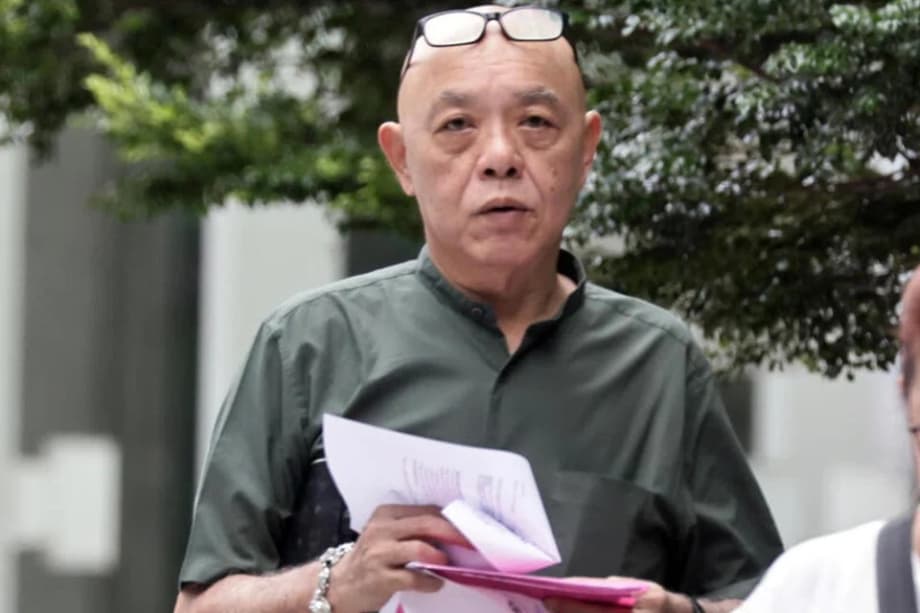
The leader of a prominent Taoist temple in Singapore has been fined S$2,000 for organizing a public religious procession without the required police permit. Lim Tong San, 62, the chief master of Tien Sen Hua Taoist temple located on Paya Lebar Road, admitted to organizing the unlawful procession that took place in October 2024. The case has highlighted the delicate balance between religious expression and public order regulations in Singapore’s multicultural society.
- Taoist Temple Leader Fined for Unpermitted Religious Procession in Singapore
- The Religious Significance of the Procession
- The Procession Route and Public Disruption
- Singapore’s Legal Framework for Public Processions
- The Court Proceedings and Sentence
- Broader Implications for Religious Practices in Singapore
- Singapore’s Multicultural Context and Religious Harmony
- Conclusion and Future Outlook
- Key Points
The procession, which involved devotees walking along public roads, was part of a two-day annual celebration honoring Baogong, the God of Justice, and welcoming the Jade Emperor, the supreme deity in Taoism. During the event, participants occupied road lanes, causing inconvenience to motorists and raising questions about the intersection of religious traditions and urban order in the city-state.
The Religious Significance of the Procession
The event that led to Lim’s conviction was not merely a casual gathering but a significant religious observance for the Taoist community. According to court documents, Lim had planned an annual celebration centered around Baogong, also known as the God of Justice, who serves as the temple’s chief deity. In Taoism, Baogong is revered as a symbol of justice and integrity, often depicted as a stern judge who punishes the wicked and protects the righteous.
The two-day event began on October 23, 2024, when Lim and devotees embarked on a temple-visiting journey across Singapore. They visited approximately 80 to 90 places of worship throughout the western part of the island, engaging in prayers and rituals at each location. This practice of visiting multiple temples during religious festivals is common in Chinese folk religions and Taoism, representing devotion and the building of spiritual connections.
On October 24, the participants returned to Tien Sen Tua Temple via chartered buses and private vehicles. Following rituals held at the temple and an adjacent open field, Lim led devotees and volunteers in a foot procession around 9pm. The purpose of this specific procession was to welcome the Jade Emperor to the temple. In Taoist cosmology, the Jade Emperor is considered the Supreme Ruler of Heaven, governing all aspects of the celestial realm and overseeing human affairs on Earth.
Deputy Public Prosecutor Maximilian Chew explained the significance of the event during court proceedings: “Towards the end of the event at about 9pm… the devotees and volunteers of the temple participated in a foot procession organised and led by the accused. The purpose of the procession was to welcome the ‘Jade Emperor’ – the Supreme Ruler of Heaven in Taoism – to the temple.”
The rituals and procession were not private affairs but were broadcast live on YouTube, allowing a wider audience to participate virtually in the religious observance. This aspect of the case underscores how modern technology continues to play a role in religious practices, even as those practices intersect with centuries-old traditions.
The Procession Route and Public Disruption
What began as a religious observance evolved into a public order issue when the procession moved onto public roads. According to court testimony, Lim and the devotees occupied the leftmost lane of Paya Lebar Road heading towards Ubi Avenue 2. They subsequently used the left filter lane turning into Ubi Avenue 2, walking approximately 400 meters before returning to the temple.
While the procession may have appeared orderly to participants, its presence on active roadways created significant traffic disruption. The group not only used the pavement along Ubi Avenue 2 but also took over vehicle lanes, forcing motorists to navigate around them. In Singapore’s densely populated urban environment, where roads are carefully managed to accommodate high traffic volume, such unscheduled disruptions can have cascading effects on traffic flow and public safety.
The court heard that the procession inconvenienced motorists on the road and members of the public using the pavement. This element of public disruption was a key factor in the prosecution’s case, as it demonstrated how the unauthorized event impacted the broader community beyond just the temple’s devotees.
Singapore’s Legal Framework for Public Processions
The case against Lim Tong San was built upon Singapore’s Public Order Act (POA), a piece of legislation that strictly regulates public assemblies and processions. Enacted in 1966, the POA was designed to maintain public order and prevent activities that might disrupt social harmony or stability in the young nation.
Under Section 4 of the POA, any unauthorized procession—defined as a group of three or more persons moving along a public road with a common purpose—constitutes an offense. The law requires organizers to obtain a permit from the police before conducting any public procession. The permit system allows authorities to assess factors such as route feasibility, public safety, potential traffic disruptions, and the risk of public disorder before approving such events.
In addition to the POA, Singapore’s Road Traffic Act (Cap. 276) further penalizes the obstruction of public roads. Section 67 of this act imposes fines for causing unnecessary hindrance to traffic, providing authorities with multiple legal avenues to address unauthorized road use. Together, these laws form a comprehensive framework that enables the state to regulate public space activities effectively.
A police spokesperson emphasized the rationale behind these regulations: “Our laws and policies balance the need to provide adequate space for the conduct of public assemblies and processions, with the need to maintain public order and peace in Singapore.”
The penalties for violating these regulations are substantial. First-time offenders can be fined up to S$5,000, while repeat offenders face even stiffer consequences, including possible imprisonment of up to six months and fines up to S$10,000. These penalties reflect Singapore’s serious approach to maintaining public order in its dense urban environment.
The Permit Application Process
Obtaining a permit for a public procession in Singapore is a structured process designed to balance community needs with public order considerations. Organizers must submit applications to the police well in advance of their planned event, providing details such as the proposed route, estimated number of participants, timing, and security measures.
The police evaluate each application based on several criteria, including potential traffic impact, public safety risks, and the event’s likelihood to cause disorder or offense to other segments of society. For religious processions, authorities typically work with organizers to find accommodations that allow for religious expression while minimizing disruption to the general public.
It is worth noting that Singapore does allow religious processions when proper permits are obtained. Major religious festivals such as Hindu Thaipusam and Buddhist Vesak celebrations regularly involve processions that are conducted legally with full police cooperation. The key difference in Lim’s case was the complete absence of any permit application or approval.
The Court Proceedings and Sentence
Lim Tong San faced charges under the Public Order Act for organizing a public procession without the necessary approval. During the court proceedings, the prosecution presented evidence that Lim had not merely failed to comply with permit conditions but had failed to obtain any permit whatsoever.
In their submissions, the prosecution sought a fine between S$2,000 and S$3,000. They argued that Lim’s culpability was higher because no permit had been granted at all, as opposed to situations where organizers might have deviated from approved permit conditions. This distinction is important in Singapore’s legal framework, as it speaks to the intent and awareness of the organizer regarding the legal requirements.
Several factors worked in Lim’s favor during sentencing. The court was told that he had pleaded guilty at the earliest opportunity, saving judicial resources and demonstrating acceptance of responsibility. Additionally, Lim had no prior similar convictions, indicating that this was an isolated incident rather than a pattern of disregard for the law.
On January 22, Lim was fined S$2,000, falling within the range sought by the prosecution and well below the maximum penalty for a first-time offender. The sentence reflects the court’s consideration of both the seriousness of the offense and the mitigating factors presented by the defense.
Legal Analysis and Comparisons
The S$2,000 fine imposed on Lim Tong San falls within Singapore’s typical range for unlawful procession violations. Legal observers noted similarities to previous cases, such as a 2022 incident involving a Buddhist festival where organizers faced similar penalties for unauthorized processions.
Comparative legal analysis reveals that Singapore’s approach to public processions sits between more permissive and more restrictive systems globally. In the United States, for instance, religious processions are generally protected under the First Amendment’s guarantee of free exercise of religion, as affirmed in cases like Widmar v. Robbins. American courts typically require substantial evidence of public harm before restricting religious expression in public spaces.
Conversely, France’s approach to religious expression in public spaces is significantly more restrictive, governed by the principle of laïcité (secularism). French laws enacted in 2004 prohibit conspicuous religious symbols in public schools, and the general approach prioritizes secularism over individual religious expression in public spaces.
Singapore’s position represents what some legal scholars call a “middle path”—requiring permits for public processions but not banning them outright. This approach aligns with the country’s identity as a multicultural society with a pragmatic approach to governance, attempting to balance religious diversity with social order.
Broader Implications for Religious Practices in Singapore
The Lim Tong San case underscores a recurring tension in Singapore’s multicultural society: the regulation of religious traditions that inherently involve public processions or gatherings. As a city-state with limited land and high population density, Singapore faces unique challenges in accommodating diverse religious practices while maintaining public order and safety.
Taoist communities, while culturally significant in Singapore’s Chinese-majority population, occupy a demographic niche compared to larger religious groups. This can make their specific needs and practices less visible to authorities and the general public, potentially leading to situations where traditional practices inadvertently violate regulations designed for broader crowd management.
The case highlights the importance of ongoing dialogue between religious communities and regulatory authorities. Many religious traditions predate modern urban planning and zoning regulations, creating situations where long-standing practices may conflict with contemporary public order concerns. Finding ways to respect these traditions while ensuring public safety requires understanding, compromise, and sometimes creative solutions from both sides.
For Lim’s temple and similar religious organizations, the fine may have a deterrent effect, potentially making religious leaders more cautious about organizing events that might require official permits. This could result in either increased compliance with regulations or a reduction in certain traditional practices, both of which would impact religious expression in different ways.
Recommendations for Balancing Religious Expression and Public Order
Following the case, legal analysts and community observers have suggested several approaches that could help prevent similar incidents while preserving religious traditions:
- Flexible Permit Systems: Implementing tiered permit requirements for small-scale religious processions, similar to how Japan handles matsuri (festival) permits, could reduce barriers for minor religious events while maintaining oversight.
- Community Liaison Units: Establishing interfaith committees or dedicated units within police or regulatory bodies to work with religious communities on procession planning could improve understanding and compliance.
- Educational Outreach: Providing clearer guidance to religious organizations about legal requirements and application processes could prevent unintentional violations.
- Religious Accommodation Policies: Developing specific guidelines for religious processions that acknowledge their unique characteristics while ensuring public safety could provide clearer direction for both organizers and enforcers.
Singapore’s Multicultural Context and Religious Harmony
Singapore’s approach to regulating public processions exists within its broader context of maintaining racial and religious harmony in a diverse society. Since independence, Singapore has implemented various policies aimed at preventing ethnic or religious conflict and promoting social cohesion. The regulation of public assemblies and processions is seen as one component of this broader social management strategy.
Religious processions are indeed part of several major religious traditions in Singapore. The Hindu festival of Thaipusam involves a procession where devotees carry kavadi (burdens) along a designated route from the Sri Srinivasa Perumal Temple to the Sri Thendayuthapani Temple. Similarly, Buddhist Vesak celebrations often include candlelight processions, and Christian groups sometimes organize public walks of faith during Easter or other significant periods.
These events typically proceed without legal issues because organizers obtain the necessary permits and work closely with authorities to ensure public safety. The difference in Lim’s case was the absence of any such coordination, which authorities viewed as undermining the structured approach that maintains harmony in Singapore’s diverse society.
The case also highlights how social media and technology have changed the landscape of religious practice. The live-streaming of the procession on YouTube meant that the unauthorized event had a digital audience beyond the physical participants. This raises questions about how digital presence might factor into future considerations of public order and religious expression.
Conclusion and Future Outlook
The case of Lim Tong San serves as a reminder of the complex balancing act required in diverse urban societies where multiple religious traditions coexist within limited public space. While Singapore’s strict regulatory framework has contributed to public order and safety, cases like this reveal the ongoing challenges of accommodating traditional religious practices within modern urban governance structures.
The S$2,000 fine, while substantial, represents a measured response that acknowledges both the seriousness of the violation and the religious context in which it occurred. It sends a clear message about the importance of complying with public order regulations while avoiding more severe penalties that might seem punitive toward religious expression.
As Singapore continues to evolve as a global city with a rich religious tapestry, cases like this will likely prompt ongoing conversations about how to balance tradition and modernity, faith and order, individual expression and collective good. The challenge for authorities will be to maintain public order without stifling the vibrant religious diversity that characterizes Singaporean society.
For religious communities, the case underscores the importance of understanding and engaging with regulatory frameworks. Rather than viewing these regulations as obstacles to faith, religious leaders might consider them as structures that, when properly navigated, can allow their traditions to continue safely in a modern urban context.
Ultimately, the Lim Tong San case is less about a single procession and more about the broader project of building a society where diverse faiths can flourish within a framework that ensures the safety and harmony of all. As Singapore moves forward, the lessons from this case may inform approaches that better accommodate religious practices while preserving the public order that has been central to the nation’s development.
Key Points
- Lim Tong San, 62, chief master of Tien Sen Hua Taoist temple, was fined S$2,000 for organizing an unlawful public procession without a permit in October 2024.
- The procession was part of a two-day annual celebration honoring Baogong (God of Justice) and welcoming the Jade Emperor (Supreme Ruler of Heaven in Taoism).
- Participants occupied road lanes along Paya Lebar Road and Ubi Avenue 2, causing inconvenience to motorists.
- Singapore’s Public Order Act requires permits for any public procession involving three or more people moving along a public road.
- First-time offenders can be fined up to S$5,000, while repeat offenders may face up to six months’ jail and fines up to S$10,000.
- The case highlights tensions between religious traditions and public order regulations in Singapore’s multicultural society.
- Legal experts suggest improved dialogue between religious communities and authorities could prevent similar incidents.
- Singapore allows religious processions when proper permits are obtained, as seen in major festivals like Thaipusam and Vesak.
- The event was live-streamed on YouTube, adding a digital dimension to the public order considerations.
- Lim pleaded guilty at the earliest opportunity and had no prior similar convictions, factors considered in sentencing.