Singapore Navigates New Waters with High Seas Treaty
Singapore is currently undertaking a comprehensive review of its domestic legislation and maritime policies to align with the obligations of a historic global agreement. The UN High Seas Treaty, formally known as the Biodiversity Beyond National Jurisdiction (BBNJ) agreement, officially entered into force on January 17, marking a pivotal moment in international ocean governance. This pact aims to protect marine life in the vast expanses of the ocean that lie outside any single nation’s control, covering nearly two-thirds of the world’s oceans. As one of the early ratifiers among more than 80 nations, Singapore is now moving to translate these international commitments into concrete local laws.
The Ministry of Foreign Affairs has confirmed that government agencies are actively examining existing legal frameworks to identify gaps. This review focuses on ensuring that Singapore can effectively govern activities that fall under the treaty’s purview. The anticipated changes will likely reshape how environmental impact assessments are conducted, how maritime activities are regulated, and how deep-sea research is managed. For a nation deeply integrated into the global maritime economy, these changes represent a significant step toward sustainable ocean management.
Singapore’s Ambassador for International Law, Rena Lee, who presided over the treaty negotiations, stated that “The entry into force of the BBNJ Agreement today stands as a monument to multilateralism and to the years of dedication, dialogue and cooperative action by countless committed people around the world.”
Her leadership during the negotiations was instrumental in bridging the divides between developed and developing nations. The treaty is widely regarded as the most significant multilateral environmental convention since the Paris Climate Agreement. It provides the first legal framework to protect biodiversity in international waters, ensuring that the benefits of marine resources are shared fairly among all nations.
A Landmark Agreement for the Global Ocean
The high seas are areas beyond national jurisdiction, comprising the waters that lie beyond the 200-mile exclusive economic zone of any country. These regions have historically been governed by a patchwork of fragmented regulations, often described as a “Wild West” where oversight was minimal. For decades, this lack of comprehensive regulation left the high seas vulnerable to overfishing, pollution, illegal wildlife trafficking, and unchecked exploitation by industries seeking seabed minerals.
The new treaty addresses these governance gaps by establishing four main pillars. These include the conservation and sustainable use of marine biological diversity, area-based management tools like marine protected areas, environmental impact assessments, and capacity-building alongside the transfer of marine technology. By creating a unified structure, the treaty seeks to ensure that ocean resources are used sustainably and that marine ecosystems are resilient in the face of growing climate threats.
Scientists report that the oceans have absorbed a vast amount of the excess heat and carbon dioxide generated by human activity. This service has come at a cost, leading to ocean acidification, warming, and deoxygenation. The treaty provides a mechanism to mitigate these impacts by protecting large swathes of the ocean. It is crucial for enforcing the global pledge to protect 30 percent of the world’s land and oceans by 2030, a target known as “30×30”. Without this treaty, achieving that goal for the high seas would be legally impossible.
The BBNJ Agreement functions as an implementing agreement under the 1982 United Nations Convention on the Law of the Sea. It becomes the third such agreement under UNCLOS, solidifying the legal architecture for the ocean. The agreement establishes a Conference of the Parties, a decision-making body that will meet annually to oversee implementation and adopt specific standards and guidelines.
Overhauling Environmental Impact Assessments
One of the most critical aspects of Singapore’s legal review concerns environmental impact assessments. Under the treaty, countries must conduct EIAs if their planned activities could harm the marine environment, even if those activities originate within their own jurisdiction but affect the high seas. This marks a shift from current practices, where Singapore’s EIA processes, while robust for domestic projects, are not fully codified into law for high seas activities.
Professor Peter Ng, an advisor at the National University of Singapore’s Lee Kong Chian Natural History Museum, highlighted the necessity of establishing rigorous frameworks for these assessments. He emphasized that the government needs to create clear guidelines for Singapore-registered companies operating in the high seas. This includes companies involved in seabed exploration or those harvesting marine organisms for commercial purposes, such as collecting rare sponges for medicinal compounds.
The treaty mandates that these assessments must be transparent. Public notification of planned activities is required, and feedback from affected groups must be welcomed. This requirement for transparency may necessitate changes to how Singapore handles confidential information, although the Ministry of Foreign Affairs has noted that robust frameworks already exist for domestic development. The challenge lies in adapting these domestic standards to the specific context of the high seas.
Standards for these assessments will eventually be adopted by the treaty’s decision-making body. Singapore plans to consider these international standards when updating its domestic processes. This harmonization ensures that local companies and scientists are held to the same rigorous benchmarks as their international counterparts, fostering a level playing field.
Balancing Shipping Interests and Conservation
As one of the world’s busiest ports and a global shipping hub, Singapore faces unique challenges in implementing the High Seas Treaty. The agreement allows for the creation of marine protected areas in the high seas to conserve marine life. These areas can impose restrictions on human activities, potentially affecting shipping lanes and maritime traffic.
Marine policy analyst Youna Lyons noted that proposed protected areas could impact Singapore’s shipping activities. The government will need to navigate the delicate balance between facilitating global trade and protecting sensitive marine ecosystems. This balancing act involves close collaboration with existing regulatory bodies to ensure that new environmental measures do not disrupt the free flow of maritime commerce.
Dr. Tara Davenport from the NUS Centre for International Law stressed that the treaty should not undermine existing regulatory frameworks. Bodies like the International Maritime Organization and the International Seabed Authority already have mandates over shipping and seabed mining respectively. The High Seas Treaty is designed to complement these organizations rather than replace them.
For instance, the IMO already has stricter anti-pollution laws in designated sensitive sea areas. The treaty’s provisions on environmental impact assessments are intended to work alongside these existing rules. Singapore plans to participate actively in the treaty’s upcoming summits and collaborate with the IMO to ensure that international shipping needs are balanced with marine environment protection. This diplomatic engagement is crucial for advocating for the interests of the maritime community while upholding conservation goals.
Scientific Leadership and Capacity Building
Beyond regulation, Singapore is positioning itself as a leader in the scientific aspects of the treaty. The agreement places a strong emphasis on marine scientific research and the sharing of benefits arising from marine genetic resources. Singapore’s strengths in high seas research make it a valuable partner for developing nations seeking to build their capacity in oceanography and marine biology.
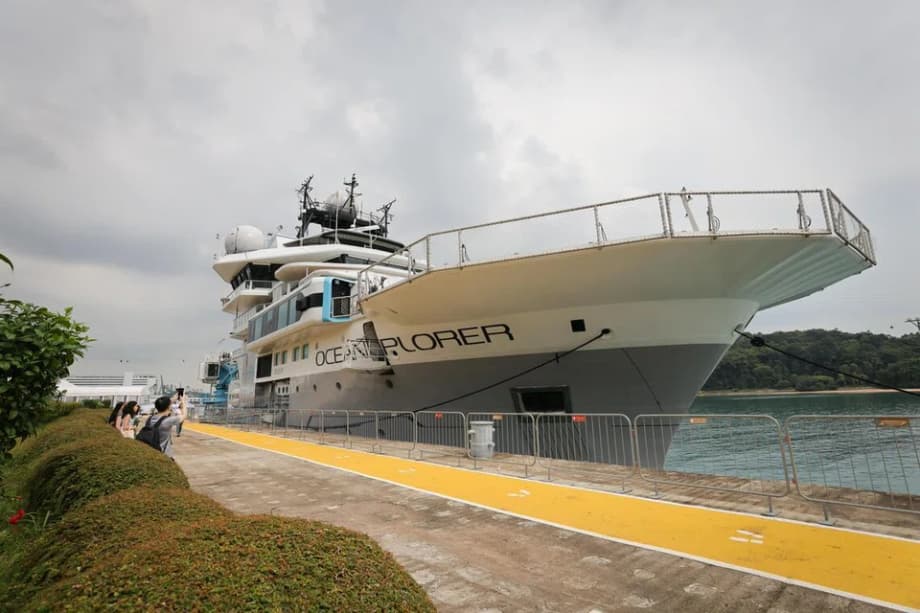
A recent joint expedition illustrates this commitment. In October 2025, scientists from NUS and the non-profit organization OceanX explored a seamount chain in the Indian Ocean. This expedition mapped over 8,300 square kilometers of seafloor and included scientists from several Asian countries. Such collaborative efforts are essential for the treaty, which mandates capacity building and the transfer of marine technology to developing states.
Professor Peter Ng underscored the necessity of a global perspective in studying phenomena like climate change and ocean currents. The research conducted during these expeditions provides data that transcends national borders. By sharing this knowledge and expertise, Singapore helps other nations fulfill their treaty obligations and participate meaningfully in ocean governance.
The expedition utilized advanced technologies, including remotely operated vehicles and environmental DNA analysis. These tools allow scientists to detect traces of genetic material in the water, providing a non-invasive way to survey biodiversity. The technologies and skills developed during these missions are equally applicable to shallow waters, equipping regional scientists to better manage their own marine resources. This capacity building is a core pillar of the BBNJ Agreement, ensuring that all nations can benefit from the sustainable use of ocean resources.
Regional Implications and the Path Forward
The entry into force of the High Seas Treaty has significant implications for Southeast Asia. The region is surrounded by ocean and is highly reliant on fisheries for protein and jobs. Seven ASEAN countries, including Singapore, Indonesia, and the Philippines, are parties to the treaty. This regional participation is vital because what happens in the high seas directly impacts coastal waters through the migration of fish stocks and ocean currents.
Rizza Sacra-Dejucos, Asia Regional Coordinator of the High Seas Alliance, noted that protecting high seas waters is essential for maintaining balanced ecosystems that support coastal communities. Migratory species like tuna move between national waters and the high seas, making international cooperation critical for food security.
While the treaty is a victory for multilateralism, challenges remain. Enforcement mechanisms in international waters are inherently difficult to implement. The treaty relies on the cooperation of member states and the integration of its provisions into national laws. The United States has signed but not ratified the treaty, meaning it will participate as an observer without voting rights. Nevertheless, the momentum generated by the 83 ratifying countries signals a strong global commitment.
The treaty’s first Conference of the Parties is expected to meet within the year to finalize operational details. Singapore plans to be an active participant in these discussions. The coming years will be crucial as the international community moves from diplomatic agreement to practical implementation. The creation of the first marine protected areas on the high seas will be a key milestone to watch.
For Singapore, the journey involves updating laws, regulating industries, and contributing to global science. By integrating these diverse elements, the nation aims to fulfill its obligations under the treaty while maintaining its role as a leading global maritime hub.
The Bottom Line
- The UN High Seas Treaty officially entered into force on January 17, 2026, providing the first legal framework to protect biodiversity in international waters.
- Singapore is reviewing its domestic laws, particularly regarding environmental impact assessments, to comply with the treaty’s obligations.
- The treaty establishes four main pillars: marine biodiversity conservation, area-based management tools, EIAs, and capacity building.
- Singapore must balance its status as a global shipping hub with new conservation measures and the potential creation of marine protected areas.
- Scientific research, such as the NUS and OceanX expedition to the Indian Ocean, plays a key role in Singapore’s contribution to the treaty’s capacity-building goals.