A Critical Milestone in Robotics Development
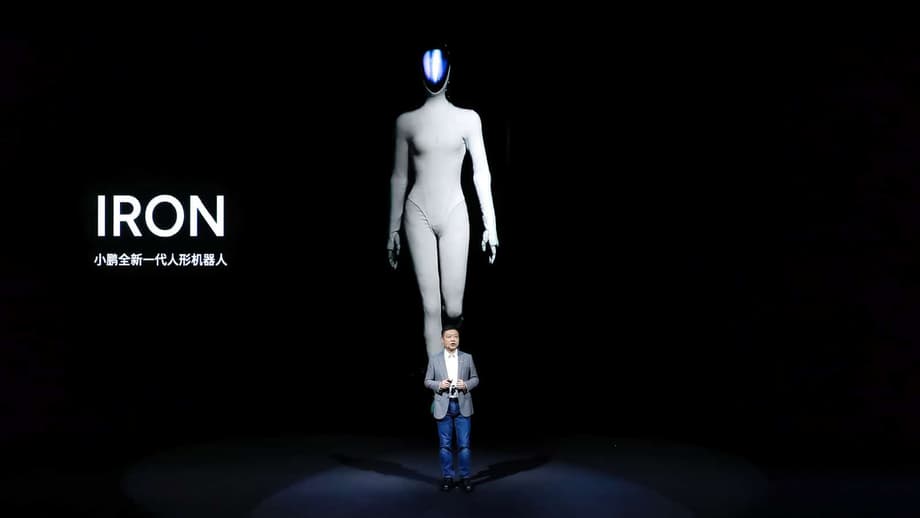
Xpeng has successfully completed its first ET1 version robot prototype developed to automotive standards, marking a significant step toward the mass production of high-level humanoid robots. He Xiaopeng, chairman and CEO of the Chinese electric vehicle (EV) manufacturer, announced the milestone on Weibo, stating that he spent the day observing and discussing the development with his team. This achievement represents a crucial milestone in the company’s ambitious timeline to achieve mass production of humanoid robots by the end of 2026.
- A Critical Milestone in Robotics Development
- The IRON Robot: Features and Capabilities
- Powerful Computing and Advanced AI Integration
- Battery Technology Breakthrough
- The Viral Catwalk Demonstration
- Musk Acknowledges Competition
- Manufacturing and Mass Production Strategy
- Commercial Applications and Partnerships
- Skepticism and Industry Challenges
- Market Context and Competitive Landscape
- Financial Market Reaction
- The Road Ahead
- Key Points
The completion of the ET1 prototype demonstrates Xpeng’s commitment to transitioning from a traditional electric vehicle manufacturer to what it now describes as a “global embodied intelligence company.” This strategic shift reflects the growing convergence between automotive technology and robotics, with companies leveraging their expertise in AI, manufacturing, and battery technology to develop increasingly sophisticated humanoid machines.
The IRON Robot: Features and Capabilities
Xpeng’s humanoid robot, named IRON, was unveiled at the company’s 2025 AI Day event in November, showcasing remarkable advances in robotic design and functionality. The next-generation IRON robot features an innovative “bone-muscle-skin” framework that closely mirrors human anatomy. This design includes a humanoid spine capable of flexion, allowing the robot to bend and balance dynamically, along with bionic muscles that provide actuation mimicking organic motion profiles.
The robot’s specifications are impressive by current industry standards. Standing approximately 178 cm tall and weighing 70 kg, IRON closely resembles human proportions. It boasts 82 degrees of freedom throughout its body, with particularly sophisticated hands featuring 22 degrees of freedom each. These hands use what Xpeng claims are the industry’s smallest bevel gear joints, enabling 1:1 human hand sizing and allowing for delicate manipulation tasks such as grasping fragile objects or operating touch interfaces.
The robot’s exterior is covered in flexible synthetic skin that can be customized for different body shapes and proportions, contributing to its remarkably human-like appearance. At the front, IRON features a 3D curved display serving as its “face,” capable of expressive communication.
Powerful Computing and Advanced AI Integration
At the heart of IRON’s capabilities is Xpeng’s proprietary computing architecture. The robot is equipped with three in-house developed Turing AI chips, delivering a combined 3,000 TOPS (Tera Operations Per Second) of processing power. This computing capacity is roughly equivalent to that found in high-end autonomous vehicles, now adapted to manage 82 articulated joints in real-time while processing visual and linguistic input simultaneously.
The robot runs on Xpeng’s second-generation VLA (Vision-Language-Action) model, which the company describes as its first mass-produced physical world large model. This AI system incorporates what Xpeng calls a “VLT + VLA + VLM” architecture. The VLA component handles action generation, translating sensory input into motor commands. The VLM (Vision-Language-Model) manages natural language dialogue and social interaction. Most notably, the VLT (Vision-Language-Task) is a new large model developed specifically for robotic reasoning, functioning as the “core engine” for autonomous decision-making.
This sophisticated AI stack allows IRON to perform advanced tasks including conversation, walking, and interaction with its environment. The robot can decompose complex instructions, plan multi-step tasks, and adapt to dynamic environments without constant human supervision.
Battery Technology Breakthrough
One of IRON’s most significant technical achievements is its power source. Xpeng has incorporated all-solid-state batteries in the robot, marking what the company claims is an industry first. Solid-state battery technology offers higher energy density and enhanced safety compared to traditional lithium-ion batteries. According to Xpeng, this approach has enabled a lightweight design with reduced weight by approximately 45%, while passing rigorous safety tests including 9G acceleration impact.
The use of solid-state batteries reflects Xpeng’s automotive DNA and demonstrates how the company is leveraging its EV supply chain advantage in robotics development. This technological choice is particularly relevant for robots intended to operate in enclosed public spaces or eventually in homes, where safety and energy density are critical considerations.
The Viral Catwalk Demonstration
When Xpeng unveiled its next-generation IRON robot at the 2025 AI Day event, the demonstration quickly went viral. The robot performed a catwalk with natural, fluid movements and highly realistic human posture. Its gait was so lifelike that many observers speculated a human was concealed inside the robot costume. This skepticism grew so intense that Xpeng felt compelled to address it directly during the presentation.
In a dramatic moment that instantly became internet famous, Xpeng staff members cut open the robot’s leg on stage, exposing metal joints, actuators, and wiring to prove there was no hidden human inside.
The theatrical nature of this demonstration, while effective in proving authenticity, also drew attention to the remarkable advances in motion control and balance algorithms achieved by Xpeng’s engineering team. The ability to mimic the elegant gait of humans, particularly the complex hip movements and coordinated steps required for a catwalk, represents a significant technical challenge in robotics development.
Musk Acknowledges Competition
The quality of Xpeng’s robot demonstration was notable enough to draw a response from Tesla CEO Elon Musk, who has been developing his own humanoid robot called Optimus. According to reports, Musk sent a direct message stating, “Not bad… Tesla and China companies will dominate the market. Other companies in the West are weak.” This public acknowledgment from one of the most prominent figures in robotics and electric vehicles underscores the competitive landscape emerging in humanoid development.
He Xiaopeng responded swiftly on social media, writing, “Let this stand as the final proof: the robot that mastered the catwalk is built by a Chinese startup.” This exchange highlights what many industry observers see as an emerging two-horse race between American and Chinese tech giants in the humanoid robot market, with both Tesla and Xpeng leveraging their automotive expertise to advance robotics capabilities.
Manufacturing and Mass Production Strategy
Xpeng has set an ambitious timeline for mass production, targeting large-scale production of high-level humanoid robots by the end of 2026. The completion of the first ET1 prototype developed to automotive standards represents progress toward this goal. The company’s strategy leverages its existing automotive supply chain and manufacturing infrastructure, which Xpeng believes gives it a significant time-to-market advantage over pure robotics startups.
To address one of the persistent bottlenecks in robotics development—the lack of large-scale training data—Xpeng has established its first embodied intelligence data factory in Guangzhou. This specialized facility is designed to generate the task-diverse datasets that humanoid systems desperately need for real-world operation. By creating a dedicated infrastructure for data collection, Xpeng is following a similar approach to Tesla’s strategy of using real-world data to train autonomous systems.
The company has also announced plans to open the IRON SDK (Software Development Kit) to global developers, inviting third parties to build applications and extend the robot’s capabilities. This open platform strategy mirrors successful models in mobile and automotive software, representing a bet that developer creativity will unlock use cases Xpeng hasn’t anticipated.
Commercial Applications and Partnerships
Despite the impressive demonstrations, Xpeng has adopted a measured approach to commercialization. The company has indicated that IRON will initially prioritize commercial service applications rather than personal home use. The first deployment wave will target controlled commercial environments, with IRON serving as guides, shopping assistants, and receptionists in Xpeng’s own retail showrooms.
This strategy allows the company to accumulate task-specific operational data while maintaining tight control over the interaction environment and minimizing liability exposure. Xpeng has also established industrial partnerships, with Chinese steel giant Baosteel signing on as an ecosystem partner. IRON units are slated for deployment in inspection and material sorting roles within Baosteel facilities, providing revenue and operational validation while stress-testing the platform in demanding industrial environments.
Interestingly, Xpeng has revealed that it tested using IRON robots in its own manufacturing operations for tasks such as tightening screws on assembly lines. However, the company concluded that this approach wouldn’t be efficient at scale due to performance issues and high repair and replacement costs compared to human workers. This pragmatic assessment suggests Xpeng is taking a realistic view of current robotics capabilities.
Skepticism and Industry Challenges
Not all observers have been uniformly enthusiastic about Xpeng’s robot demonstrations. Some analysts have questioned whether the impressive catwalk performance translates to practical utility. A critical analysis from 36kr pointed out that while the robot’s movements were visually impressive, the demonstrated application scenarios were limited. The robot was shown sitting in the driver’s seat of an Xpeng vehicle as a “technology guide,” but not actually performing useful tasks.
Critics have noted that unlike competitors such as Tesla’s Optimus, which has been demonstrated performing factory tasks like sorting parts and tightening screws, Xpeng’s IRON has primarily been shown performing what could be seen as “flashy moves” without clear practical applications. This has led some to question whether the demonstrations are more about public relations than showcasing genuine capabilities.
There are also broader challenges facing the humanoid robot industry. Battery life remains limited to a few hours, and many activities still require human operators using the robots as puppets to complete tasks while gathering data for future iterations. Researchers caution that technical and safety limitations mean humanoids are far from ready for general-purpose use in homes and offices.
Market Context and Competitive Landscape
Xpeng’s humanoid robot development occurs within a rapidly evolving global industry. Chinese firm UBTECH has announced what it calls “the world’s first mass delivery of humanoid robots,” with more than 1,000 of its Walker S2 model sent to factories in 2025. However, industry experts note that deployment remains at an early stage, and whether humanoids are saving companies time or money has yet to be determined.
The automotive industry has emerged as an ideal testing ground for humanoid robots, with their semi-structured environments built for automation and diverse complex tasks. Companies including Tesla, Boston Dynamics, and Xpeng are all running pilots of humanoid robots in their parent company’s industrial plants, taking advantage of their existing manufacturing expertise.
Looking ahead, industry insiders predict that in 2026, a single enterprise in the industrial field could purchase and receive over 10,000 humanoid robots. This quantity level would mark the first development inflection point for the humanoid robot industry, similar to the large-scale start-up stage of new-energy vehicles around 2018.
Financial Market Reaction
Despite the technical achievements, Xpeng’s stock performance has reflected broader challenges facing the company. Shares fell in Hong Kong following the robot announcement, weighed down by a recent analyst price target cut from Macquarie, which reduced its target to $26 from $32 while maintaining an “Outperform” rating. The brokerage firm cited 2026 as a transition year for Xpeng as it expands its product portfolio amid slowing demand in China’s EV market.
This market reaction highlights the tension between Xpeng’s long-term technological ambitions and short-term financial realities. While the humanoid robot program represents an exciting diversification of the company’s capabilities, investors remain focused on core business performance in the competitive electric vehicle market.
The Road Ahead
Xpeng’s humanoid robot program represents both a technical achievement and a strategic gamble. By leveraging its automotive expertise in AI, manufacturing, and battery technology, the company has made rapid progress in developing a sophisticated humanoid platform. The completion of the first automotive-grade prototype is a meaningful milestone on the path toward mass production.
However, significant challenges remain. The company must prove that its robot can move beyond impressive demonstrations to practical applications that provide clear economic value. It must also navigate the complex technical, safety, and regulatory challenges that come with deploying sophisticated robots in commercial environments. Furthermore, Xpeng faces intense competition from both established players like Tesla and emerging robotics companies worldwide.
The next 18 months will be crucial for Xpeng’s robotics ambitions. As the company moves toward its target of mass production by the end of 2026, the industry will be watching closely to see whether IRON can transition from a viral sensation to a commercially viable product that delivers on the promise of embodied intelligence.
Key Points
- Xpeng completed its first ET1 robot prototype developed to automotive standards, with CEO He Xiaopeng confirming the milestone on social media
- The company aims to achieve mass production of high-level humanoid robots by the end of 2026
- The IRON robot features 82 degrees of freedom, hands with 22 degrees of freedom, and flexible synthetic skin
- Powered by three Turing AI chips delivering 3,000 TOPS and Xpeng’s second-generation VLA model
- Industry-first use of all-solid-state batteries for higher energy density and enhanced safety
- Elon Musk acknowledged Chinese companies as strong competitors in the humanoid robot market
- Initial applications will focus on commercial service scenarios rather than home use
- Baosteel signed as an ecosystem partner for industrial deployment of IRON robots
- Xpeng established an embodied intelligence data factory in Guangzhou to address training data needs
- Company plans to open IRON SDK to global developers to expand the robot’s capabilities