1,200 March Against Hate in Japanese City as Foreign Residents Face Rising Hostility
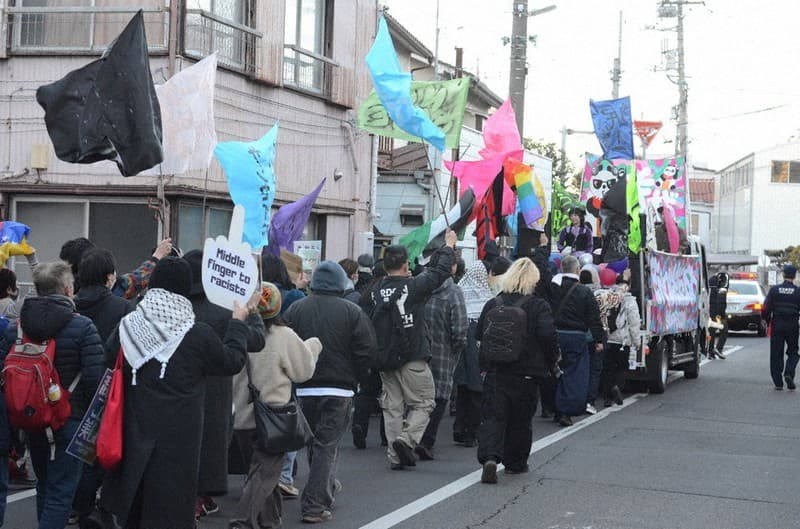
About 1,200 people joined an anti-discrimination march in Kawaguchi, a city just north of Tokyo where foreign nationals make up approximately 8% of the population. The two-hour “Gochamaze Kawaguchi No Hate March” drew protesters from across Saitama Prefecture and beyond on January 11, with participants chanting “Stop discrimination” and “Hate speech is not cool” as they walked from JR Kawaguchi Station toward Nishi-Kawaguchi Station.
- 1,200 March Against Hate in Japanese City as Foreign Residents Face Rising Hostility
- Who Are the Kurds and Why Did They Come to Japan?
- From Coexistence to Conflict: The Escalation of Hostility
- The Social Media Amplification of Hate
- Political Rhetoric and Election Dynamics
- Community Response: From Stand-ins to Marches
- Legal Battles and Institutional Responses
- The Human Cost: Kurdish Families Living in Fear
- Broader Implications for Japan’s Future
- Looking Ahead: Building a More Inclusive Society
- The Bottom Line
The name “Gochamaze” translates to “mishmash” in Japanese, symbolizing the city’s identity as a melting pot of cultures. The event was organized as a “sound rally,” with demonstrators led by a truck carrying a DJ playing international music. Organizers emphasized that no specific groups were mobilized for the march, reflecting its grassroots nature and broad community support.
Mayuko Nakajima, a member of the organizing team, explained the motivation behind the event. She noted that discriminatory rhetoric has tended to intensify at election campaign spots, including during last year’s House of Councillors contest.
“I wanted to take action ahead of the Kawaguchi mayoral poll,” said Nakajima, referencing the upcoming election where official campaigning begins January 25.
A 36-year-old American man living in the city’s Nishikawaguchi area decided to join the rally on the day of the event. Having lived in Japan for 15 years, he expressed concern about the tangible shift in discourse surrounding foreigners.
“While some people may feel friction with the growing number of foreign nationals, I hope those who saw the rally will think about what kind of society they want,” he said.
Who Are the Kurds and Why Did They Come to Japan?
The Kurdish people are an ethnic group with a distinct language and culture but no country of their own. Often described as the world’s largest stateless population, they are concentrated in a mountainous region spanning Turkey, Syria, Iran, and Iraq. For decades, they have faced discrimination and oppression, particularly in Turkey where the government implemented a harsh policy of assimilation that denied their very existence as an ethnic group.
The persecution intensified in the 1980s and 1990s during the armed conflict between the Turkish military and the Kurdistan Workers’ Party (PKK), a militant Kurdish rights group seeking independence. This conflict drove many Kurds to seek safety abroad, with some finding their way to Japan in the early 1990s.
Several factors attracted Kurdish migrants to the Kawaguchi and Warabi areas of Saitama Prefecture. Japan’s image as a peace-loving nation was appealing, and a bilateral treaty allowed Turkish nationals to enter Japan for up to 90 days without a visa. Some Kurds entered as short-term visitors and stayed beyond the authorized period, while others arrived seeking asylum from persecution.
Tas Mehmet, considered the first Kurd to have settled in Kawaguchi, arrived in 1993 fleeing persecution in Turkey. In an interview, he described how he worked tirelessly to build a new life, taking jobs that Japanese people typically avoided, such as working in sewers, construction, and demolition.
“From that point on, I worked tirelessly to build a new life here,” Mehmet said. “I took the kinds of jobs Japanese people don’t want to do, like working in sewers, in construction, and in demolition.”
Over time, as more Kurds settled in the area, they established businesses and created a thriving community. Today, there are close to 200 Kurdish demolition firms based in southern Saitama, and the industry has become heavily dependent on these workers as more Japanese contractors retire without heirs to take over their businesses.
From Coexistence to Conflict: The Escalation of Hostility
For nearly three decades, Kurdish residents lived relatively peacefully in the Kawaguchi area, with only minor cultural frictions over issues like garbage disposal and noise. However, since around 2023, the situation has changed dramatically, with Kurdish residents increasingly becoming targets of bashing both online and in the real world.
A turning point came in July 2023 when a fight between two groups of Kurdish men resulted in several people with stab wounds. The incident brought about 100 people, including relatives of both the victims and perpetrators, to gather outside Kawaguchi Municipal Medical Center where the injured were being treated. The crowd became so menacing that the medical center stopped accepting emergency patients for nearly six hours.
Media coverage of the incident triggered an outpouring of hate speech on social media, with posts labeling all Kurdish people as criminals. The Kawaguchi city government received approximately 400 angry phone calls, many from people who didn’t even live in Saitama Prefecture but had seen the posts online.
Vakkas Cikan, a representative of the Japan Kurdish Cultural Association, acknowledged that the incident was unfortunate but emphasized it shouldn’t define the entire community.
“It was not good to have caused the incident and to have troubled the hospital and local residents,” Cikan said. “But I think it is discriminatory to describe all Kurdish people as criminals.”
In response to rising tensions, the Kawaguchi city assembly approved a written opinion in June 2023 calling for “a crackdown on crimes by certain foreigners” without specifically mentioning Kurds. This resolution likely helped xenophobes propagate the image of Kawaguchi as a city besieged by lawless Kurds.
Seiichi Okutomi, a municipal assembly member representing a district where many Kurdish people reside, commented on the situation.
“I have received complaints about unsafe driving and violence,” Okutomi said. “This might have been influenced by the increase in those who came to Japan after the earthquake in Turkey.”
The Social Media Amplification of Hate
While local incidents have contributed to tensions, much of the anti-Kurdish sentiment can be traced to social media campaigns that often originate from outside Japan. An analysis of online activity shows a dramatic increase in posts targeting Kurds, correlating with specific events.
According to an Asahi Shimbun analysis using social media tracking software, there were about 40,000 posts and reposts about Kurds in Japan on X (formerly Twitter) in March 2023. This figure jumped to 240,000 in April during discussions of a bill to revise immigration laws. It reached 1.08 million in July following the stabbing incident, and climbed to 2.42 million by March 2024.
Perhaps most concerning is that many viral anti-Kurdish messages come from people pretending to be Kurdish residents. A 34-year-old Turkish IT worker who called himself Tayfun admitted to the Asahi Shimbun that he had never been to Japan but had pretended to be a Kurdish resident on X. Using Google Translate, he wrote at least 180 posts in Japanese to provoke antipathy.
“Japanese are so naive that they believe everything. Influential accounts on X can set the agenda for Japan if they want to,” Tayfun reportedly wrote in Turkish on the platform.
Another Turkish worker living in South Korea has also posted messages telling “lying Kurds to get out of Japan,” claiming that Kurdish residents “are tarnishing the image of Turkey.”
These false accounts have helped create a distorted narrative of Kurdish life in Japan. Posts brand Kurds as “murderers” who are trying to “take over Japan,” while some trolls encourage sympathizers to “kill them” or “go Kurd hunting.”
Koichi Yasuda, a journalist who has authored a book about the internet and patriotism, noted the unprecedented speed at which the Kurdish threat narrative was constructed.
“The Kurdish threat has been forged on social media within less than a single year. The acceleration speed was unprecedented,” Yasuda said.
Political Rhetoric and Election Dynamics
As Japan’s foreign population reaches record highs, migration has become a contentious political issue. In the lead-up to the July 20 House of Councillors election, candidates in Saitama Prefecture increasingly emphasized their stance on foreigners during campaign speeches.
A candidate from the opposition Sanseito party was seen raising his voice at JR Warabi Station, claiming that “An excessive increase of foreigners will worsen public safety and lead to the collapse of society.” The party’s platform includes a Japanese First policy, which appears to resonate with some voters in areas with higher foreign populations.
In Kawaguchi, where foreigners make up 8.4% of the population, and Warabi, where they account for 13.3%, many candidates emphasized their position on foreigner regulations. The opposition Nippon Ishin (Japan Innovation Party) distributed leaflets with the heading “Foreigner issues: Reclaim a safe Saitama.”
A campaign official noted the geographic difference in reception to these messages.
“The reaction is lackluster in the northern part of the prefecture where there are fewer foreigners, but it resonates with voters here,” the official said.
At the same station, a candidate from a political group calling for the abolition of policies that favor foreigners was shouting statements that could be considered hate speech, including “Koreans go back to Korea” and “We mustn’t lose to anti-Japanese Koreans.”
Prime Minister Shigeru Ishiba, visiting Kawaguchi on July 5, struck a more moderate tone in his speech.
“It’s important for people to follow rules properly and play various roles in Japanese society,” Ishiba said.
A local source close to the Liberal Democratic Party expressed disappointment with the prime minister’s measured approach.
“Such weak language won’t resonate. There is a sense of crisis that strong words like tightening of regulations reach voters more effectively than the achievements of local assembly members who have tackled issues like waste disposal and noise problems,” the source said.
The Reality Behind the Rhetoric
Despite the alarmist rhetoric about foreigner-related crime, statistics paint a different picture. While foreigners make up 8.8% of those apprehended in Saitama Prefecture, their representation has remained nearly flat as the foreign population increased by 27% between 2019 and 2024. Meanwhile, recognized Penal Code offenses have decreased since 2019.
In Kawaguchi specifically, the number of foreign nationals has more than doubled in the past 20 years, rising from 14,679 in 2004 to 39,553 in 2023. Yet during the same period, criminal offenses reported annually dropped sharply from 16,314 to 4,437. Of the 1,313 people arrested by Kawaguchi police last year, 1,129 were Japanese citizens.
Regarding claims of preferential treatment for foreigners, data shows they receive proportionately less in public benefits. Foreigners made up 4% of national health insurance policyholders in 2023, but medical expenses paid to them accounted for only 1.39% of the total. About 46,000 foreign households received livelihood protection in 2023, representing 2.8% of the total, despite the foreign population increasing by 65% over the past decade.
Community Response: From Stand-ins to Marches
The January 11 anti-hate march was not an isolated event but part of a growing movement to counter xenophobia in the region. Since late 2024, an anti-hate group has held regular “stand-ins” outside Warabi Station, attracting about 10 participants each time, many coming from distant cities.
One participant in his 40s from Yokohama explained his motivation for attending these stand-ins.
“We don’t do this out of pity for Kurds. It is part of a trend against hate since 2009 that first targeted the city’s Filipino residents. The targets change but the people spreading hate are the same,” he said. “I can’t pretend I don’t see it. We must stop other members of society from being subjected to discrimination. The only people who can solve this are the Japanese majority.”
Local initiatives have also sought to support Kurdish community members since well before the hate came to public attention. Tatsuhiro Nukui and his wife Madoka run nonprofit organization Heval, which means “friend” in Kurdish. The group supports integration for Kurdish residents and helps children attend public schools.
Since 2020, Heval has held volunteer-led Japanese language classes for kids and adults on Sundays near Warabi Station. Nukui explained the motivation behind these classes.
“We wanted Kurdish parents to get more familiar with Japanese, as we got a lot of calls from schools saying they were struggling to communicate with them,” Nukui said.
Despite facing approximately 120 pieces of hate mail since May 2023, Nukui noted that on the local level, friction with residents has often been exaggerated. He emphasized the importance of addressing underlying issues rather than promoting hate.
“I’ve come away with the impression that I share some of the same concerns as some prominent anti-Kurdish figures. How we differ, though, is our approach to resolving those differences,” Nukui said. “Japanese education for foreigners who come to Japan is almost entirely left up to volunteers, for example. As a society we need to think about how to include other groups.”
Legal Battles and Institutional Responses
Japan’s legal community has also stepped up efforts to shield Kurds from hate speech. An 83-member group of lawyers has filed a lawsuit seeking damages of 5.5 million yen ($36,000) from a male resident of Kanagawa Prefecture who made almost weekly appearances in the city to accuse the Kurdish association of affiliation with terrorists.
The suit builds on a November ruling by the Saitama District Court that issued a provisional order banning the prominent anti-Kurdish protester from demonstrating within 600 meters of the association. The first hearing was scheduled for April 23.
Yasuko Moroka, a Tokyo-based lawyer involved in the case, explained the broader significance of this legal action.
“We intend to show the country this is unacceptable and not limited to the defendant, that Kurdish hate is spreading across society,” Moroka said. “We hope it will encourage municipal governments to introduce a local ordinance against discrimination in general, not just regarding a single group.”
Legislation discouraging hate speech has already been introduced in other Japanese municipalities, most notably in 2020 in Kawasaki, near Tokyo, where hate speech toward the city’s Korean population has been rife.
The Kawaguchi city government has also taken steps to address tensions. In July 2022, the city enacted an ordinance requiring wrecking companies to seek approval before using large spaces to store equipment and materials, addressing noise complaints that had been a source of friction.
Kawaguchi Mayor Nobuo Okuki has taken a balanced approach to the situation.
“Those who break the law will be dealt with strictly,” Okuki said. “He also called on the central government to allow others on provisional leave to work so they can maintain a minimum level of living.”
The Human Cost: Kurdish Families Living in Fear
Behind the statistics and political rhetoric are real families whose daily lives have been profoundly affected by the rising hostility. Ali, a Kurdish father who arrived in Japan more than a decade ago with his wife and children, described how the atmosphere has changed.
“I would rather die than go back to Turkey. But life is also getting worse here. I can see that our Japanese neighbours are much cooler towards us these days. Some refuse even to greet us,” Ali said.
In July, Ali’s sons were playing in a park near their home when they were approached by a man. According to Ali’s statement to police, the man struck his younger child, a primary school pupil, in the face, knocking him to the ground, while yelling in Japanese: “Foreigners, go back to your country!”
Weeks later, when Ali confronted the man about the assault, he denied deliberately harming the child but added a chilling threat.
“If it wasn’t for the law, I’d kill you people,” the man said.
The impact on Kurdish children has been particularly severe. Ali reported that his children have been called names at school and that other children refuse to play with them.
“My kids are too scared to go outside. His lip was bleeding after the attack, and he wakes up in the night convinced that the man is coming to kill him,” Ali said of his traumatized 11-year-old son.
Ali is waiting for a decision on his third application for refugee status, saying that he and his family could no longer live in safety in Turkey. However, Japan has granted refugee status to only a single Kurdish migrant, and last year recognized just 190 refugees total, most from Afghanistan.
Broader Implications for Japan’s Future
The tensions in Kawaguchi reflect a broader challenge facing Japan as it grapples with demographic decline and a shrinking workforce. The country’s foreign population reached a record 3.8 million at the start of 2025, though this still represents less than 3% of the total population. The National Institute of Population and Social Security Research predicts that the share could reach 10% by 2017.
Migration has joined the economy and cost of living as a key election issue, potentially influencing who becomes Japan’s next prime minister. After two bruising elections in the past year, the ruling Liberal Democratic Party has taken a tougher line on immigration, including promises to achieve zero illegal immigration, cap new arrivals, and ensure better social integration.
Yusuke Kawai, president of the far-right Yamato party and a self-styled “Joker” city councillor for Toda, has become a prominent figure in the anti-immigration movement. Dressed in a Japanese flag and delivering theatrical speeches from his campaign truck bearing the slogan “Nihonjin First” (Japanese People First), Kawai attracts crowds of around 200 people, mainly women and young adults.
“I am fighting so that women can once again walk alone in the city at night,” Kawai said at a recent rally outside Warabi Station.
The rise of such figures mirrors xenophobic movements visible in the UK, Europe, and the United States. However, some observers note that Japan’s traditionally homogenous society may be particularly vulnerable to fear-based rhetoric about immigration.
The post-pandemic explosion in foreign tourism, with a record 3.42 million people visiting Japan in August, has also fueled dystopian predictions of a “silent invasion.” This month, the government’s international cooperation agency scrapped a hometown partnership program designed to foster ties with African countries following a xenophobic backlash from residents.
Looking Ahead: Building a More Inclusive Society
Despite the challenges, there are signs of hope. At the Newroz festival in March 2025, when Yusuke Kawai interrupted the Kurdish New Year celebration calling it a “terrorist event that should be suspended,” the predominantly Japanese sections of the crowd rushed to drive him out, some holding up banners decrying discrimination.
Mehmet Colak, who helped organize the festival, struck an optimistic note after the event.
“Whatever happens, people like that are going to show up. But this year we could enjoy the festival and welcomed about twice as many Japanese people. I hope we can repeat it next year,” Colak said.
Some older Kurds at the Heval Japanese language classes have tried to downplay the significance of the online discourse. One writer in his 40s who fled Turkey after producing work in Kurdish that contravened Turkish assimilation measures expressed resilience.
“People with hearts filled with hate are cowards. I have known truly terrible fear, and forgotten what it means to be afraid. They do not scare me,” he said through a translation app.
Tas Mehmet, who has lived peacefully in Japan for three decades, now faces each day with trepidation rather than the sense of relief he once felt when returning to Kawaguchi.
“These days it’s depressing to go back to Kawaguchi after work. I used to feel a sense of relief when Kawaguchi’s tree-lined streets came into view, knowing my family and friends were waiting for me. Now I’m just really anxious. When I go home, I feel self-conscious about being a Kurd. Are Kurds that scary? What scares me is discrimination,” Mehmet said.
As Japan navigates this critical juncture in its demographic evolution, the path forward remains uncertain. The January 11 march, with its message of coexistence and celebration of diversity, offers one vision of what that future might look like.
The Bottom Line
- About 1,200 people participated in the “Gochamaze Kawaguchi No Hate March” on January 11, protesting discrimination against foreign residents in Kawaguchi, Japan.
- Kurdish residents, who began settling in the Kawaguchi area in the early 1990s, have faced increasing hostility since 2023, coinciding with political debates about immigration laws.
- A stabbing incident in July 2023 involving Kurdish men triggered a wave of hate speech on social media and led to hundreds of angry calls to city officials.
- Many anti-Kurdish messages on social media originate from outside Japan, with some individuals pretending to be Kurdish residents to provoke antipathy.
- Political candidates have increasingly used anti-foreigner rhetoric during campaigns, despite statistics showing that foreigner-related crime has not increased proportionally with the foreign population.
- The Kawaguchi foreign population has more than doubled in 20 years while overall crime rates have dropped sharply.
- Local initiatives like Heval, a nonprofit supporting Kurdish integration, and regular “stand-ins” against hate at Warabi Station represent community efforts to counter discrimination.
- Legal actions, including lawsuits against hate speech and court orders prohibiting demonstrations near Kurdish community centers, provide another avenue of response.
- Kurdish families report increasing fear, with children facing bullying and parents worrying about their safety in public spaces.
- Japan’s foreign population reached a record 3.8 million in 2025 as the country faces demographic decline and workforce shortages.