More Young Workers, Greater Pressure to Create Jobs
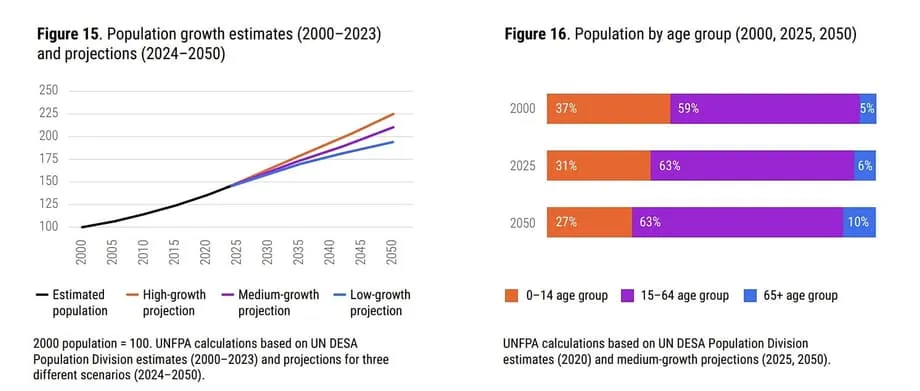
Central Asia's population is projected to exceed 114 million by 2050, while its population aged 15 to 64 is expected to rise from about 50 million to about 71 million, according to the United Nations Population Fund (UNFPA). Those figures point to more than 20 million additional people of working age over the next quarter century, at a time when Europe and East Asia face low birth rates and aging populations.
Contents
- More Young Workers, Greater Pressure to Create Jobs
- What the Demographic Window Means
- Uzbekistan Is at the Center of the Expansion
- Kazakhstan Is Growing and Aging at the Same Time
- Families Balance Siblings, Independence and Costs
- Europe's Smaller Families Face Different Pressures
- A Larger Workforce Needs Better Employment
- Water, Land and Cities Will Face More Demand
- What the Projections Say About the Coming Decades
- Key Points
Nearly one third of Central Asia's population is younger than 15. For governments, that means sustained demand for schools, healthcare and, eventually, employment. For families, it means decisions about how to pay for food, education and housing while balancing cultural traditions, personal ambitions and the practical demands of raising children.
Europe faces a different balance. Low fertility and longer lives are increasing the share of older residents, putting pressure on pension systems, public services and the workers who help finance them. Central Asia's younger population offers room for economic expansion, but the benefits depend on whether its growing workforce can find productive, adequately paid jobs.
As of January 14, 2026, the central policy choice is how to prepare for these contrasting futures. Central Asian countries need to expand services and employment for younger generations. Many European countries need to support older populations while addressing labor shortages and making a smaller workforce more productive.
What the Demographic Window Means
UNFPA describes Central Asia as entering a demographic window: a temporary period when a large generation of young people moves into adulthood and increases the number of potential workers. If those workers are healthy, educated and employed, they can help economies grow faster.
The possible gain is called a demographic dividend. In simple terms, a country can benefit when more people are earning incomes relative to those who depend on others for support. The projected increase from 50 million to 71 million people aged 15 to 64 amounts to about 42%. Creating enough worthwhile employment for that expansion is a major task.
Nigina Abbaszade, UNFPA representative in Uzbekistan, said the outcome would depend on preparations made now:
Whether this growth translates into economic and social gains depends on how well countries prepare now,
Abbaszade identified education, health and employment as priorities, with particular attention to women and younger people:
Investment in education, healthcare, and decent employment, particularly for women and young people, is essential to ensure that the growing population contributes productively to society.
Women's access to education and work is central to both economic and demographic outcomes. More opportunities can help women support themselves and their families while giving them greater scope to make decisions about careers and children.
Governments must invest in people's skills and health, often described as human capital, to turn population growth into higher living standards. Without sufficient education, jobs and social protection, a growing population can face unemployment, greater reliance on migration, environmental strain and social fragmentation.
Uzbekistan Is at the Center of the Expansion
Uzbekistan, Central Asia's most populous country, had 37.4 million residents in 2024, accounting for nearly half the region's population. Its population is projected to reach 52 million by 2050, an increase of 14.6 million from the 2024 figure.
Around 60% of Uzbekistan's people are younger than 30. The population is growing by about 2% a year, nearly twice the global average. That youthful profile creates momentum for economic growth, innovation and an expanding labor market, while increasing the need for classrooms, training and employment.
Uzbekistan's National Statistics Committee puts the annual population increase at roughly 740,000 people. The number of citizens of working age rises by approximately 350,000 each year. Those figures describe different changes: population growth covers people of all ages, while the second figure concerns the group most likely to enter or remain in employment.
Surkhandarya, in southern Uzbekistan, records the country's highest birth rates. Its position was also reflected in the first 24 hours of 2026, when 243 babies were born there, the highest regional total.
Uzbekistan recorded 1,815 births during those first 24 hours, comprising 894 girls and 921 boys. Behind that daily count lies a longer sequence of needs, from maternity care and early childhood services to school places and opportunities for work.
Uzbekistan's projected growth makes sustained spending on education and skills development especially urgent. A larger working population can support a larger economy when businesses and public institutions are able to use those skills productively.
Kazakhstan Is Growing and Aging at the Same Time
Kazakhstan had a population of 20.3 million in 2025, up 23% since 1992. Its population is projected to reach approximately 26 million by 2050. Children aged 0 to 14 account for around 29% to 30% of residents, helping sustain future population growth.
Fertility remains relatively high, at around three children per woman. Kazakhstan is nevertheless further along in its demographic transition than its Central Asian neighbors. A demographic transition is the gradual change in birth rates, survival and population age structure that alters how many children, workers and older people a society contains.
People aged 65 and older currently account for about 8% of Kazakhstan's population. Their share is expected to reach almost 15% by 2050, nearly doubling. Kazakhstan therefore faces two demands together: preparing a substantial young population for adulthood and expanding support for older residents.
Kazakhstan's national figures also conceal differences between regions. Population growth is concentrated in the south and west, while northern regions experience population decline and slower economic activity. Schools, healthcare, employment and infrastructure planning need to reflect those local conditions.
A growing southern community may need additional classrooms and housing. A northern community losing residents faces a different task in maintaining services and economic activity. Kazakhstan's experience shows why a single national population total cannot capture every locality's needs.
Families Balance Siblings, Independence and Costs
Sayyora Mamaraimova, a homemaker from Uzbekistan aged 59, grew up in a large family and wanted her children to have the same companionship. She described the support she remembered:
In our family there were eight of us. We always supported each other,
Mamaraimova explained how that experience influenced her wish to have children:
That's why I wanted my children to have siblings, so they would never feel alone.
Mamaraimova had five daughters, while considering her health and her family's financial limits. She said the responsibilities continued regardless of family size:
No matter how many children you have, you still have to think about education, food, and the future,
Feruza Saidhadjaeva, also from Uzbekistan, worked continuously while raising four children. Her experience combined motherhood with a long professional career, and she placed particular value on planning and women's independence:
Financial responsibility matters. I never wanted to depend on anyone,
Saidhadjaeva said a large family required shared effort as well as financial preparation:
Large families have many positives, but they require discipline, planning, and equal responsibility.
Azhara Kabitova, a mother in Kazakhstan, has six children, including twins and triplets. She described the cultural encouragement surrounding larger families:
Culturally, having many children is encouraged,
Kabitova also stressed the everyday financial decisions parents face:
But families still have to think carefully about finances and long-term planning.
These parents describe family size as a balance between cultural values, personal wishes and practical limits. Sibling support and encouragement from relatives matter, but so do earnings, health, education costs and responsibility within the household.
Europe's Smaller Families Face Different Pressures
Eurostat data put the European Union's total fertility rate at approximately 1.38 births per woman, below the replacement level of about 2.1. The fertility rate estimates how many children a woman would have over her lifetime if current birth patterns continued. Replacement level is the approximate rate needed for one generation to replace itself without migration.
Life expectancy in Europe continues to rise. Together, longer lives and low fertility change the balance between workers and people who depend on them. An increasing dependency ratio means more dependents relative to the population of working age, creating pressure on welfare systems, pensions and public finances.
Many European countries face shrinking workforces without substantial immigration or changes in policy. Families' decisions about children are closely connected to career plans, housing costs and the ability to combine paid work with parenting.
Ilkhom Khalimzoda, an Uzbek citizen living in Finland, described the demands of raising children in a more individualized setting:
Every child requires more time, energy, and money, and parents do almost everything themselves,
Khalimzoda contrasted that experience with the help available from relatives in Uzbekistan:
There is no extended family support like in Uzbekistan.
Jonas Astrup, a Danish father of three, said one or two children was the norm in northern Europe, with larger families often viewed as an exception. His observation places his own household outside that usual pattern.
Central Asian family decisions remain more strongly influenced by cultural norms and support across generations, although economic changes are gradually altering those choices. European and Central Asian parents share the need to plan for their children's future, but the support surrounding them and the costs they face differ.
A Larger Workforce Needs Better Employment
The World Bank's Europe and Central Asia Economic Update forecast growth in the region's developing economies to slow from 3.7% in 2024 to 2.4% in 2025, mainly because of weaker expansion in the Russian Federation. Those figures concern the broader group of developing economies in Europe and Central Asia, rather than Central Asia alone.
The report also identified a serious employment problem: most jobs created over the preceding 15 years were in roles requiring relatively limited skills and offering restricted earning potential. More workers will need opportunities that allow them to use better training and earn higher incomes.
Aging, lower fertility and slowing productivity growth add pressure to labor markets across that wider region. Productivity means how much a worker can produce with the time, equipment and skills available. Better productivity can support higher earnings and help economies cope when their workforce shrinks.
The World Bank called for stronger investment in infrastructure, improvements to the business environment and more private capital. Private capital is money invested by businesses and other private investors. Such investment can help finance productive activity and employment, alongside public spending.
Central Asia and Türkiye urgently need more jobs for their growing young populations. The Western Balkans and Central Europe face a different priority: improving job quality and productivity as their workforces shrink. The region's varied circumstances require countries to take responsibility for reforms suited to their own needs, drawing on assets such as human talent and natural resources.
Central Asia's demographic opportunity therefore depends on both the number and quality of jobs created. Infrastructure, skills and a business environment that supports investment must develop together if millions of additional workers are to contribute to a more resilient economy.
Water, Land and Cities Will Face More Demand
Central Asia's growing population will increase pressure on water resources, land and urban infrastructure by the middle of the century. Vulnerable areas include the Aral Sea region and the Fergana Valley, where demographic growth adds to environmental demands.
Research published in Nature describes rising environmental pressures in urban areas worldwide from air pollution and carbon emissions. Regions growing rapidly have experienced increases in pollutants despite efforts to improve air quality in countries with higher incomes.
Climate change adds another concern for Central Asia. Projections suggest increasing exposure to extreme weather, with vulnerable populations potentially bearing a disproportionate share of the harm. More residents and expanding cities increase the scale of the infrastructure and services that governments must provide.
Central Asian governments will need infrastructure able to withstand climate pressures and urban planning that accommodates growth while limiting environmental damage. Water, land, transport and housing needs are part of the same development challenge as education and employment.
Insufficient jobs, education and social protection can deepen reliance on migration and strain communities. Environmental planning therefore belongs alongside economic planning: a larger population needs both opportunities to earn a living and places where people can live safely.
What the Projections Say About the Coming Decades
A major study published in The Lancet projected the global population to peak at 9.73 billion in 2064 before falling to 8.79 billion by 2100. Its findings pointed to continued gains in female education and access to contraception as forces that would accelerate fertility declines and slow population growth.
Central Asia's expected expansion and Europe's population decline illustrate how different regional trends can exist within that global picture. These are projections dependent on future demographic conditions and decisions, rather than fixed population totals.
UNICEF's projections for children in 2050 indicate that Sub-Saharan Africa and South Asia will have the largest child populations. Its broader Europe and Central Asia grouping is expected to have aging populations and a decreasing share of children, even while Central Asia itself continues to grow.
UNICEF's findings describe governments facing different service demands: some must expand provision for large child populations, while others balance children's needs with those of an increasing elderly population. Decisions taken now, or left unmade, will shape the world children inherit in 2050 and beyond.
The main dates and projections trace the scale of the change:
- 2024: Uzbekistan had 37.4 million people, and growth in the developing economies of Europe and Central Asia was 3.7%.
- 2025: Kazakhstan had 20.3 million people; the World Bank forecast regional economic growth of 2.4%.
- January 1, 2026: Uzbekistan recorded 1,815 births in the first 24 hours of the year.
- 2050: Central Asia is projected to exceed 114 million people, including approximately 71 million aged 15 to 64. Uzbekistan is projected to reach 52 million and Kazakhstan approximately 26 million.
- 2064: The Lancet study projected a global population peak of 9.73 billion.
- 2100: The same study projected a global population of 8.79 billion.
Central Asia could develop new economic partnerships with Europe as its young workforce grows and European countries face labor shortages. That opportunity depends on sustained investment, suitable jobs and cooperation. Policies that protect people's well being and future opportunities will determine whether population growth produces better living standards.
Key Points
- UNFPA projects Central Asia's population to exceed 114 million by 2050, with the population aged 15 to 64 rising from about 50 million to 71 million.
- Nearly one third of Central Asians are younger than 15, creating sustained demand for education, healthcare and future employment.
- Uzbekistan had 37.4 million residents in 2024 and is projected to reach 52 million by 2050; around 60% of its population is under 30.
- Kazakhstan is projected to reach approximately 26 million people by 2050, when almost 15% could be aged 65 or older, compared with 8% currently.
- The EU fertility rate of approximately 1.38 births per woman is below the replacement level of about 2.1.
- The World Bank identified limited earning potential in many newly created jobs and urged investment suited to each country's demographic needs.
- Water resources, land, urban infrastructure and climate pressures require planning alongside investment in skills and employment.
- Education, healthcare, women's opportunities and decent jobs will determine how much Central Asia benefits from its expanding workforce.