A Global Collectible Craze Meets Factory Floor Allegations
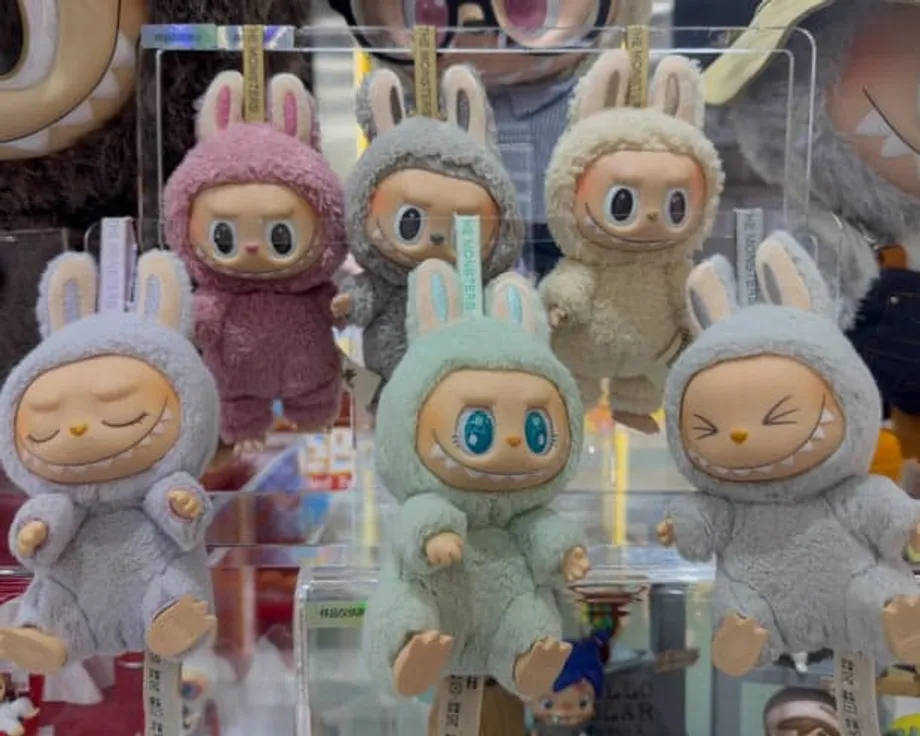
Workers at Shunjia Toys in China's Jiangxi province were reportedly working more than 100 hours of overtime a month to help meet demand for Labubu, the fuzzy, toothy characters sold by Hong Kong listed Pop Mart. Chinese labor law sets a monthly overtime limit of 36 hours. The allegations place the people assembling a global collectible sensation at the center of a dispute over the cost of its success.
Contents
- A Global Collectible Craze Meets Factory Floor Allegations
- Young Workers Face the Same Demands as Adults
- Daily Targets and Overtime Stretch the Workforce
- Pop Mart Promises Checks and Corrective Action
- A Pattern Extending Beyond One Toy Factory
- Why Emotional Appeal Generates So Much Demand
- Falling Resale Prices Add Another Kind of Pressure
- Counterfeit Labubu Toys Bring Labor and Safety Risks
- Expansion Abroad Keeps Supplier Oversight in Focus
- Key Points
China Labor Watch (CLW), a nonprofit organization based in New York, spent three months investigating undercover at Shunjia, a key Pop Mart supplier producing the exclusive Monsters line that includes Labubu. Its findings describe young employees doing the same assembly work as adults, workers signing contracts with essential terms left blank, and teams facing demanding daily production targets.
Labubu's appeal has spread through celebrity endorsements, social media and collectors drawn to figures often described as ugly yet cute. The business behind that appeal is substantial: the Monsters line generated 4.8 billion yuan in sales in the first half of 2025 alone. Pop Mart was described as on track for 20 billion yuan in annual revenue, with a market capitalization exceeding Hasbro and Mattel combined.
As of January 14, 2026, Pop Mart said it was investigating the allegations and would require corrective action if violations were substantiated. The central issue is how the company's promises of regular supplier checks fit with the working conditions described by CLW, particularly when demand pushes factories to produce more.
Young Workers Face the Same Demands as Adults
Chinese law allows people aged 16 to 18 to work, while requiring special protections for this age group. Those protections are intended to keep young employees away from dangerous or strenuous tasks and limit their exposure to physical demands unsuitable for their age.
CLW's investigation found young workers assigned to ordinary assembly line jobs at Shunjia without a different workload or different production targets. The concern is the treatment of legally employable young people: the organization said the factory failed to provide the additional safeguards required for them.
Assembly work can involve repeating the same task throughout a shift while keeping pace with the rest of a production line. At Shunjia, the reported absence of any adjustment for younger employees meant they faced the same pressure to keep up as adult colleagues. CLW presented this as a failure to apply protections intended for a vulnerable group of workers.
Many young employees also reportedly signed contracts in which they completed only their personal information. Sections covering job duties, pay, the length of employment and social insurance were left empty. Social insurance concerns the benefits and coverage attached to employment, making those missing terms part of a worker's basic understanding of the job.
Workers were reportedly given no more than five minutes to complete the paperwork and explicitly told not to read or fill in the remaining sections. A contract with blank terms leaves an employee unsure about what the employer has promised. It can also make it harder to challenge treatment at work when the written record does not clearly set out wages, responsibilities or benefits.
Daily Targets and Overtime Stretch the Workforce
Teams of 25 to 30 workers at Shunjia were reportedly required to assemble at least 4,000 Labubu figures each day. The investigation linked those targets to long working hours, describing a production environment in which employees faced intense pressure to finish the required output.
Workers often exceeded 100 additional hours of work each month, according to the investigation, compared with the legal overtime ceiling of 36 hours. Overtime is work added beyond normal scheduled hours. When it becomes a regular part of meeting production targets, the extra burden falls on employees through longer shifts and less time away from the factory.
Li Qiang, CLW's executive director, also raised concerns about the gap between Shunjia's stated production capacity and estimates drawn from worker interviews. The factory's official capacity was 12 million toys a year, with plans to expand to 33 million. Interviews suggested that actual output was already much higher than the stated level.
Estimates cited in the investigation put annual production from just two teams at more than 24 million units, more than twice the factory's stated capacity of 12 million. Those figures describe different measures, with the larger estimate based on worker accounts and the smaller figure representing the factory's official capacity. They sit at the heart of CLW's concern about how rapidly production was expanding.
Rapid increases in output when demand surges are described as a common feature of Chinese manufacturing. A company can seek more goods before a planned expansion is complete, leaving existing employees to carry more of the work. At Shunjia, the reported targets and overtime show how the Labubu boom could translate into physical pressure on the people assembling the toys.
Pop Mart Promises Checks and Corrective Action
Pop Mart responded by stating its commitment to worker welfare and safety. A spokesperson said the company regularly conducts standardized audits of supply chain partners, including annual checks by independent firms recognized internationally. An audit is an inspection intended to assess whether a supplier meets required standards.
The company said it took CLW's findings seriously and was investigating. It also pledged to strengthen oversight and require partners to take corrective action if the alleged violations were substantiated. Its response left the investigation and any resulting remedies pending as of January 14.
Li Qiang argued that routine inspections can miss what workers experience each day, particularly when factories prepare for an audit. His concern was that a scheduled visit may give a different picture from the conditions employees face while meeting normal production demands.
Li, speaking as CLW's executive director, described the weakness he saw in the existing checks:
"At present, existing supply-chain oversight mechanisms do not appear sufficient to identify and prevent these labour issues in a timely and effective manner," said Li Qiang.
Li called for accessible ways for workers to raise complaints and communicate concerns, including an independent and effective worker hotline. He also urged greater transparency about actual factory conditions and disclosure of the full supply chain, including outsourced production. Outsourcing means passing work to another business, potentially adding another layer between a brand and the people making its products.
A Pattern Extending Beyond One Toy Factory
CLW has investigated toy factories for nearly two decades. Across that work, it has repeatedly identified excessive overtime, inadequate safety training and a lack of independent unions. These findings place the Shunjia allegations within a longer dispute over working conditions in the production of toys for global brands.
Previous investigations covering factories making products for companies including Disney and Hasbro documented as much as 175 hours of overtime a month. Those earlier findings describe other factories, while the Shunjia investigation reported workers often exceeding 100 hours. Both concern workloads far above China's stated monthly limit of 36 hours.
Pressure over prices and production quotas helps explain the repeated pattern. Multinational buyers seek lower manufacturing costs and larger quantities, sometimes demanding further reductions in price and higher targets each year. Suppliers then have to meet those commercial demands through the way they organize production and labor.
Weak enforcement of labor protections and long working hours can give manufacturers a cost advantage over competitors operating under stricter rules. Lower labor costs help factories offer goods at prices that manufacturers in more tightly regulated countries may struggle to match. That contributes to China's strength in global manufacturing and makes inexpensive products available to consumers.
The benefit to corporate profits and retail prices comes with a cost for workers when their rights and welfare are squeezed. Shunjia's reported overtime and treatment of young employees illustrate the conflict: the product becomes more widely available while the people making it face demands that labor rules are intended to limit.
Why Emotional Appeal Generates So Much Demand
Labubu's rise is part of what is described in China as the emotional economy. The term refers to spending driven by how a purchase makes someone feel, including comfort, stress relief and a sense of personal expression, rather than simply by its practical use.
Millennials and Generation Z consumers have helped move designer toys and plush figures from niche collecting into mainstream shopping. Social media spreads images of desirable characters, while celebrity endorsements from Rihanna and Blackpink's Lisa have brought Labubu to much wider audiences.
Pop Mart's business combines that emotional appeal with high profit margins. Its gross margin was estimated at between 65% and 70%, a range compared with luxury brands such as Louis Vuitton. Gross margin is the share of sales revenue left after the direct cost of the goods sold, before other business expenses are deducted.
The blind box model adds another reason to buy repeatedly. Customers purchase a sealed package without knowing which particular figure is inside. The surprise can encourage people to keep buying in pursuit of a preferred character or a complete collection. The model has been described as encouraging an addictive pattern similar to gambling because the desired result is uncertain.
Strong sales give Pop Mart and its suppliers a reason to increase production quickly. The 4.8 billion yuan generated by the Monsters line in the first half of 2025 shows the scale of demand attached to the characters. For workers, the connection is direct: more orders can mean higher output targets and longer hours.
Falling Resale Prices Add Another Kind of Pressure
Collectors also face the risk that a fashionable toy will lose value. Recent accounts described secondary market prices for major toy lines falling by nearly 24%, alongside regret among buyers. The secondary market is where owners resell products after their first retail sale, often at prices shaped by scarcity and popularity.
Those declines fed warnings that the art toy bubble could be bursting. A bubble develops when enthusiasm pushes prices upward and buyers expect that rise to continue. Falling resale prices can weaken that expectation, especially for people who bought hoping their collections would become more valuable.
Factory workers experience this volatility differently from collectors. A sudden boom can bring intense demands to make more goods, while a shift in taste can bring uncertainty about future work. The same market that rewards fast expansion can become unstable when enthusiasm moves elsewhere.
Pop Mart therefore faces pressure from two directions: meeting demand while it is strong and managing the risks when that demand changes. The labor allegations show why the way production is increased matters alongside the financial success of a popular character.
Counterfeit Labubu Toys Bring Labor and Safety Risks
Labubu's popularity has created a large counterfeit market, with imitation figures often called Lafufus. Some are made in informal home factories operating without oversight. These operations add another labor concern around the craze, separate from the allegations involving Pop Mart's supplier.
Accounts from Shenzhen described elderly women cutting apart toy heads in cramped apartments for pennies, unaware of the retail value of the products they were helping make. The informal operations were described as outside the law, without worker protections and often using materials of poor quality.
Counterfeits also create risks for buyers. Authorities in the United Kingdom seized thousands of fake Labubu dolls considered choking hazards because parts were poorly attached. Pieces that come loose can be swallowed, making construction quality a safety issue as well as a question of authenticity.
The Intellectual Property Office said criminals rush such products to market with complete disregard for safety concerns. Counterfeit production can involve toxic plastics and banned chemicals, adding material risks to the danger posed by detachable parts.
China's crackdown on imitations also carries a national interest. Labubu is viewed as a success in soft power, meaning influence gained through culture and appeal, and as a symbol of movement from Made in China to Created in China. Counterfeits threaten the reputation and commercial value of a character associated with that ambition.
Expansion Abroad Keeps Supplier Oversight in Focus
Pop Mart is diversifying production amid threats of tariffs from the United States. Tariffs are taxes imposed on imported goods and can increase the cost of selling products in a foreign market. The company is moving production to countries including Vietnam, Mexico and Indonesia to reduce exposure to trade risks.
Moving production can protect a business against changes in trade policy, while also extending the network of factories it needs to monitor. Concern surrounding the strategy is that exploitative practices could move with production into locations where regulatory enforcement is weak. The worker protections at each supplier remain central to that issue.
Pop Mart's international ambitions include a potential Hollywood film adaptation. As the brand reaches more consumers, its public image increasingly depends on both the characters it sells and the conditions under which those products are made.
Consumers and investors are demanding higher ethical standards from brands they support. For Pop Mart, responsible management of its supply chain is therefore tied to maintaining Labubu's position as a cultural icon. Its promised investigation and corrective measures put attention on how those commitments will translate into factory conditions.
Shunjia's workers remain at the center of the immediate dispute. CLW's allegations connect a product bought for comfort and enjoyment with accounts of blank contracts, demanding quotas and excessive overtime. Pop Mart's response promises scrutiny, while the wider business continues to navigate counterfeit competition, changing collector demand and trade pressures.
Key Points
- China Labor Watch spent three months undercover at Shunjia Toys in Jiangxi, a Pop Mart supplier making the Monsters line that includes Labubu.
- The investigation alleged that workers aged 16 to 18 faced the same workloads as adults and that many signed contracts with essential terms left blank.
- Workers reportedly often exceeded 100 overtime hours a month, against China's legal limit of 36 hours.
- Teams of 25 to 30 people reportedly had to assemble at least 4,000 Labubu figures daily.
- The Monsters line generated 4.8 billion yuan in sales in the first half of 2025, while Pop Mart was described as on track for 20 billion yuan in annual revenue.
- Pop Mart said it was investigating and would require corrective action if violations were substantiated. CLW called for independent worker complaints channels and greater supply chain transparency.
- Counterfeit Lafufu toys bring additional labor concerns and safety risks, including poorly attached parts, toxic plastics and banned chemicals.
- Pop Mart is diversifying production into Vietnam, Mexico and Indonesia amid US tariff threats, while facing changing collector demand and growing scrutiny of supplier conditions.