16,000 households targeted for mortgages in 2027
Mongolia plans to move 16,000 households into apartments through mortgages charging 6 percent interest in 2027, the first major financing target under a national program announced by Prime Minister N. Uchral on October 21, 2026. The initiative combines 40,000 government apartments with financing for purchases of 60,000 homes built by private companies.
Contents
- 16,000 households targeted for mortgages in 2027
- What will be built, and when?
- Renting without a down payment
- How the 1.42 million tugrik payment works
- Building a down payment over five years
- Shared ownership divides the financing
- Ger district land will count toward payment
- Private buyers face two mortgage choices
- Funding and selection are the next steps
- Key Points
Called the 50,000 chimneys down, 100,000 households in apartments program, it offers four arrangements for government housing: ordinary rental, renting toward ownership, saving a down payment while renting, and shared ownership. For an apartment measuring 45 square meters with two rooms, the announced monthly rent is 700,000 tugriks. Paying toward ownership as well would bring the monthly bill to 1,420,000 tugriks.
The government's housing announcement says more than half the government apartments will go to households from ger districts, with the value of their land counted toward payment. Ger districts are residential areas that include traditional round dwellings known as gers, alongside houses.
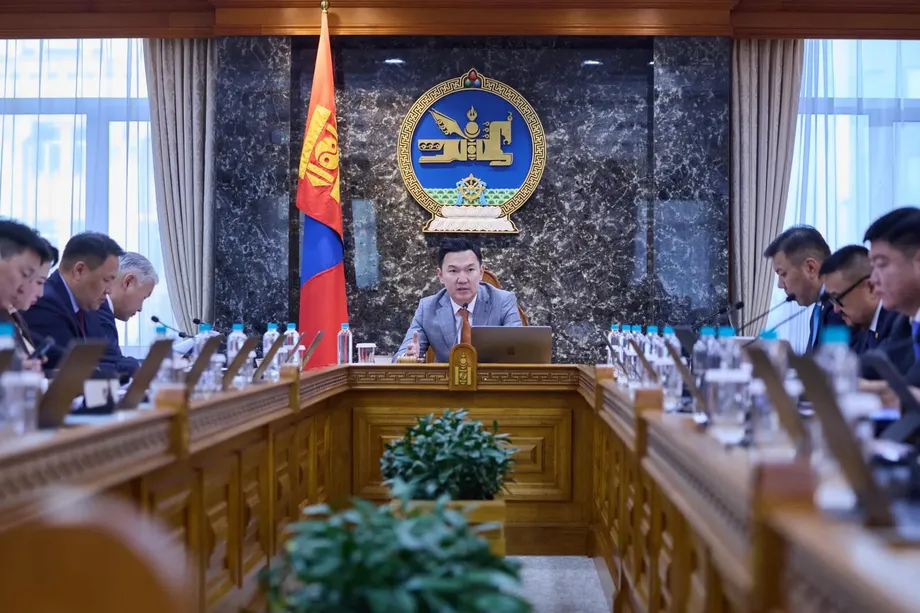
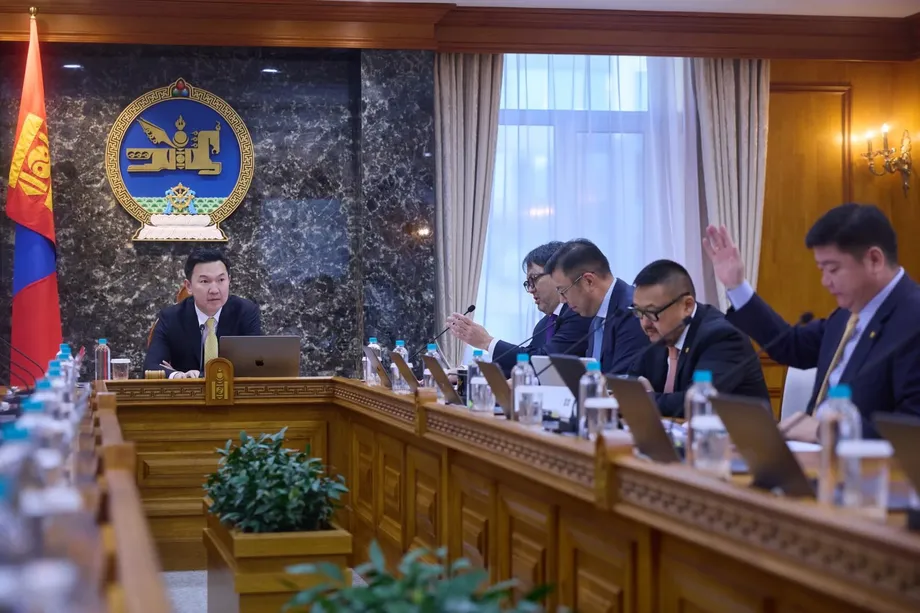
Uchral presented the initiative in connection with a regular Cabinet meeting at which the housing program was discussed. Its design addresses two different financial problems: finding enough money to enter a housing arrangement and keeping up with payments afterward. Families would have several ways to enter government housing, while buyers of private apartments would receive different mortgage options.
What will be built, and when?
The government identifies 3,572 apartments under construction in developments including Selbe, Sharhad, and Solongo I and II. It expects further additions of 8,238 apartments in 2027 and 11,246 in 2028, on the way to completing 40,000 government apartments by 2030.
The government's completion target is 2030, although 2040 has also been reported. Its announcement also puts private construction at more than 82,000 apartments by 2030, with 60,000 private apartments designated for the program's mortgage arrangements.
The announced milestones cover both construction and household financing:
- October 21, 2026: Uchral announces the national housing program.
- 2026: Private companies are expected to complete 14,832 apartments.
- 2027: The government targets mortgages at 6 percent for 16,000 households and an additional 8,238 government apartments.
- 2028: A further 11,246 government apartments are planned.
- 2030: Government housing is expected to reach 40,000 apartments, while private companies are expected to have built more than 82,000.
The 40,000 government apartments and the 60,000 private apartments designated for mortgage support together make up the program's 100,000 household target. Private construction beyond those 60,000 apartments forms part of the larger building pipeline described by the government.
Renting without a down payment
Uchral used an apartment measuring 45 square meters with two rooms to explain the four government housing choices. The simplest is ordinary rental at 700,000 tugriks a month, with no down payment required.
For a household choosing this arrangement, the stated rent would total 8.4 million tugriks over 12 months. The immediate financial requirement is therefore a recurring monthly payment rather than a large sum saved before moving in.
Prime Minister N. Uchral explicitly described both ordinary rental and renting toward ownership as arrangements without an initial down payment. Speaking in Mongolian, he said:
Let me stress again that both rental housing and rent-to-own housing require no down payment.
The other options deal with ownership in different ways. One spreads the accumulation of a down payment over five years, while another divides the apartment's financing between a rental arrangement and a bank loan.
How the 1.42 million tugrik payment works
The arrangement for renting toward ownership has two monthly components: 700,000 tugriks in rent and 720,000 tugriks credited toward ownership. Together, they produce the announced payment of 1,420,000 tugriks.
The ownership contribution is slightly larger than the rental component. Over one year, the household would pay 8.4 million tugriks in rent and 8.64 million tugriks toward ownership, for a combined 17.04 million tugriks.
Compared with ordinary rental, this option requires another 720,000 tugriks each month, making the monthly payment just over twice the rent alone. The benefit is that part of each payment goes toward acquiring the apartment rather than paying only for occupancy.
Uchral was also reported as saying that full ownership would transfer after 20 years. At the announced monthly amount, 20 years of uninterrupted payments would total 340.8 million tugriks, including 172.8 million tugriks credited toward ownership. This calculation assumes that both monthly components remain unchanged throughout that period.
Building a down payment over five years
The third option allows a household to accumulate a down payment while renting. Instead of saving the usual 30 percent before entering the arrangement, the household would pay an additional 860,000 tugriks every month for five years.
Across 60 months, those additional payments would add up to 51.6 million tugriks. Applying the example's monthly rent of 700,000 tugriks would produce a combined monthly commitment of 1.56 million tugriks during that saving period.
This would be 140,000 tugriks more each month than the separate arrangement for renting toward ownership. The two choices serve different purposes: the 720,000 tugrik contribution goes toward ownership, while the 860,000 tugrik contribution builds a down payment for a later mortgage.
A mortgage is a loan used to buy a home, repaid over time with interest. For families considering this option, the first five years would involve paying both for their accommodation and for the savings needed to enter the loan arrangement.
Shared ownership divides the financing
The fourth option is shared ownership. Uchral said the bank and the Capital City Housing Corporation, known as NOSK, would be registered together on the apartment's ownership certificate.
Half the apartment's value would be handled through rental or an arrangement for renting toward ownership. The household would take out a loan for the remaining half. In practical terms, the buyer would borrow against half the apartment's value rather than financing the full purchase through a mortgage.
Uchral said this would halve the required down payment threshold and the loan and interest payments. The household would still have a rental or ownership contribution associated with the other half of the property, alongside its bank repayments.
The choice therefore changes the mix of payments. A smaller mortgage would sit beside the arrangement covering the other half of the apartment, giving households another route into housing where the full mortgage requirement might otherwise be difficult to meet.
Ger district land will count toward payment
More than half the 40,000 government apartments are intended for households from ger districts. The government says their land will be valued and counted toward payment, allowing a property asset they already hold to help finance the move.
Uchral also said 25,000 chimneys would be removed as households moved into government apartments. That figure is half the national program's target of removing 50,000 chimneys and is equivalent to 62.5 percent of the 40,000 government apartments.
The land arrangement gives the program a second function beyond supplying homes: it connects apartment allocation with the movement of households out of properties using individual chimneys. For participating families, the value assigned to their land would directly affect how much of their housing payment it covers.
The government apartment allocation and the wider chimney target operate at different scales. The specific figure attached to moves into government housing is 25,000 chimneys, while the program as a whole carries the 50,000 target.
Private buyers face two mortgage choices
The 60,000 private apartments designated for financing support are intended for households buying a home for the first time. Of those households, 39,000 are planned to receive mortgages at 6 percent interest.
The remaining 21,000 would have an option charging 6 percent for the first three years and 12 percent for the following 17 years. That produces a loan term of 20 years, with the higher rate applying for most of it.
The split means 65 percent of the 60,000 households would fall within the planned 6 percent group, while 35 percent would be offered the arrangement whose rate rises after three years. For the latter group, the interest rate would double when the initial period ends.
A household's later monthly payment would depend on how much it still owed and the repayment schedule. The practical issue for those buyers is whether they could afford the loan after the introductory rate ends, as well as during its first three years.
Uchral said interest rates and conditions would also vary by urban area and location, taking population concentration, demand, pressure on the city and traffic congestion into account. The financing plan therefore links borrowing conditions to where an apartment is located.
Funding and selection are the next steps
Uchral promised that household selection would be open and transparent. Selection of the first households is expected after Parliament approves the 2027 budget, making that approval the next stated procedural milestone.
The prime minister also described a proposal to raise 1.8 trillion tugriks through the financial sector for the private housing mortgage program and include swap costs in the budget. A swap is a financial agreement to exchange payment obligations, often involving currencies or interest rates. The proposal would place the associated cost in public spending plans.
The announcement leaves several practical details open: the application date, full eligibility rules, income requirements, land valuation method, treatment of missed payments and exact later repayments under the mortgage options. It also gives no date for the budget vote. Those details will determine which households can qualify and what each arrangement will cost them.
The program's immediate measures of progress are concrete: completing the apartments already under construction, securing the planned financing and selecting households for the 16,000 mortgages targeted in 2027. Its longer schedule extends through the government's 2030 construction target.
Key Points
- Mongolia announced the housing program on October 21, 2026, targeting 100,000 households and the removal of 50,000 chimneys.
- The plan combines 40,000 government apartments with mortgage support for 60,000 private apartments.
- A government apartment measuring 45 square meters would cost 700,000 tugriks a month to rent or 1,420,000 tugriks to rent toward ownership.
- Another option allows households to build a down payment by paying 860,000 tugriks monthly, in addition to rent, for five years.
- More than half the government apartments are intended for ger district households, whose land value would count toward payment.
- Among private apartment buyers, 39,000 households are planned for mortgages at 6 percent; another 21,000 would have an option rising to 12 percent after three years.
- The government targets 16,000 households for mortgages at 6 percent in 2027, with initial selection expected after budget approval.