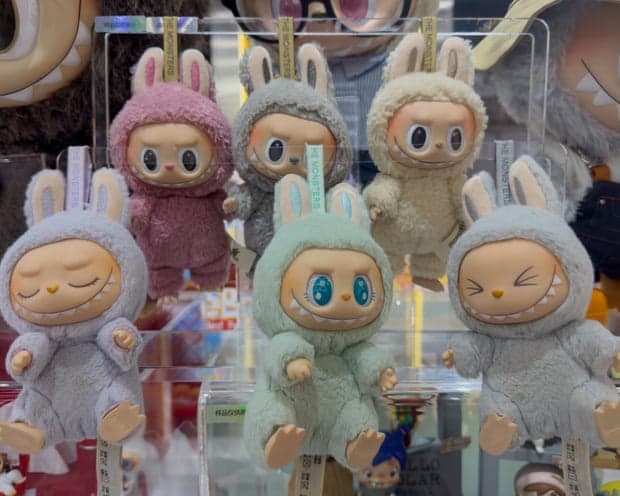
The Dark Side of a Viral Sensation
Labubu toys, the toothy and fuzzy monsters that have captured the hearts of celebrities and collectors worldwide, are facing a severe backlash. While these ugly yet cute figures generate billions in sales for the Hong Kong listed Pop Mart, a new investigation suggests the workers assembling them face severe exploitation. China Labor Watch (CLW), a New York based non profit organization, spent three months undercover at Shunjia Toys in Jiangxi province. The factory is a key supplier for Pop Mart, producing the exclusive Monsters line that features the Labubu character. The findings paint a stark picture of the human cost behind the global toy craze, raising serious questions about corporate responsibility in the fast paced world of designer collectibles.
- The Dark Side of a Viral Sensation
- Violations of Youth Labor Protections
- Intense Pressure and Excessive Overtime
- Corporate Response and Accountability Gaps
- Structural Issues in the Manufacturing Sector
- The Emotional Economy Driving Demand
- The Shadow Market of Counterfeits
- Geopolitical Pressures and Future Challenges
- Key Points
Violations of Youth Labor Protections
The investigation uncovered disturbing practices regarding the employment of minors. While Chinese law permits the employment of workers aged 16 to 18, it mandates special protections for this age group. These protections are designed to restrict them from dangerous or strenuous work and ensure they are not subjected to the same physical demands as adults. However, researchers found that young workers at Shunjia Toys were assigned to standard assembly line positions without any differentiation in workload or production targets. The report highlights a critical failure in adherence to labor standards, placing vulnerable young workers in conditions potentially unsuitable for their age.
Beyond the physical demands, the administrative treatment of these workers raised red flags. Many underage employees reported signing blank contracts. They were instructed to fill in only their personal details while leaving critical sections such as job content, salary, contract term, and social insurance details empty. The process was rushed, with workers given no more than five minutes to complete the paperwork and explicitly told not to read or fill in the other sections. This practice leaves workers with little understanding of their legal rights or the terms of their employment, effectively stripping them of necessary legal recourse.
Intense Pressure and Excessive Overtime
The demand for Labubu toys has created a manufacturing environment of relentless pressure. Workers at the Shunjia facility reported facing unrealistic production quotas. Teams of 25 to 30 people are required to assemble at least 4,000 Labubu figures every single day. This high pressure environment forces employees to work long hours to meet their targets. Chinese labor law stipulates a maximum of 36 hours of overtime per month. Yet, the investigation revealed that workers at Shunjia Toys often exceed 100 additional hours of overtime each month.
Li Qiang, the executive director of CLW, pointed out the discrepancy between the factory official capacity and its actual output. Shunjia Toys has an official production capacity of 12 million toys per year, with plans to expand to 33 million. However, interviews with workers suggested the facility was already producing far beyond its stated limits. Estimates indicate that just two teams at the factory were producing more than 24 million units annually. This gap between planned capacity and actual output is a common phenomenon in Chinese manufacturing. When market demand surges, production expands rapidly, and the physical burden of this expansion falls directly on the workforce.
The financial incentives for the company are clear. In the first half of 2025 alone, the Monsters line generated 4.8 billion yuan in sales. Pop Mart is on track to reach 20 billion yuan in revenue for the year, with a market capitalization that has surpassed traditional giants like Hasbro and Mattel combined.
Corporate Response and Accountability Gaps
Following the release of the report, Pop Mart issued a statement addressing the allegations. The company emphasized its commitment to worker welfare and safety. A spokesperson stated that Pop Mart conducts regular, standardized audits of its supply chain partners, including annual independent third party audits by internationally recognized firms. The company claimed to be taking the findings seriously and is currently investigating the matter. They pledged to strengthen oversight mechanisms and require corrective actions from partners if the violations are substantiated.
Despite these assurances, critics argue that existing oversight mechanisms are insufficient. Li Qiang noted that standard audits often fail to catch the realities of daily factory life, especially when facilities prepare for inspections. He argued that real change requires more than just periodic checks. Li suggested that Pop Mart needs to establish accessible grievance and communication mechanisms for workers, such as an independent and effective worker hotline. He also called for improved transparency regarding actual factory working conditions and full disclosure of the supply chain structure, including outsourced production.
“At present, existing supply-chain oversight mechanisms do not appear sufficient to identify and prevent these labour issues in a timely and effective manner,” said Li Qiang.
Structural Issues in the Manufacturing Sector
The conditions found at Shunjia Toys are not isolated incidents. They reflect broader structural issues within the Chinese manufacturing sector. China Labor Watch has investigated toy factories for nearly two decades, consistently finding violations such as excessive overtime, inadequate safety training, and lack of independent unions. In previous reports covering factories producing for major brands like Disney and Hasbro, the NGO documented workers enduring up to 175 hours of overtime per month. These excessive hours are often driven by price pressure from multinational companies that demand lower production costs and higher quotas each year.
Analysts suggest that China weak labor protections actually serve as a strategic economic advantage. By keeping labor costs low through lax enforcement and long working hours, manufacturers can offer prices that competitors in countries with stricter labor laws cannot match. This structural advantage allows companies to produce goods at a fraction of the cost found in the West, contributing to China dominance in global manufacturing. While this system benefits corporate bottom lines and consumer access to cheap goods, it relies on the suppression of workers rights and welfare.
The Emotional Economy Driving Demand
To understand the pressure on the factory floor, one must look at the explosive demand for these products. The rise of Labubu is part of a larger trend in China known as the emotional economy. Millennials and Gen Z consumers are increasingly spending money on items that offer emotional value, stress relief, and the expression of self. Designer toys and plushies have moved from niche hobbies to mainstream obsessions, driven by social media trends and celebrity endorsements from stars like Rihanna and Blackpink Lisa.
This emotional consumption fuels a business model with high margins. Pop Mart gross margin is estimated to be between 65% and 70%, comparable to luxury brands like Louis Vuitton. The blind box sales model, where buyers do not know which specific figure they are purchasing until they open it, creates a gambling like addiction that drives repeat purchases. However, analysts warn that this market can be volatile. Recent reports suggest the art toy bubble may be bursting, with secondary market prices for major lines falling by nearly 24% and collector regret setting in. This volatility creates an unpredictable environment for workers, who face intense pressure during boom times but may face instability when trends shift.
The Shadow Market of Counterfeits
The immense popularity of Labubu has also spawned a vast underground market for counterfeits, often called Lafufus. While these fakes are often produced in informal home factories with zero oversight, they further complicate the labor landscape. Reports from Shenzhen describe elderly women slicing apart toy heads in cramped apartments for pennies, entirely unaware of the retail value of the items they are creating. These informal operations exist outside the law, offering no protections for workers and often using substandard materials.
In international markets, the flood of counterfeits poses safety risks. Authorities in the UK have seized thousands of fake Labubu dolls that were deemed choking hazards due to poorly attached parts. The Intellectual Property Office notes that criminals rush these products to market with complete disregard for safety concerns, sometimes using toxic plastics and banned chemicals. The crackdown on fakes has become a matter of national interest for China, which views Labubu as a soft power success story and a symbol of the shift from Made in China to Created in China.
Geopolitical Pressures and Future Challenges
Pop Mart faces not only reputational risks but also geopolitical headwinds. Threats of tariffs from the United States have prompted the company to diversify its supply chain. Pop Mart is actively moving production to countries like Vietnam, Mexico, and Indonesia to mitigate trade risks. While this strategy may protect the company from tariffs, there are concerns that it could simply export the exploitative labor practices to new locations with weak regulatory environments.
As Pop Mart continues its global expansion, including a potential Hollywood film adaptation, the scrutiny on its labor practices will likely intensify. Consumers and investors are increasingly demanding higher ethical standards from the brands they support. The company ability to manage its supply chain responsibly will be crucial for maintaining its image as a cultural icon. For now, the workers at Shunjia Toys remain at the center of a conflict between the insatiable global demand for emotional comfort products and the harsh realities of industrial manufacturing.
Key Points
- China Labor Watch found underage workers at Shunjia Toys facing the same workload as adults, violating legal protections.
- Workers reported signing blank contracts under extreme time pressure and working over 100 hours of overtime monthly.
- Pop Mart, the company behind Labubu, claims to conduct regular audits but faces criticism for insufficient oversight.
- The emotional economy drives high sales for Pop Mart, with market caps exceeding traditional toy giants.
- A vast counterfeit market, or Lafufus, exploits informal labor and poses safety risks to consumers.
- Geopolitical tensions are pushing Pop Mart to move supply chains to Vietnam and Mexico.