Why China is rewriting the rulebook on power banks
China is preparing a sweeping update to how portable power banks are designed, labeled, and tested. The Ministry of Industry and Information Technology (MIIT) plans to require that all newly manufactured power banks either include an LCD screen that shows status or work with a companion application that provides the same information in real time. The move follows a rise in airport and in flight incidents involving lithium batteries, including reports of smoking or fire in overhead bins. Recent cases include an Air China flight on October 18 that diverted after smoke was detected in an overhead bin, and an IndiGo taxiing incident the next day when a passenger’s power bank ignited.
- Why China is rewriting the rulebook on power banks
- What the new standard requires
- Tougher safety tests, explained
- From CCC to a new regime, what changes for flights
- Impact on manufacturers and supply chains
- What travelers and consumers should do now
- How China compares with global airline rules
- Will screens and apps make power banks safer
- Key Points
Officials intend to replace the current China Compulsory Certification program for power banks with a dedicated safety specification that covers product design, cells, circuits, firmware, labels, and user information. Public consultation is slated for December 2025, official publication is expected in February 2026, and full enforcement is targeted for June 2026. Many details are already known, including higher thresholds for penetration tests, longer and hotter heat resistance checks, and stricter overcharge tolerance.
The update builds on aviation rules tightened in 2025. On domestic flights in mainland China, only power banks with a valid 3C mark are allowed in the cabin. Security teams now check markings and capacity, and non compliant units can be seized at checkpoints. The new power bank standard will sit above that aviation gatekeeper rule by dictating what can be manufactured and sold nationwide.
China is the largest producer of portable chargers, so the standard will shape the local market and exports as well. Large brands already sell models with screens that show state of charge and power delivery. The proposed rules go further by requiring deeper status data and by upgrading the suite of abuse tests that batteries must survive without venting, smoking, or fire.
What the new standard requires
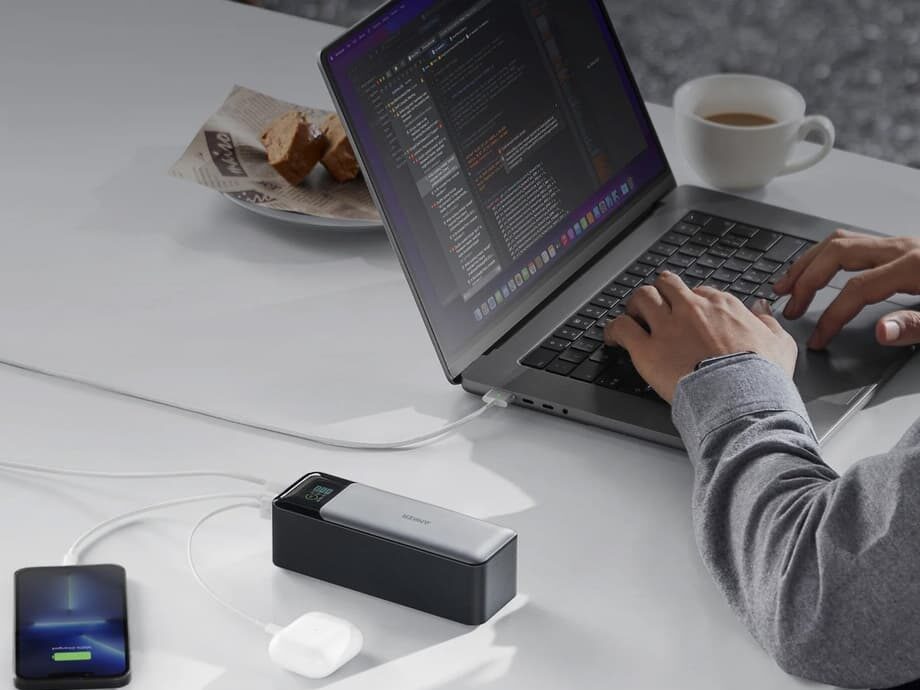
Regulators aim to make power banks safer and more transparent to the user. Every unit will either show key information on an LCD, or connect to an app that provides the same data. The specification also tightens what manufacturers must print on the casing and how long products are expected to be used safely. Several features mirror what premium models already do, but now they would become requirements for every product sold in China.
- Visible status on the device or via a companion app, including state of charge and output power.
- Health information such as cycle count and an indicator of battery condition.
- Clear labeling on the shell with the full name of the manufacturer or OEM, the battery type, production date, and a recommended safe service life.
- More rigorous safety testing for cells and packs, including penetration, heat, overcharge, and short circuit scenarios.
- Upgraded protection circuitry and firmware to prevent dangerous failure modes.
- Traceability of components and batches to support recalls and compliance checks.
The requirement for a screen or app is unusual in a global context. Chinese officials want users to be able to see more than a simple four LED bar. Real time readouts and alerts can steer people away from risky behavior, like running a damaged pack or leaving one inside a hot car. They also give airlines and security staff quick ways to identify capacity, usage, and brand information without guesswork.
Tougher safety tests, explained
The new specification raises thresholds so that damaged or stressed batteries are less likely to fail. Lithium ion cells can enter thermal runaway when shorted or overheated. The pack then vents hot gases and can ignite nearby materials. Engineering and testing aim to make that chain reaction less likely and to limit its effects if it starts.
Penetration and internal short tests
Power banks will need to pass stricter nail or spike penetration tests that simulate a sharp object piercing a cell. Internal shorts can trigger rapid heating and venting. The new procedure requires that units must not catch fire, crack open, or leak even when the cell is compromised. It also validates the design of separators, current interrupters, and the chassis that contains the cells.
Thermal abuse and temperature resistance
Heat accelerates chemical reactions inside a cell. The standard extends the high temperature test from 130 degrees Celsius for 30 minutes to 135 degrees Celsius for 60 minutes. That is a much harsher exposure. Passing means the pack can survive a longer heat soak, for example inside a parked vehicle under the sun, without smoking or igniting.
Overcharge and power electronics
Overcharging stresses lithium cells and can push them into dangerous states. The new rules require packs to tolerate a voltage surge up to 1.4 times the standard level without catastrophic failure. That raises the bar for battery management systems, which must monitor each cell, balance charges, and cut off power quickly when limits are crossed. It also puts more pressure on selection of quality charger chips and MOSFETs.
From CCC to a new regime, what changes for flights
For travelers, two tracks matter. The aviation rules determine what you can carry on a plane, while the new MIIT standard will determine what products can be sold. At the moment, domestic flights in China allow only power banks with the 3C certification mark in carry on baggage. Security agents can ask to see the mark and the capacity rating, and they can confiscate non compliant units.
Capacity limits align with international practice. Up to 100 watt hours is allowed without special permission. Packs from 100 to 160 watt hours need airline approval, and anything above 160 watt hours is not allowed on passenger flights. Power banks must be in the cabin, not checked luggage. Most 10,000 mAh and 20,000 mAh models are under 100 watt hours if they use cells with a 3.7 volt nominal voltage.
Once the new standard takes effect, the 3C program for power banks would be phased out for manufacturing. The aviation rule that airports enforce could then reference the new standard when checking products. Travelers should expect tighter inspection in the near term, because airport fires have drawn more attention to batteries. According to the global airline trade group IATA, lithium battery related events occur about once every ten days worldwide.
Impact on manufacturers and supply chains
China has hundreds of small power bank assemblers that rely on commodity cells and simple control boards. The new requirements will raise the bar on design, firmware, and traceability. Industry estimates suggest that as much as seventy percent of smaller producers may exit the market, unable to fund the upgrades or meet the audit trail needed to pass certification.
Adding a screen, health sensors, and better battery management raises bill of materials cost. Stronger enclosures, better separators, and higher grade cells also increase unit cost. Factories will need more testing equipment, including chambers for thermal abuse and rigs for penetration tests. Quality management systems will need to track batches and record test results for inspectors.
Large brands are better positioned. Many already ship models with status displays and robust protection circuits. They also have relationships with top cell suppliers and can invest in companion apps. The standard could accelerate a shift toward smart power banks that report cycle counts, cell health, and firmware version, similar to what users see with laptop batteries. That change could support longer warranties and more responsible disposal when packs reach the end of their rated service life.
What travelers and consumers should do now
If you plan to fly within China, check your power bank before you pack. Look for the 3C mark printed clearly on the device. If it is missing or faded, security may not allow the unit past the checkpoint. Keep the bank in your carry on and be ready to remove it for inspection. Airports discourage storage in overhead bins because detection is slower there if a device overheats.
Check capacity in watt hours. If the label shows only milliamp hours, you can convert by multiplying by the nominal voltage, then dividing by one thousand. For most packs that use 3.7 volt cells, a 10,000 mAh unit is about 37 Wh, and a 20,000 mAh unit is about 74 Wh. Stay under 100 Wh for the smoothest experience. If a pack is between 100 and 160 Wh, ask the airline for approval before you travel.
When buying a new power bank in 2026 or later, look for models that display health and cycle count, or that connect to a trusted app. Check that the casing lists the full manufacturer name, battery type, and a recommended service life. Choose reputable brands and sellers. Avoid no brand units or those with unclear labels. If you store a power bank in a hot car or see bulging, recycle it immediately.
How China compares with global airline rules
Most countries follow the 100 Wh and 160 Wh thresholds popularized by IATA and adopted by regulators in regions such as the European Union, the United Kingdom, and the United States. All require that spare lithium batteries and power banks travel in the cabin, never in checked baggage. Many airlines limit the number of units and ask that terminals are protected from short circuits.
Some carriers also restrict use. Airlines in Australia, Singapore, and parts of the Middle East now prohibit passengers from charging with a power bank during the flight. Several require that such devices remain within reach, not stored in overhead bins. These measures reduce the risk that a smoking battery could go unnoticed and make it easier for cabin crews to respond quickly with fire containment equipment.
China stands out for adding a screen or app requirement at the manufacturing stage. That is not a travel rule, it is a product rule. If other countries follow, smart displays could become standard across the industry. Even if they do not, many exporters will build to the Chinese standard to access the market, which could lift safety and transparency for customers everywhere.
Will screens and apps make power banks safer
A display does not prevent a cell defect, but better information can guide use and speed intervention. If a pack can show a rising internal temperature, a swelling warning, or a high cycle count that indicates aging, users can stop using it before a failure. Airlines and security staff can make quicker decisions when labels and on screen data are clear.
The heavier lift comes from the test upgrades and the electronics that prevent overcharge and shorts. Higher thresholds for heat, penetration, and voltage are designed to block the conditions that lead to thermal runaway. Combined with better quality control and traceability, the standard targets both the causes and the consequences of battery failures.
No battery rule removes all risk. Good practice still matters. Keep power banks out of overhead bins, avoid covering them with clothing while charging, and stop using any unit that feels hot, smells of chemicals, or shows swelling. If a device smokes or sparks on a plane, tell the crew immediately and follow instructions.
Key Points
- China plans to enforce a new power bank safety standard by June 2026, replacing 3C for manufacturing.
- Every new power bank must have an LCD screen or a companion app that shows status and health data.
- Tests get tougher, including penetration, a 135 degrees Celsius for 60 minutes heat soak, and tolerance of 1.4 times overcharge voltage.
- Labels must include manufacturer name, battery type, production date, and a recommended service life.
- Industry estimates suggest many small factories will exit, while large brands are prepared.
- On domestic flights in China, only 3C certified power banks are allowed today, under the common 100 Wh and 160 Wh limits.
- Several airlines worldwide now prohibit using power banks on board and require that they stay within reach in the cabin.
- Displays and apps can aid safety, but prudent use and storage remain essential for lithium batteries.