Paradise Lost in the Name of Green Progress
Abdullah Ambar returned to Lelilef Sawai village on Halmahera island a decade ago seeking peace after decades at sea. The 64-year-old fisherman built three boats and found prosperity in the abundant waters off Indonesia’s remote North Maluku province. “You can find fish just 10m from shore,” he recalled. “If people were hungry, they could take a small canoe, go out for an hour or two, come back home, and eat.”
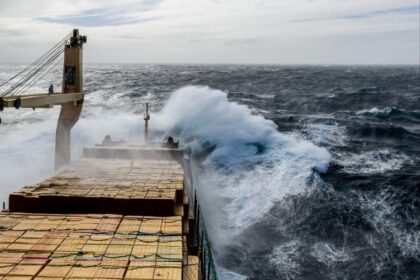
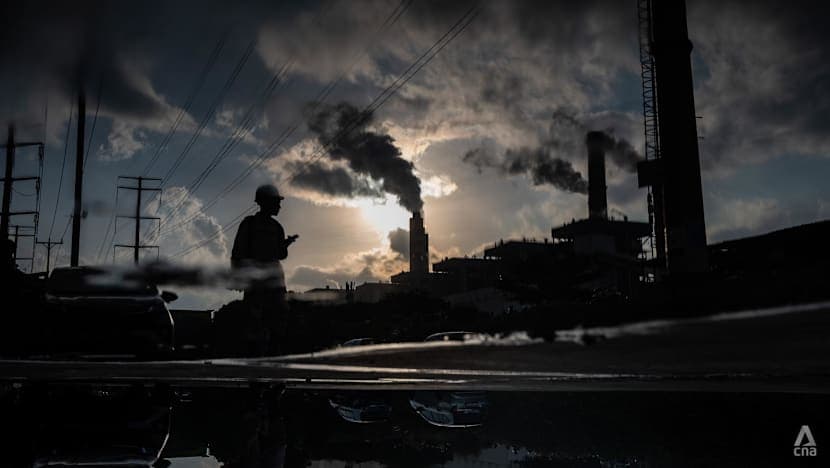
That tranquility vanished in 2018 when industrial development arrived on the other side of Weda Bay. A nickel processing facility began operating, fed by a six gigawatt coal-fired power plant. Within years, the landscape transformed into an industrial wasteland. Lush green hills became bare red clay that bleeds into the sea during rains. Cargo ships destroy coral reefs while ferrying coal and nickel ore. The four villages along Weda Bay now host 80,000 workers in a landscape of dormitories and industrial haze where stars once shone.
Ironically, this destruction drives the global transition away from fossil fuels. Nickel serves as a primary component in electric vehicle (EV) batteries, offering high energy density that extends driving range. Indonesia produces approximately 2.2 million tonnes annually, representing nearly 40 percent of global supply. As nations pursue net-zero targets, the International Energy Agency projects nickel demand will double by 2050.
The Carbon Paradox of Clean Transportation
Brad Adams, executive director at Climate Rights International, observes that “nickel and other mega-projects are often launched under the banner of green development but leave behind a trail of social and environmental harm.” The contradiction is stark: cutting emissions in wealthy cities creates pollution hotspots in Indonesian mining regions. Battery-grade nickel processing requires enormous energy, and Indonesia’s refineries rely heavily on coal power, creating a carbon footprint that undermines the climate benefits of the EVs they supply.
According to Indonesia’s Ministry for National Development Planning (Bappenas), 97 percent of electricity for nickel processing comes from coal-fired plants. In 2023 alone, the industry consumed roughly 100 billion kilowatt-hours, equivalent to powering 10 million homes annually. Each tonne of battery-grade nickel processed releases an estimated 93 tonnes of carbon dioxide equivalent, compared to the 4.6 tonnes emitted annually by a typical passenger vehicle.
Chinese firms dominate Indonesia’s nickel sector, having invested billions since Jakarta imposed raw ore export bans in 2014 and 2020. These policies forced companies to build domestic refineries to access Indonesia’s vast reserves. Irwandy Arif of the Indonesian Mining Institute explains that Chinese companies offered faster, cheaper refinery construction with government backing. “All [Indonesia] has to do is sit back and relax and before you know it, a smelter is up and running,” he noted.
Environmental Devastation in the World’s Largest Nickel Hub
Weda Bay has emerged as the planet’s largest nickel production center, hosting 18 refineries and 11 coal-fired power plants across mining concessions spanning 2,560 square kilometers on Halmahera. The Indonesia Weda Bay Industrial Park (IWIP), managed by Chinese conglomerates Tsingshan Holding Group, Huayou Cobalt, and Zhenshi Holding Group, anchors this industrial complex. While officials celebrate economic growth, residents endure environmental catastrophe.
Research from the University of California, Berkeley and Climate Rights International documents at least 5,331 hectares of tropical forest cleared within nickel concessions on Halmahera, releasing approximately 2.04 million metric tonnes of greenhouse gases previously stored in those forests. This land clearing has altered watersheds and increased flooding risks throughout the region.
Adrian Patapata, a 65-year-old resident of Kobe village, describes how floods transformed from minor inconveniences into life-threatening events. “Nowadays, the water comes up to here,” he explained, gesturing to his chest. “And when it does, we sleep up there,” pointing to rafters where his family builds makeshift platforms. In August 2025, floodwaters inundated his neighborhood for six days, carrying red and orange sludge from mining operations that destroyed his farmland. “The soil is no longer good,” he said. “Nearly everything I planted grew sickly and unproductive.”
Communities Fighting Displacement and Pollution
Beyond infrastructure damage, the nickel boom threatens Indigenous ways of life across Indonesia’s mining regions. On Kabaena island in Southeast Sulawesi, the Bajau people, known as Sea Nomads for their exceptional diving abilities, face existential threats from mining operations covering three-quarters of the island’s territory. Mighty Earth reports that three children drowned between 2021 and 2023 in murky, nickel-contaminated waters near Baliara village, while others suffer skin infections from red-tinted seawater. “We cannot allow our children to swim in the sea anymore; their childhood is being stolen,” one resident explained.
Leaked internal documents obtained by investigative outlets reveal systematic pollution on Obi Island, where the Harita Group’s operations began in 2010. As early as 2012, company emails flagged hexavalent chromium contamination in the Tugaraci river, a known carcinogen regulated at 50 micrograms per liter in drinking water. Internal tests from 2022 showed levels 19 times higher than legal thresholds in springs used by Kawasi villagers, who report stomach ailments from their only available water source. Despite knowing the contamination source, officials marked information for internal review only and proceeded with a $660 million stock listing while claiming water quality met standards.
Back in Halmahera, the Sawai people face similar pressures. Climate Rights International interviewed 45 residents near IWIP operations, documenting how companies coordinated with Indonesian police and military to pressure landowners into selling property at fractions of requested prices. Maklon Lobe, an Indigenous Sawai farmer holding legal title to 38 hectares, refused offers of just 15 percent of his asking price. According to the investigation, he endured repeated police visits demanding explanations for his refusal. After companies blocked access to his land and cut his trees without consent, he eventually sold under duress at a police station meeting, receiving payment for only 8 of his 38 hectares at prices below agreement.
Fisherfolk face similar devastation. Max Sigoro, a 51-year-old fisherman from Gemaf village, described the transformation of local waters. “Before the mining, the fish stock was abundant, the sea was clear. Now, I can’t catch fish near [IWIP]. The water is dirty, and the security chases us away. The water pollution is from mining. There is oil in the water from the machines. Also, hot water from the power plants is polluting the ocean.”
Global Supply Chains and Corporate Responsibility
The nickel extracted from Halmahera and Sulawesi enters supply chains serving major global automakers. Contracts link Indonesian operations to Tesla, Ford, Volkswagen, BMW, Mercedes-Benz, Toyota, and Hyundai. While these companies pledge ethical sourcing, tracing specific nickel batches proves difficult as materials mix during processing.
Evvy Kartini, founder of the National Battery Research Institute, questions the distribution of benefits from foreign investment. “We can say that we are the biggest producer, but all of it is China-owned. [The production] only took place on our land. We sold our nickel-rich soil to them,” she said. She emphasizes that without technology transfer, Indonesia risks remaining merely a source of raw materials rather than developing genuine industrial capacity. “We will lose if we only have the land but not the technology. We need to question who benefits the most from the investment. What about the local people?”
Environmental groups demand that automakers audit supply chains back to specific mines. The 2022 US Inflation Reduction Act requires such traceability for vehicles to qualify for tax rebates, while the EU Battery Regulation mandates identification of mines destroying forests or damaging waterways. Activists argue that purchasing from operations like IWIP contradicts the environmental promises of electric vehicle marketing.
Regulatory Responses and an Uncertain Future
Facing mounting criticism, Indonesian officials have begun acknowledging governance failures. Raden Sukhyar, an adviser on downstreaming at the Ministry for Industry, admits that some industrial processes “lack proper governance” and that environmental concerns remain “homework that still needs to be done.”
In June 2025, Bappenas launched a decarbonization roadmap targeting an 81 percent emissions reduction in the nickel industry by 2045 through hydropower, solar, and wind energy. IWIP announced plans for a two gigawatt solar farm and 500 megawatt wind capacity, though operational timelines remain unclear. The company also committed to reforestation across 40,000 hectares and electric truck deployment.
However, researchers at World Resource Institute caution that Halmahera lacks grid infrastructure and suitable rivers for hydropower, leaving only solar and wind options constrained by land availability. Meanwhile, the Indonesian government reduced national nickel mining quotas by 120 million tons for 2025, dropping permitted production from 272 million to 150 million tons to preserve reserves and enforce environmental standards.
Recent enforcement actions signal potential shifts. In June 2025, the Environment Ministry sanctioned the Indonesia Morowali Industrial Park (IMIP) in Sulawesi for operating on 1,800 hectares outside approved environmental impact assessments and failing to manage wastewater. President Prabowo Subianto revoked licenses for four nickel mining companies in Raja Ampat following environmental violations documented by Greenpeace. Yet activists like Julfikar Sangaji of the Mining Advocacy Network argue these measures prove insufficient, calling for project postponements until proper safeguards exist. “Who needs all these projects? We don’t,” he said. “This feels like an apocalypse looming over our lives.”
The Bottom Line
- Indonesia produces approximately 60 percent of global nickel supply, essential for EV batteries, but extraction drives deforestation and pollution in biodiverse regions like Halmahera and Sulawesi.
- Processing facilities rely on coal power, releasing 93 tonnes of carbon dioxide equivalent per tonne of battery-grade nickel, creating a carbon paradox where green technology production damages local environments.
- Communities face displacement, flooding, and contaminated water supplies while global automakers source materials from industrial parks accused of human rights violations and environmental breaches.
- Chinese investment dominates the sector following Indonesian export bans, creating economic growth but raising concerns about technology transfer and local benefit distribution.
- The government has reduced 2025 mining quotas by 44 percent and sanctioned major facilities for environmental violations, though activists argue enforcement remains inadequate to prevent irreversible ecological damage.