Two Tankers a Day Through a Global Energy Lifeline
Tanker traffic through the Strait of Hormuz has fallen from approximately 80 vessels a day to just two, leaving hundreds of ships waiting on either side and pushing Asian governments into emergency action. As of March 26, 2026, the Philippines has declared a national energy emergency, Japan has begun its largest release of emergency oil reserves, and South Korea is restarting nuclear reactors ahead of schedule.
Contents
- Two Tankers a Day Through a Global Energy Lifeline
- A Selective Blockade With a Military Response
- Damaged Facilities Make Recovery Harder
- The Philippines Declares an Energy Emergency
- South Korea Faces an Isolated Electricity System
- Japan Uses Reserves While China Has More Buffers
- South Asia Confronts Physical Shortages
- Farmers Face a Fuel and Fertilizer Squeeze
- Allies Weigh Their Response as Travel Shrinks
- Key Points
The narrow waterway between Oman and Iran, approximately 40 kilometers wide, normally carries roughly one fifth of global oil consumption and substantial shipments of liquefied natural gas (LNG). Since the United States and Israel launched strikes against Iran in late February, Tehran has effectively blockaded the passage. The resulting disruption is reaching beyond petrol stations to electricity generation, factories, farming and household incomes.
Fatih Birol, executive director of the International Energy Agency (IEA), described the situation as "very severe" and potentially more damaging than the 1973 oil embargo and the oil shock following the 1979 Iranian Revolution combined. His comparison also includes the disruption to natural gas, which many countries use to generate electricity and manufacture fertilizer.
Birol described the scale of the combined emergency this way:
two oil crises and one gas crash put all together.
Brent crude, an international benchmark for oil prices, is trading above $100 a barrel after rising approximately 40 percent since the conflict began. Energy research firm Wood Mackenzie predicts that prices could reach $150 in the coming months if the war continues. It warns that an average price of $125 this year would trigger a global recession.
A Selective Blockade With a Military Response
Iran's restrictions amount to what analysts call a "soft closure": the waterway remains physically passable, but threats, costs and selective permission have brought most commercial traffic to a halt. Shipping companies face exceptional insurance costs or unofficial transit fees running into millions of dollars to get through.
Iranian Foreign Minister Abbas Araghchi has confirmed that vessels from China, Russia, Pakistan, Iraq and India have received safe passage. At least two Indian tankers have recently crossed. Iran is allowing ships from friendly nations while blocking those associated with countries it considers enemies, including the United States and Israel. Some economies retain limited supply routes while others face a complete cutoff.
The United States has deployed A-10 Warthog ground attack aircraft and Apache gunships against Iranian fast attack boats and drones along the southern flank of the strait. The White House has reportedly told allies that reopening the passage could take "several weeks", rather than days.
US Treasury Secretary Scott Bessent has acknowledged that Iranian tankers have already been getting out and that Washington has allowed those movements to supply the rest of the world. The approach reflects two competing American objectives: keeping military pressure on Iran while preventing a complete collapse in global energy supplies.
The crisis has developed through several stages:
- Late February: US and Israeli strikes against Iran were followed by the effective blockade of the Strait of Hormuz.
- By March 26: Daily tanker traffic had fallen from approximately 80 vessels to two, and Brent crude was trading above $100 a barrel.
- Later in March: Japanese Prime Minister Sanae Takaichi is expected to discuss more American LNG purchases and additional nuclear reactor restarts with President Donald Trump.
- May: A Thai rice farmer says continued fuel uncertainty could lead him to abandon planting his next crop.
Damaged Facilities Make Recovery Harder
The IEA reports that at least 40 critical energy assets across the region have been severely damaged. The crisis therefore involves both the movement of fuel and the ability to produce it. Reopening a shipping route would address one part of the problem while repairs to extraction and processing facilities would still be necessary.
Strikes on Qatar's Ras Laffan and Mesaieed industrial cities have forced the world's largest LNG exporter to halt production. LNG is natural gas cooled into liquid form so that ships can transport it. Countries dependent on those cargoes face pressure on electricity supplies as well as industrial fuel.
Production stoppages, destroyed infrastructure and depleted emergency reserves mean that economic damage could persist for months or years even if hostilities end soon. The coordinated release of 400 million barrels from international strategic reserves offers temporary relief. Birol has stressed that these stockpiles are finite bridges, not permanent replacements for normal supplies.
Iran has also threatened to extend disruptions to the Bab al Mandab Strait, which connects the Red Sea to the Suez Canal and carries more than one tenth of global seaborne trade. Disruption there would compound the Hormuz blockade and threaten to sever maritime connections between Europe and Asia entirely.
The Philippines Declares an Energy Emergency
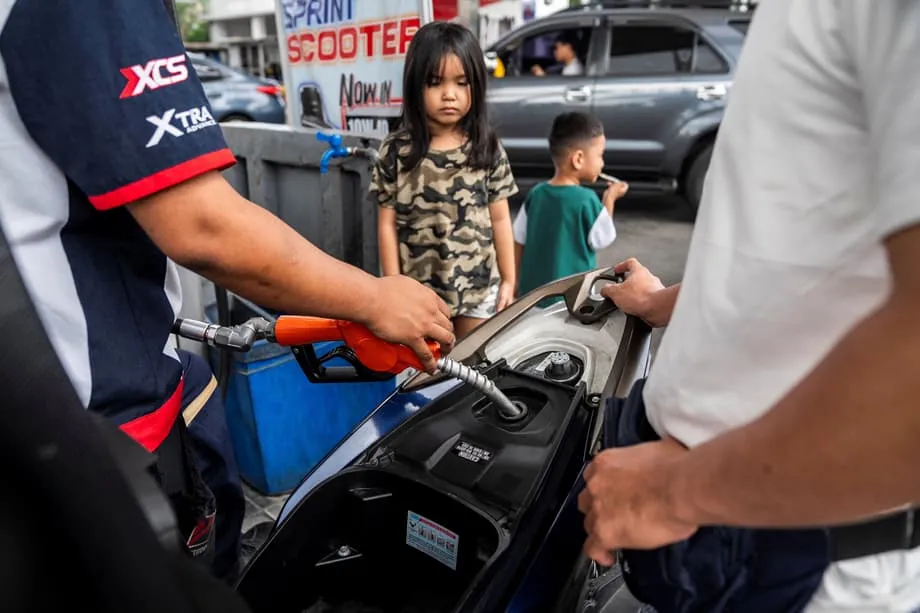
President Ferdinand Marcos has declared a state of national energy emergency in the Philippines, the first such declaration worldwide since the war began. The country imports 98 percent of its oil from the Gulf, leaving it heavily exposed to the loss of shipping through Hormuz.
Marcos promised a continuous flow of oil in a televised address and announced the procurement of one million barrels to supplement the country's current supply of 45 days. The emergency declaration gives his government powers to purchase fuel directly, prioritize the distribution of essential goods and introduce extraordinary conservation measures.
Civil servants face compressed workweeks as part of that response. Governments adopting such measures are trying to reduce energy consumption while maintaining essential services, as access to replacement cargoes becomes more expensive and uncertain.
The Philippines also faces risks beyond its fuel imports. Along with Nepal and Bangladesh, it depends on money sent home by migrant workers employed in Saudi Arabia, Qatar and the United Arab Emirates. Remittance to GDP ratios exceed 25 percent in Nepal and the Philippines. Those payments help sustain families whose livelihoods are tied to economic conditions in the Gulf.
Gulf economies are under pressure from the blockade, while migrant workers account for the majority of collateral damage casualties. For households receiving remittances, the conflict threatens both the cost of daily necessities and the income used to pay for them.
South Korea Faces an Isolated Electricity System
South Korea imports 84 percent of its energy and relies on the Middle East for 70 percent of its oil and 20 percent of its natural gas. Its electricity system is isolated by the surrounding sea and the closed North Korean border. Unlike countries connected to neighboring power networks, it cannot draw emergency electricity from nearby states.
President Lee Jae-myung, who took office in June with a progressive agenda centered on inclusive growth and a transition to renewable energy, now faces conflicting demands. His administration has advised residents to take shorter showers and charge phones during daylight hours to conserve electricity.
Lee's government has restarted nuclear reactors ahead of schedule and is considering increased coal generation, stepping back from its renewable energy commitments as it seeks dependable power. It is also considering restrictions on exports of naphtha, a petroleum byproduct used to manufacture plastics.
South Korea holds about 3.5 million tons of LNG reserves, enough for roughly two to four weeks of stable demand. Its net oil imports represent 2.7 percent of GDP, placing it among the economies most vulnerable to shocks in the current account, which records international flows including trade and income. More expensive imported oil increases the amount of money leaving the country to pay for energy.
Naphtha shortages are already forcing petrochemical production cuts in South Korea and Japan. Plastics made from this material are used in products ranging from washing machines to automobiles, so fuel disruption is becoming a manufacturing supply problem.
South Korea's semiconductor producers Samsung and SK Hynix face particular risks from the wider supply squeeze. Together they provide a dominant share of the world's memory chips, which underpin artificial intelligence systems and cloud infrastructure. Interruptions affecting their industrial supply chains would reach far beyond domestic consumers.
Japan Uses Reserves While China Has More Buffers
Japan has begun its largest release of emergency oil reserves, drawing approximately 45 days of supply from a strategic stockpile equivalent to 254 days. That planned release represents roughly 18 percent of the stated stockpile, illustrating how much stored oil is being committed to manage the immediate disruption.
The Japanese government has urged calm after residents began hoarding toilet paper amid fears of consumer goods shortages. Prime Minister Sanae Takaichi is expected to discuss buying more American LNG and restarting additional nuclear plants when she meets Trump later this month.
China, the world's largest oil importer, appears better positioned to withstand the crisis, though it remains exposed. Its strategic reserves are estimated at between 900 million and 1.4 billion barrels, providing nearly three months of import cover. More than 46 million barrels of Iranian crude are currently floating in tankers along the South China Sea.
Russia supplies nearly one fifth of China's energy imports through pipeline routes unaffected by the Middle East conflict. Beijing has also banned fuel exports from its refineries to protect domestic inventories. Together with selective passage through Hormuz, these supplies give China alternatives that many Asian importers lack.
China's large renewable energy sector and adoption of electric vehicles provide further buffers against oil price volatility. Renewable energy accounts for more than half its installed capacity. Years of investment in reserves, renewable infrastructure and relationships with sanctioned suppliers, including Iran and Russia, are now delivering practical advantages.
An energy economics researcher described China as fortunate to have begun investing in renewable energy 25 years ago and said it is now receiving the benefits. The crisis has also strengthened perceptions of China as a potentially more stable energy partner for importing nations, with resources and supplier relationships that Washington cannot match.
South Asia Confronts Physical Shortages
Bangladesh imports from Qatar 25 percent of the gas used to generate its electricity and faces a structural gas deficit exceeding 1,300 million cubic feet a day. It has closed all universities to conserve power while anticipating a worsening crisis as summer temperatures rise.
Pakistan has raised state controlled energy prices by 20 percent. Businesses are preparing to operate expensive diesel generators, which provide electricity when regular supplies fail but increase operating costs and worsen air quality in cities already affected by pollution.
India has received exemptions for oil shipments from Iran, yet it faces domestic shortages of liquefied petroleum gas (LPG). This fuel is used for cooking, making shortages immediately disruptive for households, restaurants and hotels. The government has absorbed more than half of global price increases to protect poor households.
Indian restaurants and hotels are shortening operating hours or removing dishes that require substantial cooking fuel. Limited storage capacity leaves the country with little room to absorb prolonged disruption. Analysts warn that fertilizer factories and small industries could feel supply shortages within weeks.
South Asia's immediate problem is therefore access as well as price. Government subsidies can soften the cost of fuel for consumers, while shortages still force businesses and public institutions to reduce activity. Bangladesh's university closures and India's changing restaurant menus show how an energy emergency reaches ordinary routines.
Farmers Face a Fuel and Fertilizer Squeeze
Theerasin, a farmer working rice fields outside Bangkok, says uncertainty about fuel could lead him to abandon planting his next crop in May. Machinery is essential to preparing land, moving water and harvesting, leaving producers exposed when diesel becomes expensive or difficult to obtain.
Theerasin explained why the production end of the food supply chain is hit first:
We are the producers. Simply put, being at the start of the chain, the production side gets hit first. Fuel is the critical factor. We can not plow or break the soil manually, we can not use people to harvest by hand anymore, and we can not manually scoop water into the fields. Everything requires machinery.
Farmers across developing Asia face the same dependence on irrigation and harvesting equipment powered by diesel. Replacing those machines with manual labor is no longer a practical option in the situation Theerasin describes. Fuel uncertainty can therefore affect whether land is planted, rather than simply how much a harvest costs.
Fertilizer shortages may prove more consequential than the rise in oil prices. The blockade has disrupted natural gas supplies needed to produce fertilizers containing nitrogen, a nutrient crops need to grow. With planting seasons approaching in Africa and Central Asia, reduced fertilizer availability threatens agricultural productivity and food security.
Children face lasting risks when food becomes scarce. Even temporary episodes of hunger can permanently damage cognitive and physical development, making it harder to learn and grow. Those effects can contribute to poverty continuing from one generation to the next.
Allies Weigh Their Response as Travel Shrinks
The United States is pressing allies to join military efforts to secure the Strait of Hormuz. Japan has said it is not considering maritime security operations, while Australia, Britain, Germany, Italy and Greece have ruled out sending naval vessels.
The European Union is instead placing greater weight on clean energy strategies intended to reduce consumption over the longer term. Across Asia, the immediate choices are more urgent: use stored fuel, find alternative suppliers, conserve electricity or change the mix of power generation.
Airlines in Vietnam, the Philippines, Australia and the Pacific have already suspended or reduced flights. The IEA recommends measures to curb energy demand, including avoiding air travel, switching to electric stoves and working from home.
The crisis is reshaping alliances and perceptions of reliability as governments assess which partners can supply fuel and which are willing to help secure shipping. China's reserves and alternative routes offer one form of protection. Japan's stockpile release and South Korea's reactor restarts show other ways countries are trying to buy time.
Emergency reserves, subsidies and conservation can ease the pressure while normal supplies remain disrupted. The longer Hormuz stays effectively impassable, the greater the pressure on prices and the deeper the risk of global recession. Damage to production facilities means that recovery will also depend on restoring oil and gas output, alongside reopening the waterway.
Key Points
- Hormuz tanker traffic has fallen from approximately 80 vessels a day to two, disrupting a route that normally carries roughly one fifth of global oil consumption.
- Iran is permitting selected vessels from China, Russia, Pakistan, Iraq and India to pass while blocking ships associated with enemy nations.
- The Philippines has declared a national energy emergency and announced the procurement of one million barrels to supplement its supply of 45 days.
- The IEA reports severe damage to at least 40 critical energy assets, and Qatar has halted LNG production following strikes on industrial facilities.
- South Korea is restarting nuclear reactors ahead of schedule, while Japan is releasing approximately 45 days of oil from reserves equivalent to 254 days.
- China has estimated strategic reserves of 900 million to 1.4 billion barrels, Russian pipeline supplies and substantial renewable energy capacity.
- Bangladesh has closed universities to conserve power, Pakistan has raised state controlled energy prices by 20 percent, and India faces LPG shortages.
- Fuel and fertilizer disruption threatens manufacturing, farming, household incomes and food security across Asia and beyond.
- Wood Mackenzie predicts Brent could reach $150 a barrel if the war continues and warns that an average of $125 this year would trigger a global recession.