Emergency Powers Deployed as Economic Pressure Mounts
The Thai Interior Ministry has activated sweeping emergency powers to enforce price controls across the nation, threatening violators with up to 10 years in prison and fines reaching 100,000 baht (approximately $3,900). The directive, signed by Mr Narucha Kosacivilize, director-general of the Department of Provincial Administration, mobilizes provincial governors, district chiefs, and local officials nationwide to intensify monitoring of fuel and consumer goods markets. The measures represent a significant escalation in the government response to an energy crisis triggered by global supply disruptions and regional security concerns.
- Emergency Powers Deployed as Economic Pressure Mounts
- The Seven Pillars of Thailand’s Price Control Strategy
- Cross-Border Dimensions: Fuel Controls and Regional Security
- Global Energy Shocks Ripple Through Southeast Asia
- Economic Fallout: From Airlines to Street Vendors
- Enforcement in Action: Seizures and Inspections
- Key Points
The crackdown operates under the Emergency Decree on the Amendment and Prevention of Fuel Shortage of 1973, a rarely invoked law that provides authorities with extraordinary enforcement capabilities. Under this framework, officials can take immediate legal action against businesses found hoarding controlled goods, manipulating prices, or deliberately delaying services to the public. The ministry has specifically warned that storing goods in undeclared locations or delaying fuel sales without reasonable cause will trigger severe penalties including imprisonment.
The Seven Pillars of Thailand’s Price Control Strategy
The Interior Ministry directive establishes seven strict measures designed to prevent fuel shortages and stabilize living costs during the crisis. These measures create a comprehensive oversight network integrating four main agencies: provincial commerce offices will inspect goods and service prices, provincial energy offices will supervise petrol stations, provincial police will handle law enforcement, and district chiefs will conduct on-the-ground inspections.
The first measure targets hoarding directly, requiring officials to inspect quantities of controlled products and prosecute those storing goods in hidden locations or deliberately withholding supply. The second prohibits service providers from refusing or delaying services to the public. The third establishes continuous market price monitoring to prevent manipulation to abnormally high or low levels that could destabilize the fuel market. The fourth requires district chiefs to deploy officials for close inspection of fuel traders in their jurisdictions.
The fifth measure imposes a temporary suspension on exports of petrol, gasohol (a gasoline-ethanol mixture), diesel, aviation fuel, and liquefied petroleum gas. However, exceptions apply for exports to Laos and Myanmar, as well as products that cannot be sold domestically within Thailand. The sixth measure mandates that fuel traders clearly display retail prices at points of sale and report every price adjustment to the director-general of the Department of Energy Business. The seventh outlines the severe legal penalties awaiting violators.
Cross-Border Dimensions: Fuel Controls and Regional Security
Thailand’s fuel export restrictions cannot be separated from the kingdom’s broader security crackdown on transnational criminal operations along its borders. The export suspension forms part of a coordinated strategy targeting sophisticated scam centers operating in Myanmar and Cambodia that have exploited Thailand’s infrastructure to conduct global fraud operations worth tens of billions of dollars annually.
Since February 5, Thai authorities have severed electricity, internet, and fuel supplies to five locations across the Myanmar border, specifically targeting the lawless enclaves of Myawaddy and Shwe Kokko where Chinese-run criminal syndicates operate extensive forced-labor compounds. These facilities, known for so-called pig butchering scams (where victims are groomed online over months before being defrauded of life savings), depend heavily on Thai electricity and fuel supplies to maintain operations.
China is actively conducting bilateral and multilateral cooperation with Thailand, Myanmar, and other countries, taking comprehensive measures to address both the symptoms and root causes, and working together to block criminals from committing crimes in relevant countries.
This statement from Chinese Foreign Ministry spokesperson Guo Jiakun followed a visit by Liu Zhongyi, China’s vice minister of public security, to the Thai-Myanmar border in late March. The visit preceded large-scale repatriations of thousands of workers from the scam centers, including an initial batch of approximately 600 Chinese nationals. The Thai government has also sought arrest warrants for three senior leaders of the Karen Border Guard Force (BGF), the pro-junta militia controlling Myawaddy, over past human trafficking cases involving Thai nationals.
The fuel restrictions have created severe shortages in Myawaddy Township, where prices have surged to between 3,000 and 10,000 kyats per liter (approximately $1.50 to $5.00), forcing residents to queue from 3 am for limited supplies. While the scam centers continue operating using generators and solar panels, ordinary Myanmar residents and farmers bear the brunt of the crisis. Thailand has extended similar measures to Cambodia, restricting border crossings across seven provinces and halting fuel exports to combat criminal syndicates there, following a diplomatic crisis involving Prime Minister Paetongtarn Shinawatra.
Global Energy Shocks Ripple Through Southeast Asia
Thailand’s emergency measures unfold against a backdrop of severe global energy disruption triggered by escalating tensions in the Middle East. The Iran conflict has driven up international oil prices while disrupting supply chains for diesel, jet fuel, and fertilizers throughout Asia. Regional economies are scrambling to secure domestic supplies as traditional export partners restrict outbound shipments.
China, the world’s second-largest fertilizer exporter and sixth-largest jet fuel exporter, has ordered state-backed refiners to halt overseas shipments of jet fuel, diesel, and kerosene. Beijing has also instructed fertilizer exporters to stop shipments to key markets including India, while maintaining some flows to Southeast Asia. These restrictions, implemented without public announcement through the National Development and Reform Commission, aim to preserve Chinese reserves amid the closure of the Strait of Hormuz.
The regional fuel shortage has hit Myanmar particularly hard, compounding five years of economic devastation following the 2021 military coup. Myanmar farmers in the rice-growing Irrawaddy delta now spend nights queuing at fuel depots, with diesel prices surging from 2,450 kyats in February to 3,800 kyats by mid-March. Black market rates have reached 12,000 kyats per liter. The United Nations World Food Programme warns that 12.4 million Myanmar residents, a quarter of the population, already struggle to find food, with rising fertilizer costs and restricted fuel access threatening the upcoming cultivation season.
Vietnam, which imports nearly 70 percent of its jet fuel needs with about 60 percent coming from Thailand and China, faces potential disruptions from April. Australian airlines, which rely on China for about one-third of jet fuel supplies, are already experiencing supply issues at rural airports. This regional context explains why Thailand has prioritized domestic fuel security over export commitments, despite the economic impact on neighboring economies.
Economic Fallout: From Airlines to Street Vendors
The fuel crisis has triggered cascading price increases across Thailand’s economy, affecting transportation, aviation, food services, and e-commerce. Thai Airways International has raised ticket prices by 10 to 15 percent as Jet A-1 fuel surged from approximately $80 per barrel to over $200 per barrel. While the airline has partially cushioned the impact through fuel hedging covering about 50 percent of needs through mid-year, domestic routes face particular pressure since Thai regulations prohibit separate fuel surcharges on internal flights.
Water transport operators face existential threats from sustained high diesel prices. Charoenporn Charoentham, managing director of Chao Phraya Express Boat Ltd, warned that continued elevated costs could force service reductions or complete suspension of operations. The company currently purchases diesel at around 35 baht per liter through wholesale traders, above sustainable levels for the private operator. The state bus operator Transport Co Ltd maintains service continuity through long-term purchase agreements with PTT Plc and reserve stocks of 100,000 to 120,000 liters daily, though officials acknowledge that prolonged high prices may eventually necessitate fare increases.
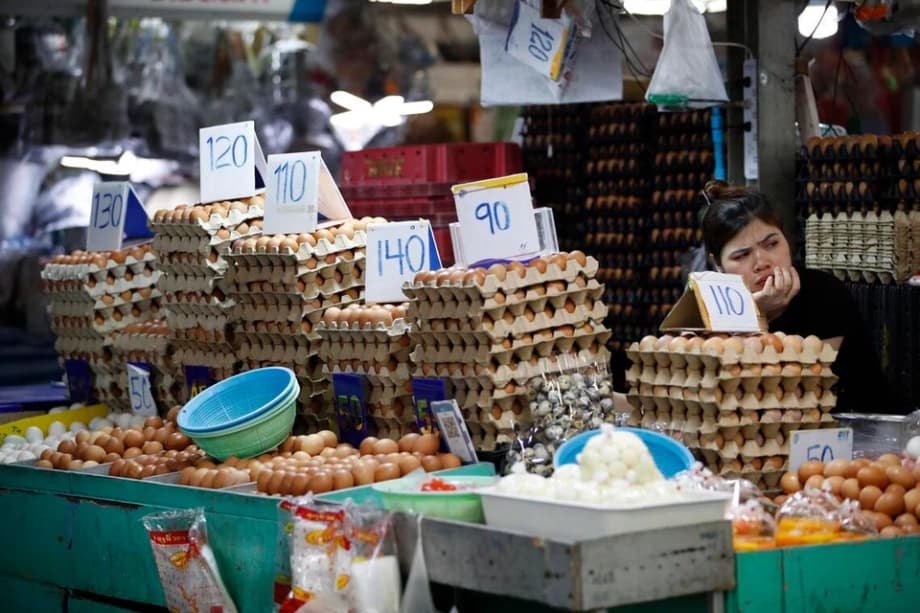
Food prices are climbing steadily. Egg prices rose by 20 satang per egg on March 14, with retailers expecting further increases of 0.10 to 0.20 baht per egg in early April due to transport costs. Restaurant operators in Bangkok’s Bang Son area report meat prices increasing significantly: pork rising from 150 to 155 baht per kilogram, pork belly from 180 to 200 baht, and chicken from 70 to 90 baht. Street vendors indicate they must raise menu prices by 5 baht per dish to maintain operations, though many are attempting to absorb costs through electricity management and internal efficiency measures.
E-commerce platforms have responded to cost pressures by increasing seller fees. Shopee, Lazada, and TikTok Shop have all announced commission and transaction fee adjustments effective from early April. Shopee Mall stores now face commission rates of up to 15.52 percent in electronics and fashion categories, while Lazada standard stores face maximum fees of 13 percent in some categories. These increases place additional strain on Thai small and medium enterprises already struggling with higher energy and packaging costs.
Enforcement in Action: Seizures and Inspections
Thai authorities have already begun implementing the crackdown with concrete enforcement actions. In Tak province, which borders Myanmar and has experienced severe domestic fuel shortages, security forces recently seized 20,000 liters of diesel and fuel storage equipment from a riverside warehouse in Mae Sot district. Authorities intercepted the fuel, which was suspected of being bound for illegal export to Myanmar, following tip-offs from local residents. The raid uncovered a ten-wheel truck loaded with diesel and warehouse storage including two 4,500-liter tanks.
The Central Investigation Bureau has intensified inspections focusing on four key areas: fuel quality, legal documentation, pricing compliance, and hoarding activities. Police Lieutenant General Natthasak Chaowanasai, commissioner of the CIB, confirmed that over 40,000 liters of diesel are currently under review for possible stockpiling. The Consumer Protection Police Division is coordinating with the Ministries of Commerce and Energy, tax authorities, and local officials to prevent exploitation of the crisis.
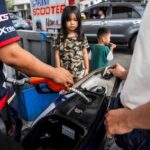
Tak Governor Chusak Ruying has ordered strict crackdowns on all illegal fuel exports along the border, responding to situations where local gas stations frequently run dry within hours, forcing residents into long queues that stall traffic. The Interior Ministry has urged citizens to report irregularities at petrol stations or retail outlets, including suspected hoarding or unjustified price increases, through district offices or the Damrongdhama Centre hotline.
Key Points
- Thailand has activated the 1973 Emergency Decree on Fuel Shortages, threatening up to 10 years imprisonment and 100,000 baht fines for hoarding or price manipulation
- Seven strict measures integrate four government agencies to monitor fuel stations, inspect prices, and enforce a temporary suspension on exports of petrol, diesel, aviation fuel, and LPG
- Fuel export restrictions connect to a broader crackdown on Myanmar and Cambodian scam centers that have relied on Thai infrastructure for operations
- Global energy disruptions from Middle East tensions have caused jet fuel prices to surge from $80 to over $200 per barrel, forcing Thai Airways to raise fares 10 to 15 percent
- Thai authorities seized 20,000 liters of suspected smuggled diesel in Mae Sot as part of intensified border enforcement
- China has simultaneously restricted fuel and fertilizer exports, exacerbating regional supply shortages affecting Vietnam, Australia, and Myanmar
- Domestic economic impacts include rising food prices, e-commerce fee increases, and potential service cuts for river transport operators
- Thailand continues to allow fuel exports to Laos and Myanmar only for products that cannot be sold domestically or for specific cross-border arrangements