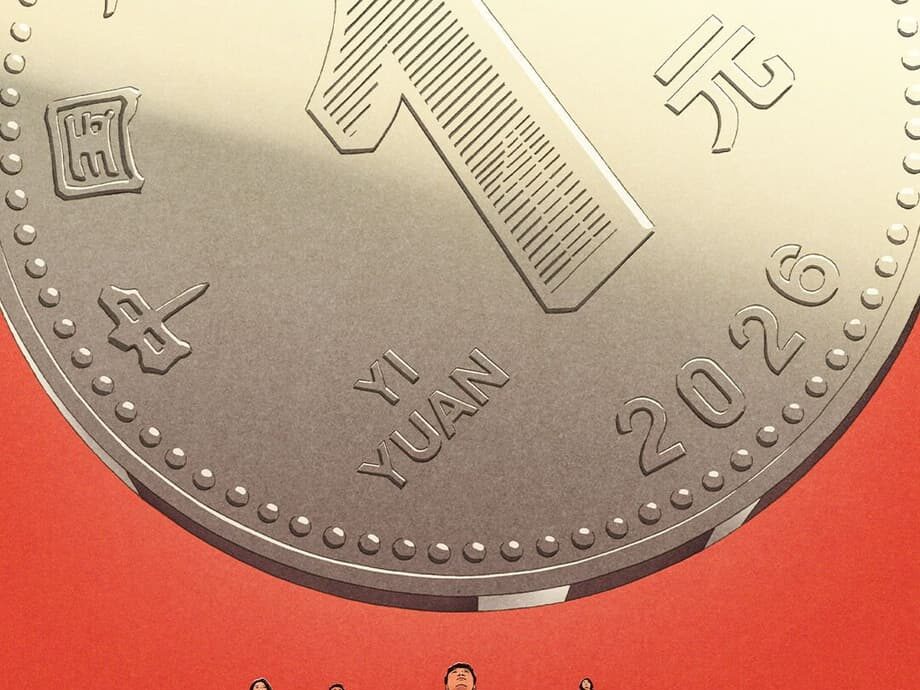
The Great Transfer Begins
Over the past half-century, China has performed an economic miracle that lifted hundreds of millions from poverty and created vast fortunes almost overnight. The nation has conjured more wealth in fifty years than any civilization in human history, transforming from a predominantly agrarian society into the world’s manufacturing powerhouse and second-largest economy. Cities like Shenzhen grew from fishing villages to metropolitan centers boasting per capita incomes rivaling those of developed nations. Private enterprises, from technology giants to real estate empires, have accumulated capital reserves that dwarf the treasuries of many sovereign states. Now this success story faces a challenge that threatens to undermine that progress: the first great intergenerational transfer of wealth in China’s modern history is underway. As entrepreneurs who built empires during the reform era age and prepare to pass their fortunes to their children, a hereditary elite is crystallizing that could persist for generations.
This transformation poses risks that extend far beyond economics. On its current trajectory, this transfer will widen inequality, cement privilege across generations, and breed social resentment that could challenge the stability of the Communist Party itself. The children of the first billionaires are coming of age, educated at elite international institutions and networked with global capital, ready to assume control of family conglomerates worth billions of dollars. Unlike their parents, who often rose from modest circumstances through grit and timing, these heirs will inherit positions of immense economic power simply by virtue of birth. The irony is striking. A government that claims devotion to “common prosperity” appears shockingly indifferent to the mechanisms that would prevent the emergence of a permanent aristocracy. While President Xi Jinping speaks repeatedly of reducing wealth gaps and ensuring shared success, his administration has failed to implement the most basic tool for preventing dynastic wealth concentration: a meaningful inheritance tax. This gap between rhetoric and reality reveals a tension at the heart of modern Chinese governance.
A Historical Reversal
To understand the significance of what is happening today, one must look back to China’s imperial past and its remarkably meritocratic traditions. The Qing dynasty, which ruled from 1644 to 1911, maintained one of history’s most sophisticated bureaucratic systems precisely because it rejected hereditary rule among its administrators. Unlike European aristocracies where titles and power passed automatically through bloodlines, the Qing relied on a rigorous examination system that allowed commoners to rise to the highest offices based on scholarly merit rather than birthright.
This system of meritocracy, known as the keju, required aspiring officials to master classical Confucian texts and demonstrate moral and administrative competence through competitive examinations held at county, provincial, and national levels. While wealthy families could afford tutors and books, the system remained porous enough that talented individuals from modest backgrounds could ascend to power. The examinations tested knowledge of philosophy, poetry, and governance, ensuring that officials possessed both intellectual capability and ethical grounding. Those who passed the highest levels of examinations joined the mandarins, the small coterie of elite bureaucrats that ruled the vast empire.
The Qing also enforced a “rule of avoidance” that prevented officials from serving in their home provinces, reducing the risk of nepotism and local favoritism. Officials rotated positions every three years, preventing them from developing local power bases that might challenge central authority or favor family interests. This created a government of what historians call “elite commoners,” rulers who maintained ties to broader society rather than forming a closed caste.
David Graeber, the anthropologist and critic of economic systems, observed that historical meritocratic mechanisms often emerged from political necessity rather than idealism. In his analysis of global capitalism, he noted that periods of relative equality typically required external pressure on ruling elites. The Qing examination system similarly served to legitimize imperial rule by ensuring that the administrative class maintained connections to the communities they governed. Today, China is witnessing the reverse of this historical pattern. The “princelings,” children of high-ranking officials and successful entrepreneurs, increasingly dominate both business and politics. Wealth, rather than examination scores, determines access to elite education, social networks, and opportunities. The red aristocracy of the 21st century resembles the hereditary elites that the Communist Party theoretically opposed when it rose to power in 1949.
When Capital Outruns Growth
The mathematical reality driving this concentration of wealth was identified by French economist Thomas Piketty in his landmark work “Capital in the Twenty-First Century.” Piketty demonstrated that when returns on capital exceed overall economic growth rates, wealth naturally accumulates in the hands of those who already possess it. This formula, expressed as r > g (where r represents the rate of return on capital and g represents the growth rate of the economy), explains why market economies tend toward inequality unless corrective measures intervene.
In China, economic growth has slowed from the double-digit rates of the early 2000s to more modest levels today. Meanwhile, returns on investment in property, technology, and finance remain substantial for those with existing capital. The result is a widening chasm between the asset-rich and everyone else. Chinese billionaires built their fortunes during the explosive growth period, and their heirs stand to inherit concentrations of wealth unprecedented in the nation’s history. Without intervention, these fortunes will compound over generations, creating a permanent rentier class that lives off investment income rather than productive contribution.
Graeber’s criticism of capitalism provides additional context for understanding China’s trajectory. He argued that the period between roughly 1917 and 1975, when Western capitalism did produce broad prosperity and reduced inequality, represented a historical anomaly rather than the system’s natural tendency.
Capitalism does not contain an inherent tendency to civilise itself. Left to its own devices, it can be expected to create rates of return on investment so much higher than overall rates of economic growth that the only possible result will be to transfer more and more wealth into the hands of a hereditary elite of investors.
During those decades, capitalist elites faced credible threats from socialist alternatives, strong labor movements, and the competitive pressure of the Soviet Union. These pressures forced concessions that created middle-class prosperity. High marginal tax rates, robust estate taxes, and strong unions ensured that wealth circulated rather than accumulating in dynastic vaults. China today lacks these counterbalancing forces. The Communist Party maintains strict control over labor organizing, and no ideological alternative exists to threaten the existing structure. Without external pressure, the natural tendency of capital to concentrate proceeds unchecked.
The Missing Inheritance Tax
The most glaring omission in China’s policy framework is the absence of a robust inheritance tax. While most developed nations, including the United States, Japan, and European countries, levy significant taxes on large estates to prevent dynastic wealth accumulation, China has no such mechanism. The Communist Party, despite its ideological commitment to equality and its rhetorical embrace of “common prosperity,” has refused to implement taxes on inherited wealth. This stands in stark contrast to other developed economies where estate taxes have long served as a brake on dynastic privilege.
This inaction appears to stem from political calculation rather than administrative incapacity. The party elite itself includes many wealthy individuals with assets to protect. Additionally, the business class that drives economic growth might resist policies that threaten family fortunes. Yet this political caution comes with long-term costs. Without taxation on inherited wealth, the first generation of Chinese billionaires will establish family dynasties that could persist for generations, creating a rigid social hierarchy antithetical to the party’s founding principles. The wealth gap will harden into a class barrier that no amount of economic growth can overcome.
The contrast with mid-century Western social democracies is instructive. During the post-war period, top marginal tax rates in the United States and United Kingdom exceeded 90% in some years, and estate taxes prevented the reconstitution of the Gilded Age fortunes of the Rockefellers and Carnegies. These policies did not prevent economic growth; rather, they helped create the conditions for broad-based prosperity by ensuring that wealth recycled through the economy rather than accumulating in dynastic vaults. Thomas Piketty has argued that the left should focus on electing governments dedicated to creating international mechanisms to tax and regulate concentrated wealth, suggesting rates as high as 80% on large incomes to prevent the formation of a parasitical rentier class.
China’s current leadership seems to hope that voluntary charitable giving or informal pressure on the wealthy will suffice to maintain social harmony. Tech billionaires occasionally make large donations to social causes, often after regulatory crackdowns or public pressure campaigns. Yet these gestures cannot substitute for systematic tax policy that structures the economy to favor merit over inheritance. The party’s reluctance to tax inherited wealth suggests a tacit alliance with the very capitalists it claims to regulate, prioritizing short-term stability over long-term equity.
The Risk of Resentment
Historical legitimacy in China has always depended on the concept of the “Mandate of Heaven,” the idea that rulers must govern competently and fairly to maintain their right to power. During the Qing dynasty, officials understood that failure to manage inequality or corruption could justify rebellion and regime change. The modern Communist Party has largely replaced this traditional metaphysics with a performance-based legitimacy rooted in economic growth and rising living standards. When the economy boomed, the party could claim credit for delivering prosperity. As growth slows and inequality becomes structural rather than temporary, the social contract frays and the party risks losing its moral authority.
Young Chinese workers speak of “lying flat” as a form of protest against impossible housing prices and limited mobility. The knowledge that wealth increasingly depends on family background rather than individual effort undermines the narrative of meritocracy that the party has promoted since the reform era began in 1978. University graduates face intense competition for jobs while children of the wealthy study abroad at elite institutions and return to take positions in family companies or state enterprises. The frustration of realizing that hard work no longer guarantees advancement creates a generation of disillusioned youth who see little point in striving.
The danger is not merely economic but political. A society with rigid class boundaries and limited circulation of elites historically produces instability. When talented individuals from modest backgrounds find their paths blocked by hereditary privilege, the resulting resentment can fuel radicalism. The Communist Party rose to power precisely by mobilizing such resentment against the landlord and capitalist classes of the pre-1949 era. It now risks becoming the guardian of a new aristocracy that mirrors the old oppressors it once overthrew.
Xi Jinping’s rhetoric about “common prosperity” recognizes this danger. The campaign targets “unreasonable income” and calls for regulating “excessive” wealth accumulation. Yet without structural reforms like inheritance taxes, these campaigns amount to sporadic interventions rather than systematic solutions. They may punish individual billionaires while failing to address the underlying dynamic that produces billionaires as a class. The government appears shockingly insouciant about what this will mean for social stability in the coming decades.
Global Context and the Future
China’s challenge exists within a broader global pattern. From the United States to India, nations are grappling with the return of hereditary wealth and the decline of social mobility. The mid-twentieth century’s relatively egalitarian capitalism appears increasingly as a unique moment created by war destruction, high taxation, and Cold War competition. As those pressures recede, the natural tendency of capital to concentrate reasserts itself across different political systems.
China might seem uniquely positioned to resist this trend given its official ideology and centralized state power. The Communist Party can direct economic policy without the electoral constraints that limit Western governments. It could implement confiscatory estate taxes, force public ownership transitions, or mandate radical wealth redistribution if it chose. That it has not done so suggests either that the party has become captured by the interests of the wealthy, or that it fears the economic consequences of aggressive redistribution on investment and growth.
Either explanation points to a difficult future. If China continues on its current path, it will develop a social structure resembling the pre-revolutionary era, with a small hereditary elite controlling disproportionate economic and political power. This would represent the ultimate irony: a communist state that creates the very class dynamics it was founded to eliminate. The first generation of Chinese capitalists built their wealth through risk and innovation. Their grandchildren will inherit these fortunes simply by being born, regardless of their own capabilities or efforts. Without taxation to break up these concentrations, China risks becoming a society where birth matters more than ability, a reversal of everything the modern state claimed to stand for.
Key Points
- China is experiencing its first major intergenerational wealth transfer, creating a hereditary elite of billionaire heirs and princelings
- The Communist Party has failed to implement inheritance taxes or other mechanisms to prevent dynastic wealth accumulation
- This trend reverses historical Chinese meritocratic traditions, particularly the Qing dynasty examination system that allowed social mobility based on scholarly achievement
- Economic analysis shows that when returns on capital exceed growth rates, wealth naturally concentrates without corrective taxation
- Xi Jinping’s “common prosperity” campaign lacks structural reforms to address the root causes of inequality
- The emergence of a permanent aristocracy risks breeding social resentment and undermining the party’s political legitimacy