A Historic Shift in Postwar Defense Policy
Japan will achieve a milestone in its military transformation on March 31, 2026, when it deploys its first domestically developed long-range missiles capable of striking targets beyond its immediate territory. The Japan Ground Self-Defense Force (JGSDF) will officially introduce two advanced weapons systems at separate bases, marking the operational debut of Tokyo’s controversial counterstrike capabilities doctrine adopted three years prior. The simultaneous deployment of the Hyper Velocity Gliding Projectile (HVGP) at Camp Fuji in Shizuoka Prefecture and the upgraded Type-12 surface-to-ship missile at Camp Kengun in Kumamoto Prefecture represents the most concrete manifestation yet of Japan’s departure from its exclusively defense-oriented posture maintained since World War II. For seven decades following its defeat in 1945, Japan constrained its military to defensive operations within its immediate vicinity, avoiding power projection capabilities that could be characterized as offensive. This restraint stemmed from Article 9 of the Japanese constitution, which renounced war as a means of settling international disputes, and from deeply held public sentiment favoring pacifism after the devastation of World War II.
This transition reflects profound changes in the regional security environment that have rendered traditional defensive postures insufficient in the eyes of Japanese policymakers. North Korea continues advancing its nuclear weapons program while launching increasingly sophisticated ballistic missiles capable of ranging all of Japan, and China has rapidly expanded its military capabilities while intensifying activities around the East China Sea, Taiwan, and the western Pacific. In response to these mounting threats, Japanese policymakers revised the country’s three key security documents in December 2022, formally introducing the concept of counterstrike capabilities that allow forces to strike enemy missile launch sites or military targets if Japan comes under attack or faces imminent threat. Officials emphasize these capabilities remain defensive in nature and would only activate following an armed attack, yet the shift constitutes one of the most significant changes in Japanese defense policy in decades, effectively abandoning the strict interpretation of exclusive defense that has governed Japanese military thinking since 1954.
The New Arsenal: HVGP and Upgraded Type-12
The March 31 deployments introduce distinct weapons systems designed to address different tactical requirements while sharing the common goal of extending Japan’s defensive reach. Both systems represent significant technological achievements for Japan’s domestic defense industry, which has historically focused on shorter-range defensive weapons constrained by the country’s postwar constitutional restrictions. Together with planned acquisitions of foreign standoff weapons, these domestically produced missiles form a central pillar of Tokyo’s strategy to deter adversaries by holding key military targets at risk from greater distances than previously possible.
Hyper Velocity Gliding Projectile
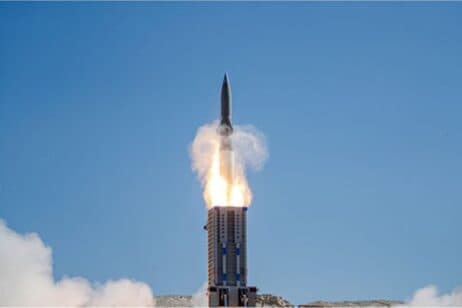
The HVGP represents Japan’s entry into hypersonic weapons technology, a category of missiles that travel at least five times the speed of sound while maneuvering along unpredictable trajectories. Unlike conventional ballistic missiles that follow predictable parabolic arcs, hypersonic glide vehicles separate from their boosters and travel along the edge of the atmosphere, making them exceptionally difficult for existing missile defense systems to intercept. The Block I variant being deployed to Camp Fuji features a solid-fuel rocket booster that launches a glide vehicle capable of reaching speeds up to Mach 5.
The initial version possesses a range of approximately 500 to 900 kilometers, sufficient to cover the contested Ryukyu Islands chain including areas near Taiwan. Mounted on an eight-wheeled tactical truck carrying two containerized missiles, the system offers road mobility essential for survivability in combat scenarios. The Ministry of Defense has assigned the first units to a specialized training detachment at Camp Fuji, where crews will develop operational tactics and doctrine for this entirely new category of weapon. Because the HVGP introduces unprecedented capabilities to the JGSDF, this initial deployment focuses primarily on experimentation and developing training methodologies rather than immediate combat readiness. The system underwent successful test firings in California during 2024 with support from U.S. facilities, and additional domestic tests confirmed capabilities for air and sea transport as well as operation in cold weather environments.
Upgraded Type-12 Surface-to-Ship Missile
While the HVGP offers hypersonic speed, the upgraded Type-12 provides extended range through stealth and precision. This weapon represents a fundamental redesign of the existing Type-12 coastal defense missile, extending its range from roughly 200 kilometers to approximately 1,000 kilometers while incorporating low-observable features to evade radar detection. Originally designed exclusively for anti-ship missions, the improved version possesses the capability to strike land-based targets including missile launch facilities and command centers. Mitsubishi Heavy Industries serves as the prime contractor for both the upgraded Type-12 and the HVGP, reflecting the company’s central role in Japan’s missile defense industrial base.
From its deployment location at Camp Kengun in Kumamoto Prefecture on the southern island of Kyushu, the upgraded Type-12 can reach large portions of North Korea and significant sections of China’s eastern coastline. The missile system will serve as a core component of Japan’s emerging counterstrike architecture, enabling ground forces to attack adversary launch sites from beyond the range of many enemy weapons. The Defense Ministry accelerated this deployment schedule by approximately one year, citing the urgent need to strengthen deterrence amid growing regional security challenges. Future deployments will place additional units at Camp Fuji for training in fiscal year 2027, while ship-launched variants will deploy aboard the destroyer JS Teruzuki at Yokosuka Naval Base and air-launched variants will equip F-2 fighters at Hyakuri Air Base.
Strategic Context: From Pure Defense to Counterstrike
For decades following World War II, Japan maintained an exclusively defense-oriented security posture that limited the Self-Defense Forces largely to repelling attacks on Japanese territory. This doctrine prohibited possessing weapons that could strike foreign bases or territory, even preemptively against imminent threats. However, the regional security environment has deteriorated dramatically, compelling policymakers to reconsider these longstanding limitations in favor of a more dynamic deterrent posture.
China’s military expansion presents the primary catalyst for this transformation. Beijing now operates multiple aircraft carriers with additional vessels under construction, maintains the world’s largest navy by ship count, and conducts increasingly aggressive exercises around Taiwan and the Senkaku Islands. The Taiwan Strait lies just 69 miles from Yonaguni Island, Japan’s westernmost territory, placing Japanese forces within immediate proximity of potential flashpoints. Meanwhile, North Korea has conducted numerous ballistic missile tests in recent years, with several projectiles landing in waters near Japan or overflying Japanese territory entirely, demonstrating capabilities that could deliver nuclear payloads against Japanese cities.
At the same time, though the HVGP is advertised to be designed for island defense, as de facto ballistic missiles, they harbor the ability to attack enemy bases, which could be considered as escalatory. It is important to consider how the HVGP could be integrated in Japan’s overall strategy in bolstering deterrence and managing crisis stability.
Takuya Matsuda, an Assistant Professor at Aoyama Gakuin University in Tokyo, offered this assessment to USNI News, highlighting the strategic ambiguity inherent in systems capable of both defensive island protection and offensive base strikes. The 2022 National Security Strategy attempts to navigate this ambiguity by emphasizing that counterstrike capabilities remain fundamentally defensive, intended only to disrupt and defeat invading forces over long distances. Yet the acquisition of weapons capable of striking mainland Chinese or North Korean territory marks a decisive break from previous doctrines that relied primarily on missile defense and alliance deterrence.
Deployment Plans and Local Apprehension
The March 31 deployments represent only the initial phase of a broader fielding strategy planned through fiscal year 2027. The Ministry of Defense intends to expand HVGP operations to Camp Kamifurano in Hokkaido and Camp Ebino in Miyazaki Prefecture by fiscal year 2026, creating defensive coverage across Japan’s northern and southern approaches. These locations place parts of Russia’s Far East and the Korean Peninsula within range while avoiding the politically sensitive Okinawa prefecture, which hosts the majority of U.S. military forces in Japan and faces distinct local sensitivities regarding military expansion.
Despite the strategic rationale, the deployments have generated significant controversy at the local level. Residents and civic groups in Kumamoto staged protests outside Camp Kengun after missile-related equipment arrived in the early hours of March 9, with demonstrators carrying banners reading Stop long-range missile deployment and warning that the weapons could make the area a target in the event of conflict. The secretive nature of the equipment transport, conducted past midnight without prior public notification, exacerbated community tensions.
The prefecture has never been notified. It is extremely disappointing that we learned this from media reports.
Kumamoto Governor Takashi Kimura expressed this frustration to reporters, criticizing the Defense Ministry’s lack of transparency. Kumamoto Mayor Onishi Kazufumi similarly stated that the ministry’s handling of the process had undermined public trust and heightened anxiety among residents. The ministry has scheduled a briefing and equipment display for local governments and community representatives on March 17 at Camp Kengun, though no similar explanatory meeting is currently planned for the HVGP deployment at Camp Fuji. These local tensions illustrate the challenges Tokyo faces in balancing national security requirements with domestic political consent, particularly when introducing weapons systems that break radically from the country’s postwar defensive posture.
Future Capabilities and Allied Support
The current deployments represent merely the foundation of Japan’s planned long-range strike architecture. The Ministry of Defense has approved 2.07 billion dollars for serial production of HVGP Block 1 while allocating an additional 5.03 billion dollars for development of advanced variants. The Block 2A version, expected by 2027, will extend range to approximately 2,000 kilometers, while the Block 2B variant planned for 2030 could reach 3,000 kilometers, potentially covering much of the Asian continent from Japanese territory. These extended ranges would enable strikes against targets deep within China or North Korea without requiring forward deployment of launchers.
Beyond domestic systems, Japan is integrating foreign weapons into its counterstrike capabilities. The Japan Maritime Self-Defense Force plans to deploy 400 U.S.-made Tomahawk cruise missiles, including 200 Block IV and 200 Block V variants, aboard modified Aegis destroyers beginning in March 2026. The destroyer JS Chokai recently arrived in San Diego for integration training, with deliveries expected to commence by the end of March 2026. Additionally, Tokyo is acquiring Joint Strike Missiles for air-launch from F-35 and F-15 fighters, and developing a new surface-to-surface precision missile with performance characteristics similar to the Tomahawk through contracts with Mitsubishi Heavy Industries. Kawasaki Heavy Industries is also developing a New Surface-to-Ship Missile with a projected 2,500-kilometer range, incorporating artificial intelligence to identify structural weak points on enemy vessels.
Effective employment of these weapons requires sophisticated intelligence, surveillance, and reconnaissance capabilities that Japan currently lacks. The Self-Defense Forces operate only nine indigenous ISR satellites, insufficient for tracking mobile targets across the vast distances these missiles can reach. To address this gap, Japanese corporation IHI partnered with Finnish firm ICEYE in October 2025 to deploy a constellation of synthetic-aperture radar satellites capable of all-weather target detection. The network will initially include four satellites with options for up to twenty additional spacecraft, with full operational capability expected by fiscal year 2029. Until these indigenous capabilities mature, Japan will likely rely on the United States for targeting information, creating dependencies that could complicate operational decision-making during crises.
Regional Reactions and Geopolitical Implications
The deployment has drawn sharp criticism from Beijing, whose military mouthpiece PLA Daily published a commentary accusing Japan of breaching its pacifist constitution and undermining regional security. The Chinese military argued that the increased ability to strike long-range targets was breaking the restrictions of the pacifist constitution that the Japanese Self-Defence Forces cannot possess offensive weapons. Beijing particularly noted that the choice of deployment locations in Kyushu and Hokkaido, rather than Okinawa, appeared designed to minimize international criticism while still achieving strategic coverage of the first island chain.
Washington has provided substantial support for Japan’s missile programs, including a 200 million dollar Foreign Military Sale approved in March 2025 covering test preparation, transportation support, and related equipment for the HVGP program. The United States also permitted test firings of the Japanese hypersonic weapon at facilities in California, demonstrating the deepening defense technology cooperation between the allies. This support aligns with broader U.S. strategy to strengthen regional deterrence against Chinese expansion by empowering allied capabilities, including commitments to use the full range of American military capabilities, including nuclear weapons, in defense of Japan.
Neighboring countries view these developments with mixed reactions. The Philippines, itself facing territorial disputes with China in the South China Sea, monitors Japan’s buildup as a potential balancing factor against Beijing’s military growth. South Korea, while formally allied with Japan through trilateral cooperation with the United States, maintains historical sensitivities regarding Japanese military capabilities that require careful diplomatic management. Russia, which lost the Southern Kuril Islands to Soviet forces at the end of World War II, has also expressed concerns about missile ranges potentially covering its Far East military facilities in Vladivostok and Sakhalin. For Tokyo, the challenge lies in balancing that evolving military posture with domestic concerns and regional stability, ensuring that enhanced deterrence does not inadvertently trigger the very conflicts it seeks to prevent.
Key Points
- Japan will deploy its first domestically developed long-range missiles on March 31, 2026, marking a historic shift from the country’s postwar exclusively defensive posture.
- The Hyper Velocity Gliding Projectile (HVGP) hypersonic missile will deploy to Camp Fuji for training, while the upgraded Type-12 surface-to-ship missile with 1,000-kilometer range will deploy to Camp Kengun in Kumamoto.
- These weapons form the operational core of Japan’s counterstrike capabilities doctrine adopted in December 2022, allowing strikes on enemy launch sites following an armed attack.
- Future variants will extend ranges significantly, with HVGP Block 2A reaching 2,000 kilometers by 2027 and Block 2B potentially reaching 3,000 kilometers by 2030.
- Local communities have protested the deployments, particularly in Kumamoto where residents criticized the lack of prior notification and warned the base could become a conflict target.
- China has accused Japan of breaching its pacifist constitution, while the United States has provided 200 million dollars in support for the HVGP program and permitted testing at American facilities.
- Japan plans to acquire 400 U.S. Tomahawk cruise missiles and is developing additional domestic systems to create a layered long-range strike capability by 2030.