US Trade Representative Opens Sweeping Investigations
The Office of the United States Trade Representative initiated far-reaching investigations into 60 major economies on March 12, 2026, targeting what officials describe as pervasive failures to prohibit imports produced through forced labor. The action places South Korea, Japan, China, India, and the European Union among dozens of trading partners now facing potential tariffs under Section 301 of the 1974 Trade Act. Ambassador Jamieson Greer announced the probes as part of a broader effort by the Trump administration to restore trade pressure after the Supreme Court struck down previous tariff mechanisms last month.
- US Trade Representative Opens Sweeping Investigations
- Section 301 Becomes Primary Tool After Supreme Court Ruling
- Sixty Economies Face Scrutiny Over Labor Import Bans
- Targeted Nations Mobilize Response Strategies
- Seoul Navigates Dual Trade Pressures
- Potential Tariffs and Global Supply Chain Disruption
- Legal Precedent and International Standards
- The Essentials
The investigations arrive merely one day after USTR opened separate inquiries into 16 economies regarding structural excess manufacturing capacity, creating a twin trade offensive that covers nearly all major US trading partners. Together, these 60 economies accounted for more than 99 percent of US imports during 2024, according to official statements. The forced labor probe specifically examines whether governments have enacted and enforced effective bans on goods produced under coercive labor conditions, with USTR asserting that many nations provide artificial cost advantages to producers who exploit workers.
Under the statutory framework, USTR seeks to determine whether acts, policies, and practices related to forced labor import prohibitions are unreasonable or discriminatory and whether they burden or restrict US commerce. The office has requested consultations with all 60 governments and scheduled public hearings to examine evidence and arguments from affected stakeholders.
Section 301 Becomes Primary Tool After Supreme Court Ruling
The Trump administration turned to Section 301 authority following a decisive Supreme Court ruling on February 20, 2026, which held that the International Emergency Economic Powers Act does not authorize presidential tariff imposition. The 6-3 decision in Learning Resources, Inc. v. Trump invalidated the country-specific emergency tariffs that had formed the cornerstone of the administration’s trade policy, including the baseline 10 percent duties and steeper reciprocal rates that targeted individual nations.
In response, President Trump immediately imposed temporary 10 percent tariffs under Section 122 of the Trade Act, a provision allowing short-term import surcharges to address balance-of-payments deficits. These emergency tariffs, later increased to 15 percent, face statutory constraints that limit their duration to 150 days and cap rates at 15 percent without congressional extension. With these temporary measures scheduled to expire in July, the administration requires alternative legal foundations to maintain its trade agenda.
Section 301 provides precisely that mechanism. Unlike IEEPA or Section 122 authorities, Section 301 investigations can result in country-specific tariffs without time limits or percentage caps. The provision empowers USTR to investigate foreign acts, policies, or practices deemed unjustifiable, unreasonable, or discriminatory, and to impose remedies including tariffs, import restrictions, or binding agreements. Under Section 302(b), USTR possesses authority to self-initiate investigations without waiting for private sector petitions, a power Ambassador Greer exercised in launching both the forced labor and overcapacity probes.
Sixty Economies Face Scrutiny Over Labor Import Bans
The forced labor investigations cast a remarkably wide net, encompassing traditional allies and strategic competitors alike. The complete list includes Algeria, Angola, Argentina, Australia, The Bahamas, Bahrain, Bangladesh, Brazil, Cambodia, Canada, Chile, China, Colombia, Costa Rica, Dominican Republic, Ecuador, Egypt, El Salvador, the European Union, Guatemala, Guyana, Honduras, Hong Kong, India, Indonesia, Iraq, Israel, Japan, Jordan, Kazakhstan, Kuwait, Libya, Malaysia, Mexico, Morocco, New Zealand, Nicaragua, Nigeria, Norway, Oman, Pakistan, Peru, Philippines, Qatar, Russia, Saudi Arabia, Singapore, South Africa, South Korea, Sri Lanka, Switzerland, Taiwan, Thailand, Trinidad and Tobago, Türkiye, United Arab Emirates, United Kingdom, Uruguay, Venezuela, and Vietnam.
USTR defines forced labor as work or service extracted from individuals under the menace of penalty for nonperformance, performed involuntarily. The United States has prohibited such imports for nearly a century under the Tariff Act of 1930, recognizing both humanitarian concerns and economic distortions created by artificially suppressed labor costs. According to the International Labour Organization, approximately 28 million people globally were trapped in forced labor as of 2021, representing an increase of 2.7 million since 2016 driven entirely by private sector exploitation.
The official notice argues that when nations permit goods produced through forced labor to enter their markets, domestic manufacturers gain unfair cost advantages over American competitors who must comply with higher labor standards. This dynamic, USTR contends, threatens US workers and businesses by distorting competitive conditions and rewarding exploitative production methods. The investigations will examine whether each economy maintains adequate legal prohibitions and, critically, whether those laws are actively enforced at borders and within supply chains.
Targeted Nations Mobilize Response Strategies
Governments across the targeted list have begun formulating diplomatic responses to the investigations, with strategies varying from cooperative engagement to defensive justification. South Korea’s Ministry of Trade, Industry and Resources announced Friday that Seoul would maintain close consultations with Washington while insisting upon equitable treatment compared to other major economies. The ministry stressed principles of ensuring balanced benefits from existing trade agreements and securing treatment no less favorable than that accorded to comparable nations.
Trade Minister Yeo Han-koo characterized the USTR move as an attempt to restore trade measures previously imposed as reciprocal tariffs, which had subjected Korean exports to 15 percent duties before the Supreme Court ruling. Korea currently faces the temporary 10 percent global tariff imposed after the IEEPA decision, making the Section 301 investigations a potential avenue for either restoring higher rates or negotiating alternative arrangements.
Singapore’s Ministry of Trade and Industry indicated it would engage directly with USTR regarding the investigation, while noting that the city state maintains a 34 billion Singapore dollar trade deficit with the United States and healthy industrial occupancy rates. The Philippines through Malacañang Palace stated it would monitor and actively participate in the investigation process to address American concerns. India’s government faces similar scrutiny alongside its inclusion in the separate overcapacity probe, creating dual exposure to potential trade remedies.
Despite the international consensus against forced labor, governments have failed to impose and effectively enforce measures banning goods produced with forced labor from entering their markets. For too long, American workers and firms have been forced to compete against foreign producers who may have an artificial cost advantage gained from the scourge of forced labor.
The statement from Ambassador Greer accompanied the official announcement, framing the investigations as necessary to level competitive playing fields while advancing human rights objectives.
Seoul Navigates Dual Trade Pressures
South Korea finds itself in a particularly complex position, having been named in both the forced labor investigations and the parallel structural excess capacity probe announced March 11. The overcapacity investigation targets 16 economies including Korea, China, the European Union, Japan, India, Mexico, Taiwan, Vietnam, and others, examining whether production capacity untethered to actual demand creates unfair trade advantages. USTR specifically noted that Korea exhibits structural excess capacity in various manufacturing sectors alongside persistent trade surpluses with the United States.
The dual designation creates significant uncertainty for Korean exporters, who face potential tariffs from either or both investigative tracks. Korean officials have stressed their commitment to the existing trade agreement with Washington, signed during previous negotiations, while seeking clarity on how the investigations might interact with prior commitments. The government appears to be pursuing a strategy of active diplomatic engagement rather than public confrontation, hoping to demonstrate compliance or negotiate modifications before any determinations are finalized.
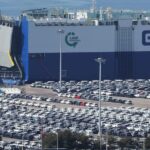
Analysts note that Korea’s advanced manufacturing sectors, particularly automobiles, electronics, and semiconductors, face heightened vulnerability to any determinations of excess capacity. The USTR notice specifically mentioned global automotive sector concerns, noting that capacity utilization rates below healthy thresholds of approximately 80 percent indicate overproduction. Korean manufacturers maintain substantial export volumes to the United States across these categories, making the investigation outcomes economically significant for both nations.
Potential Tariffs and Global Supply Chain Disruption
The investigations explicitly contemplate tariffs and import restrictions as potential remedies, raising the prospect of substantial disruptions to global supply chains. For the forced labor probes, USTR has identified both tariff measures and direct import restrictions as possible outcomes, depending on whether investigations determine that foreign practices are actionable and what level of remedy appears appropriate. Legal analysts suggest the administration likely aims to replicate the magnitude and breadth of the now-invalidated IEEPA tariffs through these alternative statutory mechanisms.
The compressed timeline suggests urgency in restoring tariff pressure. USTR has scheduled public hearings on the forced labor investigations for April 28, 2026, with written comments and appearance requests due by April 15. The overcapacity hearings follow on May 5, creating a narrow window for diplomatic intervention and public participation. Ambassador Greer expressed hope that investigations could conclude with proposed remedies before the temporary Section 122 tariffs expire in July, though he acknowledged that timing remains uncertain.
Supply chain managers across multiple industries are now assessing exposure to potential disruptions. Companies with manufacturing operations, sourcing relationships, or import dependencies involving the 60 investigated economies must evaluate risks of sudden tariff imposition or border restrictions. The forced labor dimension adds compliance complexity, as firms must demonstrate that their supply chains exclude products mined, produced, or manufactured wholly or partially through coerced labor to avoid potential exclusion from the American market.
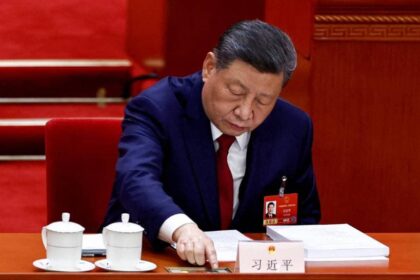
Treasury Secretary Scott Bessent is scheduled to meet Chinese Vice Premier He Lifeng in Paris during the coming week, potentially setting conditions for a summit between President Trump and Chinese President Xi Jinping. These bilateral discussions occur alongside the broader Section 301 investigations, suggesting that the administration may pursue both multilateral pressure through statutory investigations and bilateral negotiations to achieve trade objectives.
Legal Precedent and International Standards
The current investigations build upon recent USTR precedent regarding labor rights and trade enforcement. In 2024, the Biden administration initiated the first Section 301 investigation specifically targeting labor and human rights violations, focusing on Nicaragua. That investigation examined repression of collective bargaining, child labor, human trafficking, and dismantling of rule of law protections. USTR ultimately determined that Nicaraguan practices were unreasonable and burdened US commerce, implementing a phased tariff remedy reaching 15 percent by 2028.
However, the new investigations differ fundamentally in scope and target. While the Nicaragua case addressed domestic labor practices within the investigated country, the current probes examine whether foreign governments adequately prevent imports of forced labor goods from other nations. This creates a novel form of trade pressure, essentially requiring countries to police their borders against third-party exploitation or face American sanctions.
Several targeted economies have already enacted domestic legislation addressing forced labor imports. Canada prohibited such imports in July 2020 pursuant to USMCA commitments, while Mexico implemented similar bans under the same agreement. The European Union adopted its Forced Labour Regulation in December 2024, prohibiting sale, import, and export of goods produced using forced labor throughout the single market. Despite these measures, USTR determined that none of the 60 economies appear to have both adopted and effectively enforced comprehensive prohibitions to date.
The Essentials
- The Office of the US Trade Representative initiated Section 301 investigations into 60 economies on March 12, 2026, examining failures to ban imports produced with forced labor.
- Targeted economies include South Korea, China, Japan, India, the European Union, United Kingdom, Canada, Mexico, and 52 additional major trading partners.
- The investigations follow a Supreme Court ruling on February 20, 2026, that invalidated tariffs imposed under the International Emergency Economic Powers Act.
- Public hearings are scheduled for April 28, 2026, with written comments due by April 15, 2026.
- USTR Ambassador Jamieson Greer indicated potential remedies include tariffs and import restrictions, with hoped-for conclusion before temporary Section 122 tariffs expire in July.
- South Korea faces dual pressure, having been named in both the forced labor probe and a separate March 11 investigation into structural excess manufacturing capacity.
- The International Labour Organization estimates 28 million people globally were in forced labor as of 2021, an increase of 2.7 million since 2016.
- Treasury Secretary Scott Bessent is scheduled to meet Chinese counterparts in Paris to discuss trade tensions alongside the Section 301 investigations.