The Smuggling Pipeline Exposed
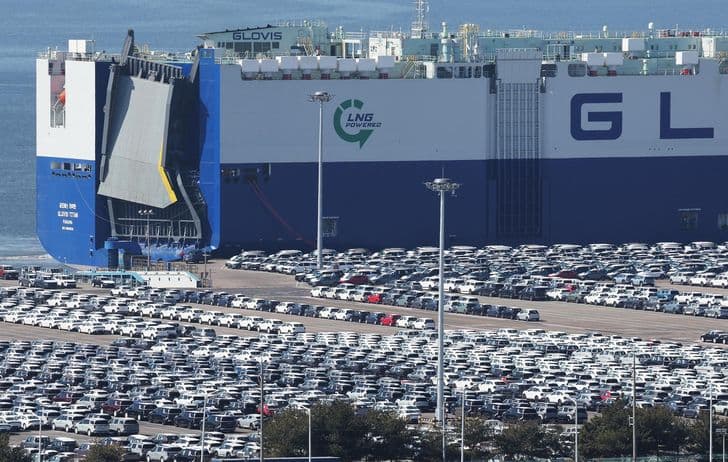
South Korean customs authorities have uncovered a sophisticated sanctions evasion network that shipped nearly 4,000 luxury vehicles to Russia over a three-year period, circumventing international export controls imposed following Moscow’s full-scale invasion of Ukraine. The Korea Customs Service announced Wednesday that 3,705 cars with a combined value of 179.6 billion won ($121.2 million) were illegally exported between 2023 and 2025, primarily through deceptive routing schemes that masked Russia as the true destination.
The investigation revealed that traders exploited a network of intermediary countries to bypass Seoul’s prohibition on automotive exports. Rather than declaring Russia as the final destination, exporters falsely claimed the vehicles were bound for neighboring Central Asian nations, particularly Kazakhstan and Kyrgyzstan. Once the cars reached these transit hubs, they were diverted northward into Russia, effectively nullifying the sanctions regime designed to deprive Moscow of luxury goods and advanced technology.
The scale of this operation highlights the persistent challenge facing democratic nations attempting to restrict Russia’s access to high-value Western and Asian manufactured goods. While direct trade routes have been severed, the emergence of complex re-export networks through third countries demonstrates how sanctions implementation often lags behind the adaptive strategies of circumvention specialists. The vehicles involved were predominantly high-end luxury models, including German premium brands initially imported into South Korea, suggesting the operation catered to Russia’s wealthy elite who continue to demand Western automotive excellence despite international isolation.
Lee Myeong-gu, a chief official at the Korea Customs Service, emphasized the government’s commitment to closing these loopholes. In an official statement, he declared:
As a responsible member of the international community, we plan to thoroughly investigate illegal exports that violate export controls and eradicate such practices to enhance national credibility and export competitiveness.
Navigating the Regulatory Framework
South Korea’s automotive export restrictions align closely with measures implemented by the European Union, the United Kingdom, and the United States, forming part of a coordinated international response to Russia’s 2022 invasion of Ukraine. Seoul initially imposed bans on vehicles with engine displacements of 2,000 cubic centimeters or more, effectively targeting larger, more powerful automobiles that often serve as status symbols among Russia’s political and economic elite. Additionally, South Korea prohibited the export of any luxury vehicles valued above $50,000 to both Russia and its ally Belarus.
The $50,000 threshold was deliberately calibrated to strike at high net worth individuals with potential connections to the Russian state, recognizing that luxury consumption patterns often correlate with political influence in authoritarian regimes. These restrictions expanded significantly in 2024, when Seoul instituted a comprehensive permit requirement system for all vehicles featuring engines larger than 2.0 liters destined for Russian territory. This regulatory tightening aimed to close loopholes that had allowed previously unrestricted categories of vehicles to flow into the sanctioned market.
Violators of these export controls face severe criminal penalties under South Korean law. The customs authority has authority to impose prison sentences of up to seven years or financial penalties reaching five times the total value of the contraband goods. This punitive framework reflects the seriousness with which Seoul views sanctions compliance, particularly as the nation seeks to maintain its standing as a responsible participant in the global rules-based order and avoid secondary sanctions from Western partners.
The Central Asian Diversion Route
Investigators identified several sophisticated methods employed by traders to disguise the true destination of exported vehicles. The most prevalent technique involved falsifying customs documentation to list Kazakhstan or Kyrgyzstan as the intended market, when in reality these countries served merely as transit points for onward shipment to Russia. This geographic obfuscation exploits the Eurasian Economic Union trade bloc, which facilitates seamless movement of goods between Russia and Central Asian member states once items clear initial customs barriers.
Another common evasion tactic involved the misclassification of vehicle status. Traders purchased brand-new automobiles from Korean dealerships, then artificially aged them through administrative procedures that registered the vehicles as used or secondhand. This disguise served dual purposes: it circumvented manufacturer restrictions on new car exports to Russia, and it potentially evaded scrutiny under regulations specifically targeting zero-mileage luxury vehicle transfers. The Korea Customs Service noted that many of these disguised vehicles were prestigious German marques that had originally been imported into South Korea for domestic sale, rather than Korean domestic brands.
The prominence of Central Asian waypoints in this smuggling network aligns with patterns identified by customs authorities across multiple jurisdictions. The United Kingdom’s government guidance on countering Russian sanctions evasion specifically highlights Kazakhstan and Kyrgyzstan as jurisdictions requiring enhanced due diligence, citing anomalous trade flow increases and their shared land borders with Russia. These countries have experienced tenfold increases in vehicle imports from Europe and Asia since 2022, far exceeding any plausible domestic market absorption capacity.
Escalating Trade Volumes Reveal Growing Challenge
The temporal trajectory of illegal exports reveals an alarming acceleration in circumvention activities. According to customs data, the value of illicit vehicle shipments to Russia surged more than five-fold during 2025, reaching 149.2 billion won ($100.78 million) compared to significantly lower figures recorded in 2024 when Seoul initially tightened export restrictions. This spike suggests that sanctions evasion networks scaled their operations substantially as they refined their logistics and identified reliable transit corridors through third countries.
The three-year investigation period, spanning 2023 through 2025, captures the evolution of Russia’s parallel import infrastructure following the initial imposition of Western automotive sanctions. As major international manufacturers including Mercedes-Benz, BMW, Audi, and Porsche formally exited the Russian market and closed domestic production facilities, demand for their products did not diminish among wealthy Russian consumers. Instead, this vacuum created lucrative opportunities for intermediary traders willing to navigate complex multi-jurisdictional supply chains.
The financial scale of the Korean customs discovery, while significant, represents merely one tributary of a much larger global flow. Parallel investigations have revealed that tens of thousands of vehicles reach Russia monthly through similar grey-market schemes originating from China, where international brands manufacture vehicles through joint ventures with local partners. These cars, often technically identical to those produced for Western markets, travel through informal networks that enable Russian dealers to place orders through Chinese intermediaries, effectively rendering manufacturer withdrawal announcements largely symbolic.
Global Circumvention Networks and Enforcement Gaps
The Korean case fits within a broader pattern of sanctions evasion that has bedeviled Western policymakers since 2022. The European Union, working in coordination with G7 partners, has developed the Common High Priority List (CHPL), which identifies 50 specific items at elevated risk of diversion to Russia due to their military or dual-use applications. While the list focuses heavily on electronics, semiconductors, and manufacturing equipment, automotive components and luxury vehicles feature prominently in the broader ecosystem of restricted goods that Russia actively seeks to procure through deceptive means.
International guidance documents reveal the complexity of identifying illicit re-export schemes. The United Kingdom’s Office of Trade Sanctions Implementation has catalogued numerous red flag indicators that businesses should monitor, including customers with little prior history in the automotive sector suddenly placing large orders, payments routed through third countries not otherwise involved in transactions, and shipping routes that appear inconsistent with the stated destination’s typical import patterns. Particularly suspicious are new customers incorporated after February 2022 who immediately seek high-value automotive products.
The enforcement challenge is compounded by Russia’s legalization of parallel imports in June 2022, a legislative move that formally permitted the importation of goods without intellectual property holders’ consent. While this Russian domestic law does not invalidate international sanctions, it has created a permissive environment for traders within Russia to receive sanctioned goods without fear of domestic legal consequences. Meanwhile, exporters in source countries face diametrically opposite legal frameworks, where participation in such trade networks carries severe criminal liability, as demonstrated by recent prison sentences of four to six years handed down in Germany to individuals convicted of exporting luxury vehicles to Russia.
Investigative reporting has further illuminated how deeply these networks penetrate legitimate business structures. Research by Systema, the investigative unit of Radio Free Europe/Radio Liberty, traced luxury vehicle imports through Hong Kong and South Korea to Russian dealerships with connections to the Federal Protective Service (FSO), the agency responsible for protecting top Russian officials. These findings suggest that the trade in sanctioned vehicles intersects with Russia’s security apparatus, potentially providing protection for smuggling operations that serve the country’s elite while ordinary citizens face economic hardship from international isolation.
Seoul’s Strengthened Enforcement Architecture
In response to these revelations, the Korea Customs Service has initiated a comprehensive overhaul of its export control mechanisms. The agency established a dedicated trade security investigation unit in April 2024 specifically tasked with identifying and disrupting sanctions evasion schemes. This specialized unit employs enhanced screening technologies and data analytics to identify anomalous export patterns that might indicate false destination declarations or misclassified goods.
The customs authority now requires rigorous verification of end-user certificates for all vehicles featuring engines exceeding 2.0 liters, demanding that exporters provide documentary evidence of the final recipient and intended use. For shipments destined to countries identified as high-risk transit hubs, including Kazakhstan, Kyrgyzstan, and China, Korean customs officials conduct enhanced due diligence procedures that examine corporate ownership structures, beneficial ownership, and historical trade patterns to identify potential front companies operating on behalf of Russian end users.
Legal consequences for violations have been clearly articulated to serve as deterrents. Beyond the maximum seven-year prison sentences and five-fold value fines, the customs service has indicated willingness to publicly identify offending companies and individuals, leveraging reputational risk to discourage participation in circumvention schemes. The agency has also signaled enhanced cooperation with international partners, including information sharing with European Union customs authorities and the United States Bureau of Industry and Security, to track vehicles that may have originated in Korean ports but ultimately appeared in Russian showrooms.
Industry observers note that while enhanced enforcement may disrupt existing smuggling routes, the fundamental economic incentives driving parallel import schemes remain potent. With Western luxury brands formally absent from the Russian market but demand persisting among wealthy consumers, the price premiums available to successful smugglers continue to attract risk-tolerant traders. The Korea Customs Service acknowledges that eradicating such practices entirely may require sustained international coordination and continued adaptation of enforcement techniques as circumvention networks inevitably evolve in response to heightened scrutiny.
Key Points
- Nearly 4,000 luxury vehicles worth $121.2 million were illegally exported from South Korea to Russia between 2023 and 2025, violating international sanctions imposed after the Ukraine invasion.
- Traders employed false destination declarations, primarily listing Kazakhstan and Kyrgyzstan as intended markets while diverting vehicles to Russia through Central Asian transit routes.
- Illegal export values surged more than five-fold in 2025 compared to 2024, reaching 149.2 billion won ($100.78 million) as circumvention networks expanded operations.
- South Korea prohibits exports of vehicles with engines exceeding 2.0 liters or valued above $50,000 to Russia, with violators facing up to seven years imprisonment and fines reaching five times the goods’ value.
- The Korea Customs Service established a dedicated trade security investigation unit in April 2024 and has implemented enhanced due diligence requirements for exports to high-risk third countries.
- The scheme forms part of a global pattern of sanctions evasion that includes parallel grey-market flows from China and complex procurement networks utilizing third-country front companies.