South Korea’s Democracy Tested in Landmark Ruling
A Seoul court has delivered a stunning verdict that reverberates through South Korean politics, sentencing former Prime Minister Han Duck-soo to 23 years in prison for his role in what judges have formally declared an insurrection. The ruling marks the first time a court has legally characterized former President Yoon Suk Yeol’s failed martial law declaration as a rebellion, establishing a critical judicial precedent that could shape the fate of multiple high-profile officials facing similar charges.
- South Korea’s Democracy Tested in Landmark Ruling
- The Court’s Devastating Assessment of Han’s Actions
- The December 3 Crisis and Its Aftermath
- From Technocrat to Defendant: Han Duck-soo’s Remarkable Career
- What the Verdict Means for Yoon Suk Yeol
- Domestic and International Reactions
- The Path Forward for South Korean Democracy
- Key Points
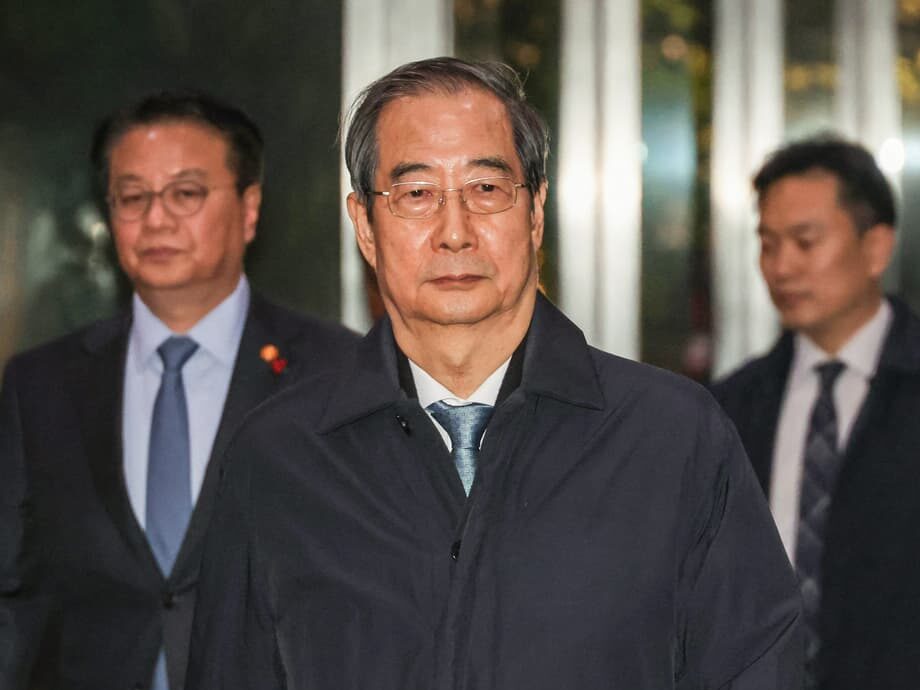
Han, 76, received his sentence Wednesday at the Seoul Central District Court, where Presiding Judge Lee Jin-kwan ordered his immediate detention. The prison term significantly exceeds the 15 years prosecutors had requested, reflecting the court’s assessment of the grave threat the former prime minister’s actions posed to South Korea’s constitutional order. Han becomes the first cabinet minister from Yoon’s administration to be convicted on criminal charges directly related to the martial law attempt, making his case a potential bellwether for upcoming trials.
The judgment centers on events that unfolded on December 3, 2024, when President Yoon Suk Yeol appeared on television at 10:28 p.m. to announce the imposition of martial law. The declaration shocked the nation and triggered immediate resistance from lawmakers and citizens alike, ultimately resulting in the measure being overturned by the National Assembly within hours. What prosecutors and now the court have portrayed as a coordinated attempt to undermine democratic institutions has led to one of South Korea’s most significant political crises in decades.
The court’s characterization of these events as an insurrection carries profound implications, potentially setting the stage for even more severe consequences for Yoon himself, who faces a separate ruling on February 19 where prosecutors have demanded the death penalty. Han’s conviction on charges of engaging in key actions of insurrection, perjury, and falsifying official documents represents a cornerstone in the legal response to the martial law crisis.
The Court’s Devastating Assessment of Han’s Actions
Judge Lee delivered a scathing evaluation of Han’s conduct, emphasizing the unique responsibility the prime minister held as the second-highest official in South Korea’s government. The court found that Han possessed both the constitutional duty and the practical authority to prevent the martial law declaration but instead chose to facilitate its implementation.
The defendant had a duty as a prime minister indirectly given democratic legitimacy and the responsibility for it to follow the Constitution and laws and make every effort to realize and defend the Constitution. Even so, he neglected this duty and responsibility until the end, thinking the Dec. 3 insurrection might succeed, and chose to take part as a member.
This assessment directly contradicted Han’s defense strategy, which centered on claims that he had privately opposed the martial law declaration and found himself in a state of psychological shock when Yoon announced it. Throughout the trial, Han maintained that he never supported or tried to assist the martial law implementation, telling the court in November, “I never supported it or tried to help it.” The judges rejected these assertions entirely, finding instead that Han had been an active participant in the insurrection rather than a passive bystander.
The court identified specific actions that demonstrated Han’s complicity, including his role in organizing what judges described as the “outward appearance” of a legitimate cabinet meeting to rubber-stamp an unconstitutional decree. Evidence presented during the trial showed that only six cabinet ministers were summoned in advance to the presidential office, with Han helping ensure the meeting achieved the minimum quorum required for legality while actively preventing meaningful deliberation on the martial law decree.
CCTV footage proved particularly damaging to Han’s defense, showing him nodding as Yoon explained the martial law plan and receiving documents including the official proclamation. The court established that Han had knowledge of the martial law plan hours before Yoon’s televised announcement, undermining claims that he was caught unaware or unprepared to respond. Rather than using this advance notice to mobilize opposition or warn colleagues, the evidence suggested Han used the time to facilitate the declaration’s procedural requirements.
Judge Lee characterized Yoon’s martial law declaration as a “self-coup” by elected leadership, distinguishing it from historical military coups and arguing it posed unique dangers to democracy precisely because it originated from within constitutional structures rather than from outside them. This reasoning informed the court’s decision to reject sentencing precedents from past military coups, instead imposing a harsher penalty reflecting what they viewed as the betrayal of democratic legitimacy.
The Damning Phone Call
Among the most compelling evidence against Han was a recorded phone call from December 8, in which he instructed a presidential aide to destroy a backdated martial law document. The former prime minister’s words on that call proved devastating to his credibility.
Let’s make it as if my signature never existed.
This suggestion, captured in audio recordings presented to the court, directly contradicted Han’s claims of opposition to the martial law declaration and suggested consciousness of guilt rather than principled resistance. The court found no genuine remorse in Han’s behavior throughout the trial, noting that he had continued concealing evidence and providing false testimony even as the proceedings advanced. The December 8 call demonstrated active efforts to cover up his role rather than mere passive complicity, a distinction that influenced both the conviction and the severity of the sentence.
Han’s legal troubles extended beyond the insurrection charge itself. The court convicted him on multiple related counts, including perjury during Yoon’s impeachment proceedings, creating false documents, and destroying presidential records. Each additional charge reflected what judges viewed as a pattern of obstruction and dishonesty extending well beyond the initial martial law declaration. These supplementary convictions underscored the court’s finding that Han had not merely participated in unconstitutional actions but had subsequently engaged in a systematic cover-up.
The comprehensive nature of the verdict addressed nearly every aspect of Han’s conduct surrounding the martial law crisis, from his participation in the cabinet meeting to his subsequent efforts to distance himself from the events. This thorough approach explains why the final sentence significantly exceeded the 15-year term prosecutors had recommended. Judge Lee determined that the aggravating factors, including Han’s high constitutional position, his active facilitation of the decree, and his subsequent attempts to conceal evidence, warranted harsher punishment than even the prosecution had deemed appropriate.
The December 3 Crisis and Its Aftermath
Understanding the gravity of Han’s sentence requires examining the context of the martial law declaration and the immediate chaos it unleashed throughout South Korean society and government. When Yoon Suk Yeol appeared on television that December evening, he announced extraordinary emergency measures that suspended normal constitutional protections and authorized military authorities to take control of essential government functions. The declaration specifically targeted what Yoon described as anti-state forces within the country, characterizing the opposition-controlled National Assembly as “a den of criminals” and vowing to eliminate “shameless North Korea followers and anti-state forces.”
These inflammatory terms harkened back to language used during South Korea’s authoritarian era, evoking painful memories of dictatorship that many believed the country had permanently left behind in the 1980s. The practical implementation of martial law involved deploying troops and police officers to the National Assembly and election offices, actions the court characterized as “a riot” or “a self-coup” intended to undermine the constitutional order. This use of force against democratic institutions represented what the court viewed as an unlawful attempt to suppress opposition and consolidate power.
Resistance to the declaration was immediate and widespread. Thousands of protesters gathered outside the National Assembly, while legislators rushed to the building to convene an emergency session. Despite the physical presence of military and police forces, enough lawmakers managed to enter the assembly chamber to vote down Yoon’s decree, demonstrating the resilience of South Korea’s democratic institutions. No major violence occurred during these confrontations, largely because many of the deployed troops and police officers refused to aggressively control protesters or block lawmakers, reflecting institutional resistance to the martial law order.
The political fallout proved devastating for Yoon and his administration. The National Assembly moved quickly to impeach the president, and Han Duck-soo assumed the role of acting president on December 14, 2024, following confirmation of the impeachment resolution. However, Han’s tenure as acting president proved short-lived and contentious. On December 27, the National Assembly unanimously passed an impeachment motion against him, suspending him from duties amid allegations tied to his role in facilitating the martial law process.
The specific controversy surrounding Han’s impeachment centered on his refusal to fill vacant seats at the Constitutional Court, which was deliberating whether to formally remove Yoon from office. Opposition lawmakers argued that restoring a full court bench would increase prospects for Yoon’s ouster, and they viewed Han’s inaction as an attempt to protect his former patron. The Constitutional Court later reinstated Han as acting president, but the damage to his reputation had been done. After the court formally dismissed Yoon as president in early April, Han resigned to pursue the presidency in June’s snap election, ultimately withdrawing from the race after failing to secure the conservative party nomination.
From Technocrat to Defendant: Han Duck-soo’s Remarkable Career
The dramatic fall from grace represented by Wednesday’s sentencing contrasts sharply with Han Duck-soo’s distinguished career as one of South Korea’s most experienced and respected technocrats. A career diplomat and bureaucrat, Han served in senior positions under five different presidents across both conservative and progressive administrations, demonstrating an unusual ability to navigate South Korea’s often-volatile political landscape. His first stint as prime minister came under liberal President Roh Moo-hyun from 2007 to 2008, while his second term began under conservative President Yoon Suk Yeol in May 2022.
Yoon’s appointment of Han initially seemed calculated to bring stability and experience to the administration. Han ultimately became the longest-serving prime minister under any single president in South Korean democratic history, a testament to his political adaptability and administrative competence. Throughout four decades of public service, Han established himself as a fixture in Korean governance, someone who transcended partisan divisions and focused on technical expertise rather than ideological combat. This background makes his conviction for participating in an attempt to undermine democracy particularly striking, representing what many observers view as a betrayal of the public trust accumulated over decades of service.
Throughout the trial, Han’s legal team emphasized his long record of public service and argued that his behavior during the martial law crisis reflected the challenges of serving under a president determined to pursue a controversial course of action. They portrayed Han as having attempted to moderate Yoon’s impulses while remaining constrained by hierarchical government structures and the practical limitations of his position. The court rejected this characterization entirely, finding instead that Han possessed both the authority and the obligation to resist unconstitutional orders and chose not to exercise either.
The breadth of Han’s experience across multiple administrations potentially explained why he remained free throughout much of the trial process. In August, a judge had rejected his arrest warrant, citing “room for legal dispute” over his culpability. This decision reflected what many legal experts viewed as the complexity of establishing his specific criminal intent given his technocratic background and the unusual circumstances of the martial law declaration. However, the comprehensive nature of Wednesday’s verdict, with its finding of active participation and subsequent cover-up efforts, appears to have resolved those ambiguities in the prosecution’s favor.
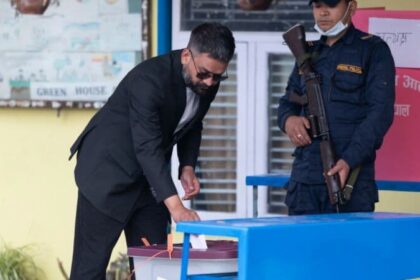
Han’s response to the sentencing was notably subdued. After the ruling, clad in a suit and green tie, he told reporters, “I will humbly follow the judge’s decision.” His lawyer indicated plans to appeal the verdict to the Supreme Court, suggesting that legal challenges will continue. The court’s expectation that the case will be fought through to the highest level reflects the constitutional importance of the issues at stake and their potential impact on future governance.
What the Verdict Means for Yoon Suk Yeol
Perhaps the most significant consequence of Han’s sentencing lies in what it suggests for former President Yoon Suk Yeol, who faces his own insurrection trial with a verdict scheduled for February 19. Prosecutors have demanded the death penalty in Yoon’s case, characterizing him as the mastermind behind the martial law declaration. While South Korea has not carried out an execution since 1997, the severity of the requested punishment reflects prosecutors’ view of the extraordinary threat Yoon’s actions posed to the constitutional order.
Yoon has already been sentenced to five years in prison for obstructing his own arrest following the martial law declaration, a separate case from the insurrection charges. This earlier conviction involved allegations that he defied attempts to detain him, fabricated the martial law proclamation, and denied some cabinet members their rights to deliberate on his martial law decree. Yoon has appealed this verdict, maintaining his innocence across all charges and denouncing the investigations as “frenzied,” arguing they involve “manipulation” and “distortion.”
The former president has consistently denied seeking to impose long-term military rule, arguing instead that the martial law decree was intended to warn the public about what he described as obstruction by a liberal-controlled parliament. However, investigators have concluded that the move was actually aimed at consolidating and prolonging his hold on power. The court’s characterization of Han’s actions as participation in a “self-coup” suggests that judges will likely apply similar reasoning to Yoon, potentially resulting in an even harsher sentence given his role as the presumed architect of the martial law plan.
Yoon currently faces eight separate criminal trials, reflecting the breadth of legal jeopardy stemming from the martial law declaration and related actions. Beyond the insurrection charges, prosecutors have also accused him of abuse of power and additional criminal offenses. The outcome of these cases will determine whether Yoon spends the remainder of his life in prison, a dramatic downfall for a conservative president who took office with promises of stability and reform.
The martial law crisis has already had profound consequences for South Korean politics and governance. Beyond Han and Yoon, numerous other high-ranking officials face indictment, including Yoon’s defense, safety, and justice ministers, along with the spy chief, police chief, and several top military commanders. The breadth of these prosecutions reflects what investigators view as a systematic attempt to subvert constitutional processes rather than the isolated actions of a few individuals.
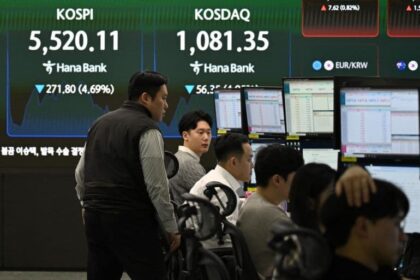
The political turmoil and power vacuum created by the crisis tarnished South Korea’s international image and rattled its diplomacy and financial markets, though the country has since moved toward stability. Lee Jae Myung, a former leader of the main liberal opposition Democratic Party, won the snap election that followed Yoon’s removal, restoring normal constitutional governance. However, the legal proceedings against the former administration continue, serving as both accountability mechanism and ongoing reminder of how close South Korean democracy came to serious crisis.
Domestic and International Reactions
The sentencing has elicited varied responses across South Korean society, reflecting the deep political divisions the martial law crisis exposed. At a train station in Seoul, 23-year-old commuter Kim Su-hyeon watched the news coverage and offered a perspective shared by many who opposed Yoon’s administration.
This ruling is something that citizens who oppose martial law can fully accept.
This sentiment reflects relief among those who viewed the martial law declaration as an existential threat to democracy and who believe accountability is essential for preventing similar actions in the future. For younger generations who have grown up entirely in democratic South Korea, the martial law declaration represented a shocking glimpse into a past they thought permanently consigned to history books. The harsh sentence imposed on Han Duck-soo serves as reassurance that democratic institutions remain capable of defending themselves against authoritarian temptations.
Not all reactions were uniformly positive, however. Kim In-sik, a 79-year-old commuter, offered a more nuanced perspective on Han’s legacy and the circumstances of his downfall.
I don’t know whether this elderly man meant to devote himself to the people of South Korea in his own way, but the outcome wasn’t good.
This ambivalent view reflects the complexity of Han’s position and the tragedy of his career ending in disgrace rather than the honorable retirement that might have been expected for a technocrat who served across five administrations. For some older Koreans with memories of past political transitions and bureaucratic survival, Han’s behavior may represent the compromises and moral failures that public officials sometimes make when caught between constitutional obligations and political pressures.
Internationally, the case has drawn attention as a test of democratic resilience in a region where authoritarian influences remain strong. South Korea’s ability to hold its highest officials accountable through legal rather than extra-legal means demonstrates the strength of its democratic institutions, even as the martial law attempt itself exposed potential vulnerabilities. The comprehensive legal response to the crisis may ultimately strengthen South Korean democracy by establishing clear boundaries around constitutional power that future leaders will hesitate to cross.
Legal experts have emphasized the precedent-setting nature of the verdict, with many suggesting it will influence not only remaining cases related to the martial law declaration but also future interpretations of executive authority in South Korea. The court’s willingness to exceed prosecutorial sentencing recommendations indicates an independent judiciary prepared to assert its authority even in cases involving the highest levels of government. This judicial independence represents one of the key institutional safeguards that prevented Yoon’s martial law declaration from succeeding in the first place and continues to protect constitutional order through the accountability process.
The Path Forward for South Korean Democracy
As Han Duck-soo prepares for the appeals process and the nation awaits Yoon Suk Yeol’s February 19 verdict, South Korea finds itself reflecting on how close it came to a democratic crisis and what lessons should be drawn from the experience. The martial law declaration exposed institutional vulnerabilities that civil society and political leaders will likely work to address in coming years. These might include clearer protocols for cabinet resistance to unconstitutional presidential orders, strengthened protections for whistleblowers within government, and enhanced mechanisms for rapid legislative and judicial response to executive overreach.
The comprehensive nature of the legal response, with multiple high-ranking officials facing charges across various courts, demonstrates the complexity of unraveling a coordinated attempt to undermine democratic institutions. Each verdict contributes to a broader narrative about accountability and the limits of executive power, potentially creating deterrent effects against future attempts at authoritarian drift. The fact that the martial law declaration failed so quickly, with both the legislature and the judiciary mobilizing effectively to counter it, speaks to the resilience of South Korea’s democratic architecture.
At the same time, the case raises uncomfortable questions about how a respected technocrat like Han Duck-soo could become complicit in actions so clearly contrary to South Korea’s constitutional traditions. His conviction suggests that institutional safeguards alone are insufficient without personal moral courage and a commitment to democratic principles that transcends political loyalty or career advancement. The training and preparation of senior government officials may need to incorporate more explicit emphasis on constitutional ethics and the obligations to resist illegal orders, regardless of their source.
For South Korean citizens, the ongoing trials serve as a continuing civic education about the nature and fragility of democracy. The detailed evidence presented in court has provided unprecedented insight into how authoritarian attempts can develop within democratic systems and the various forms that resistance can take. This public education component may prove as valuable as the specific punishments handed down, creating a more informed and vigilant citizenry better prepared to defend democratic institutions in the future.
The international community continues to watch these proceedings with interest, as South Korea’s response to its democratic crisis will likely influence how other nations balance accountability and stability following political turmoil. The thorough legal process, with its respect for due process and judicial independence, offers a potential model for democratic societies facing similar challenges elsewhere. South Korea’s experience demonstrates that even serious attempts to subvert democracy can be addressed through constitutional mechanisms rather than descending into chaos or retaliation.
As the legal proceedings continue toward their conclusions, South Korea appears poised to emerge from this crisis with its democratic institutions strengthened rather than permanently damaged. The harsh sentence imposed on Han Duck-soo, combined with the potentially even more severe consequences awaiting Yoon Suk Yeol, sends an unambiguous message that attempts to undermine the constitutional order will face serious consequences. This message may ultimately serve as the most important deterrent against future authoritarian temptations, ensuring that December 3, 2024, remains an isolated episode rather than the beginning of a darker chapter in South Korean history.
Key Points
- Former South Korean Prime Minister Han Duck-soo, 76, was sentenced to 23 years in prison for his role in the December 3, 2024 martial law insurrection.
- The court ruled that the martial law declaration constituted an insurrection, marking the first judicial determination of its kind.
- Judge Lee Jin-kwan described the events as a “self-coup” by elected power that posed unique dangers to democracy.
- The 23-year sentence exceeded the 15 years sought by prosecutors, reflecting the court’s assessment of the aggravating factors.
- Han was convicted of engaging in key actions of insurrection, perjury, and falsifying official documents.
- Damning evidence included a phone call where Han told an aide to destroy a backdated document: “Let’s make it as if my signature never existed.”
- Han became the first cabinet member from Yoon’s administration convicted on martial law-related charges.
- Former President Yoon Suk Yeol faces a February 19 ruling on insurrection charges where prosecutors have requested the death penalty.
- Yoon was already sentenced to five years in prison for obstructing his own arrest following the martial law declaration.
- The martial law declaration was overturned by the National Assembly within hours of Yoon’s televised announcement.
- Han served as prime minister under five different presidents and was the longest-serving PM under a single president in democratic Korean history.
- CCTV footage showed Han nodding as Yoon explained the martial law plan and receiving related documents hours before the announcement.
- The court found Han helped ensure the cabinet meeting had minimum quorum while preventing meaningful deliberation on the decree.
- Han briefly served as acting president after Yoon’s impeachment but was himself impeached before being reinstated and later resigning.
- Numerous other high-ranking officials, including defense, justice, and interior ministers, face related charges.