A Crisis of Confidence in Higher Education
South Korea’s Ministry of Education has announced a decisive move to amend the Private Teaching Institute Act following a series of high-profile indictments involving the buying and selling of exam questions. The scandal has exposed a lucrative underground market where instructors allegedly purchased test questions from current teachers to boost the performance of students at private academies. The proposed legal changes aim to provide clear grounds for punishing those involved in these illicit practices, addressing a loophole that has allowed the corruption to fester.
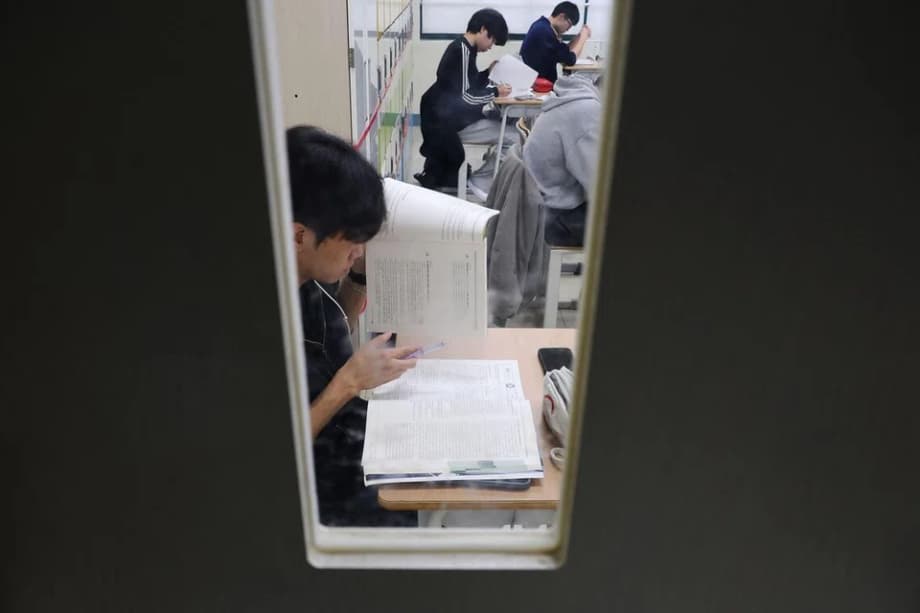
The announcement comes at a time of heightened anxiety surrounding the College Scholastic Ability Test, commonly known as the Suneung. This annual standardized test is widely regarded as the single most important factor determining a young person’s future in South Korea, influencing university admission, career prospects, and even social standing. With such high stakes, the integrity of the exam system is paramount, yet recent events have shaken public trust in the fairness of the admissions process.
The Ministry stated that it aims to propose the specific amendments within the year. Under current regulations, the Education Minister has the authority to suspend operations, shut down businesses, or impose fines on private academies for violations such as false advertising or failure to register. However, there is no explicit clause outlining sanctions for academies or instructors specifically involved in the trading of test questions. This legislative gap has made it difficult to effectively penalize the “cash-for-questions” rings that have allegedly infiltrated the education sector.
The Indictments of Star Lecturers
Prosecutors have indicted 46 private academy instructors, including some of the nation’s most famous “star lecturers,” such as Cho Jung-shik and Hyun Woo-jin. These high-profile educators are accused of obtaining exam questions from current teachers for use in their private teaching materials. According to the prosecution, Hyun allegedly paid a current teacher 420 million won, while Cho paid 83 million won in exchange for questions from the mock college entrance exam and school tests.
The financial incentives for these instructors are immense. By securing questions in advance, private academies can effectively guarantee higher scores for their students. These inflated results are then used in marketing campaigns to attract new enrollments and justify exorbitant tuition fees. Prosecutors have also indicted the education company Hyconsi and the Gangnam Daesung Institute on charges of trading exam questions with teachers between 2020 and 2023.
The practice of buying and selling Suneung mock exam questions before they are administered does more than just break the rules. It distorts the nationwide ranking of students and undermines the fundamental fairness of the admissions system. Students who attend academies involved in these schemes gain an unfair advantage over those who rely on honest study, creating a distorted playing field that favors wealthier families who can afford access to these “star” instructors.
Uncovering an ‘Education Cartel’
The scope of the problem appears to be systemic rather than isolated. An investigation by South Korea’s state auditor, the Board of Audit and Inspection, previously uncovered allegations of collusion between high school teachers and private education companies. The watchdog report described an illicit organization specifically set up to leak exam questions in exchange for cash ahead of the annual Suneung.
The auditor requested a police investigation into 56 individuals, including current public high school teachers and officials suspected of violating laws prohibiting solicitation, obstruction of duty, and embezzlement. Among those investigated were 27 current teachers, a university professor, four employees of the Korean Institute for Curriculum and Evaluation, which administers the Suneung, and 23 individuals associated with the private academy sector.
The audit revealed several significant criminal activities, including a case where a teacher recruited eight colleagues to form a cash-for-questions ring. This ringleader, who had served on Suneung review committees, allegedly supplied over 2,000 mock exam questions reflecting Suneung trends to private academies and renowned instructors from 2019 to May 2023. In exchange for these services, the ringleader received over 500,000 US dollars, distributing a significant portion to the participating teachers while retaining a substantial sum for personal profit.
The ‘English Question 23’ Controversy
A specific incident involving the 2022 Suneung further fueled public outrage. The controversy centered on “English question 23,” where a passage from a mock exam book created by a renowned instructor appeared verbatim on the actual Suneung exam. While the Korean Institute for Curriculum and Evaluation dismissed this as a coincidence, the auditor asserted that it had concrete evidence the question had been leaked.
The incident involved a university professor who supervised an educational broadcast related to the Suneung. He included a question based on a passage from Harvard University Professor Cass Sunstein’s book, provided by a high school teacher appointed as an English question setter. This same passage appeared on the Suneung two months later, violating rules on the security of educational broadcasts. The auditor criticized the institute for failing to prevent this duplication and for excluding the incident from a report on the Suneung complaints process, despite it generating 60% of all complaints.
The High Stakes of the Suneung
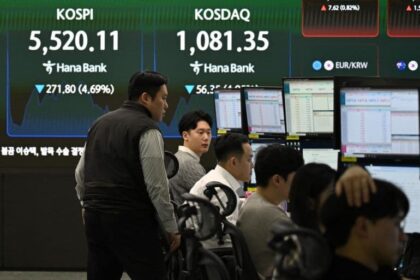
To understand the motivation behind these illegal schemes, one must understand the intense pressure surrounding the Suneung. The exam is essential for admission to top universities and is widely regarded as a gateway to social mobility, economic security, and even a good marriage. The pressure is so intense that the entire country adjusts its schedule on exam day. Flights are temporarily halted to ensure silence during the English listening test, the stock market opens an hour later, and banks and public offices delay their start times to reduce traffic congestion.
Videos of police officers rushing late students to exam halls have become an annual occurrence. Parents flock to churches and Buddhist temples to pray for their children’s success, while students observe various taboos, such as avoiding seaweed soup for lunch due to a superstition that its slippery strands will cause them to “slip” up on the test. More than 500,000 students register for the exam each year, making it a massive logistical event that brings the nation to a standstill.
Exam Difficulty and Administrative Turmoil
The demand for leaked questions is further driven by the reputation of the Suneung for extreme difficulty. The exam is an eight-hour marathon covering Korean, mathematics, English, social sciences, and natural sciences. In recent years, the English section has faced particular criticism for questions that students describe as “insane” or akin to deciphering an ancient script.
The controversy over the exam’s difficulty led to the resignation of the chief official in charge of administering the Suneung, Oh Seung-geol, who accepted responsibility for the “chaos” caused by the test. Critics argued that the questions were less a test of English proficiency and more a test of logic tricks, with passages taken out of context from academic books. For example, one question required students to insert a sentence into a paragraph about the philosophy of video game avatars, while another presented a complex argument on Immanuel Kant’s philosophy of law.
“The texts are not necessarily impossible, but they are maddeningly confusing. It is a pain because it makes the material useless for actual education,” said Jung Chae-kwan, an English language professor and former official at the institution that administers the Suneung.
Professor Jung noted that teachers often end up drilling “test-taking hacks” rather than teaching English, as knowing the tricks can sometimes allow students to answer correctly without fully reading or understanding the text. This environment creates a desperate market for any edge academies can find, legal or otherwise.
New Threats from Artificial Intelligence
As authorities grapple with traditional cheating methods, the education sector is facing a new wave of academic dishonesty driven by artificial intelligence. A recent incident at a high school in Seoul highlighted the growing challenges of maintaining fairness in the digital age. During a Korean language assignment, a teacher noticed students accessing unauthorized pages on their tablet PCs.
Upon reviewing access logs, the school discovered that several students’ answers had grown in length abnormally fast, in under a minute. The students admitted to copying answers generated by AI or pasting prewritten content. The school invalidated the assessment for all students and conducted a paper-based retest to ensure fairness. Similar incidents have occurred at the university level, including cases at Yonsei University and Seoul National University where students used AI tools during online exams or submitted AI-generated code.
These developments underscore the need for updated guidelines and stricter regulations. While the Ministry of Education pushes to expand AI competencies among students, experts warn that clear usage standards and ethics education are essential to prevent students from relying on AI without critical thinking. The Seoul Metropolitan Office of Education is preparing new guidelines on AI use, aiming to distribute them before the next academic year.
Public Outcry and Demands for Justice
The reaction to the scandals has been fierce, with the Presidential Office expressing deep concern over the erosion of fairness in the admissions system. Presidential chief of staff Kang Hoon-sik emphasized the foundational importance of a cheat-free system.
“The foundation of a fair Republic of Korea is an admissions system free from cheating. Education authorities owe students a sincere reflection and apology for the sense of futility and disillusionment they may have experienced,” said Kang Hoon-sik during a meeting of senior presidential aides.
Public outrage has also led to collective legal action. Over 100 organizations, including the Anti-Education Cartel Special Investigation Citizens’ Committee, announced plans to file a lawsuit seeking compensation for affected students in relation to the Suneung ‘English question 23’ controversy. They are seeking damages equivalent to 15,000 US dollars per individual on behalf of nearly 445,000 students, totaling an estimated 6.6 billion US dollars. Chairman of the committee, Professor Yang Jeong-ho, stressed that calling the leaking or predicting of exam questions a “coincidence” is unfair and deeply disappointing.
In response to these mounting pressures, the Ministry of Education has announced plans to improve the fairness of future exams. The statute of limitations for disciplinary action against teachers involved in exam irregularities will be extended from the current three years to 10 years. The government has also pledged to implement reforms starting from the June mock exams to prevent question overlap between the Suneung and private mock exams.
Key Points
- South Korea’s Ministry of Education plans to amend the Private Teaching Institute Act to explicitly punish the buying and selling of exam questions.
- High-profile “star lecturers” Cho Jung-shik and Hyun Woo-jin were indicted for allegedly paying teachers hundreds of millions of won for leaked questions.
- The state auditor uncovered a widespread “education cartel” involving teachers and private academies trading questions for cash.
- The Suneung exam is a high-stakes event that halts flights and delays work hours across the country, dictating students’ future prospects.
- The exam’s chief official resigned recently following complaints about the “insane” difficulty of the English section.
- New challenges are emerging with AI-based cheating in high schools and universities, requiring updated usage guidelines.
- Civic groups are filing a class-action lawsuit seeking billions in damages for students affected by question leaks.
- The government will extend the statute of limitations for penalizing teachers involved in exam irregularities from three to 10 years.