A Transpacific Legal Battle Emerges
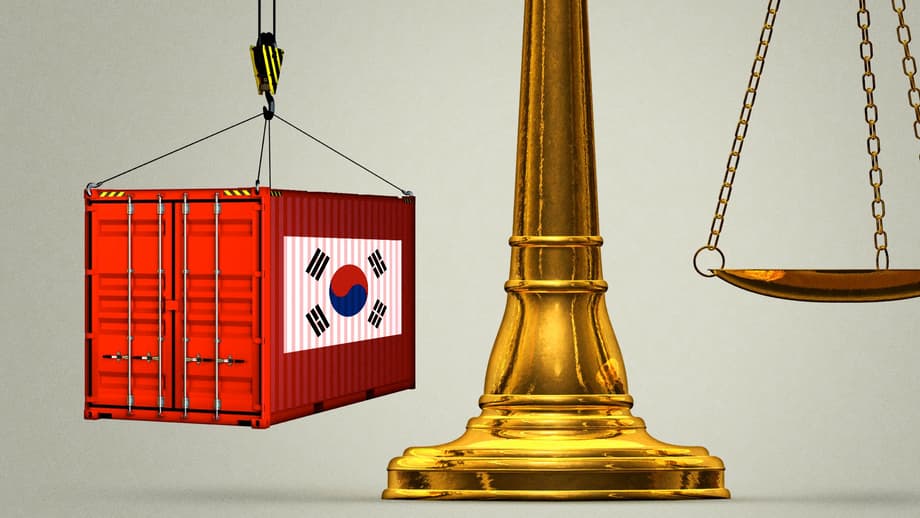
Silicon Valley investment firms Greenoaks and Altimeter have taken the rare and aggressive step of filing arbitration claims against the government of South Korea. The firms argue that Seoul has acted unlawfully toward the e-commerce giant Coupang, a Seattle-based company that conducts the vast majority of its business in South Korea. This legal challenge represents a significant escalation in a dispute that began with a consumer data incident but has evolved into a potential trade conflict between two staunch allies. The move is highly unusual, as it involves U.S. venture capitalists directly suing a foreign government over regulatory actions. The investors also petitioned the U.S. Trade Representative to investigate the matter, potentially driving a wedge between Washington and Seoul.
The heart of the complaint centers on allegations that South Korea violated the U.S.-Korea Free Trade Agreement. The investors claim the government has discriminated against Coupang to benefit domestic and Chinese competitors. Specifically, they argue that the state response to a 2025 data breach was overstated and punitive beyond standard regulatory enforcement. By bringing these claims, the investors aim to compel South Korea to cease what they describe as targeted interference and restore fair market conditions for U.S. businesses operating in the region.
The Catalyst: A Disputed Data Breach
The central point of contention stems from a data breach disclosed by Coupang in November 2025. The company reported that personal data for approximately 33 million customers in South Korea was potentially compromised. This disclosure triggered a massive backlash from the public and lawmakers in South Korea, leading to widespread calls for stricter penalties and regulatory crackdowns. The reaction from the political sphere was swift and severe, with senior officials demanding punitive measures.
However, the investors behind the lawsuit argue that the government response relies on a distorted narrative of the event. Legal filings from Greenoaks and Altimeter contend that a China-based threat actor successfully downloaded data from only about 3,000 accounts. They emphasize that the compromised information did not include financial details, government ID numbers, or login credentials. The investors allege that senior officials in the ruling Democratic Party of Korea ignored this evidence and instead publicly framed the incident as involving tens of millions of victims. They claim this was done to inflame public opinion and justify a severe regulatory crackdown against the company.
Allegations of a Coordinated Campaign
The complaints filed by the investment firms describe what they term a “whole-of-government” assault designed to cripple Coupang operations. Rather than limiting the focus to data security, the investors allege that South Korean authorities mobilized more than a dozen government agencies to investigate unrelated aspects of the business. These actions reportedly involved labor, financial, customs, and tax probes that bear little relation to the original data incident.
According to the filings, these actions included the formation of a 150-member task force within the National Tax Service and an 86-member police task force dedicated solely to investigating Coupang. The firms report that the company has faced hundreds of audits, inspections, and raids, resulting in more penalties than any other company in Korean history. Additionally, the government reportedly pressured the national pension fund to divest its holdings in Coupang and blocked commercial agreements that had no relation to the data breach.
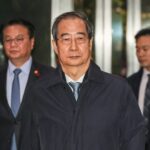
The intensity of the political rhetoric has drawn sharp criticism from the investors. South Korean Prime Minister Kim Min-seok reportedly urged law enforcement to approach the case against Coupang “with the same determination used to wipe out mafias.” This sentiment was echoed by other officials who discussed the possibility of bankrupting the company, revoking its licenses, or imposing record-breaking fines. The investors also note that officials have referred several Coupang executives for criminal prosecution, including Chairman Bom Kim and Chief Administrative Officer Harold Rogers, both of whom are U.S. nationals.
“When a close ally penalizes a U.S. company for its success, it compromises a vital partnership and opens the door to competitors that do not play by the rules,” said Neil Mehta, Founder and Managing Partner of Greenoaks.
Mehta, who serves on the Coupang board, emphasized that the legal action was taken independently of the company to defend the principles of fair trade.
Invoking Trade Agreements and Enforcement Tools
To address these grievances, the investors have leveraged two primary legal mechanisms. First, they have served a formal notice of intent to pursue arbitration claims under the U.S.-Korea Free Trade Agreement, known as KORUS. This treaty is designed to protect U.S. investors and companies from discriminatory acts by the South Korean government. The formal notice initiates a mandatory 90-day “cooling-off” period during which the two parties can attempt to resolve the issue through consultation. If this period passes without a resolution, the firms may proceed to a formal arbitration hearing.
Second, the investors have petitioned the Office of the U.S. Trade Representative to investigate South Korea conduct under Section 301 of the Trade Act of 1974. This statute grants the USTR broad authority to investigate and respond to unfair foreign trade practices. The petition asks the U.S. government to consider appropriate trade remedies, which could include tariffs or other sanctions against South Korean goods and services. The USTR has up to 45 days to decide whether to launch a formal investigation.
Diplomatic Friction and Sovereign Defense
The legal filings threaten to strain diplomatic relations between Washington and Seoul. The move comes at a sensitive time, as the Trump administration has previously expressed sensitivity regarding foreign government actions against U.S. technology giants. Former acting White House chief of staff Mick Mulvaney recently penned an op-ed arguing that South Korea is targeting Coupang, and Brad Gerstner, the founder of Altimeter, has been a prominent figure in discussions surrounding U.S. economic policy.
South Korean officials have firmly rejected the accusations of discrimination. President Lee Jae Myung stated that South Korea is a sovereign country that will address the issue fairly according to the law and principles. Trade Minister Yeo Han-koo, following meetings with U.S. officials in Washington, denied that the government is singling out Coupang. He suggested that U.S. officials held misunderstandings regarding the situation. Minister Yeo argued that the “unprecedented” nature of the data leaks and the subsequent inadequate response by Coupang justified the regulatory scrutiny. He noted that if a Korean company caused a similar large-scale information leak in the United States, the American government would likely respond with equal severity.
The Financial Stakes for Investors
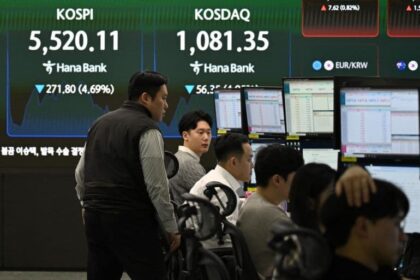
The dispute carries heavy financial weight for the investors involved. Since Coupang disclosed the data breach on November 30, its New York-listed shares have fallen approximately 27 percent. This decline has erased billions of dollars in market capitalization. The investors argue that these losses are a direct result of the hostile regulatory environment created by the South Korean government.
Greenoaks and its related entities hold more than $1.4 billion worth of Coupang shares, while Altimeter position is valued at around $210 million. Neil Mehta of Greenoaks stated that the government actions have cost the firm hundreds of millions of dollars. The investors seek not only financial compensation but also a restoration of predictable business conditions for U.S. companies operating in South Korea. They argue that the current instability threatens the value of their investments and discourages future American investment in the Korean market.
Implications for the Future
As the 90-day cooling-off period begins, all eyes will be on whether the South Korean government opts to “engage in self-correction” as requested by the investors. The outcome of this dispute could set a significant precedent for how international trade agreements are enforced in the digital age. It also highlights the growing tension between data privacy regulations and the principles of free trade.
If the USTR decides to launch a Section 301 investigation, the matter could escalate rapidly from a corporate dispute to a full-blown trade war involving tariffs and countermeasures. Such an outcome would likely complicate broader strategic cooperation between the United States and South Korea on security and economic issues in the Indo-Pacific region. For now, the investors await the response from Washington and Seoul while Coupang continues to navigate a difficult operating environment in its primary market.
The Bottom Line
- Greenoaks and Altimeter filed arbitration claims against South Korea under the KORUS trade agreement.
- The investors allege South Korea mounted a discriminatory campaign against Coupang following a data breach.
- South Korean officials claim the regulatory response was justified by the severity of the data incident.
- A 90-day cooling-off period has begun for potential arbitration talks.
- The USTR has 45 days to decide on launching a Section 301 investigation.