A Bold Experiment Unravels
In 2022, Thailand made history as the first Asian nation to decriminalize cannabis. The move was widely celebrated as a progressive step that would transform the country’s economy and healthcare landscape. What followed, however, was an unexpected wave of consequences that has now sparked a fierce debate about the future of cannabis policy in the kingdom. Three years after legalization, Thailand finds itself at a crossroads, with growing public concern about recreational use among youth and a potential reversal of policies that once promised economic salvation.
The initial vision was clear and compelling. Thailand would become a regional hub for medical cannabis, creating a new cash crop for farmers and expanding health tourism in a country recovering from the devastating economic impacts of the COVID-19 pandemic. But the reality that unfolded has been far more complex and controversial than policymakers anticipated.
The rapid proliferation of cannabis shops across the country created an environment where recreational use flourished instead of the carefully controlled medical market that had been promised. This shift has triggered a backlash that now threatens to undo the landmark reform entirely.
The story of Thailand’s cannabis experiment reflects broader tensions between economic innovation and social protection, between individual freedom and community well-being, and between progressive policy and conservative values in a nation known for its traditional approach to drug control.
From Medical Miracle to Recreational Boom
When Thailand removed cannabis from its list of narcotics in June 2022, the policy was explicitly designed for medical use. Spearheaded by Anutin Charnvirakul, then Public Health Minister and now Deputy Prime Minister, the legislation was framed as a means to help patients access alternative treatments while providing farmers with a new source of income.
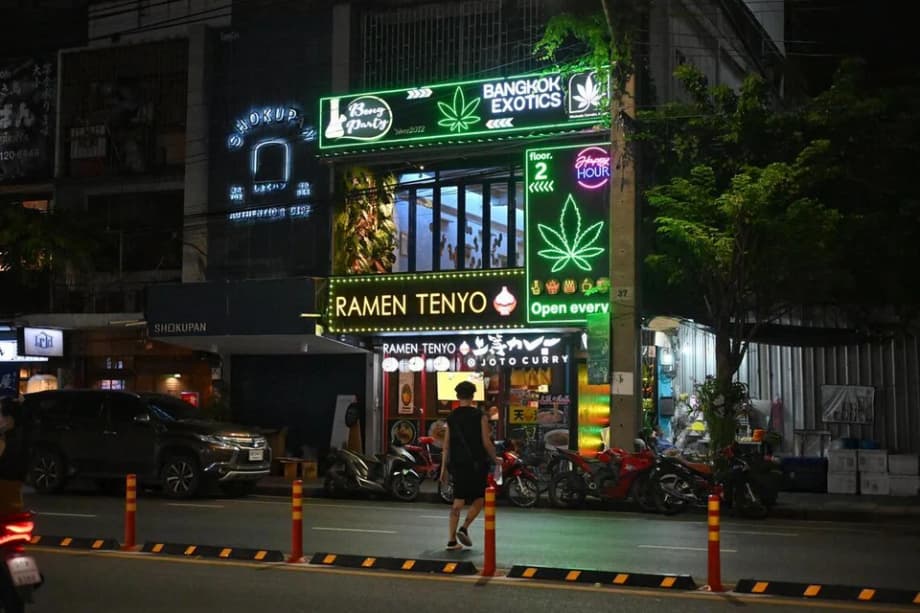
The lack of clear regulations from the outset created a gray area that entrepreneurs quickly exploited. Within months, thousands of dispensaries with flashy neon signs appeared across the country, particularly in urban centers and tourist destinations. These shops offered an array of products far beyond what might be considered strictly medical, including pre-rolled joints, fruit-flavored gummies, and high-THC strains marketed for their psychoactive effects.
The smell of cannabis became ubiquitous in many neighborhoods, with some comparing it to the common scent of grilled pork at street food stalls. This visible and olfactory presence of cannabis in daily life transformed public perception of the drug and accelerated its normalization throughout Thai society.
The speed of this transformation caught many observers by surprise. Dr. Patraporn Kinorn, a specialist in child psychiatry and addiction treatment, noted at a recent seminar on cannabis-induced illnesses that the lack of proper regulation had created serious unintended consequences.
“The law may say that children are already protected, but the question is: is it enough?”
The gap between policy intentions and real-world implementation became starkly evident as recreational use surged far beyond medical applications. According to a study by the Thailand Development Research Institute, recreational cannabis use increased nearly tenfold between 2020 and 2022, jumping from 1.2 million to 11.1 million users. During the same period, those using cannabis for medical reasons grew only modestly from 430,000 to 540,000.
The Youth Crisis: A Generation at Risk
The most concerning development in Thailand’s cannabis experiment has been its impact on young people. What was supposed to be a regulated medical system instead created easy access to cannabis products for children and teenagers, raising alarm among parents, educators, and health professionals.
Studies have documented growing recreational use among schoolchildren, with usage rates among Thai children and youth aged 18-19 increasing tenfold from 1-2% in 2020 to 9.7% in 2022. This dramatic rise has become a major point of contention for many Thais who supported decriminalization but never intended it to expose their children to mind-altering substances.
Yodsakorn Khunphakdee, coordinator of the Youth Network Against Cannabis, summarized the growing concern in stark terms during an interview about the impact of decriminalization.
“It got out of control and has had a huge negative impact, especially on children and young people under 25, whose brains are still developing.”
In January 2025, the Youth Network Against Cannabis submitted a petition to the Public Health Ministry with 200,000 signatories urging that decriminalization be overturned. This grassroots movement reflected parental anxiety that has only intensified as cannabis shops have become increasingly visible in residential areas and near schools.
Thapanawong Ladkaew, a 38-year-old businessman and father of two from a small town in northeastern Thailand, expressed a common parental dilemma. He described flea markets that openly sell cannabis and coffee shops displaying bongs in his community.
“My kids were asking about this out of curiosity. I certainly don’t want my children to try cannabis.”
Like many parents, Ladkaew suggests that recreational use should be limited to designated tourism zones like Pattaya rather than being integrated into everyday community life where children are exposed to it.
The situation reached a breaking point when a two-year-old girl was hospitalized after consuming a cannabis-laced gummy. This incident prompted the Public Health Ministry to launch an urgent nationwide crackdown on cannabis-infused foods, beverages, and snacks. Public Health Minister Somsak Thepsutin expressed grave concern over the incident, highlighting that uninformed access to cannabis by young people had become a persistent worry for authorities.
Health Consequences Rise
As recreational use expanded, Thai healthcare facilities began documenting significant increases in cannabis-related health problems. The medical community had warned of potential risks, but the scale of the impact surprised even many critics of decriminalization.
Ministry of Public Health hospitalization data analyzed by Dr. Bundit Sornpaisarn, a staff scientist at the Institute for Mental Health Policy Research in Canada, revealed alarming trends. Monthly cannabis dependence cases soared from an average of 162 in the year before decriminalization to 447 the year after, and 837 the year after that. Even more concerning, cannabis-induced psychosis jumped fivefold over the same timeframe.
These statistics have been corroborated by other research. Anunchai Assawamakin, a pharmacologist at Mahidol University and advisor to the Office of the Narcotics Control Board, reported that there were 20,804 cannabis-linked psychosis cases in the 12 months after decriminalization, up from 10,619 in the 12 months leading up to it.
Dr. Patraporn Kinorn, the child psychiatrist, noted that she is seeing an increasing number of young patients addicted to cannabis who are self-administering the plant to treat depression, only to find their conditions worsen. This pattern is particularly concerning because it suggests that young people are using cannabis as a form of self-medication without proper medical guidance, potentially exacerbating underlying mental health issues.
The Royal College of Physicians of Thailand added its voice to the growing chorus of concern in a June statement acknowledging that cannabis poses health risks, both mentally and physically, especially for young people and pregnant women.
While some researchers caution that more study is needed to fully understand the effects of cannabis legalization, the hospitalization data and clinical observations have created significant pressure on policymakers to address the public health consequences.
Economic Promises Unfulfilled
One of the most surprising aspects of Thailand’s cannabis experiment has been its economic underperformance. Initially projected to become a billion-dollar industry that would revitalize rural economies and create thousands of jobs, the cannabis sector has largely failed to deliver on its economic promise.
Nuttanan Wichitaksorn, a visiting research advisor at the Thailand Development Research Institute, conducted a comprehensive study of the cannabis industry’s economic impact in 2024. His findings painted a stark picture of financial failure.
“The policy yielded ‘no positive economic impact at all,’ even though the industry was tipped to be worth $1 billion by 2025.”
Wichitaksorn’s study found that only 25% of 177 cannabis companies surveyed were profitable, with most small operators struggling to cover their costs. The lack of a viable business model has made the cannabis industry less attractive to politicians seeking vote-winning policies.
“It’s not a hot issue anymore. Now they see other things that are more exciting and get more votes,”
Wichitaksorn observed, explaining why political parties have largely abandoned their support for the industry.
The economic reality has been particularly harsh for small-scale farmers and entrepreneurs who invested their savings in cannabis cultivation or dispensaries, believing government promises of a lucrative new market. Porlnarong Panor, a home grower of premium-quality buds, exemplifies the disappointment felt by many small operators.
After selling his Harley Davidson and pouring his savings into grow lights and a dispensary, Panor now faces the prospect of shutting down his operation due to new regulatory requirements. He feels betrayed by the government that encouraged his investment.
“The people who unlocked it didn’t think things through from the start. They’re the government now, and they still don’t care,”
he said, referring to Anutin Charnvirakul.
New rules requiring dispensaries to become licensed medical facilities with medical practitioners onsite are too costly for small operators like Panor to implement.
“They said everyone should be able to grow and sell, but now it’s not for everyone. Only those with big capital and certified farms can survive,”
he lamented.
Political Winds Shift Against Cannabis
As public concern about cannabis has grown, political positions have shifted dramatically. What was once celebrated as a progressive reform has become a political liability, with parties across the spectrum competing to demonstrate their toughness on drug control.
Over two-thirds of Thais polled in 2024 wanted the plant reclassified as a narcotic, according to the National Institute of Development Administration. This dramatic shift in public opinion has made cannabis policy a decisive issue for politicians seeking electoral advantage.
Perhaps most notably silent on the issue during recent campaigns is Anutin Charnvirakul, once hailed as the “Cannabis King” for his role in championing decriminalization. As Deputy Prime Minister and leader of the Bhumjaithai Party, Anutin has largely avoided discussing the policy that defined his earlier political career.
A deputy leader for the Bhumjaithai Party recently told Bloomberg News that its cannabis policy had been “distorted heavily” and was never intended for recreational purposes. If the party returns to power after the election, it would push for legislation to allow cannabis for medical use only, without recriminalizing it.
Other leading political parties have taken even more hardline positions. The reformist People’s Party and Pheu Thai Party, both leading in polls, have indicated they would place cannabis back on the narcotics list, allowing its use only for approved medical purposes. Although the issue is not prominently featured in their campaign pledges, their positions represent a clear rejection of the current decriminalized status.
Cannabis advocate Prasitchai Nunual expressed deep disappointment about this political shift.
“We’re deeply disappointed, because the party that unlocked cannabis and our only political ally has now gone down a different path from ours. There seems to be no future for an equitable cannabis law.”
Prasitchai is now running for Parliament, hoping to gain support for tighter regulations that would allow recreational use under controlled conditions. While his chances of driving such change appear slim, his candidacy reflects the desperation rippling through the community of cannabis advocates and entrepreneurs.
The political landscape has become so hostile to cannabis that even the former health minister who led the drive to decriminalize has grudgingly pledged his support for undoing that decision. Anutin recently told local media that “we can’t take a personal attitude towards this,” acknowledging political reality over personal principles.
Regulatory Crackdown and Industry Impact
As political and public pressure mounted, Thai authorities began implementing increasingly strict regulations on the cannabis industry. What began as a hands-off approach to encourage market growth has transformed into a comprehensive crackdown on recreational sales and unlicensed operations.
In 2025, new rules were established mandating that cannabis purchases require a prescription from a certified medical professional. These regulations effectively transformed the freewheeling recreational market into a strictly medical system, creating significant challenges for existing businesses that had developed around the recreational model.
The government reported that 7,000 out of 18,000 cannabis shops did not apply to renew their licenses at the end of 2025 as a result of the tougher rules. This mass exodus from the legal market has created uncertainty about the future of the industry and its ability to serve even legitimate medical patients.
For those attempting to comply with the new regulations, the costs are often prohibitive. Dispensaries must now register as clinics and hire licensed doctors, an expensive and bureaucratic shift that small businesses say they cannot afford. The transformation required to meet new standards has forced many operators to close their doors.
Natthakan Punyathanaworakit, a Bangkok-based entrepreneur with three cannabis stores, has already closed one location due to mounting pressure and compliance costs. She predicts that most registered shops will eventually shut down, with many operations likely going underground.
“It’s the little guys—the mom and pop shops, the family business where the wife is helping trim while the husband is growing—they’re the ones that will suffer,”
cannabis entrepreneur Chokwan Chopaka told The Guardian.
Not all businesses view the new regulatory environment as purely negative. The owners of Shaggy Buds, a dispensary in one of Bangkok’s busiest commercial districts, are planning to build a new store designed specifically for regulatory compliance.
“I don’t think 2026 is the beginning of the end for the industry. It is actually an opportunity. If you could pass all the criteria, you would build a strong foundation for the future,”
said co-owner Nitikrist Attakrist.
This perspective reflects a belief that stricter regulations could ultimately strengthen the industry by eliminating sub-standard operators and creating a more professional, sustainable market. However, for every business that can afford to adapt, many more face financial ruin.
Global Context and Comparisons
Thailand’s cannabis experiment cannot be understood in isolation. It represents one of the most ambitious attempts to balance economic opportunity with social responsibility in the global movement toward drug policy reform. Comparing Thailand’s experience to other jurisdictions offers insights into what went wrong and what might have been done differently.
The United States provides perhaps the most instructive comparison. Since California first legalized medicinal cannabis in 1996, the US pot industry has grown into a $40 billion market, with weed now legal in 24 states for recreational purposes and in 40 for medical use. However, the US experience has also demonstrated the challenges of transitioning from an illegal to a legal market, including persistent black market activity, regulatory complexity, and social equity concerns.
Unlike Thailand, most US jurisdictions implemented comprehensive regulatory frameworks simultaneously with legalization, specifying everything from licensing procedures to product testing standards to taxation structures. This approach, while not without its own problems, may have prevented the kind of uncontrolled explosion of recreational use seen in Thailand.
In Canada, which legalized cannabis nationwide in 2018, the government established a strict control system that limited retail outlets, imposed product quality standards, and restricted advertising. While not preventing all problems, this approach created a more orderly transition to legal cannabis than Thailand experienced.
Thailand’s decision to decriminalize first and regulate later created a vacuum that was quickly filled by opportunistic operators. As Anunchai Assawamakin described it, the policy created “a vacuum that has dragged on for over two years” rather than a structured legal market.
Another crucial difference is that Western countries generally have more established public health infrastructure and experience with harm reduction approaches to substance use. Thailand, with its history of harsh anti-drug policies and limited experience with regulated psychoactive substances, faced unique challenges in managing the social impact of widespread cannabis availability.
The international dimension of Thailand’s cannabis policy has also created tensions. Foreign governments, particularly in Asia where cannabis remains strictly prohibited, have complained about the rise in drug smuggling from Thailand. There have been high-profile arrests of tourists attempting to transport Thai cannabis back to their home countries, creating diplomatic friction and negative publicity.
The Path Forward
As Thailand grapples with the consequences of its cannabis experiment, policymakers, advocates, and concerned citizens are debating the best path forward. The options range from complete recriminalization to comprehensive regulation that allows limited recreational use under strict controls.
The most immediate question is whether the Ministry of Public Health’s order restricting cannabis to medical use only will be formalized through publication in the Royal Gazette, making it legally enforceable. Government spokesperson Jirayu Houngsub has stated that “the policy must return to its original goal of controlling cannabis for medical use only,” citing the serious social problems created for young people.
Many cannabis advocates argue that proper regulation, rather than criminalization, is the solution to the problems that have emerged. Prasitchai Nunual, head of the advocacy group Writing Thailand’s Cannabis Future, points to the stalled Cannabis and Hemp Act as a potential framework for addressing public concerns while preserving the benefits of legalization.
“Everyone agrees that it needs to be controlled. But government agencies lack the data to make informed decisions regarding cannabis regulation,”
he observed.
A proper regulatory framework could include measures such as stricter zoning to keep dispensaries away from children, comprehensive product testing, licensing requirements, age verification systems, and public education campaigns. Such an approach would require significant investment in enforcement and oversight but might create a sustainable middle path between the current chaos and complete prohibition.
The economic dimension also requires careful consideration. While the cannabis industry has not delivered the broad prosperity promised, it has created tens of thousands of jobs and generated tax revenue in certain sectors. Rattapon Sanrak, a weed activist and founder of Thailand’s first legal dispensary, estimates that at least 60,000 jobs are at stake if the industry is severely restricted.
For small farmers who invested in cannabis cultivation as an alternative to traditional crops, the policy shift could be devastating. Many face bankruptcy unless they can transition to other forms of agriculture or find legitimate export markets for their products.
The human cost of recriminalization must also be considered. More than a million people who registered their growing activities could potentially become criminals again overnight. The approximately 3,000 marijuana offenders who were released from prison when cannabis was decriminalized might face renewed legal jeopardy.
Cultivators and dispensary owners have indicated they would sue the government for damages if recriminalization causes them to lose their investments. Rattapon Sanrak highlighted the personal stakes involved.
“Some people have used their entire savings to invest in the business,”
he noted.
Ultimately, the path Thailand chooses will reflect its broader values and priorities as a society. The tension between economic innovation and social protection, between individual freedom and community well-being, between traditional values and progressive reform will play out in the coming months as policymakers determine the future of cannabis in the kingdom.
The Bottom Line
Thailand’s cannabis experiment began with high hopes but has evolved into a complex dilemma with no easy solutions. The country now faces difficult choices about how to address the unintended consequences of decriminalization while preserving any potential benefits.
- Thailand became the first Asian nation to decriminalize cannabis in 2022, aiming to create a medical cannabis hub and new cash crop for farmers.
- Recreational use surged dramatically, increasing nearly tenfold from 1.2 million users in 2020 to 11.1 million in 2022.
- Usage among youth aged 18-19 increased from 1-2% in 2020 to 9.7% in 2022, raising serious public health concerns.
- Hospitalizations for cannabis dependence more than doubled, while cannabis-induced psychosis cases increased fivefold.
- Economic projections proved overly optimistic, with only 25% of surveyed cannabis companies reporting profits.
- Over two-thirds of Thais now support reclassifying cannabis as a narcotic, according to 2024 polling.
- 7,000 out of 18,000 cannabis shops did not apply to renew their licenses in response to stricter 2025 regulations.
- Major political parties now advocate restricting cannabis to medical use only, with some supporting full recriminalization.
- New regulations require prescriptions for cannabis purchases and mandate that dispensaries operate as licensed medical facilities.
- The future of Thailand’s cannabis industry hangs in the balance as policymakers weigh public health concerns against economic interests and individual freedoms.