A New Legal Era Dawns in Southeast Asia
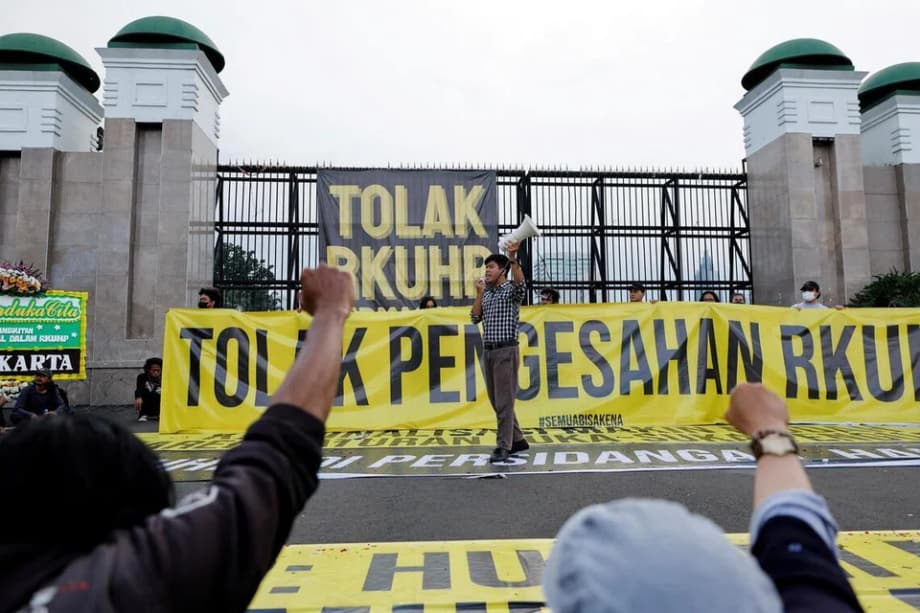
Indonesia has officially implemented a sweeping overhaul of its criminal justice system, marking the end of a colonial era and the beginning of a legally complex chapter for the world’s third-largest democracy. On January 2, 2026, the new Criminal Code (KUHP) officially replaced the Dutch colonial penal code that had been in place since 1918. While the government frames this as a necessary decolonization effort that aligns the law with contemporary Indonesian values and culture, the transition has triggered intense debate. The legislation, years in the making and finally ratified in 2022 following a three-year transition period, encompasses hundreds of articles that touch on nearly every aspect of public and private life.
- A New Legal Era Dawns in Southeast Asia
- The Shift from Permission to Notification in Public Protest
- Moral Legislation and the Criminalization of Private Conduct
- Impact on Women’s Rights and Reproductive Health
- Expanding Police Powers and Community Sentencing
- Religious Freedom Amid Blasphemy Laws
- Domestic Pushback and International Concerns
- Key Points
The implementation of the code represents a profound shift in how the state regulates its citizens. Government officials argue that the new laws provide a legal framework that is finally independent of foreign influence and better suited to the archipelago’s unique social fabric. However, critics view the legislation as a regression that threatens to erode hard-won civil liberties. The breadth of the code has drawn scrutiny from international human rights organizations, legal experts, and diplomatic partners who fear the vague definitions and severe penalties could be used to suppress dissent and police morality.
At the heart of the controversy is the tension between national sovereignty and international human rights standards. The government maintains that the new code reflects the will of the Indonesian people and their religious and cultural norms. Yet, the practical application of these laws is causing anxiety among activists, journalists, and minority groups who worry that the legislation provides authorities with broad tools to enforce conformity and silence criticism.
The Shift from Permission to Notification in Public Protest
One of the most immediate and contentious changes affects the right to assembly. Under the new code, organizing a parade, rally, or demonstration on public streets without notifying the police is now a criminal offense punishable by up to six months in jail. This provision converts what was previously an administrative violation into a criminal act, fundamentally changing the calculus for civil society groups and labor unions planning public actions.
Indonesian officials have defended the provision by stressing the distinction between notification and permission. Deputy Minister of Law and Human Rights Edward Hiariej emphasized that the government does not ban expressions of opinion but requires advance notice to manage public order. He cited a specific incident in West Sumatra where a patient in critical condition died because an ambulance was stuck in traffic caused by an unannounced protest. The government argues that notification is essential to allow police to redirect traffic and protect the rights of others to use public roads.
“A notification is a must, so police can plan and redirect traffic, ensuring everyone else’s traffic rights are protected.”
Despite these assurances, activists and legal scholars argue that the criminalization of unnotified protests creates a “chilling effect.” They contend that the threat of prison time for organizing a spontaneous demonstration will discourage citizens from exercising their right to free speech, particularly in response to sudden government actions or emergencies. Critics point out that the definition of what constitutes a disruption to public interest is subjective, giving law enforcement significant discretionary power to arrest protesters.
Andreas Harsono, a researcher at Human Rights Watch, criticized the provision as a “rubber article” that can be loosely interpreted to catch anyone. Usman Hamid, executive director of Amnesty International Indonesia, echoed this sentiment, stating that it is dangerous for people exercising their right to express opinions through demonstrations to end up in prison. The fear is that these laws will be used selectively against government critics while being ignored for protests aligned with state interests.
Moral Legislation and the Criminalization of Private Conduct
Beyond public assembly, the new code intrudes deeply into the private lives of Indonesian citizens, sparking fierce debate over the role of the state in regulating morality. Perhaps the most internationally discussed provisions are those criminalizing sex outside marriage and cohabitation. Under Article 411, consensual sex outside marriage can be punished by up to one year in prison, while Article 412 criminalizes couples living together as husband and wife without a legal marriage, punishable by up to six months in prison.
The government has attempted to assuage concerns by noting that these offenses are “complaint-based.” This means prosecution can only proceed if a spouse, parent, or child of the accused files a formal police report. This mechanism was intended to prevent the police from actively raiding homes and to reassure the tourism industry that foreign visitors would not be arbitrarily targeted. However, critics argue that this simply shifts the power to prosecute from the state to potentially vindictive family members or neighbors.
The implications for the LGBT community are particularly severe. Since same-sex marriage is not legally recognized in Indonesia, any consensual same-sex conduct effectively falls under the ban on sex outside marriage. This marks the first time in Indonesia’s history that adult consensual same-sex conduct has been explicitly criminalized by national law. Human Rights Watch has noted that this effectively renders all same-sex conduct illegal, exposing LGBT individuals to blackmail and extortion.
Furthermore, the laws disproportionately affect vulnerable populations who marry under religious or customary ceremonies rather than through the state. Millions of couples, particularly in rural areas and among Indigenous communities, do not possess official marriage certificates. Researchers estimate that as many as half of all Indonesian couples may lack these documents due to the cost and complexity of registration. Their unions, previously socially accepted, could now technically expose them to criminal prosecution under the new code.
Impact on Women’s Rights and Reproductive Health
Women’s rights advocates have raised serious alarms regarding the code’s impact on reproductive health and bodily autonomy. The new code maintains the criminalization of abortion with limited exceptions, only permitting the procedure in cases of rape or medical emergencies, and only within the first 14 weeks of pregnancy. Additionally, the code restricts the dissemination of information about contraception to minors and criminalizes providing information about obtaining an abortion.
These provisions contradict public health data and international standards. Restrictive abortion laws do not decrease the number of abortions but rather drive them underground, making them unsafe. In Indonesia, estimates suggest that 1.7 million abortions occur annually, with most performed outside the formal healthcare system. The maternal mortality rate remains high, standing at approximately 140 deaths per 100,000 live births. By restricting access to safe medical procedures and information, the new laws threaten to increase these mortality rates.
The World Health Organization and various human rights bodies have called for the decriminalization of abortion to protect women’s rights to life, health, and freedom from cruel or degrading treatment. By framing reproductive health issues as matters of moral compliance rather than public health, the new code undermines the ability of women and girls to make informed choices about their bodies and futures. This can lead to a range of negative consequences, including the end of a girl’s education, increased child marriage, and lasting physical health damage.
Expanding Police Powers and Community Sentencing
Accompanying the substantive Criminal Code is a new Criminal Procedure Code (KUHAP), which outlines how crimes are investigated and prosecuted. This procedural reform has raised its own set of concerns, particularly regarding the expansion of police authority. Civil society groups have criticized the KUHAP for removing requirements for judicial warrants in cases of arrest and detention, effectively allowing the police to detain individuals without court oversight.
Legal experts warn that this lack of judicial checks could lead to abuses, making it easier for law enforcement to silence critics through arbitrary detention. The Indonesian Legal Aid Foundation (LBH) has argued that the new code creates a “superpower” status for the police, disrupting the independence of other investigators and opening the door for case manipulation. This expansion of power is particularly worrying given the existing challenges of police accountability in Indonesia.
On the other hand, the new code introduces alternative punishments designed to alleviate the pressure on the country’s severely overcrowded prison system. Judges can now sentence offenders to community service, ranging from 8 to 240 hours, instead of prison time for minor offenses carrying a maximum sentence of five years. With prisons operating at nearly double their capacity, this move is intended to be a humanitarian reform.
However, analysts have expressed concerns that the implementation of community service could be uneven. There is a risk that wealthier offenders with better legal representation could secure non-custodial sentences, while poorer defendants lacking connections or resources might end up in prison. This disparity could reinforce public perceptions that the justice system punishes poverty rather than the offense itself. Successful implementation will require intensive supervision and clear guidelines to ensure judicial discretion is not abused for political or financial gain.
Religious Freedom Amid Blasphemy Laws
The new criminal code also updates regulations concerning religion, a sensitive topic in the world’s largest Muslim-majority nation. While Article 305 offers a glimmer of hope for religious minorities by criminalizing the desecration of places of worship and religious objects with penalties of up to five years in prison, the broader context of religious regulation remains troubling.
The code expands the existing blasphemy laws from one article to six. While the maximum jail term has been reduced to three years, the new code includes an article that effectively outlaws apostasy and criminalizes persuading someone to leave their religion. This represents a significant setback for freedom of religion and belief in Indonesia. The code also recognizes “any living law” in the country, which could be interpreted to extend legal validity to hundreds of local Sharia-inspired regulations that discriminate against women and minorities.
Minority advocates remain skeptical about whether the new protections for places of worship will be enforced consistently. History shows that authorities often fail to protect minorities from intimidation by hardline groups, sometimes even siding with the majority to maintain order. While the law promises protection for houses of worship, the reality on the ground often involves administrative hurdles that prevent minorities from building or renovating their places of worship in the first place.
“Everything depends on law enforcement. It also depends on whether local governments uphold the constitution or prioritize political accommodation.”
As noted by Bonar Tigor Naipospos of the Setara Institute for Democracy and Peace, the effectiveness of the new code will depend entirely on the political will to enforce it fairly. Without a commitment to protecting the constitutional rights of all citizens, the new laws may fail to prevent the harassment and exclusion of vulnerable groups.
Domestic Pushback and International Concerns
Despite the government’s defense of the new code as a product of national sovereignty, the legislation faces significant resistance at home and abroad. Domestically, civil society coalitions have declared a “legal emergency,” arguing that the code violates the Indonesian Constitution and international human rights obligations. Legal aid organizations are preparing judicial reviews, challenging the code in the Constitutional Court on the grounds that it infringes on freedom of expression, information, and religion.
The government has stated it welcomes these challenges, viewing them as a healthy part of the democratic process. Law Minister Supratman Andi Agtas acknowledged that there are risks of abuse with the new powers but emphasized the need for public oversight. However, critics argue that the vague wording of the articles leaves them open to misuse by those in power to criminalize legitimate criticism of government policies.
Internationally, the reaction has been critical. Human Rights Watch described the code as “disastrous for rights,” while the International Commission of Jurists called it a major setback. Concerns have also been raised in diplomatic circles. During the drafting process, foreign governments, including the United States, urged Indonesia to reconsider provisions that threatened civil liberties.
There are concerns that the erosion of civic space in Indonesia is part of a broader regional trend. Similar restrictions on free speech and assembly have been observed in neighboring countries, where lèse-majesté laws and anti-disinformation regulations are being used to curb dissent. As Indonesia navigates this new legal landscape, the balance between maintaining public order and preserving democratic freedoms remains precarious.
Key Points
- The new Indonesian Criminal Code (KUHP) officially replaced the Dutch colonial penal code on January 2, 2026, following a three-year transition period.
- Organizing a street protest without police notification is now a criminal offense punishable by up to six months in prison, though the government argues it is for traffic safety.
- Sex outside marriage and cohabitation are criminalized, with penalties of up to one year and six months in prison respectively, though prosecution requires a family member’s complaint.
- The code effectively criminalizes same-sex conduct because same-sex marriage is not legally recognized in Indonesia.
- New restrictions on abortion and the dissemination of contraceptive information raise concerns about women’s health rights and increasing maternal mortality.
- The accompanying Criminal Procedure Code (KUHAP) expands police powers to arrest without a warrant, raising fears of arbitrary detention.
- Community service sentences have been introduced to reduce prison overcrowding, though there are concerns about unequal application based on wealth.
- Blasphemy laws have been expanded, and the code recognizes local “living laws” that could discriminate against religious minorities.
- Domestic and international human rights groups have filed judicial reviews and condemned the code for violating freedom of expression and civil liberties.