A New Era for Beverage Recycling
Singapore is preparing for a significant shift in how its residents consume and dispose of bottled and canned beverages. Starting in April 2026, the Beverage Container Return Scheme (BCRS) will introduce a mandatory 10-cent refundable deposit on most pre-packaged drinks sold in plastic and metal containers ranging from 150 millilitres to 3 litres. While the environmental goals are clear, the financial implications for businesses and consumers have sparked intense debate across the island’s beverage industry.
- A New Era for Beverage Recycling
- How the Deposit System Works
- The Hidden Costs and Financial Pressures
- Unique Challenges for Importers
- Government Response and Industry Reaction
- Consumer Impact and Price Effects
- Environmental Context and Expert Perspectives
- Implementation Timeline and Remaining Questions
- Key Points
The scheme, managed by a consortium of major beverage producers including Coca-Cola, F&N Foods, and Pokka, represents Singapore’s most ambitious effort to boost recycling rates for beverage containers. The National Environment Agency (NEA) has licensed Beverage Container Return Scheme Limited (BCRS Ltd.), a non-profit company formed by these industry giants, to design and operate the nationwide system.
How the Deposit System Works
The concept appears straightforward. Consumers will pay an additional 10 cents when purchasing most bottled and canned beverages. This deposit is fully refundable when the empty container is returned at designated collection points equipped with reverse-vending machines (RVMs). These machines, similar to those piloted in Singapore in recent years but with updated interfaces, will scan the container’s barcode and deposit mark before processing the refund through electronic payment methods like PayNow.
More than 1,000 return points are expected to be operational across Singapore by April, with the initial rollout focusing on major supermarkets before expanding to HDB estates and hawker centres. Sheng Siong has confirmed that all 87 of its stores will serve as return points, providing convenient access for consumers nationwide.
The Hidden Costs and Financial Pressures
Beyond the consumer-facing 10-cent deposit, a complex web of fees and administrative costs has emerged as a major concern for beverage producers. The BCRS requires all manufacturers, importers, and distributors of covered beverages to register with the scheme operator and pay various fees that fund the collection, sorting, and recycling infrastructure.
Every registered producer faces a mandatory one-time registration fee of S$500. Each individual product registered carries an additional S$5 fee. On a per-unit basis, producers must pay approximately 3 cents for aluminium cans and 4 cents for plastic containers placed on the market. These producer fees are calculated based on the projected revenue from material sales and unclaimed deposits.
The financial burden becomes significantly heavier for importers who cannot influence packaging design. International barcodes used on imported drinks are no longer accepted under the scheme to prevent fraud, as the same barcodes might appear on containers sold outside Singapore where no deposit was paid. To comply, importers must affix special BCRS-approved stickers featuring both the deposit mark and a new Singapore-specific barcode. These stickers cost between 4 and 18 cents each, depending on volume, and must be purchased from three accredited vendors.
Importers who choose to use international barcodes instead of affixing new stickers face a different but equally challenging cost structure. A refundable security fee is imposed to prevent fraud and protect the scheme’s integrity. For a shipment of 100,000 containers, this security fee can reach S$28,000, or approximately 30 cents per unit. While the fee is fully refundable and can be provided as a banker’s guarantee, it represents a significant cash flow burden for smaller businesses.
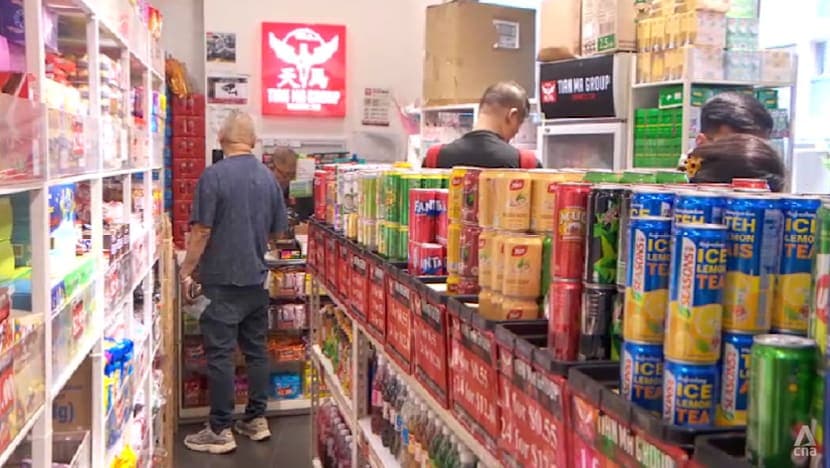
Devang Bafna, director of Tian Ma Group Holdings, which imports and sells drinks from across the region, described the domino effect of these costs. His warehouse processes close to a million bottles and cans across about 200 products each month.
“I’ll have no choice but to impose that cost onto the consumers and in the end, it’s just going to increase the price overall,” Bafna said. “We have no cards to play. It’s a domino effect. If one does it, the other has to do it, and it falls all on the consumer.”
Unique Challenges for Importers
The craft beer industry faces particularly difficult hurdles under the new regulatory framework. Craft beer businesses often import seasonal brews from countries such as Australia and the United Kingdom, with each batch featuring its own unique design. Under the BCRS, every new design must be registered separately, and importers must wait for approval before the product can be sold.
Corrine Chia, co-founder of craft beer distributor The Drinking Partners, explained the time-sensitive nature of her industry. The registration and approval process takes 12 to 16 weeks, which significantly reduces the sales window for products with a typical shelf life of around 12 months. The manual process of sticking labels onto cans and bottles adds further manpower costs.
“I think trying to get information has been a struggle. We don’t know what’s happening,” Chia added. “There’s a lot of fear that we are undergoing, but what we know for sure is that there’s going to be higher costs coming in.”
Other beverage importers have expressed similar concerns about the feasibility of their business models under the new scheme. A wholesale distributor of kombucha noted that the costs of adding stickers to 800,000 cans imported yearly would amount to around S$24,000 annually, excluding the manpower required to apply them. The company may need to increase prices by 70 cents as a result. Another distributor, Andrei Ng of Itrade Beverage, said the S$2,500 government grant would cover only one-third of the cost of printing scheme-compliant barcodes, with ongoing administrative expenses further squeezing margins.
Government Response and Industry Reaction
Responding to industry concerns about rising costs, the National Environment Agency announced the BCRS Producer Transition Grant on January 20, 2026. This one-time grant of up to S$2,500 for each registered producer aims to help businesses manage the initial costs of complying with the scheme. The grant can be used to offset product registration fees, producer fees, and the cost of scheme stickers. It is automatically administered by BCRS Ltd., with no application required. The grant will offset registration and producer fees at the point of billing, with businesses billed only for the remaining balance.
In a circular to beverage producers, NEA acknowledged the varied impact of the scheme across different business types. The agency stated that some producers are better positioned to make the transition while minimising cost impact, while others face logistical challenges. The grant remains valid until September 30, 2027.
The government’s announcement has received a mixed response from the beverage industry. While major producers have generally accepted the sustainability goals behind the scheme, smaller businesses argue that the S$2,500 grant provides only temporary relief from costs that will accumulate over time. Lim Jialiang, founder of beer distribution company Watering Hole, characterized the grant as a “temporary band-aid” covering only a few months’ worth of sticker costs.
“Ultimately, this scheme will pass costs on to consumers, and this will mean that some parallel import business models no longer make sense,” Lim said.
Jens Ruebbert, president of the European Chamber of Commerce in Singapore, which represents brewers such as Carlsberg and Heineken, offered a different perspective. He said its members generally accept the sustainability goals behind the scheme, despite the additional costs involved in manpower and adjustments.
“But I guess the greater good and the sustainability part of it is well accepted. I think public engagement is something which is very needed, and companies are aware, and we have gone through the same processes in other parts of the world,” Ruebbert said.
Consumer Impact and Price Effects
The central question for most Singaporeans remains how these costs will affect prices at the retail level. Importers and small retailers have warned that beverage prices could rise by 25 to 60 cents when the scheme launches. This represents a significant increase for a typical canned drink that currently costs between 70 cents and S$1.20.
The price gap between imported and locally produced beverages may narrow substantially. At some heartland provision shops, a canned drink imported from Thailand or Indonesia can cost as little as S$0.70 today, while locally produced alternatives often cost closer to S$1. The new compliance costs, particularly the requirement to replace barcodes on imported products, threaten to eliminate this price advantage.
BCRS has pushed back against the most dire price predictions, citing international experience. The scheme operator stated that for the majority of beverages sold locally, producers are able to make the transition while minimising the cost impact nearer to the producer fees, which is at less than 5 cents per unit. However, this estimate applies primarily to major producers who can print BCRS barcodes directly onto packaging, avoiding stickering costs entirely.
At Coca-Cola’s manufacturing plant in Negeri Sembilan, Malaysia, which supplies both the Singapore and Malaysian markets, up to 1,000 bottles are produced every minute. Tolga Cebe, chief executive officer for Singapore, Malaysia and Brunei at Bottling Investments Group, The Coca-Cola Company, said the transition requires changes across multiple parts of the business.
“We will have to update and revise each and every packaging artwork in Singapore to be BCRS compliant,” Cebe said. “This will entail some one-off transition costs, some changes in our production line and adjustments to manage the complexity.”
Environmental Context and Expert Perspectives
Despite the cost controversies, the environmental rationale for the BCRS remains compelling. Singapore’s household recycling rate fell to a record low of 11 per cent in 2024, while plastic recycling stands at approximately 5 per cent. Beverage containers make up a significant share of household recyclables but are often contaminated or incorrectly disposed of, reducing recycling efficiency.
International evidence suggests that deposit return schemes can dramatically improve recycling rates. Taiwan has achieved PET bottle recycling rates of around 95 per cent through its incentive system. European countries such as Germany and Norway see rates above 90 per cent. These systems have proven effective at reducing waste sent to incineration, cutting greenhouse gas emissions, and decreasing the use of virgin resources.
Lionel Dorai, executive director of Zero Waste Singapore, emphasised that accessibility will be key to the scheme’s success, particularly for lower-income households.
“First, there’s an increase in cost, and a lot of times, the education may not reach them as well,” Dorai said. “I think what’s important is that we ensure the education comes from a whole-of-society approach.”
Zero Waste Singapore has been working with NEA to install reverse-vending machines at recycling hubs in areas such as Pioneer and Queenstown. The organisation found that clustering multiple recycling options in one location leads to higher participation and lower contamination rates than the national average.
Associate Professor Chua Yeow Hwee from Nanyang Technological University’s School of Social Sciences, who specialises in consumer behaviour, highlighted the importance of creating a system that involves all stakeholders. He noted that getting everyone in the ecosystem on the same page would help deliver lasting impact through community effort rather than relying on a single stakeholder or temporary monetary incentives.
Implementation Timeline and Remaining Questions
The scheme officially launches on April 1, 2026, with a transition period extending until September 30, 2026. During this six-month window, both non-BCRS labelled and BCRS-labelled stocks can be sold. Containers without the scheme’s deposit mark will not include the 10-cent charge, while those with the new labelling will. Most beverage containers bearing the new barcodes are expected to appear on shelves from June 2026, though the reverse-vending machines will be deployed early to allow for testing and familiarisation.
NEA has clarified that the scheme applies only to beverages supplied to the Singapore market for local consumption. Products destined for export, including those produced locally for overseas markets, goods imported for re-export, and supplies for outbound travel channels, are exempt from the scheme. The regulatory framework will be enforced strictly, with NEA stating it will take action against the sale of non-BCRS-compliant cans and bottles from October 1, 2026.
As the April launch approaches, several questions remain unanswered. The method of refund is still being finalised, with options such as PayNow being considered. An official announcement on the rollout details is expected by the end of January. Industry stakeholders are also awaiting more information about where the collected containers will be recycled, with NEA stating that BCRS Ltd. will share more about these plans when ready.
BCRS Ltd. has organised online workshops to educate producers about the scheme, with an average of about 70 participants attending each of the first three sessions held between October and January. Three more sessions are scheduled for February. The scheme operator has stated it is continuing to engage affected producers to explore more practical and flexible means to meet requirements. Months before the launch, many consumers remain unfamiliar with how the scheme works, though residents have indicated the deposit could encourage better recycling habits if machines are conveniently located.
Key Points
- Singapore’s Beverage Container Return Scheme launches April 1, 2026, adding a 10-cent refundable deposit to most bottled and canned beverages (150ml to 3 litres)
- Consumers can return empty containers at over 1,000 reverse-vending machines across the island to receive their deposit back via electronic payment
- Industry costs include a S$500 registration fee, S$5 per product fee, 3-4 cents per unit producer fee, and 4-18 cents per sticker for importers
- A security fee of up to S$28,000 for 100,000 units applies to importers using international barcodes to prevent fraud
- Importers and small retailers warn of price increases of 25 to 60 cents due to compliance costs
- Government has announced a S$2,500 transition grant valid until September 30, 2027 to help with compliance costs
- Major producers can minimise costs by printing compliant barcodes directly on packaging, while importers face higher manual labour and material costs
- Craft beer importers face unique challenges with seasonal brews requiring separate registration and approval
- Singapore’s plastic recycling rate is approximately 5 per cent, compared to over 90 per cent in countries with similar deposit schemes
- Six-month transition period from April to September 2026 allows sale of both compliant and non-compliant stock