Transforming Ho Chi Minh City’s Transportation Landscape
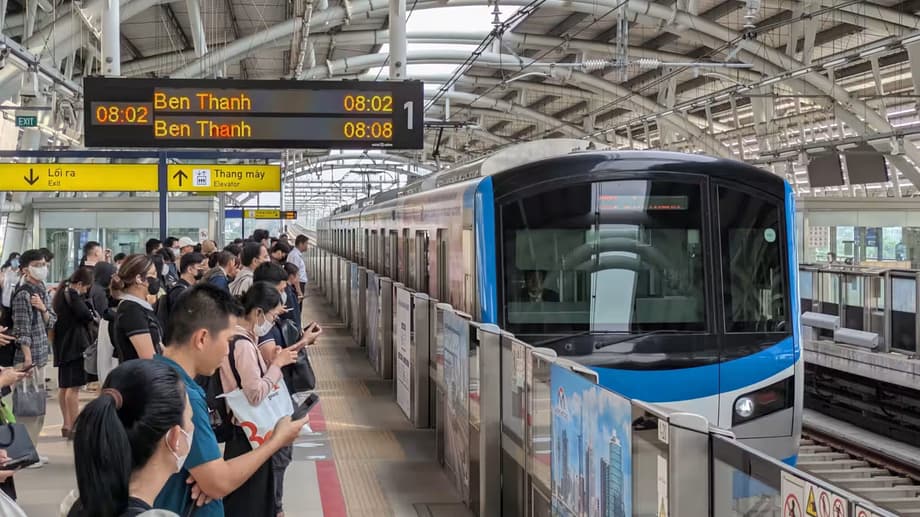
Ho Chi Minh City has undergone a significant transformation since the launch of its first metro rail line just over a year ago. The 19.7-kilometer Line 1, connecting Ben Thanh Market in District 1 to Suoi Tien Theme Park in Thu Duc City, has fundamentally altered how millions of residents navigate the bustling metropolis. With 14 stations including three underground stops, the line now carries an expected daily capacity of 150,000 passengers, offering a modern alternative to the city’s notoriously congested streets.
- Transforming Ho Chi Minh City’s Transportation Landscape
- A Decade of Delays and Development Challenges
- National Expansion Plans Take Shape
- The Shift Toward Private Investment
- Environmental and Economic Benefits Emerge
- Transit-Oriented Development Gains Momentum
- Connectivity Challenges and Integrated Planning
- Administrative Reforms Support Infrastructure Growth
- Looking Toward 2050
- Key Points
The opening week alone drew over 500,000 riders, driven by promotional fares and genuine public enthusiasm for a new mode of transport. For many Vietnamese, stepping onto a modern metro train represented more than just a commute. It symbolized the country’s arrival as a modern urban nation capable of delivering complex infrastructure projects that match those found in developed Asian cities like Singapore, Bangkok, or Tokyo.
The impact extends beyond transportation. Real estate along the corridor has experienced remarkable growth, with apartment prices increasing by approximately 8% in the first year alone. On average, property values have risen by $200-250 per square meter annually, equivalent to 5.3 to 6.5 million Vietnamese dong. Some premium projects have seen secondary market prices soar to 2.5 to 3.5 times their original launch prices, demonstrating what analysts call the “metro effect” on urban property values.
This transformation did not come easily. The project opened for commercial operation in December 2024, a full decade behind schedule. The total cost reached 212 billion yen (approximately $1.5 billion), with Japan providing 196.6 billion yen ($1.4 billion) through Official Development Assistance. This makes it Vietnam’s largest yen loan project, highlighting both the scale of ambition and the international cooperation required to bring such infrastructure to fruition.
A Decade of Delays and Development Challenges
The journey from concept to reality spanned more than fifteen years, with the project experiencing numerous setbacks along the way. Originally scheduled for completion in 2014, the metro faced multiple delays attributed to land acquisition issues, technical challenges, and what experts identify as administrative bottlenecks. Vietnam’s goal of becoming a high-income country by 2045 hinges on overcoming these systemic hurdles.
Communist Party General Secretary To Lam has acknowledged these challenges, calling for a “revolution” in administrative efficiency through ministry reorganization and structural reforms. The delays in the metro project exemplify broader issues with licensing procedures and complicated bureaucratic processes that continue to slow infrastructure development across the country.
The opening of a full-scale urban transportation system is expected to ease traffic congestion and reduce air pollution. Yet Vietnam’s administrative system remains a bottleneck for growth.
Ho Chi Minh City is not alone in facing these challenges. Hanoi, the capital, has encountered similar difficulties with its metro expansion. Almost three years after opening, the impact of Hanoi’s Line 2A has yet to be fully felt in the city. Vietnam now has approximately 41 kilometers of metro operational across both cities, but this remains far below the government’s ambitious targets.
The World Bank ranks Vietnam 47th out of 160 countries in overall infrastructure quality, but only 103rd specifically in road quality according to the World Economic Forum. This disparity between overall investment and specific outcomes reflects the ongoing struggle to translate financial resources into functional infrastructure efficiently.
Despite these challenges, the successful operation of Line 1 provides valuable lessons for future projects. The experience has demonstrated Vietnam’s ability to work with international partners, manage complex technical systems, and ultimately deliver projects that serve the public good. The Japanese involvement extended beyond funding to include technology transfer and technical expertise, creating a template for future international collaborations.
National Expansion Plans Take Shape
The completion of Ho Chi Minh City’s first metro line represents just the beginning of Vietnam’s urban rail ambitions. The country has outlined an extensive vision for metro development that would see eight lines spanning 220 kilometers in Ho Chi Minh City alone by 2030. This network carries an estimated price tag exceeding $25 billion and aims to connect major urban hubs with suburban areas, fundamentally restructuring how the metropolitan region functions.
Construction is already underway on Line 2, which will add another 11.3 kilometers connecting Ben Thanh Market to Tham Luong in District 12. This line is particularly significant as it incorporates lessons learned from Line 1, including more proactive planning for Transit-Oriented Development (TOD) around stations. Authorities have identified priority areas for TOD at locations such as the Tham Luong depot and several key stations.
Hanoi continues its parallel expansion efforts. The capital’s first metro line, Cat Linh-Ha Dong, has been operational since November 2021 and carries over 50,000 passengers daily. Lines 2A and 3 are under development, with Line 3 designed to connect the city center to Noi Bai International Airport by 2030. The elevated section of Line 3, comprising eight stations and spanning approximately eight kilometers from Nhon to Cau Giay, was officially inaugurated in November 2024.
International support remains crucial for these expansions. Hanoi’s Line 3 benefits from substantial financial and technical contributions from the French government, the French Development Agency (AFD), the European Investment Bank (EIB), and the Asian Development Bank (ADB). France has provided over 500 million euros in concessional financing, while ADB contributed $407.8 million and EIB provided 141 million euros.
The collaborative nature of these projects extends beyond funding. French companies Alstom, Thales, and Colas Rail supplied rolling stock, signaling systems, communication infrastructure, tracks, and electromechanical equipment. This international cooperation brings global technical standards to Vietnam while building local capacity for future projects.
The Shift Toward Private Investment
Recognizing that public resources alone cannot sustain the ambitious infrastructure rollout, Vietnam is increasingly embracing public-private partnerships (PPP). The Law on PPP has undergone amendments to expand eligible sectors, increase flexibility in financial mechanisms and risk-sharing, and streamline administrative procedures. This legal framework evolution aims to attract private capital to projects that previously relied almost entirely on public funding.
Vietnam allocates 6 percent of its GDP to infrastructure investment, significantly higher than the regional average of 2.3 percent. Yet the country requires an estimated $25-30 billion annually to sustain economic growth, while the national budget can only provide $15-18 billion. This funding gap of $10-15 billion necessitates private sector involvement, with the government aiming for 20 percent of infrastructure investment to come from private sources.
Private conglomerates are already stepping forward with ambitious proposals. Vingroup, Vietnam’s leading private conglomerate, has proposed a $5.28 billion high-speed railway connecting Hanoi with Quang Ninh province, home to the UNESCO World Heritage site Ha Long Bay. Trains would run at speeds up to 350 kilometers per hour, cutting travel time dramatically between these key northern economic hubs.
VinSpeed, a high-speed rail subsidiary of Vingroup, has also proposed extending its planned metro line in Ho Chi Minh City to begin at Ben Thanh market downtown. The 48.5-kilometer dual-track line would be capable of speeds up to 350 kilometers per hour, representing Vietnam’s first privately funded high-speed rail line. Construction is set to begin with completion expected in 30 months.
In central Vietnam, Deo Ca Group plans to develop a metro line connecting Danang and Hoi An under a PPP model combined with TOD principles. This project, slated for completion by 2030, aims to improve visitor experience in these key tourist destinations while reducing travel times and congestion. Mass rapid transit and monorail systems are being considered as the most feasible options based on regional terrain and financial capacity.
Environmental and Economic Benefits Emerge
The transition to metro-based urban mobility offers significant environmental benefits for Vietnam’s rapidly growing cities. Ho Chi Minh City, home to over 11 million people, grapples with severe traffic congestion and air pollution. Approximately 8 million motorbikes crowd its streets daily, contributing to air quality issues that impact public health.
According to the Ministry of Transport, Vietnam’s transportation sector contributes 18 percent of the country’s greenhouse gas emissions. Transitioning urban mobility to metro systems could significantly lower this figure, aligning with Vietnam’s commitment to achieving net-zero emissions by 2050. Hanoi’s Line 3 alone is projected to reduce CO2 equivalent emissions by 33,150 tons annually upon full operation.
The economic benefits extend beyond environmental improvements. Metro systems stimulate economic growth through multiple channels. During the construction of Ho Chi Minh City’s Metro Line 1, thousands of local workers found employment. Once operational, the system requires staff for maintenance, operations, and customer service. Businesses near metro stations, including retail and dining establishments, are expected to see increased foot traffic as commuter patterns shift.
Improved connectivity enhances property values along metro routes. The “metro effect” is already evident in Thu Duc City, where real estate developments are booming. JLL Vietnam reports that apartment complexes along Hanoi’s Cat Linh-Ha Dong metro line recorded price increases of up to 19% after the line began operation, compared to a 12% average across the entire Hanoi market.
This trend is reshaping urban development strategies. From 1990 to 2015, real estate projects in Ho Chi Minh City mainly developed within Ring Road 2, concentrated within a 10-kilometer radius around the city center. Urban expansion followed existing road infrastructure. The arrival of metro lines changes this dynamic, encouraging development along transit corridors and promoting more sustainable urban growth patterns.
Transit-Oriented Development Gains Momentum
The concept of Transit-Oriented Development (TOD) has attracted significant attention from both government and developers since 2023. Resolution 98/2023/QH15 specifically supports piloting TOD models in Ho Chi Minh City, making it a cornerstone in urban development planning and project marketing strategies.
TOD focuses on areas within a 1-kilometer walking radius of train stations, creating dense, mixed-use developments that encourage walking and reduce reliance on private vehicles. Projects located within a 10-minute walk of a metro station now account for approximately 14-16 percent of total commercial real estate supply and 4-9 percent of residential supply in Ho Chi Minh City and Hanoi.
JLL Vietnam experts emphasize that successful TOD projects require four fundamental pillars: connectivity, non-motorized transport, amenities, and mixed-use development. Each pillar plays a crucial role in creating a complete and sustainable TOD ecosystem. However, most developers currently focus primarily on creating direct physical connections between projects and public transport hubs, often overlooking the potential of enhancing connectivity through green spaces and non-motorized transport infrastructure.
Developers must expand their roles and add new operational components that function like mall operators but on an urban scale. This involves actively fostering pedestrian traffic and encouraging community participation through events, cultural activities, and social experiences. Creating meaningful experiences around transit hubs becomes as important as the transit functionality itself.
The market’s positive response to projects near the metro has reinforced confidence among authorities in accelerating urban development according to the TOD model. Ho Chi Minh City has been more proactive with Metro Line 2 by identifying priority areas for TOD from the outset, learning from the organic development patterns that emerged around Line 1.
Connectivity Challenges and Integrated Planning
While individual metro lines show promise, Vietnam faces significant challenges in creating integrated transportation networks. The experience with Long Thanh International Airport, currently under construction in Dong Nai Province, illustrates the importance of synchronized infrastructure planning.
The $13.2 billion airport project, with phase one expected to handle 25 million passengers annually starting in 2026, faces connectivity limitations that could undermine its effectiveness. Primary road connections including the HCMC-Long Thanh-Dau Giay Expressway and National Highways 1 and 51 are already overloaded. Several crucial projects including Ring Road 3 and expressway connections remain under construction.
Effective connectivity requires a multimodal transport system including metro lines, bus rapid transit, high-speed rail, waterways, and smart transportation solutions. Experts propose urban development along transit routes using TOD models to optimize land use, similar to successful international examples like Incheon Airport in South Korea and Schiphol Airport in the Netherlands.
Currently, travel from Tan Son Nhat Airport to the future Long Thanh site takes at least two hours, potentially extending to five hours during traffic congestion. This discourages passengers and airlines alike, highlighting the urgent need for early investments in expressways, metro lines, and high-speed rail connecting to major infrastructure projects.
Dong Nai Province is accelerating key connectivity projects and studying the extension of the Ho Chi Minh City metro line to Long Thanh Airport, with TOD-style developments planned along this corridor. However, current access routes primarily cater to cars, lacking adequate infrastructure for motorbikes despite these vehicles being the primary mode of transport for most Vietnamese.
Administrative Reforms Support Infrastructure Growth
Vietnam is implementing extensive administrative restructuring that could accelerate infrastructure development. The initiative aims to reduce the number of provinces from 63 to 34, creating larger administrative units that can support more integrated planning and development. This consolidation is expected to reduce administrative processing times, compliance costs, and business requirements by at least 30 percent by the end of 2025.
The merger may create the first official metropolis of Ho Chi Minh City, encompassing surrounding areas and significantly boosting economic scale. Improved infrastructure planning is anticipated, leading to better transport links and economic growth across larger, integrated markets. Foreign investors stand to benefit from enhanced administrative efficiency with fewer bureaucratic layers, accelerated decision-making, and consistent administrative standards across merged territories.
However, businesses must navigate challenges such as administrative and policy transition complexities, potential infrastructure and labor disparities, and changes to investment incentives and local relationships. Monitoring policy updates closely, reassessing site selection and supply chains, and strengthening local engagement become essential strategies during this transition period.
The Asian Development Bank has acknowledged Vietnam’s progress in unifying PPP regulations but points out remaining challenges in project preparation, risk allocation, long-term financing, competitive selection, and adapting policy tools for new sectors. Through continued collaboration, Vietnam aims to overcome these challenges and attract greater private investment for its ambitious infrastructure agenda.
Looking Toward 2050
Vietnam’s current metro plans aim to exceed 400 kilometers of urban rail in Ho Chi Minh City and Hanoi by 2050. This represents a transformative leap for the nation’s urban mobility, potentially rivaling established networks like London’s Underground, spanning over 400 kilometers, or Singapore’s MRT with 230 kilometers.
While the first metro lines faced significant delays and challenges, they have provided invaluable experience and capacity building. The technical expertise gained, institutional knowledge developed, and public acceptance demonstrated create a foundation for accelerating future projects. International partners remain committed to supporting Vietnam’s infrastructure ambitions, recognizing the country’s strategic importance and growth potential.
The transportation sector’s evolution toward modern, sustainable urban mobility systems serves as a microcosm of Vietnam’s broader development journey. The country is transitioning from lower-middle-income status toward high-income status, modernizing its infrastructure while navigating complex geopolitical dynamics and balancing international partnerships with domestic priorities.
For the millions of Vietnamese who now ride the metro lines daily, these projects represent more than infrastructure. They represent time saved with family, cleaner air for their children, economic opportunities, and a tangible connection to the country’s modernization journey. As the networks expand and integrate, these benefits will spread to more communities, fundamentally reshaping urban life in Vietnam’s dynamic cities.
Key Points
- Ho Chi Minh City Metro Line 1 launched in December 2024, spanning 19.7 kilometers with 14 stations and 150,000 daily passenger capacity
- Project cost $1.5 billion with $1.4 billion from Japanese ODA, opening a decade behind schedule due to administrative bottlenecks
- Apartment prices along the metro corridor increased 8% in the first year, approximately $200-250 per square meter annually
- Vietnam plans 220 kilometers of metro lines in Ho Chi Minh City by 2030, costing over $25 billion
- Hanoi’s Line 3 elevated section opened November 2024 with international support from France, AFD, EIB, and ADB
- Public-private partnerships gaining importance as government seeks $10-15 billion annually in private infrastructure investment
- Transportation sector contributes 18% of Vietnam’s greenhouse gas emissions, with metro systems helping reduce environmental impact
- Transit-Oriented Development (TOD) becoming cornerstone of urban planning around metro stations
- Vingroup proposing $5.28 billion high-speed rail connecting Hanoi to Quang Ninh at 350 km/h speeds
- Administrative reforms merging provinces from 63 to 34 expected to reduce processing times by 30%