A Sharp Decline at Osaka’s Gateway
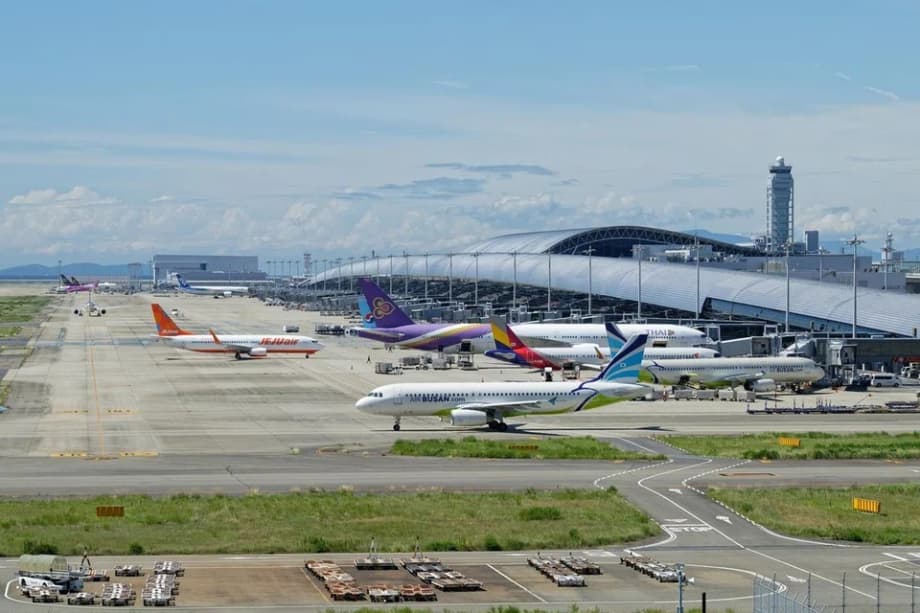
The bustling halls of Kansai International Airport in Osaka Prefecture, typically filled with travelers heading between Japan and China, have fallen noticeably quieter. Recent immigration data reveals a dramatic shift in travel patterns, with the number of travelers from this major airport to China plummeting by nearly half during the New Year holiday season. Between December 26 and January 4, only 55,170 passengers made the journey to China, representing a staggering 48 percent year-on-year drop according to preliminary figures from the Kansai airport branch of the local immigration office in Osaka.
- A Sharp Decline at Osaka’s Gateway
- The Diplomatic Spark
- Record Tourism with a Notable Gap
- Economic Ripples Across Industries
- GDP and Broader Economic Concerns
- Historical Parallels and Future Projections
- Adaptation and Strategic Responses
- Regional Implications and U.S. Involvement
- A New Normal in East Asian Relations
- Key Points
This significant decline serves as a concrete indicator of how worsening diplomatic ties between Tokyo and Beijing have begun to impact ordinary people and business. While the total number of travelers entering and leaving Japan through Kansai International Airport fell only 2 percent to 747,620, the destination rankings tell a telling story. South Korea emerged as the most popular destination with 127,990 travelers, followed by Taiwan with 59,970. China, which topped the list in 2025, has now fallen to third place. The operator of the airport, Kansai Airports, reported that the number of flights to and from China in December dropped to 2,286, approximately 60 percent of the volume recorded during the same period the previous year.
The Diplomatic Spark
The travel restrictions and subsequent drop in passenger numbers did not materialize from thin air. The current crisis traces back to November 7, when Prime Minister Sanae Takaichi responded to questions in the Japanese parliament about Japan’s potential response to a Taiwan emergency. She stated that a Chinese attempt to seize Taiwan by force could constitute a “survival-threatening situation” for Japan, adding that if U.S. warships intervened to break a Chinese blockade, Japan could be required to defend its ally.
Beijing viewed these comments as highly provocative, interpreting them as suggesting that the Japan Self-Defense Forces would be legally allowed to engage in collective self-defense activities in the event of a conflict over Taiwan. China’s consul general in Osaka, Xue Jian, retaliated on X with a now-deleted post stating that “the dirty neck that sticks itself in must be cut off.” Tokyo summoned China’s ambassador to protest what it termed the “extremely inappropriate” remark, and several Japanese politicians called for Xue’s expulsion.
The situation escalated further when China summoned Japan’s ambassador for the first time in more than two years to make a “strong protest” over Takaichi’s remarks. On November 15, China’s Ministry of Foreign Affairs advised citizens against traveling to Japan, claiming that Takaichi’s comments had increased risks to their “personal safety and lives.” This travel warning marked a significant escalation that has directly affected tourism flows between the two nations.
Record Tourism with a Notable Gap
What makes the current situation particularly striking is that Japan’s overall tourism sector has been experiencing unprecedented success. In 2025, Japan welcomed a record 42.7 million foreign visitors, easily surpassing the previous high of 36.9 million visitors in 2024 and moving closer to the country’s goal of 60 million tourist arrivals by 2030. This achievement represents a significant milestone for the world’s fourth-largest economy, which has relied heavily on tourism as a growth driver.
Foreign travelers also spent a record 9.5 trillion yen ($60 billion) in Japan in 2025, up from 8.1 trillion yen the previous year. The surge in visitors came primarily from markets outside China, with a combined 22 percent increase in visitors from Europe, the United States, and Australia last year. However, Chinese tourists had been the largest group of foreign visitors to Japan in 2025 at about 9.1 million, or nearly 23 percent of all visitors, according to Japan’s National Tourism Organisation.
The contrast between Japan’s overall tourism success and the sharp decline in Chinese visitors highlights the specific impact of political tensions. While travelers from other countries continue to flock to Japan’s shores, the absence of Chinese tourists creates a visible and economically significant gap in the visitor demographic.
The December Drop
The impact of the diplomatic spat became immediately apparent in tourism statistics. After Beijing issued its travel advisory in mid-November, the number of Chinese tourists in December dropped by 45 percent compared to the same month in 2024. This sudden contraction occurred during what should have been a peak period for travel between the two countries. The holiday season typically sees increased travel for family visits, shopping, and tourism, but political considerations clearly outweighed these traditional motivations for Chinese travelers.
According to government figures, around 250,000 people visited nine domestic factories of Kirin Brewery Co. in 2025, including 45,000 foreigners, or nearly 20 percent of the total. This represented the most foreign visitors since records began in 2016. However, a Kirin Brewery staff member noted that the number of Chinese visitors has declined since last November, despite the brewery providing informational booklets in English, Chinese, and Korean.
“It feels like the number of Chinese customers visiting our stores is decreasing,” said an official of Takashimaya Co., one of Japan’s major department store chains.
Chinese shoppers account for just over 50 percent of Takashimaya’s duty-free sales. Such sales from mid-November to the end of December dropped by 10 percent compared with the same period a year earlier. The company fears the Chinese government will continue urging its citizens to stay away from Japan, negatively affecting business during the Lunar New Year holidays in February, typically a peak season.
Economic Ripples Across Industries
The impact of declining Chinese visitors extends far beyond airports and tourist attractions. A survey conducted in December by Teikoku Databank Ltd. revealed that 42.8 percent of Japanese companies said the Chinese government’s travel advisory was having “a negative impact” on the Japanese economy. The transportation and warehousing sector, which includes the travel industry, reported the highest percentage of negative impact at 53.8 percent.
Major department stores across Japan have reported significant declines in duty-free sales. Daimaru Matsuzakaya Department Stores Co. saw duty-free sales fall 16.6 percent year on year in December, while Isetan Mitsukoshi Holdings Ltd. experienced a 14.2 percent drop. In Kyoto, a popular destination for Chinese tourists, the total number of overnight stays by visitors from China at major hotels in November decreased by 12.1 percent compared with the same month a year earlier.
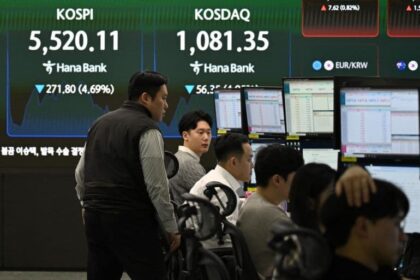
The financial markets have also reacted swiftly to the unfolding situation. Japanese shares linked to the tourism industry nosedived following China’s travel warning. Department store group Isetan Mitsukoshi fell more than 11 percent, while rival Takashimaya tumbled about 5 percent. Japan Airlines fell approximately 4 percent, Uniqlo owner Fast Retailing dipped about 5 percent, and cosmetics company Shiseido plunged roughly 9.5 percent.
GDP and Broader Economic Concerns
Economists warn that the tourism decline could have measurable effects on Japan’s broader economic performance. Takahide Kiuchi, executive economist at Nomura Research Institute, estimates that tensions between the two Asian powers could result in a 1.79 trillion yen drop in Japan’s GDP over the course of one year, representing a 0.29 percent decline in the country’s GDP. Travel spending has been a crucial growth driver for Japan, with inbound tourism contributing 0.4 percentage point to Japan’s 0.1 percent annual GDP growth last year, according to the Mastercard Economics Institute.
Stefan Angrick, head of Japan at Moody’s Analytics, echoed these concerns, stating that “a sharp drop in Chinese travel to Japan would sting.” Angrick projected that if Chinese arrivals were to halve, Japan’s GDP growth could shrink by 0.2 percentage points. He described this scenario as “hardly catastrophic, but an unwelcome drag for an economy already struggling to find traction.” Japan’s third quarter GDP contracted 0.4 percent sequentially, marking its first contraction in six quarters. On an annualized basis, the economy shrank 1.8 percent.
Ryota Abe, an economist at Sumitomo Mitsui Banking Corporation, offered similar projections. He suggested that Japan’s GDP could shrink by about 0.5 percent in the event of a total collapse in Chinese arrivals and by about 0.1 to 0.2 percent if arrivals decreased by about one-third. Even a 30 percent decrease due to heightened tensions would have a negative impact of around 0.1 to 0.2 percent, according to Abe’s analysis.
Historical Parallels and Future Projections
The current situation bears resemblance to previous diplomatic tensions between Japan and China. In 2012, during a dispute over islands off western Japan known as the Senkaku in Tokyo and Diaoyu in Beijing, mainland Chinese tourists to Japan dropped nearly 8 percent compared to 2012. Similarly, in 2010, after a Chinese fishing boat rammed into two Japanese Coast Guard vessels near the disputed islands, China sought to punish Japan through a rare-earths export ban and other measures.
Tobias Harris, founder and principal at political risk advisory firm Japan Foresight, told CNBC that the current dispute could last longer than expected, as neither side can easily back down from their position. Taiwan’s importance to Beijing means that it cannot easily accept what looks like a policy change by Takaichi. Although the Japanese leader has insisted that her statement did not signify a change in stance, she cannot easily back down without risking looking weak if she caves to Chinese pressure.
Looking ahead, JTB Corp. forecasts that the number of visitors to Japan will shrink to 41.4 million in 2026, a 3 percent drop from 2025, primarily due to a decline in tourists from China. However, spending by tourists in Japan is projected to exceed the 9.5 trillion yen recorded in 2025 because the number of visitors from Europe, the United States, and Australia, who tend to stay longer, is expected to increase. This projection suggests that Japan’s tourism industry may partially offset the loss of Chinese visitors with growth from other markets.
Adaptation and Strategic Responses
Japanese businesses have begun adapting to the new reality of strained relations with China. Sogo and Seibu Co. started taking countermeasures in November, redirecting social-media advertisements previously targeted at China to Southeast Asia, Europe, and the United States. This shift in marketing strategy reflects a broader trend of businesses seeking to diversify their customer bases and reduce dependence on any single market.
The Japanese government has also taken diplomatic steps to address the crisis. Masaaki Kanai, the Japanese foreign ministry official in charge of Asia and Oceania affairs, traveled to Beijing to meet his counterpart, Liu Jinsong. Kanai was expected to explain that Japan’s security policy has not changed and urge China to refrain from actions that damage ties. Japan’s Chief Cabinet Secretary stated that various channels of communication are open and that Tokyo had made a firm request for the Chinese side to take appropriate steps.
Despite these diplomatic efforts, China has shown little willingness to back down. Chinese Premier Li Qiang had no plans to meet Takaichi on the sidelines of the G20 summit in South Africa, according to the Chinese foreign ministry. Instead, spokesperson Mao Ning told reporters that Japan should retract its “wrongful” remarks.
Regional Implications and U.S. Involvement
The tensions between Japan and China have reverberated throughout the broader region. Taiwan President Lai Ching-te weighed in on the dispute, stating that China was carrying out a “multifaceted attack” on Japan. He called on the international community to continue paying close attention and urged China to exercise restraint, stating that China should demonstrate the conduct befitting a major power rather than becoming a “troublemaker for regional peace and stability.”
The United States has also entered the fray. George Glass, the U.S. ambassador to Japan, criticized Xue’s inflammatory remarks on X, stating that it was time to move on and adding, “Halloween has been and gone,” after the Chinese diplomat labeled Takaichi an “evil witch.” This intervention underscores the complex geopolitical dynamics at play, with the U.S.-Japan alliance facing tensions with China over Taiwan.
South Korea has found itself in a delicate position, attempting to maintain good relations with both Japan and China. President Lee Jae-myung engaged in shuttle diplomacy, meeting with both President Xi Jinping in Beijing and Prime Minister Takaichi in Japan. While China has sought to create divisions between Seoul and Tokyo, both Japan and South Korea appear committed to strengthening their relationship and enhancing trilateral cooperation with the United States.
A New Normal in East Asian Relations
Analysis of similar periods of Japan-China tensions in 2010 and 2012 suggests that the current episode could lead to permanent changes in Japan-China relations and how each views the other. After each past crisis, relations between the two countries stabilized but never fully returned to previous levels. This pattern suggests that the current episode may result in a lower baseline for the relationship going forward.
Changing domestic political conditions make it more difficult than before for both sides to deescalate. On the Chinese side, Beijing is much stronger diplomatically, economically, and militarily than a decade ago, and it views Taiwan as the “core of core interests,” meaning it is more likely to take a hardline position than in past episodes. On the Japanese side, widespread concern among elites and citizens about China’s assertiveness suggests that a complete capitulation by Tokyo is unlikely.
Notably, despite the row with China, Takaichi’s approval ratings have remained extremely high, at around 75 percent. A November poll by Nikkei and TV Tokyo showed that 55 percent of respondents felt that Takaichi’s statement was appropriate, versus 30 percent who did not. A recent Kyodo News survey showed that 48.8 percent of respondents supported the exercise of collective self-defense in a Taiwan contingency. These figures indicate a significant shift in Japanese public opinion regarding security policy.
Key Points
- Travel from Osaka’s Kansai International Airport to China dropped 48% during New Year period, falling from first to third most popular destination
- The crisis stems from Prime Minister Sanae Takaichi’s November remarks about potential Japanese military response to a Taiwan emergency
- China issued travel warnings against Japan, causing Chinese tourist arrivals to drop 45% in December 2024 compared to 2023
- Despite overall record tourism of 42.7 million visitors to Japan in 2025, the Chinese market collapse threatens economic growth
- Economists project a potential 0.29% GDP decline if tensions persist, with specific sectors like retail and transportation hit hardest
- Historical parallels from 2010 and 2012 suggest relations may stabilize at a lower level rather than fully recover
- Japanese businesses are adapting by redirecting marketing to other markets including Europe, U.S., and Southeast Asia
- Takaichi maintains high domestic approval ratings despite the diplomatic fallout, with majority public support for her stance