From Poetry to Reality
For centuries, the gleaming image of soldiers in golden armor existed solely in the verses of classical Chinese poetry. The celebrated Tang dynasty poet Wang Changling wrote of warriors who would “not leave the desert till we beat the foe, although in war our golden armour be outworn 100 times.” These lines captured the unyielding spirit of frontier battles, yet the physical reality of such armor remained elusive. Archaeologists had never unearthed a single example of the magnificent gilded suits described in historical texts, leading many to wonder if the “golden armor” was merely a metaphor for military prestige or poetic embellishment.
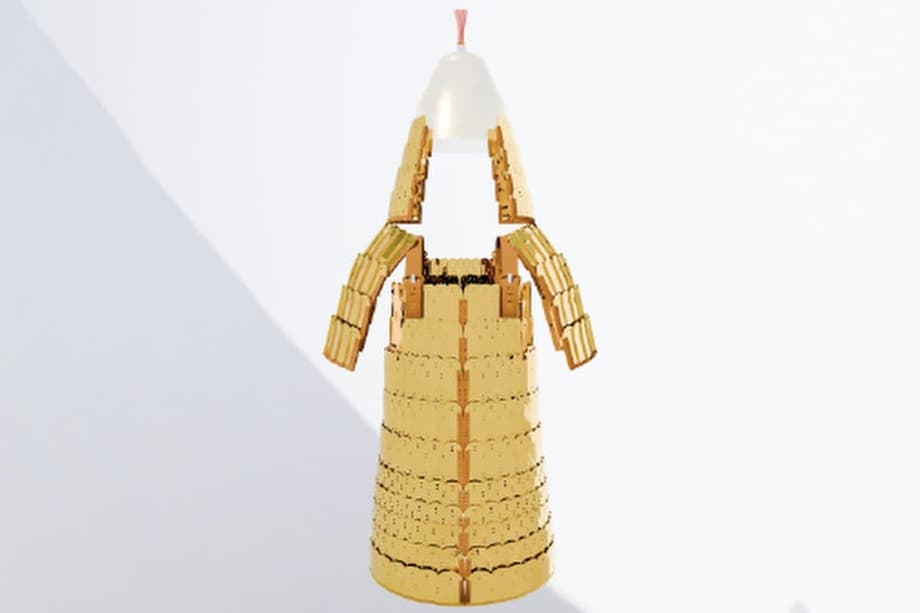
That uncertainty has now been dispelled. Researchers at the Key Laboratory of Archaeological Sciences and Cultural Heritage at the Chinese Academy of Social Sciences (CASS) have unveiled the only known physical example of Tang dynasty “golden” armor. This meticulously restored suit of gilded bronze armor was recovered from a royal tomb on the Tibetan plateau. The restoration team successfully reassembled the armor piece by piece and produced a video reconstruction depicting its likely original appearance, confirming that the poets of the Tang era were describing real objects of immense power and beauty.
The discovery is significant because it bridges the gap between literature and material culture. It provides concrete evidence that the “golden armor” celebrated in verse was not just a flight of fancy, but a specific type of high-status military equipment crafted with advanced metallurgical techniques. This find transforms our understanding of Tang dynasty warfare, craftsmanship, and the cultural exchanges that occurred along the volatile western frontiers of the empire.
A Tomb on the Silk Road Frontier
The armor emerged from the Xuewei No. 1 Tomb in Dulan County, Qinghai Province, a region that served as a critical transit point along the ancient Silk Road. Excavations at the site began in 2018, with salvage efforts continuing through 2025. The burial dates to the mid-eighth century, a time when this region was a crossroads of civilizations, linking the Tang capital of Chang’an with Central Asia and Persia. The tomb is believed to belong to a king of the Tuyuhun, a powerful people who once controlled large stretches of China’s western frontier.
The Tuyuhun kingdom played a complex role in the geopolitics of the era. Established in the 3rd century, they dominated strategic routes across the Tibetan plateau and facilitated trade along the Silk Road. However, their independence was short-lived. The kingdom was eventually conquered by the Sui dynasty and later the Tang dynasty, before becoming a vassal state under the Tubo empire, also known as the Tibetan Empire. This history of shifting alliances and conquests makes the tomb a valuable time capsule of the region’s dynamic cultural landscape.
When archaeologists first entered the tomb, they found a scene of disarray. The burial had been badly disturbed, likely by looters and early salvage attempts. Bronze armor plates and lacquered horse armor were scattered together, broken and corroded by centuries of exposure to the elements. Some fragments were so delicate that even minimal handling risked causing irreversible damage. The team faced a monumental task in transforming this chaotic collection of fragments into a coherent artifact.
The Science of Restoration
To solve this complex puzzle, conservators at CASS adopted a strategy of “disassembling the whole into parts and reassembling the parts into a whole.” This approach was necessary because the armor was too fragile to be physically manipulated in its found state. Instead, the team took the armour apart digitally. Each fragment was scanned in three dimensions to record its original position and shape. Microscopes were employed to reveal how the plates were made and what metals they contained.
Guo Zhengchen, a cultural heritage conservation expert, detailed the meticulous process at a press conference. He explained that the team carried out “layered cleaning, extraction and protection while meticulously cataloguing each armour plate.” This scientific analysis revealed that the armor was not merely made of plain bronze, as might be expected for utilitarian battlefield gear. It had been gilded, confirming that Tang poets had been describing a reality of immense visual splendor.
We adopted a strategy of ‘disassembling the whole into parts and reassembling the parts into a whole’, said Guo Zhengchen, a cultural heritage conservation expert.
The use of modern technology was crucial to the project’s success. Techniques such as scanning electron microscopy and ultra-depth microscopy allowed researchers to study the manufacture and material composition of the plates without causing damage. This data was then used to create a digital model of the armor, which in turn informed the physical reconstruction and the video simulation that shows the armor in its original, reflective glory.
Ceremonial Splendor versus Battlefield Utility
While the armor evokes images of fierce combat on the desert frontiers, researchers believe it likely served a ceremonial rather than a functional military role. The presence of gold artifacts and silk textiles in the tomb points to elite status, suggesting the armor was a symbol of royal power rather than practical protection. This distinction is important in understanding the material culture of the Tang dynasty, where visual display and ritual status often took precedence over utilitarian considerations in high-status burials.
However, the tomb did contain other items that speak to a martial culture. Alongside the gilded armour, archaeologists found equestrian gear, iron armor, and lacquered horse armor. These findings match written historical records. The New Book of Tang, compiled in the 11th century by the historian Ouyang Xiu, described Tibetan forces wearing armor so complete that “strong bows and sharp blades could not inflict serious harm.” This suggests that while the golden armor may have been for display, the people of this region certainly possessed advanced battlefield technology as well.
The juxtaposition of ceremonial gilded armor with functional iron and lacquered gear offers a nuanced picture of the Tuyuhun elite. They were warriors who understood the value of psychological warfare and the projection of power, just as they understood the necessity of physical protection. The golden armor would have been a terrifying and awe-inspiring sight, perhaps used in rituals or processions to assert dominance over rivals and allies alike.
Insights into Tang Dynasty Craftsmanship
The restoration project has shed light on the high level of craftsmanship achieved during the Tang dynasty. The analysis of the armor plates revealed sophisticated metallurgical knowledge. The process of gilding bronze involves applying a thin layer of gold onto the surface, a technique that requires skill and precision. This finding confirms that the “golden armor” described in texts was likely made of gilded bronze rather than solid gold, a detail that clarifies historical descriptions.
Beyond the armor itself, the tomb yielded other treasures that attest to the artistic richness of the period. A lacquered tray once used to hold grapes was decorated with the Tang dynasty’s finest gold-and-silver inlay techniques. Additionally, a tie-dyed fabric fragment dated to before 750 is one of the earliest known physical examples of this textile technique. These items, found alongside the armor, paint a picture of a society that valued beauty and luxury as much as military strength.
The location of Dulan County on a key trade route meant that local artisans had access to ideas and materials from across Eurasia. The region was culturally dynamic, a melting pot of Chinese, Tibetan, and Central Asian influences. The tomb reflects this cosmopolitan environment, containing items that show a synthesis of different artistic traditions. The armor itself may be a product of this cultural exchange, blending Chinese metallurgical techniques with steppe nomad aesthetics.
Connecting Literature and Archaeology
One of the most compelling aspects of this discovery is its connection to the literary tradition of the Tang dynasty. For generations, scholars have debated whether the references to golden armor in poetry were literal or metaphorical. This find provides strong evidence that writers like Wang Changling were drawing on contemporary reality when they penned their verses. The imagery of “golden scales” glimmering in the sun, found in Tang-era poems, now appears grounded in real material culture.
This alignment between text and artifact is rare in archaeology. It allows historians to reassess other literary descriptions of the period with greater confidence. If the golden armor was real, what other aspects of Tang poetry might reflect actual historical conditions? The discovery encourages a re-examination of contemporary sources, potentially leading to new insights into the daily life, values, and visual culture of the time.
The restored armor serves as a tangible link to the past, a physical manifestation of the spirit that poets celebrated. It embodies the resilience and grandeur of the Tang dynasty, a period often considered a golden age of Chinese civilization. Seeing the armor brought back to life allows modern observers to connect viscerally with the history described in textbooks and anthologies.
The Broader Historical Context
The tomb and its contents must be understood within the broader context of 8th-century East Asia. This was a period of intense interaction and conflict between the Tang dynasty, the Tibetan Empire, and various steppe confederations. The Tuyuhun, caught between these great powers, had to navigate a treacherous political landscape. Their material culture reflects this position of influence and vulnerability.
The Tibetan plateau itself has a long history of royal burials. The Chongye Valley, known as Tibet’s Valley of the Kings, is home to numerous burial mounds attributed to Yarlung dynasty kings. While the Dulan tomb is distinct from these, it shares the same tradition of interring rulers with rich grave goods to accompany them into the afterlife. The practice of burying elite figures with armor, weapons, and luxury items was common across the region, reflecting shared beliefs about power and the afterlife.
The discovery also highlights the importance of the Qinghai-Xizang Plateau as a corridor for cultural and technological transmission. Ideas, fashions, and technologies moved along these routes just as surely as silk and spices. The armor found in the tomb is a testament to this flow of culture, representing a convergence of Chinese metallurgy and frontier martial traditions.
Future Research and Public Display
The restoration of the golden armor is not the end of the story, but rather the beginning of a new chapter of research. Scholars will now have the opportunity to study the armor in detail, comparing it with other known examples of Tang dynasty military equipment. The techniques used in its restoration, particularly the digital scanning and reconstruction, set a new standard for the conservation of fragile archaeological finds.
The public display of the armor offers a unique educational opportunity. It allows people to see firsthand the artistry and engineering skill of ancient craftsmen. The video reconstruction, in particular, helps viewers visualize how the armor would have looked in motion, its gilded plates catching the light. This visual understanding is something that static descriptions in books can never fully convey.
As the restored suit takes its place in museum displays, it will serve as a focal point for discussions about Tang dynasty history, Sino-Tibetan relations, and the evolution of military technology. It stands as a testament to the enduring power of human craftsmanship and the value of preserving our shared cultural heritage.
Key Points
- The only known physical example of Tang dynasty “golden” armor has been restored from fragments found in a royal tomb.
- The gilded bronze armor was recovered from the Xuewei No. 1 Tomb in Dulan County, Qinghai Province, on the Tibetan plateau.
- The tomb belonged to a king of the Tuyuhun, a kingdom situated on the Silk Road between the Tang and Tibetan empires.
- The armor dates to the mid-eighth century, confirming descriptions found in classical Tang poetry.
- While likely used for ceremony to signal royal power, the tomb also contained functional iron and lacquered armor.
- The discovery validates historical texts and provides concrete evidence of high-status Tang dynasty material culture.
Researchers used 3D scanning and microscopy to digitally disassemble and reassemble over 1,200 fragments.