A New Era for Aviation Manufacturing
The European aviation giant Airbus has taken a decisive step into the future of industrial automation by partnering with Chinese robotics developer UBTech Robotics. This agreement centers on the deployment of the Walker S2 humanoid robot within Airbus manufacturing facilities. The partnership represents a significant milestone for UBTech, as it moves beyond its domestic market to validate its technology in one of the most demanding industrial environments in the world. Aircraft manufacturing requires extreme precision and rigorous safety standards, making it an ideal testing ground for advanced robotics systems. The collaboration will focus on identifying specific tasks where humanoid robots can operate alongside human workers to improve efficiency and safety.
This move signals a growing confidence in the maturity of humanoid robotics. For years, bipedal robots were largely seen as experimental prototypes confined to research labs. The fact that a major aerospace manufacturer is willing to integrate them into actual production lines suggests a shift toward practical commercial application. UBTech, founded in 2012 and listed on the Hong Kong stock exchange in late 2023, has positioned itself as a leader in this transition. The company aims to prove that robots with human forms can perform useful work in factories designed for people, rather than requiring expensive retrofits of the facility itself. This capability could transform how aircraft are built by handling repetitive and physically demanding tasks that currently strain human workers.
Technical Specifications of the Walker S2
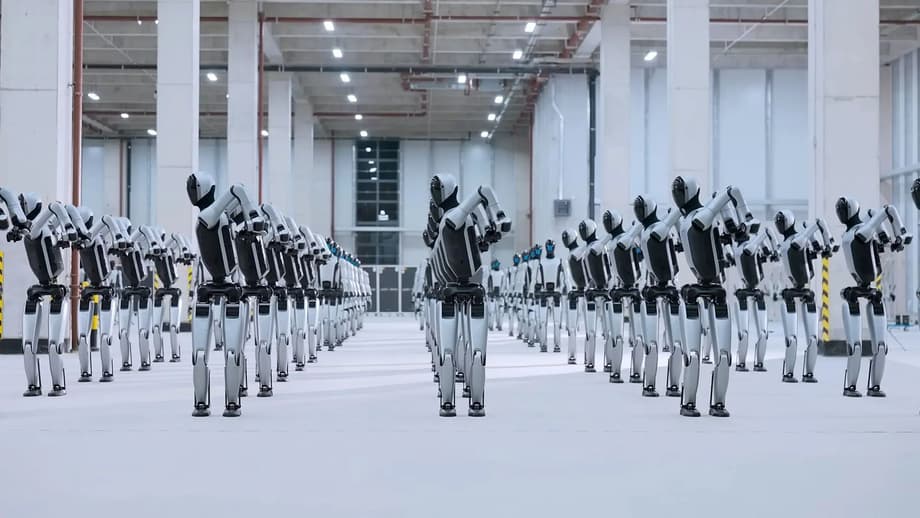
At the core of this deal is the Walker S2, a robot designed specifically for industrial use. Standing approximately 5.8 feet tall, or 1.76 meters, the machine is built to navigate spaces that were originally created for human operators. This physical compatibility allows the robot to move through doorways, use stairs, and operate in aisles that might be inaccessible to wheeled robots or large automated guided vehicles. The design philosophy hinges on the idea that the best way to automate a human factory is to use a robot that mimics human proportions and mobility.
The Walker S2 is equipped with dexterous arms and hands that enable it to manipulate tools and parts with a high degree of finesse. Manipulating objects in a three-dimensional space is critical for tasks like aircraft assembly, where components come in various shapes and sizes. The robot also features a sophisticated vision system that acts as its eyes. This system allows the Walker S2 to perceive its environment, identify objects, and navigate safely without colliding with people or machinery. Navigation is handled by UBTech’s Co Agent AI system, which coordinates the robot’s movements and facilitates object recognition.
One of the practical challenges for mobile robots is power management. Downtime for charging can disrupt production schedules. To address this, the Walker S2 utilizes an autonomous battery swapping system. When the battery level runs low, the robot can independently travel to a docking station to swap its depleted battery for a fresh one. This capability ensures the robot can operate continuously, supporting 24-hour production cycles without human intervention for power management.
Validation Across Multiple Industries
The agreement with Airbus is not an isolated event but part of a broader pattern of adoption for UBTech technology. Prior to entering the aerospace sector, the company had already secured partnerships with major players in the automotive, electronics, and semiconductor industries. Notably, UBTech signed a similar deal with American semiconductor manufacturer Texas Instruments last year. In that facility, the Walker S2 has been tested on production lines that require the handling of delicate silicon wafers, an environment that demands extreme care and cleanliness.
Other prominent clients include BYD, the Chinese electric vehicle giant, and Foxconn, the massive electronics manufacturer known for assembling consumer electronics. These deployments cover a wide spectrum of industrial challenges. The automotive sector involves heavy lifting and repetitive assembly tasks, while electronics manufacturing requires precision and speed. By succeeding in these diverse fields, UBTech has built a track record that likely gave Airbus the confidence to adopt the technology. The aerospace sector becomes the fifth major application scenario for the Walker S2, following automotive, 3C electronics, smart logistics, and semiconductor manufacturing.
Production numbers indicate that UBTech is scaling up its operations rapidly. As of January 26, the company had produced 1,000 units of the Walker S2. Mass production and deliveries began in November of the previous year, shortly after the robot was introduced in July. This quick ramp up suggests that the manufacturing processes for the robots themselves are becoming streamlined. The company expects its annual production capacity for industrial humanoid robots to reach 10,000 units by 2026, a target that reflects the anticipated surge in demand.
Financial Impact and Market Sentiment
The announcement of the Airbus partnership had an immediate and positive impact on UBTech’s financial standing. Shares of the company surged as much as 8.6% on the Hong Kong stock exchange following the news. The stock reached its highest level in over three months, closing at HKD144.7. This rally reflects investor enthusiasm for the company’s growth prospects and its expanding list of high profile clients. The market appears to be rewarding UBTech for successfully penetrating the European market and securing a deal with a top tier aerospace firm.
Financial reports from the company show strong order growth. UBTech stated that total orders for its humanoid robots exceeded 1.4 billion yuan, or roughly $200 million, last year. This substantial order book provides revenue visibility for the coming quarters. However, the investment story is complex. While orders are rising, the company is also navigating a path to profitability. Financial analysis suggests the company has reported significant annual losses, a common situation for high growth technology firms investing heavily in research and development.
Investors are currently weighing the potential for future scale against current financial burn rates. The robotics sector in China has seen a general uptick in interest, with the Hang Seng China A Robotics Index rising over 60% in 2025. This broader market trend has likely buoyed UBTech’s valuation. The company faces the challenge of converting its technological leadership and order volume into sustainable profit margins without diluting shareholder value through excessive equity issuance. The wide variance in fair value estimates from analysts underscores the uncertainty, with projections ranging from bullish optimism to cautious skepticism regarding the company’s ability to manage its cash flow while scaling production.
The Future of Humanoid Labor
The deployment of humanoid robots in aircraft manufacturing highlights a shifting paradigm in labor. In factories, there are often tasks that are dull, dirty, and dangerous. These jobs can be physically strenuous or repetitive, leading to fatigue and injury among human workers. Robots like the Walker S2 are ideally suited to take over these burdensome activities. By doing so, they can improve workplace safety and allow human employees to focus on more complex cognitive tasks that require judgment and problem solving skills.
The flexibility of humanoid robots offers a strategic advantage over traditional automation. Conventional industrial robots, such as robotic arms, are typically bolted to the floor and dedicated to a single specific task. Reconfiguring a production line that uses such fixed automation can be expensive and time consuming. In contrast, a humanoid robot can be reprogrammed to perform different tasks simply by changing its software instructions. This adaptability is particularly valuable in the aerospace industry, where production volumes are lower and the variety of tasks is higher compared to mass market automotive manufacturing.
Looking ahead, UBTech plans to continue expanding its industrial ecosystem. The company intends to collaborate with more partners to explore new application scenarios. The data gathered from the Airbus deployment will be crucial for refining the robot’s artificial intelligence and physical capabilities. As these machines learn and improve, they are expected to become increasingly integrated into the global manufacturing infrastructure, fundamentally changing how goods are produced.
Key Points
- Airbus purchased UBTech’s Walker S2 humanoid robots for aircraft manufacturing facilities.
- The Walker S2 stands 5.8 feet tall with dexterous arms, a vision system, and autonomous battery swapping.
- UBTech shares jumped up to 8.6% following the announcement of the partnership.
- The robot uses UBTech’s Co Agent AI system for coordinated movement and object recognition.
- This agreement marks UBTech’s entry into aerospace, its fifth major industrial sector.
- Total robot orders exceeded 1.4 billion yuan last year.
- Production capacity is expected to reach 10,000 units annually by 2026.
- Previous partners include Texas Instruments, BYD, and Foxconn.