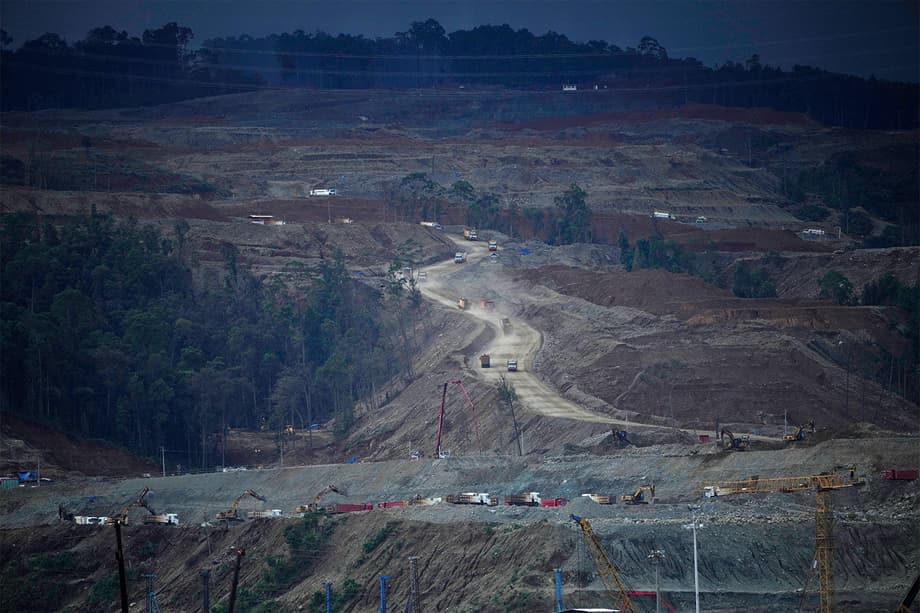
A Reversal of Environmental Progress
After years of notable progress in reducing deforestation, Indonesia faces an alarming reversal. The Southeast Asian nation lost more forest during the first nine months of 2025 than in any full year between 2020 and 2023, according to Forestry Minister Raja Juli Antoni. This acceleration in forest loss represents a significant setback for a country that had emerged as a global leader in forest conservation under President Joko Widodo’s administration.
Gross deforestation reached 166,500 hectares (411,000 acres) in just the first three quarters of 2025, putting the country on track to match or exceed 2024’s total of 216,000 hectares (534,000 acres). That 2024 figure marked the most extensive forest loss since 2019. Environmental organizations paint an even grimmer picture, with NGO Auriga Nusantara estimating total deforestation at more than 260,000 hectares (642,000 acres) last year.
“The tragedy of this project is that it is undermining Indonesia’s recent success in the battle to halt global deforestation,” said Amanda Hurowitz, forest commodities lead at nonprofit Mighty Earth.
This concerning trend raises questions about Indonesia’s commitment to environmental protection and could have far-reaching implications for global climate efforts, international trade relations, and the livelihoods of indigenous communities.
Key Drivers of Forest Loss
The primary force behind this acceleration is the Indonesian government’s push for large-scale agricultural development, most notably the Merauke Food Estate project in South Papua province. This massive undertaking involves clearing at least 2 million hectares (4.9 million acres) of forest to create industrial agricultural land. The project includes plans for a bioethanol factory, a 120-megawatt power station, and an 80-kilometer (50-mile) highway linking the coast to the interior development zone.
The food estate initiative represents a broader government strategy to increase food security and develop a domestic biofuel industry that could eventually replace energy imports. The total investment for the project could exceed $8 billion, with goals to produce and store approximately 2 billion liters (528 million gallons) of bioethanol annually by the end of the decade.
Beyond the Merauke project, other factors contribute to forest loss, including:
- Continued expansion of palm oil plantations
- Mining operations
- Infrastructure development
- Small-scale agriculture and community encroachment
This development surge comes despite Indonesia’s previous success in implementing a moratorium on clearing forest for new oil palm plantations following devastating fires a decade ago. That policy helped reduce deforestation from a peak of 440,000 hectares in 2019 to just 119,100 hectares in 2020.
Historical Context and Policy Shifts
Indonesia’s journey through forest management has been complex and marked by distinct phases. During the mid-1960s, the country experienced a surge in commercial forest exploitation that led to widespread deforestation. This trend was exacerbated by shifting cultivation, transmigration programs, agricultural expansion, and palm oil plantation activities.
The 1997-1998 Asian financial crisis triggered another wave of forest loss as currency depreciation made agricultural and mining exports more attractive. This period saw expansion of oil palm and cocoa plantations, resulting in significant forest cover loss.
The decentralization reforms that followed transferred forest management authority to local districts and provinces, which in many cases intensified forest exploitation and conversion. This era marked the beginning of Indonesia’s reputation as one of the world’s largest deforestation hotspots.
The turning point came during President Widodo’s second term, which prioritized forest protection, restoration, and fire suppression. These efforts, combined with corporate commitments to reduce deforestation linked to commodities, helped drive down forest loss rates significantly.
However, the current acceleration suggests that these gains may be fragile. The government’s renewed focus on development projects like the Merauke Food Estate demonstrates the persistent tension between economic growth and environmental conservation.
Climate Change Implications
Indonesia ranks as the world’s sixth-largest greenhouse gas emitter, following China, the United States, India, the European Union, and Russia. Its forests store vast amounts of carbon, making their protection crucial for global climate goals. The current deforestation spike threatens to undermine Indonesia’s commitments under the Paris Agreement and its target to achieve a Forest and Other Land Use Net Sink (FOLU-NS) by 2030.
The failure of Indonesia’s recent carbon credit auction at the COP30 Summit in Brazil highlights growing skepticism about the country’s environmental commitments. Indonesia offered 90 million carbon credits but sold fewer than 2.8 million. The government has not disclosed how much revenue was generated from the sales or the identities of the buyers, though some reports suggest Indonesian state-owned companies were among the purchasers.
“It means Indonesia doesn’t have a strong commitment to protect its forest or peatlands,” said Bhima Yudhistira Adhinegara, executive director of the Center of Economic and Law Studies (CELIOS).
This market skepticism reflects investor concerns about the contradiction between Indonesia’s efforts to monetize forest conservation while simultaneously approving large-scale forest conversion for development projects. The food estate initiative particularly worries climate advocates, as it targets peatland areas that store exceptional amounts of carbon and release massive amounts of greenhouse gases when drained or burned.
Trade and Economic Risks
The deforestation acceleration poses significant economic risks beyond environmental damage. Indonesia recently inked the Indonesia-EU Comprehensive Economic Partnership Agreement (IEU-CEPA), which assures tariff-free access to the European market for Indonesian palm oil. The industry has hailed this agreement as a “golden ticket” that allows Indonesian palm oil to compete on equal footing with domestic European oils like rapeseed.
However, this access faces growing threats from the European Union’s Deforestation Regulation (EUDR), which requires companies to prove that commodities like palm oil, soy, timber, cocoa, coffee, cattle, and rubber are not sourced from land deforested after December 31, 2020. Under this regulation, food-processing companies and other European customers must check at least 3% of Indonesia’s exports to ensure they didn’t benefit from deforestation.
If satellite data and other benchmarks show a spike in deforestation relative to 2020 levels, Indonesia’s risk assessment could be elevated to “high,” triggering an audit of 9% of listed commodities. This would represent a massive increase in costs for importers and could make Indonesian products less competitive in the European market.
The stakes are particularly high for companies found to have imported products derived from deforestation practices. They face the risk of losing 4% of their revenues, a prospect that CELIOS’s Adhinegara described as “daunting.”
“If Indonesia opens up more forest land to produce palm oil, it can still be very dangerous for its exports,” Adhinegara warned.
Policy Tensions and Trade-offs
Indonesia’s current situation illustrates the complex trade-offs between development, conservation, and climate goals. The government has implemented various forest land redistribution programs intended to address economic inequality, promote community development, and increase food production. These include Social Forestry (SF), the Agrarian Reform Object Land program (TORA), the Food Estate (FE) program, and the designation of Forest Areas with Special Management (KHDPK).
While these programs aim to empower local communities and support economic recovery, they often conflict with Indonesia’s climate commitments. The enhanced Nationally Determined Contributions target requires Indonesia to reduce greenhouse gas emissions by 31.89% unconditionally and 43.20% conditionally by 2030. The FOLU-NS 2030 goal specifically requires the forestry sector to become a net carbon sink rather than an emitter.
Research indicates that forest land redistribution for non-forestry purposes requires careful balancing with environmental goals. Studies recommend three key principles for sustainable implementation: developing regional strategies for sustainability, adopting a mitigation hierarchy to prevent biodiversity damage, and maintaining green space and biodiversity hotspot areas.
The challenge for Indonesia is finding development pathways that don’t rely on forest conversion. This is particularly difficult given the country’s need for economic growth, job creation, and food security for its growing population.
Global Context and Comparison
Indonesia’s deforestation challenges occur against a backdrop of worsening global forest loss. According to data from the University of Maryland’s GLAD lab and Global Forest Watch, the tropics lost a record 6.7 million hectares of primary rainforest in 2024, an area nearly the size of Panama. This represents the highest annual loss in at least two decades.
While Indonesia actually experienced an 11% decrease in primary forest loss from 2023 to 2024, this positive trend now appears threatened by the acceleration in 2025. Meanwhile, other countries like Bolivia saw a 200% increase in primary forest loss, while Brazil experienced a major spike driven largely by fires.
These global trends underscore the urgent need for coordinated international action to protect forests. Over 140 countries signed the Glasgow Leaders Declaration in 2021, promising to halt and reverse forest loss by 2030, but current trajectories suggest the world is alarmingly off track to meet this commitment.
The situation in Brazil offers a cautionary tale. The recent collapse of the Amazon Soy Moratorium, which for two decades helped protect the rainforest, demonstrates how policy reversals can quickly undermine conservation gains. Global grain traders abandoned the pact after local lawmakers threatened tax incentives, highlighting the vulnerability of voluntary conservation measures to political pressure.
This Brazilian example raises concerns about Indonesia’s own policy consistency. The gains made under President Widodo could be easily reversed under future administrations or as economic priorities shift.
Challenges for Indigenous Communities
Beyond environmental and economic concerns, the acceleration of deforestation poses significant risks to indigenous communities and local populations. The Merauke Food Estate project, in particular, has drawn criticism from human rights groups for its potential impact on indigenous communities and its use of military personnel to protect the project.
Last March, nearly two dozen civil society groups petitioned the EU Commission to consider the loss of forest cover from the Merauke Food Estate, its impact on Indigenous communities, and the use of military protection as violations of the EUDR.
Similar concerns have been documented in other parts of Indonesia. In the Rawa Singkil Wildlife Reserve in the Leuser Ecosystem, illegal deforestation for palm oil plantations has continued despite national trends showing reduced forest loss. This destruction affects areas with the highest density of Sumatran orangutans on the planet and represents a significant threat to biodiversity and indigenous livelihoods.
These local conflicts reflect broader tensions between state-led development models and community land rights. Effective forest protection requires not just national policies but also respect for indigenous land tenure and meaningful participation of local communities in decision-making.
The Path Forward
Addressing Indonesia’s deforestation crisis will require a multi-faceted approach that balances development needs with environmental protection. Several key strategies emerge from the research and expert analysis:
- Strengthening forest protection policies and ensuring their enforcement across political cycles
- Developing sustainable agricultural intensification to increase food production without expanding into forest areas
- Improving fire prevention and response capabilities
- Combating illegal logging and land grabbing
- Advancing community-led forest economies that provide livelihoods while maintaining standing forests
- Securing international climate finance to support conservation efforts
For international markets, the challenge will be implementing regulations like the EUDR in ways that protect forests without excluding smallholder farmers or driving deforestation to other regions. This requires robust traceability systems, support for smallholder compliance, and attention to non-forest ecosystems that might become targets for conversion.
The Indonesian government faces a critical choice. Continued pursuit of forest conversion for development risks undermining climate goals, damaging trade relationships, and destroying irreplaceable ecosystems. Alternatively, embracing sustainable development pathways that protect forests could position Indonesia as a leader in the global green economy while securing the long-term well-being of its citizens.
As Indonesia moves forward under new leadership after President Widodo’s term, the direction taken on forest policy will have profound implications not just for the country’s environment and economy, but for global efforts to combat climate change and protect biodiversity.
The Essentials
- Indonesia lost 166,500 hectares of forest in the first nine months of 2025, exceeding annual totals for 2020-2023
- The Merauke Food Estate project involves clearing at least 2 million hectares of forest in South Papua
- Deforestation threatens Indonesia’s FOLU Net Sink 2030 climate target and its status as the world’s sixth-largest emitter
- Indonesia sold only 2.8 million of 90 million carbon credits offered at COP30, indicating investor skepticism
- The EU’s Deforestation Regulation could increase audit requirements for Indonesian commodities if deforestation accelerates
- Companies found importing products from deforested land face penalties of up to 4% of revenues
- Indonesia’s previous deforestation reductions were achieved through moratoriums and fire suppression under President Widodo
- Global tropical primary forest loss reached record levels in 2024, with 6.7 million hectares lost worldwide