A Legacy Brand Under Siege
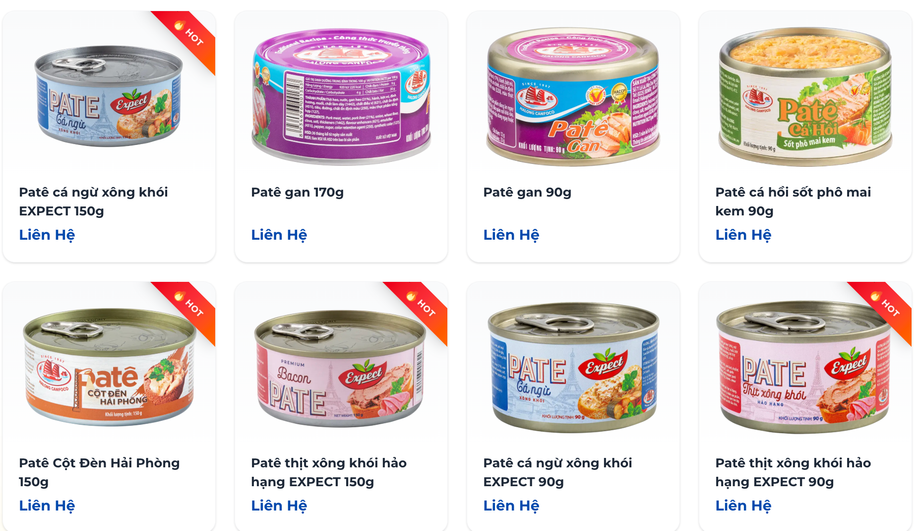
For nearly seven decades, Halong Canfoco has been a household name in Vietnam, its canned meats and pâté products found in kitchens across the country. The company’s iconic “Cot Den” (Lighthouse) brand of pâté has graced breakfast tables and restaurant menus for generations. But this trusted reputation now faces its most serious challenge after authorities uncovered a shocking food safety scandal involving more than 130 metric tons of diseased pork at the company’s facilities. The revelations have sent shockwaves through Vietnam’s food industry, triggered mass product recalls, and raised urgent questions about food safety oversight in one of Southeast Asia’s fastest-growing economies.
- A Legacy Brand Under Siege
- A Legacy Built on Trust, Now Under Question
- The Discovery: A Routine Traffic Stop Reveals a Massive Scandal
- Investigation Intensifies: Arrests and Criminal Proceedings
- Public Health Response: Recalls and Warnings
- Corporate Fallout: Market Impact and Partner Response
- The Company’s Defense: Denials and Explanations
- Broader Implications: Vietnam’s Food Safety Challenge
- The Bottom Line
The scandal came to public attention when Lao Cai Province in northern Vietnam issued an urgent directive on Monday, January 13, urging residents to temporarily stop consuming all pork-based products manufactured by Ha Long Canned Food JSC. The provincial Department of Health warned of potential food safety risks that could pose “a direct threat to public health” if not promptly controlled. Local authorities were instructed to review food businesses, eateries, and street food vendors that might be using Halong Canfoco products, while consumers were advised to seek medical attention if they experienced unusual symptoms after consuming the items.
What began as a routine traffic stop has evolved into one of Vietnam’s most significant food safety investigations in recent memory, revealing alleged practices that contradicted not just food safety regulations but the fundamental trust consumers place in established food brands. As investigations continue to unfold, the scandal has exposed vulnerabilities in supply chain management and raised concerns about how a company with ISO 22000:2018 certification—the highest international food safety standard—could become embroiled in such a crisis.
A Legacy Built on Trust, Now Under Question
Halong Canfoco’s story traces back to 1957 when it was established in Hai Phong under the name “Halong Canned Food Factory.” For decades, the company operated as a state-owned enterprise before transitioning to a joint-stock company structure. Through Vietnam’s economic transformation, Halong Canfoco grew into a pioneer and leading enterprise in the country’s processed food industry. Its ecosystem eventually expanded to include three factories and three offices supporting manufacturing and business activities nationwide.
The company’s portfolio includes a wide range of products beyond its signature pâté: canned pork, fish products, sausages, and spring rolls. According to financial reports, Halong Canfoco developed multiple sales channels including General Trade (GT), Modern Trade (MT), Café, and E-commerce. In recent years, the company expanded its retail presence by opening “Pate Cot Den Bread” shops in Ho Chi Minh City and launching a chain of 10 nem (Vietnamese sausage) stores in Hanoi.
Financially, however, the company faced significant challenges even before the scandal erupted. In 2024, Halong Canfoco reported net revenue of VND 681.8 billion (approximately $26 million), down nearly VND 60 billion from the previous year and significantly below its targets. Pre-tax profit for the year was just VND 3.15 billion, a sharp decline of VND 13.62 billion compared to 2023.
The leadership acknowledged these challenges in their annual report, noting that while demand for canned food surged in the second half of 2024 due to Storm No. 3 (Yagi), management inefficiencies hampered performance.
“However, due to less than optimal management, the company’s business results for 2024 did not meet our revenue and profit targets,” the leadership of Halong Canfoco acknowledged in their report.
This acknowledgment of management inefficiencies would prove prophetic as events unfolded in the following months. The company had set ambitious targets for 2025, aiming for consolidated revenue of nearly VND 703.6 billion with a 230% increase in pre-tax profit. These goals now seem increasingly distant as the company grapples with the fallout from the scandal.
The Discovery: A Routine Traffic Stop Reveals a Massive Scandal
The investigation began on September 8, 2025, when Hai Phong’s Economic Police Division intercepted two trucks with license plates 15C-298.81 and 34C-317.36. The vehicles were carrying a combined 1,274.5 kilograms of pork, with one truck containing 790 kilograms of butchered lean pork and the other carrying 484.5 kilograms of discolored, foul-smelling pork scraps. When questioned, the drivers—identified as Le Ba Doanh and Trinh Ha Viet—could not provide documentation of origin or transport inspection certificates for the meat.
Tests on the seized pork returned positive for African swine fever (ASF), a highly contagious viral disease that affects domestic and wild pigs. While ASF does not affect humans, its presence in food products indicates serious breaches in food safety regulations, as the disease typically affects pigs that are sick, dying, or have died from the illness. The discovery raised immediate red flags about the source of the meat and its intended destination.
Following this initial seizure, investigators traced the pork to Bui Duc Trong, a supplier in Ngo Quyen District who had been purchasing meat from the truck drivers and supplying it to Halong Canfoco. With this information, authorities expanded their investigation to the company’s facilities, where they would make discoveries that would shock the nation.
Police searches of Halong Canfoco’s warehouses revealed a disturbing picture. Four cold storage facilities—labeled 7A, 7B, 7D, and 8H/215 Le Lai—contained approximately 130 metric tons of frozen pork. The meat showed multiple signs of spoilage: it was leaking fluid and emitting foul odors, failing to meet basic food safety and hygiene standards. Laboratory testing confirmed that the stored pork was positive for African swine fever virus.
Processed Products Enter the Equation
Perhaps most concerning was evidence that some of the contaminated meat had already entered the production process. According to police reports, approximately two metric tons of the diseased pork had been processed into canned meat products, specifically pâté. Production records showed that on September 6-7, 2025—just days before the initial police interception—the company had manufactured more than 1.7 metric tons of finished pâté, equivalent to around 14,000 cans, using the contaminated ingredients.
Additional testing revealed other processed products that had been compromised: over 4,000 kilograms of crispy spring rolls and more than 3,000 kilograms of premium spring rolls also tested positive for African swine fever virus. Laboratory analysis uncovered further contamination beyond ASF—more than 13,000 kilograms of frozen pork skin and over 8,000 kilograms of frozen chicken skin were found to contain Salmonella bacteria, a common cause of gastrointestinal illness in humans.
Between September 18-29, authorities collected 260 samples for comprehensive forensic testing. The results were alarming: 65 of 122 samples tested positive for ASF, while eight of 115 microbial tests exceeded permitted limits for Salmonella spp. Notably, none of the plant or seafood-based samples showed contamination, suggesting the problems were isolated to meat products and their handling.
The Supply Chain Web
Investigations traced the origin of the infected pork to suppliers in Hung Yen Province, which borders Hai Phong. According to testimony from Nguyen Thi Lan, a resident of Dong Hung commune in Hung Yen province and a key link in the supply chain, the operation had been active for approximately six months before discovery. Lan admitted she purchased diseased pigs directly from local farms and resold them to major middlemen, though she claimed not to have known the final destination of the pork until news of the warehouse raid surfaced.
The investigation revealed a sophisticated operation designed to evade detection. Suppliers allegedly falsified quarantine documents to bypass mandatory inspections. This allowed diseased pork, which should have been destroyed under Vietnamese law, to enter the legitimate food supply chain. The scale of the operation—running for months and involving over 120 tons of meat—raised serious questions about oversight mechanisms and how such violations could escape detection for so long.
Investigation Intensifies: Arrests and Criminal Proceedings
On January 10, 2026, the investigation reached a critical milestone when police arrested Truong Sy Toan, 57, the company’s chief executive officer. Toan was taken into emergency custody for investigation into the collection and storage of pork infected with African swine fever at the firm’s cold warehouses. Investigators stated that Toan was directly involved in management and operational decisions linked to the handling of pork that failed to meet food safety standards.
The same day, police also detained three employees from the company’s Quality Management Department: Pham Thi Thuy Lan, 46, deputy head of the department; Bui Thi Thoan, 47, responsible for raw material quality inspection; and Lai Thi Thanh Huong, 52, an input materials officer. These individuals were identified as having played crucial roles in evaluating pork quality before it was approved for storage and processing.
The arrests followed four months of intensive investigation. On December 24, 2025, investigators had already issued decisions to prosecute nine suspects for supplying and trading food originating from dead or sick pigs infected with African swine fever. These individuals included Bui Duc Trong, the middleman who supplied the meat to Halong Canfoco, along with eight accomplices. All contaminated meat and related products had been destroyed in November 2025, but the investigation into individual responsibilities continued to expand.
The Investigation Agency of the Hai Phong City Police emphasized that the case was ongoing, with efforts to clarify the responsibilities of individuals and organizations involved. The scope of the investigation suggested that authorities were determined to pursue accountability throughout the supply chain, from initial suppliers to corporate executives responsible for quality control.
Public Health Response: Recalls and Warnings
As the scale of the scandal became apparent, public health authorities across Vietnam mobilized to protect consumers. The Lao Cai Department of Health’s directive was among the most comprehensive responses, instructing local authorities to coordinate with regional medical centers to form interdisciplinary inspection teams. These teams were tasked with reviewing food retailers, packaged food sellers, restaurants, and street food vendors for potential Halong Canfoco products.
Authorities made clear that if related products were found, inspectors must require their recall and prohibit further circulation or use as food ingredients until official conclusions were issued. The directive emphasized the need for strict handling of deliberate violations in accordance with the law, signaling a zero-tolerance approach to food safety breaches.
In Hai Phong, where Halong Canfoco is headquartered, the inter-agency food safety steering committee issued a directive requiring departments and localities to step up coordination, inspection, and supervision of food safety citywide. The city ordered the Department of Agriculture and Environment, the Department of Industry and Trade, and the Department of Health to intensify joint inspections, focusing on slaughterhouses, meat processors, and businesses trading in meat and meat products.
Special attention was directed toward the early detection of food safety risks, particularly products potentially contaminated with the African swine fever virus. With the 2026 Lunar New Year holiday approaching—a peak period for food consumption—inspection teams planned to increase sampling and laboratory testing of meat and meat products to protect consumers’ health. The Hai Phong Department of Industry and Trade also requested that supermarkets and commercial establishments proactively review legal documentation, origin, and quality records of products on sale while complying with any official product suspension or recall notices.
Corporate Fallout: Market Impact and Partner Response
The business repercussions of the scandal were swift and widespread. Major supermarket chains across Vietnam, including GO!, MM Mega Market, WinMart, Lotte Mart, and Saigon Co.op, immediately removed Halong Canfoco products from their shelves. A spokesperson for Central Retail, the owner of the GO! and Tops Market chains, confirmed that display of pork products from Halong Canfoco had been stopped in both chains while they awaited instructions from authorities.
Bach Hoa Xanh, a major convenience store chain, went a step further by applying customer support policies allowing returns and exchanges for any Halong Canfoco products. Kingfood Mart reported removing 100 percent of the company’s products and coordinating with the supplier to return inventory already received. Several e-commerce platforms also removed the company’s products from their listings, though some mini-supermarkets and convenience stores continued to sell the items, apparently unaware of the developing situation or awaiting guidance from distributors.
The impact extended beyond retail shelves to food and beverage chains. The Coffee House suspended sales of its Fujian lotus lychee tea and lychee Americano due to the use of ingredients sourced from Halong Canfoco. Phuc Long Heritage JSC announced it had stopped sourcing lychee ingredients from the company, while Highlands Coffee confirmed it had fully stopped using all ingredients from the firm, including canned lotus seeds and lychees that had previously been used in its popular golden lotus tea and lychee jelly tea.
Consumer reaction has been emotional and immediate. Regular shoppers expressed betrayal by a brand they had trusted for years.
“After reading the news, I was shocked and do not know what kind of meat was used to process the products I have consumed,” said Loan, a regular buyer of Halong Canfoco canned foods in Ho Chi Minh City.
Another resident, Hoa, said she threw away cans of the brand’s pâté she had purchased because she “did not know if they were made from safe ingredients.” Chau of Hanoi discarded four cans of Halong Canfoco pâté, exclaiming that she could not believe “a branded company whose products are sold in reputable supermarkets allowed diseased meat to slip through.”
Financial reports revealed the extent of Halong Canfoco’s business relationships with these major partners. As of June 30, 2025, short-term receivables from Highland Coffee Services JSC Branch exceeded VND 3.06 billion ($117,000), while Wincommerce had receivables of more than VND 7.07 billion ($270,000). The sudden suspension of these relationships represented a significant disruption to the company’s revenue stream and distribution network.
The Company’s Defense: Denials and Explanations
Throughout the unfolding scandal, Halong Canfoco maintained a consistent position. In statements to the Hanoi Stock Exchange, the company called the situation a “serious incident in the supply chain” that had “an impact on its reputation and short-term production.” However, officials insisted that the batch of diseased meat had not been used or supplied to the market.
The company clarified that it was only a recipient of raw materials, relying on legally provided documents from sellers. According to Halong Canfoco, the nine suspects charged by police were not its employees but external suppliers. The company stated it had purchased the meat after checking seemingly legitimate documents provided by these sellers, a claim that investigators acknowledged by noting the company’s “passive role” in the transaction chain.
Halong Canfoco emphasized that its products currently circulating in the market fully meet food safety regulations and hold international certifications. The company noted that its factory holds ISO 22000:2018 certification, a comprehensive food safety management system that incorporates Hazard Analysis and Critical Control Points (HACCP) principles, traceability, and continuous improvement.
“The use of Halong Canfoco products by F&B chains cannot be described as careless,” said Do Duy Thanh, CEO of consultancy FnB Director and founder of Horeca Business School, pointing to the supplier’s nearly 70-year history, broad market presence, and compliance with industry requirements.
However, Thanh acknowledged that even high standards could not completely rule out risks, especially at large businesses. This perspective highlights how even well-established companies with international certifications can face challenges in overseeing complex supply chains.
Following the incident, Halong Canfoco announced it had reviewed its input control process and supplier selection to strengthen risk prevention. The company’s board of directors suspended operations at the Hai Phong canned food factory for 14 days, appointing Cao Nhat Huy, deputy production director, to oversee operations during the suspension. Despite these measures, the company maintained that production and business activities were continuing normally without significant disruption.
Broader Implications: Vietnam’s Food Safety Challenge
The Halong Canfoco scandal highlights broader challenges in Vietnam’s food safety system as the country continues its rapid economic development. With a growing population and increasing urbanization, the demand for processed and convenience foods has expanded dramatically, creating opportunities for both legitimate businesses and unscrupulous operators seeking to cut corners.
African swine fever has been a recurring concern for Vietnam’s pork industry since its first detection in the country in 2019. The disease has devastated pig populations across Asia, causing significant economic losses for farmers. While ASF does not affect humans, the presence of ASF-positive pork in food products indicates serious failures in the food safety system, as the virus typically affects pigs that are diseased and should not enter the food chain under any circumstances.
The fact that Halong Canfoco held international food safety certifications yet allegedly became involved in such a scandal raises questions about the effectiveness of certification systems in preventing fraud and ensuring compliance. Certification indicates that a company has established processes and procedures for food safety, but it does not guarantee that all employees follow these processes perfectly or that external suppliers always provide honest documentation.
The incident also underscores the complexity of modern food supply chains, where a single brand may rely on dozens of suppliers across different regions. Ensuring food safety in such networks requires not just strong internal controls but also robust verification mechanisms for external partners. The scandal suggests that even established companies may struggle to maintain adequate oversight of their supply chains, particularly when facing financial pressures or management inefficiencies.
Consumer trust, once damaged, can be difficult to restore. The response from Vietnamese consumers has been swift, with many expressing shock and fear about products they had previously trusted. The country’s food industry now faces the challenge of not just addressing this specific case but implementing systemic reforms to prevent similar incidents in the future.
The Bottom Line
- Halong Canfoco, a nearly 70-year-old Vietnamese food processing company, faces a major scandal after authorities discovered over 130 metric tons of pork infected with African swine fever at its facilities.
- Approximately 2 metric tons of the contaminated pork had been processed into pâté and other canned products, triggering widespread recalls and health warnings.
- Police arrested CEO Truong Sy Toan and three quality control employees, while nine suspects were charged with violations of food safety regulations for supplying the diseased meat.
- Major supermarket chains including GO!, MM Mega Market, WinMart, and Saigon Co.op removed Halong Canfoco products from their shelves, while food chains like The Coffee House, Highlands Coffee, and Phuc Long suspended use of ingredients sourced from the company.
- Halong Canfoco maintains that it was a passive recipient of raw materials relying on falsified documentation and that contaminated products did not reach the market, though investigators found evidence that some processed goods had been manufactured.
- The company, which held ISO 22000:2018 food safety certification, faces questions about how such violations could occur despite international standards.
- Halong Canfoco suspended production at its Hai Phong factory for 14 days following the arrests, while local authorities across Vietnam increased inspections ahead of the Lunar New Year holiday.