A Controversial Infrastructure Plan
Taiwan’s Ministry of Transportation and Communications (MOTC) is standing firm on its plan to extend the high-speed rail (HSR) network to Yilan County, despite a wave of criticism from former senior officials and transportation unions. The project, which carries a price tag exceeding NT$350 billion, has sparked a heated debate over infrastructure priorities, financial responsibility, and the best way to connect the capital with the eastern coast. While the government argues the extension is necessary for future capacity and economic integration, opponents contend it is an extravagant solution to a problem that could be solved more cheaply.
- A Controversial Infrastructure Plan
- Project Specifications and Scope
- Historical Context and Origins
- Government Rationale and Strategic Benefits
- Criticism from Former Officials
- Labor Union Concerns and Financial Risks
- Environmental Conditions and Land Acquisition
- Operational Future and Technological Integration
- The Path Forward
- Key Points
Project Specifications and Scope
The proposed extension represents a massive engineering endeavor designed to reshape transportation in northern Taiwan. The plans outline a 60.6-kilometer corridor that would connect the HSR Nangang Station in Taipei to Yilan County. The route would pass through New Taipei City’s Xizhi, Pingxi, Shuangxi, and Gongliao districts before arriving in Yilan’s Toucheng Township. Of this total distance, 59.6 kilometers involve entirely new construction. The project includes a new station located southeast of the Yilan County government complex, along with a maintenance depot situated further south. If the project receives final approval, authorities expect the construction phase to last approximately 11 years. The Railway Bureau estimates the total cost at NT$352.18 billion, a figure that already factors in inflation and projected increases in construction expenses.
Historical Context and Origins
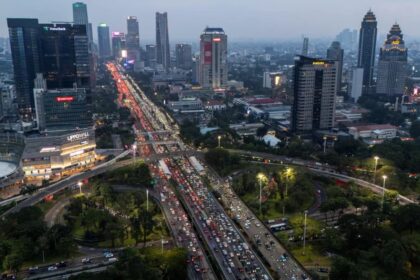
The push to improve rail connectivity to Yilan is not a new development. For years, residents and travelers have faced severe congestion on highways leading to the east coast, particularly during weekends and holidays. As far back as 2019, the MOTC raised the proposal to extend the HSR northward as an alternative to the stalled Taipei-Yilan Line project. That direct rail project had been gridlocked for years due to environmental concerns surrounding the Feitsui Reservoir watershed. The government posited that a high-speed extension, while potentially more expensive, could bypass the sensitive reservoir area and compensate for the route’s length with superior speed. However, the HSR Corporation initially noted that its Build-Operate-Transfer (BOT) contract only covered the route between Taipei and Kaohsiung, indicating the complexity of expanding the system’s mandate.
Government Rationale and Strategic Benefits
In defending the current HSR plan, the Railway Bureau asserts that it offers the best balance of speed, capacity, and environmental protection. The bureau states that both the HSR extension and a direct TR option were evaluated rigorously before the HSR plan was submitted for Cabinet review. The direct rail option faced significant hurdles. The original alignment would have cut through the Feitsui Reservoir catchment area, drawing fierce opposition from environmental groups. Rerouting this direct line along the northeastern coast was deemed unviable because it would offer minimal time savings and would require the demolition of numerous residential buildings.
In contrast, the HSR extension would largely run underground. Officials project that the HSR line would cut travel time between Taipei and Yilan from 90 minutes to just 28 minutes. More importantly, it would increase total rail capacity to more than three times current levels, addressing long-term demand rather than just short-term speed. Yang Cheng-chun, Deputy Director-General of the Railway Bureau, emphasized that Taiwan High-Speed Rail and Taiwan Railway Corp systems are complementary, with the HSR extension enabling same-day commuting between Taipei and Yilan County.
Criticism from Former Officials
Despite these justifications, the project has formidable detractors within the government’s own ranks. Former Minister without Portfolio Chang Ching-sen and former Transportation Minister Ho Chen Tan have publicly called for the project to be halted. Chang criticized the logic of investing roughly NT$400 billion in high-speed infrastructure for a relatively short distance. He argued that since Yilan is only 40 to 50 kilometers from Taipei by conventional rail measures, the expenditure is unjustifiable.
Ho Chen Tan has long advocated for the TR direct rail project, suggesting that the HSR extension is not cost-effective and could damage the financial sustainability of the existing conventional rail network. He warned that the project may never break even, potentially leaving future generations with debt. Their criticism highlights a fundamental disagreement over whether the solution requires high-speed technology or an optimized conventional network.
Labor Union Concerns and Financial Risks
The debate extends into the labor sector, where the Taiwan Railway Union and civil society groups have voiced strong objections. Union representatives argue that the HSR extension poses an existential threat to Taiwan Railway Corp (TRC). They warn that the high-speed line, with its superior speed, would siphon off passengers, leading to an estimated annual revenue loss of NT$800 million for TRC. Over 30 years, this shortfall could reach NT$58 billion, jeopardizing the corporation’s financial health and job security for railway workers.
Taiwan Railway Union secretary-general Chu Chih-yu stated, “If the HSR line is approved, the TRC could lose up to NT$800 million, adding that losses over 30 years could top NT$58 billion.”
Critics also point out the logistical reality for passengers. While the HSR is fast, travelers would still need to transfer to local trains or buses upon reaching Yilan to reach specific destinations. Union executive director Wu Shih-chao argued that because HSR passengers would still need to transfer, it would not actually be a faster option for most. He noted that the HSR would only be 20 minutes faster than a new direct rail line, yet cost significantly more.
Environmental Conditions and Land Acquisition
The project has navigated a complex regulatory landscape to reach its current stage. Last year, it passed a critical environmental impact assessment, though not without strict conditions. The Ministry of Environment’s evaluation committee granted approval on the condition that the Railway Bureau refine its approach to land acquisition. The committee required that the bureau secure land use rights for stations and surrounding commercial and residential zones through expropriation and formal zoning. This directive aims to prevent the haphazard acquisition of land that could disrupt Yilan County’s urban development plans.
Furthermore, the committee mandated a more detailed plan for land acquisition and mechanisms to evaluate contractor performance. Some committee members also suggested the bureau clarify mechanisms for evaluating the performance of operators and contractors, and conduct a financial study on Taiwan Railway Corp. In a nod to environmental rigor, the committee stipulated that trees planted as part of the project’s greening efforts would not count toward carbon credits, preventing the double counting of environmental benefits.
Operational Future and Technological Integration
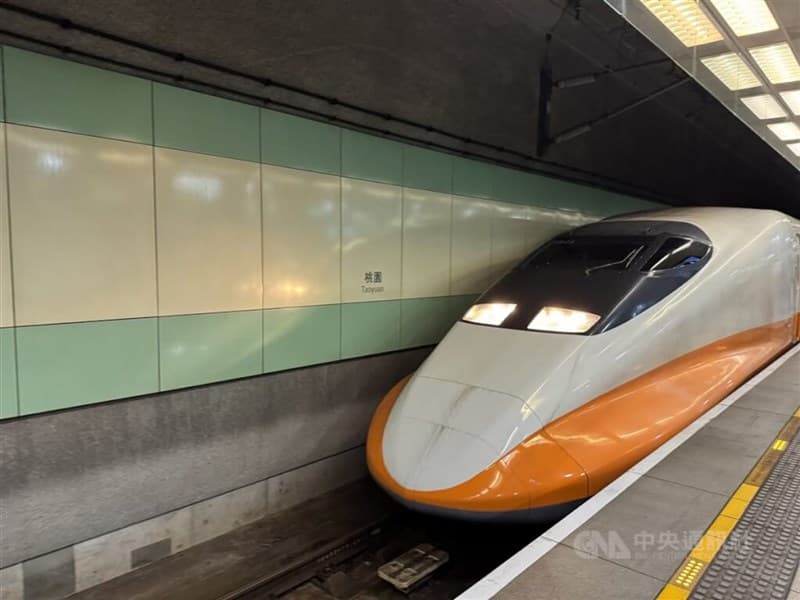
Looking ahead, the integration of the Yilan extension into the broader network involves significant technological upgrades. Taiwan High-Speed Rail Corp, which is expected to manage the new line rather than a separate entity, is preparing to introduce next-generation trains. The N700ST model, based on Japan’s N700S Shinkansen, is slated to begin arriving in Taiwan next year and enter service in 2027. These trains will feature a bright white design with orange and black accents and are designed to offer increased capacity and comfort.
The introduction of these trains coincides with the government’s vision of creating a complementary system where HSR handles long-distance, high-volume travel while TRC focuses on regional accessibility. The bureau continues to collaborate with Taiwan Railway Corp on other projects to electrify and lay a second track for the Hualien-Taitung line and improve the South Link Line in southern Taiwan. This holistic view of infrastructure suggests the government views the Yilan extension as one piece of a larger puzzle in modernizing the island’s transport network.
The Path Forward
As the proposal moves to the Executive Yuan for final review, the government faces a difficult decision. The ministry maintains that the project is a major national initiative essential for future development and that public opinions would be taken into consideration. However, the chorus of opposition from experienced policymakers and labor unions underscores the risks involved. The coming months will determine whether the government proceeds with the high-speed extension or pivots to support the direct rail option favored by critics. The outcome will shape transportation in eastern Taiwan for decades to come.
Key Points
- The MOTC proposes a 60.6-kilometer HSR extension from Taipei Nangang to Yilan Toucheng.
- Estimated cost is NT$352.18 billion with an 11-year construction timeline.
- Travel time would reduce from 90 minutes to roughly 28 minutes.
- Critics argue the cost is too high for the 50-kilometer distance and favor a direct rail line.
- Taiwan Railway Union warns of NT$800 million annual revenue loss for conventional rail services.
- The project passed an environmental impact assessment with conditions on land acquisition.
- Next-generation N700ST trains are expected to enter service in 2027.