A New Front in the Semiconductor Wars
China has launched an anti-dumping probe into a key chipmaking material from Japan, marking a significant escalation in the ongoing trade dispute between Asia’s two largest economies. The investigation focuses on dichlorosilane, a chemical essential for producing the thin films used in logic, memory, and analog chips. This move comes shortly after Tokyo officials formally protested Beijing’s imposition of new, wide-ranging export controls.
- A New Front in the Semiconductor Wars
- The Diplomatic Fallout Over Taiwan
- The Shadow of the 2010 Rare Earth Embargo
- The Mechanics of Dual-Use Export Controls
- Economic Vulnerabilities and Supply Chain Risks
- The Rare Earth Bottleneck
- A Shift in Public Opinion
- The Broader Geopolitical Context
- What Comes Next?
- The Bottom Line
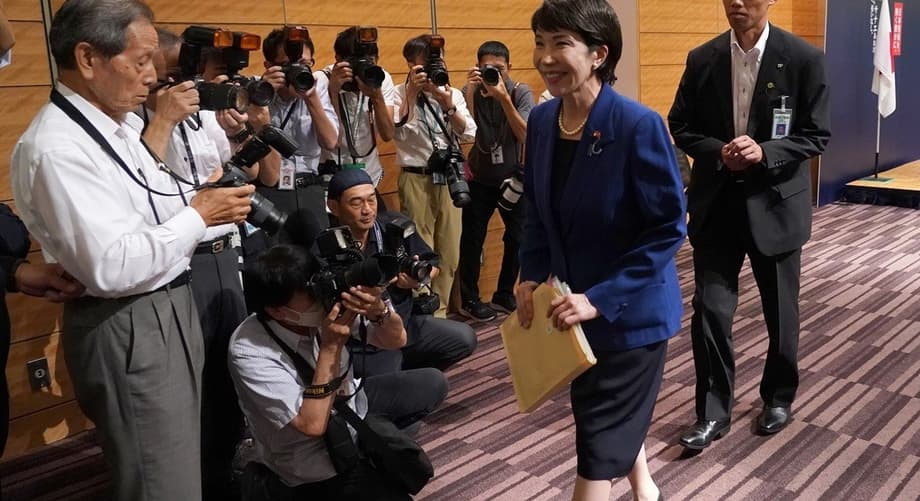
According to a statement from China’s Ministry of Commerce, the investigation is expected to be completed within a year, though it has the potential to extend by an additional six months. This trade action is not occurring in a vacuum. It represents the latest chapter in a diplomatic standoff that has been simmering since early November, triggered by controversial remarks from Japanese Prime Minister Sanae Takaichi regarding the status of Taiwan.
The timing of these measures is particularly telling. Just a day before the probe was announced, Beijing revealed new export controls on items destined for Japan that possess potential military applications. These developments have already sent ripples through financial markets, dragging down shares of major Japanese automakers while simultaneously boosting stocks associated with rare earth production.
While China has stated that its recent dual-use export controls specifically target military entities, the ambiguity of the regulations has created a climate of uncertainty for businesses. Japanese firms are left scrambling to understand the full scope of the restrictions, particularly regarding critical raw materials where China holds a dominant market position.
The Diplomatic Fallout Over Taiwan
At the heart of this economic conflict lies a profound geopolitical disagreement concerning Taiwan. In early November, Prime Minister Sanae Takaichi suggested that Tokyo could deploy its military if China were to use force to seize the self-governed island. This statement represented a departure from Japan’s traditional posture of strategic ambiguity and drew an immediate, angry response from Beijing.
Chinese officials demanded that Takaichi withdraw her remarks, characterizing them as a violation of the One-China principle. The Prime Minister has refused to back down, maintaining that her comments reflect Japan’s unwavering position on regional security. This refusal has resulted in a steady drumbeat of retaliation from China, ranging from diplomatic protests at the United Nations to stepped-up military maneuvers in the region.
In announcing the export controls, a spokesperson for China’s Ministry of Commerce explicitly linked the economic measures to the diplomatic row.
“Japan’s leader recently made erroneous remarks on Taiwan, hinting at the possibility of military intervention in the Taiwan Strait,” the spokesperson said. “Those comments were of malicious nature with profoundly detrimental consequences.”
This rhetoric underscores the high stakes involved. For Beijing, the issue of Taiwan is a core interest and a red line that cannot be crossed without consequence. For Tokyo, the security of Taiwan is inextricably linked to the safety of its own territory and the stability of regional shipping lanes upon which the Japanese economy depends.
China’s military newspaper, the People’s Liberation Army Daily, further reinforced this hardline stance in a commentary. The publication argued that the move safeguards national security and helps curb what it described as a trend of military buildup in the Asia-Pacific region. This framing suggests that Beijing views its economic pressure not merely as retaliation, but as a legitimate tool for maintaining regional stability.
Despite the rising tension, the United States has offered limited public commentary on the specific standoff. In a recent phone call, officials from Japan and the U.S. exchanged views on the regional situation and reaffirmed their commitment to close coordination. However, many analysts in Tokyo are watching closely to see if Washington will offer more tangible support should the dispute escalate further.
The Shadow of the 2010 Rare Earth Embargo
To understand the gravity of the current situation, one must look back to 2010. During a previous territorial dispute over the Senkaku/Diaoyu Islands, China effectively halted rare earth exports to Japan for two months. Though never officially announced as a state policy at the time, the embargo wreaked havoc across Japan’s manufacturing industry.
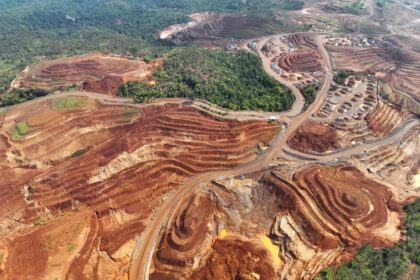
Rare earth elements are a group of 17 metals that possess unique magnetic, luminescent, and electrochemical properties. Despite their name, they are relatively abundant in the earth’s crust but are difficult and expensive to mine and refine. They are essential components in a vast array of high-tech products, including smartphone batteries, electric vehicle motors, wind turbines, and precision-guided munitions.
The 2010 crisis served as a wake-up call for Japanese industry and government. Before the embargo, Japan relied on China for upwards of 90 percent of its rare earth imports. The sudden cutoff exposed the vulnerability of having concentrated supply chains in the hands of a geopolitical rival. It forced a reevaluation of national security strategy that went far beyond traditional military hardware.
In response, Japan embarked on a costly and long-term strategy to diversify its supply sources. The government provided substantial financial support to Japanese conglomerates to secure long-term contracts with non-Chinese miners. A notable success story was the partnership between the Japanese trading house Sojitz, the state-owned Jogmec, and the Australian miner Lynas.
This deal involved hundreds of millions of dollars in loans and equity investment to help Lynas build a processing facility in Malaysia. Today, rare earths are mined in Australia, shipped to Malaysia for refining, and then sent to Japan for manufacturing. This complex chain represents a significant hedge against political risk, but it came at a high price. Non-Chinese processing operations face strict environmental regulations and higher costs, making it difficult to compete with China’s low-cost, loosely regulated industry.
Despite these efforts, Japan remains heavily exposed to Chinese leverage. Estimates suggest that Japan still relies on China for approximately 60 to 70 percent of its rare earth imports as of 2024. Furthermore, China maintains a near-total monopoly on the processing of heavy rare earths, such as dysprosium and terbium, which are particularly critical for high-performance magnets used in defense applications and electric vehicles.
The Mechanics of Dual-Use Export Controls
The latest trade restrictions center on the concept of “dual-use” items. These are goods, software, or technologies that have valid civilian applications but can also be used for military purposes. China’s export control list features over 800 such items, encompassing a wide range of chemicals, electronics, sensors, and advanced manufacturing technologies.
Under the new regulations, exports of these dual-use items to Japan are effectively banned if they are intended for military use or if they could enhance Japan’s military capabilities. While Chinese commerce ministry spokesman He Yadong has sought to reassure businesses that “civilian users will not be affected,” the practical implementation of these rules is fraught with complexity.
In the semiconductor industry, for example, the line between civilian and military use is often blurry. Advanced chips produced for commercial game consoles or servers can potentially be repurposed for military radar or missile guidance systems. Consequently, exporters often face a burden of proof to demonstrate that their products will not be diverted to military end-users.
The ambiguity of China’s action may be intentional. By triggering concern about the ongoing availability of critical industrial inputs, Beijing puts immediate pressure on the Japanese government without explicitly triggering a full-scale trade war that could damage its own economy.
Analysts note that this strategy allows China to apply calibrated pressure. If Japan acquiesces to Beijing’s demands on Taiwan, the flow of goods can continue. If not, the regulatory hurdles can be tightened further, potentially choking off critical supplies.
Japan’s Chief Cabinet Secretary Minoru Kihara has criticized the measures as unacceptable.
“The measures target only our country and deviate significantly from international practice,” Kihara told reporters. “We intend to carefully examine and analyse the details and consider necessary responses.”
The economic impact of these controls could be severe. Broad estimates indicate that dual-use items account for a significant portion of the trade between the two nations. According to Takahide Kiuchi, an executive economist at the Nomura Research Institute, dual-use goods imported from China total roughly 42 percent of Japan’s total goods imports from China.
Economic Vulnerabilities and Supply Chain Risks
The potential economic fallout from this dispute extends far beyond the specific companies directly targeted by export controls. Nomura’s Kiuchi has estimated that if rare earth export restrictions were to last for just three months, the resulting economic loss for Japan would amount to about 660 billion yen, cutting the country’s economic output by 0.11 percent.
These estimates highlight the interconnected nature of modern manufacturing. A disruption in the supply of a single obscure chemical can halt production lines for automobiles, consumer electronics, and industrial machinery. The automotive sector, a pillar of the Japanese economy, is particularly sensitive to these fluctuations.
Following the announcement of the export controls, shares of Toyota Motor Corp fell as much as 3 percent, the largest drop since early November. Conversely, stocks of rare-earth-related companies, such as Toyo Engineering Corp, surged as investors anticipated potential shortages and a shift toward alternative sourcing.
Kohei Onishi, a senior investment strategist at Mitsubishi UFJ Morgan Stanley, pointed to the precedent of recent US-China tensions.
“Supply chain disruptions like this, as seen in the US-China tensions of 2021-22, remind manufacturers of the need to diversify away from China,” Onishi said.
This realization is driving a fundamental shift in corporate strategy. Businesses are increasingly willing to accept higher costs in exchange for supply chain resilience. This trend, often referred to as “de-risking,” involves moving production out of geopolitically sensitive areas, holding larger inventories of critical components, and investing in recycling technologies to recover rare earths from old electronics.
However, building alternative supply chains is a marathon, not a sprint. Developing new mines, building refineries, and establishing certification processes can take a decade or more. In the meantime, economies like Japan remain vulnerable to the whims of their largest trading partner.
The Rare Earth Bottleneck
While Japan has made progress in diversifying its sources of light rare earths, such as neodymium and praseodymium, the situation regarding heavy rare earths remains precarious. China currently accounts for over 90 percent of the global processing capacity for heavy rare earths.
The United States faces a similar vulnerability. Until recently, China accounted for 99 percent of global heavy rare earths processing. A facility in Vietnam that provided some separation capacity has been shut down due to a tax dispute, effectively cementing China’s monopoly position.
Heavy rare earths are indispensable for cutting-edge defense technologies. For instance, an F-35 fighter jet contains over 900 pounds of rare earth elements, while a Virginia-class submarine uses approximately 9,200 pounds. These metals are used in everything from the permanent magnets in electric motors to the phosphors in radar displays.
Recognizing this strategic weakness, the United States has begun investing heavily in domestic capabilities. The Department of Defense has committed hundreds of millions of dollars to companies like MP Materials and Lynas Rare Earths to build mine-to-magnet supply chains on American soil.
Yet, even with these investments, the gap remains vast. MP Materials projects that it will produce only 1,000 tons of neodymium-boron-iron magnets by the end of 2025. In contrast, China produced an estimated 138,000 tons of these magnets as far back as 2018. Closing this gap will require sustained investment and political will over many years.
The current dispute between China and Japan serves as a stark reminder of this reality. It highlights the fact that while trade is often viewed through the lens of efficiency and comparative advantage, it is ultimately a tool of state power. Control over critical minerals translates directly into leverage in international relations.
A Shift in Public Opinion
Interestingly, the economic coercion from Beijing may be having unintended political consequences inside Japan. Far from pressuring Prime Minister Takaichi to moderate her stance, the retaliation appears to be bolstering her domestic popularity.
A recent poll conducted by the Kyodo news agency showed that 69.9 percent of the public approved of Takaichi’s administration, an increase of 5.5 percentage points since she took office. Furthermore, 48.8 percent of respondents supported Japan’s right to exercise collective self-defense if Taiwan is attacked, compared with 44.2 percent who did not.
This data suggests a hardening of public opinion. The Japanese electorate, which has long been wary of military entanglement, seems increasingly willing to support a assertive stance against Chinese bullying. This shift complicates Beijing’s calculus, as it suggests that economic pressure may strengthen the very government it seeks to influence.
Subramania Bhatt, chief executive of market researcher China Trading Desk, noted that Beijing has used various forms of pressure, from fisheries to pop culture.
“All these moves are like sharp pinpricks rather than a knockout blow,” Bhatt said.
China has reinstated a ban on Japanese seafood imports, canceled concerts by Japanese artists, and postponed the release of Japanese films. Furthermore, the government has advised its citizens against traveling to Japan, citing safety concerns. Estimates suggest that this self-imposed tourist restriction could cost Japan between 500 million and 1.2 billion dollars in lost revenue by the end of the year.
While painful for specific sectors, such as the tourism industry and hospitality businesses, these measures have not caused the widespread economic panic that might force a policy reversal. Instead, they seem to be reinforcing a narrative of Chinese aggression that plays into Takaichi’s hands.
However, experts warn that there are limits to this resilience. The short-term boost in approval ratings does not necessarily translate into long-term policy success. Raising defense spending to counter the Chinese threat will require difficult budgetary choices, either in the form of spending cuts to other programs or tax increases. These are politically risky moves that could erode public support over time.
The Broader Geopolitical Context
This bilateral dispute cannot be viewed in isolation. It is taking place against the backdrop of a broader technological cold war between the United States and China. The semiconductor industry has become the primary battleground in this conflict, with both sides seeking to restrict the other’s access to critical technologies.
The United States has implemented strict export controls on advanced semiconductor manufacturing equipment destined for China, aiming to slow Beijing’s technological and military advancement. In response, China has sought to weaponize its dominance in downstream materials processing, including rare earths and other critical minerals.
Japan is caught in the middle of this struggle. As a key ally of the United States and a technological powerhouse in its own right, Tokyo is expected to align with Washington’s restrictions. However, doing so invites retaliation from its largest trading partner. This dilemma is forcing Japan to walk a diplomatic tightrope.
The recent announcement that Japan and the United States have signed an agreement to extract rare earths in the Pacific is a direct response to this pressure. The agreement aims to reduce reliance on Chinese supplies and create a more resilient supply chain for democratic nations.
William Pesek, a contributor at Yardeni Research, argued that China’s export threats might ultimately backfire by compelling nations to lessen their dependency.
“Export threats are a hard bell to unring because they become a trust issue,” Pesek said.
Once a country has been cut off from a critical resource, it rarely returns to a state of dependence. The memory of the disruption lingers, driving policymakers and corporate executives to prioritize security over cost. This dynamic suggests that China’s current strategy may achieve short-term political goals but at the cost of long-term market share and influence.
What Comes Next?
As the investigation into Japanese dichlorosilane exports proceeds, the world will be watching closely to see how China implements its dual-use export controls. Will the restrictions remain narrowly targeted at military entities, or will they expand to encompass broader swathes of the Japanese industrial base?
There are indications that China may be considering tighter reviews for export licenses regarding medium and heavy rare earths. Such a move would be a significant escalation, given the Japanese economy’s dependence on these materials for its automotive and electronics sectors.
For its part, Japan is likely to continue its diplomatic protests while quietly accelerating its efforts to diversify away from Chinese dependence. This includes subsidizing companies to move supply chains to other countries in Southeast Asia and investing in research and development for alternative materials.
The international community also has a role to play. The World Trade Organization (WTO) provides a forum for resolving trade disputes, though its effectiveness against大国 strategic maneuvering is often limited. In 2012, the United States, Japan, and the EU successfully challenged China’s rare earth export restrictions at the WTO. A similar case could be mounted if China’s current actions are deemed to violate international trade rules.
Ultimately, the resolution of this dispute will likely depend on the broader relationship between China and the United States. If Washington and Beijing can reach a truce on technology and trade, the pressure on Japan may ease. However, if the rivalry continues to intensify, Japan may face a future where it must choose between its economic security and its national security.
The Bottom Line
- China has initiated an anti-dumping probe into Japanese dichlorosilane, a key material for semiconductor production.
- The dispute was triggered by Prime Minister Sanae Takaichi’s comments suggesting Japan could militarily support Taiwan.
- China has banned exports of dual-use items to Japan that could enhance its military capabilities.
- Japan relies on China for roughly 60 to 70 percent of its rare earth imports, a vulnerability first exposed in 2010.
- Economic estimates suggest a three-month rare earth restriction could cost Japan 660 billion yen.
- Japanese automakers and tech firms face immediate risks, while rare earth mining stocks have risen.
- The United States and Japan have signed an agreement to extract rare earths in the Pacific to reduce Chinese reliance.
- Takaichi’s approval ratings have risen amid the dispute, with nearly half the public supporting a military stance on Taiwan.