A Faster Response to Power Failures
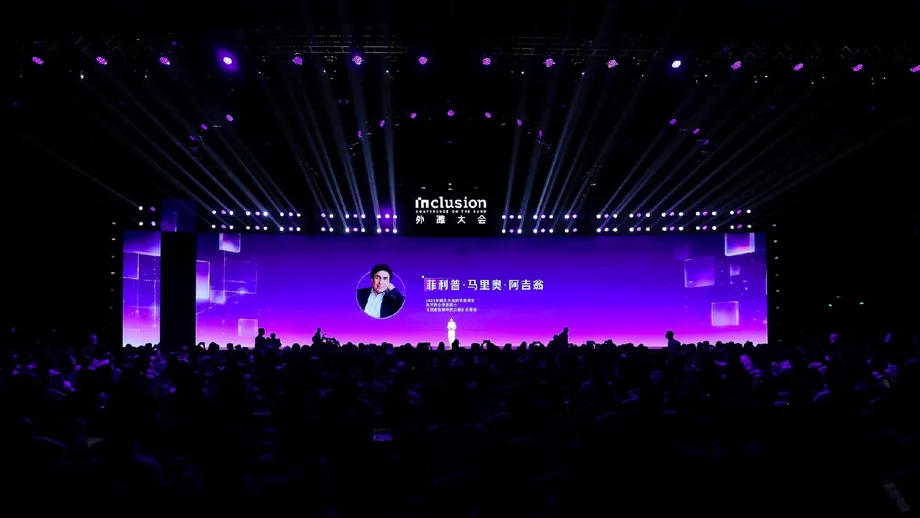
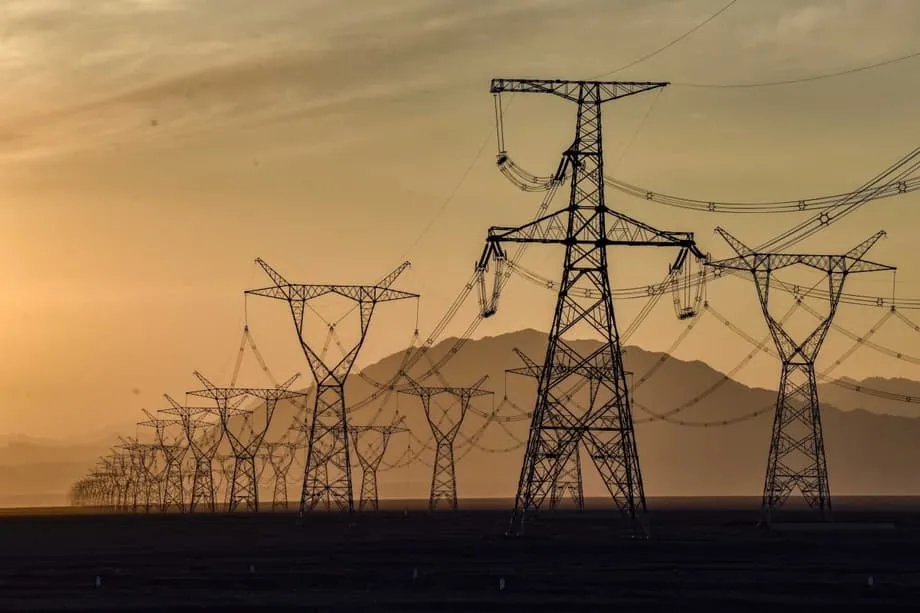
China has developed power grid technology that can identify faults, isolate damaged sections and restore electricity through healthy lines within 100 milliseconds, or one tenth of a second. Developed through a decade of collaboration, the system is already used in China's electricity, steel and rail transport sectors and has been exported to 12 countries.
Contents
- A Faster Response to Power Failures
- How Recovery Within 0.1 Seconds Works
- A Decade of Development
- Why Renewable Energy Changes Grid Operations
- Blackouts Expose Different Weaknesses
- The Financial Cost of Losing Electricity
- What Disaster Records Show
- Wenzhou Combines Stronger Equipment With Better Planning
- Cuba's Crisis Shows the Need for Generation
- Electricity Technology Becomes a Strategic Issue
- What a More Resilient Grid Requires
- The Bottom Line
The China Electric Power Research Institute, an affiliate of the State Grid Corporation of China, developed the advanced protection system with universities, electricity operators and automation companies. Its ability to detect faults involving currents at the hundred milliampere level addresses a difficult problem in operating large electricity networks: finding small electrical faults before they cause wider disruption.
The achievement comes as electricity systems face growing demand, more wind and solar generation, aging equipment and extreme weather. Hospitals, financial markets, smartphones and electric vehicles all depend on reliable electricity. A failure can interrupt essential services and cause losses extending far beyond the electricity industry.
Rapid fault recovery and rebuilding a collapsed electricity system involve different tasks. The Chinese technology isolates a problem and redirects electricity where healthy supply routes remain available. Restoring a network after power stations shut down, cables are destroyed or generation becomes insufficient can still require hours or days.
As of January 8, 2026, the development points to a faster response to certain failures within a broader effort to make electricity networks more resilient. China is combining automated protection with stronger infrastructure, improved maintenance and emergency planning, while countries elsewhere confront costly outages of their own.
How Recovery Within 0.1 Seconds Works
The protection system begins by locating a fault, such as damage associated with a tree falling on a line or a disturbance arising during a sudden increase in demand. It then disconnects the affected section so the problem has less opportunity to spread.
Healthy lines provide an alternative route for electricity. By coordinating fault detection, isolation and switching, the system can restore supply within the reported 100 millisecond window. The process resembles traffic being redirected around a blocked road, with electrical controls making the decisions automatically.
Traditional restoration can involve manual intervention and restarting power plants in sequence. Those operations can leave customers without electricity for hours or days. Automated switching addresses a narrower task at much greater speed: keeping a local fault from interrupting a larger area when other routes can carry the electricity.
The system's sensitivity is another central feature. Detecting faults at the hundred milliampere level means identifying problems involving very small currents. Finding those signals within a large operating grid allows protection equipment to respond precisely.
A human blink takes roughly 300 to 400 milliseconds, compared with the system's reported 100 milliseconds. Although the technology has been described as acting ten times faster than a blink, those stated figures give a comparison of approximately three to four times faster.
A Decade of Development
Researchers from Tianjin and Shandong universities worked alongside State Grid Beijing Electric Power and automation companies including NR Electric and Beijing Sifang Automation. Their collaboration extended over a decade, linking research with equipment development and electricity network operations.
An earlier artificial intelligence system deployed in 2022 could resume power supply in three seconds. The newer recovery window of 0.1 seconds is one thirtieth of that duration, illustrating how far the reported response time has fallen.
Wind and solar generation helped drive the demand for quicker controls. Electricity increasingly enters networks from a wider range of locations, and operators need to balance changing supplies while directing power through different routes.
A statement describing the achievement presented it as support for electricity reliability and equipment manufacturing:
As a key technological support for the safe operation of modern power systems, this achievement not only ensures the reliability of power supply in the capital and the country, but also promotes the intelligent manufacturing upgrade of power equipment.
Power generation, steel production and rail transport are among the sectors already using the technology in China. Even a brief interruption can disrupt production or create safety problems in these settings, making response speed valuable beyond ordinary household convenience.
Why Renewable Energy Changes Grid Operations
Coal, gas and nuclear stations have traditionally supplied large, centralized streams of electricity that operators can control. Wind farms and solar plants add generation whose output changes with weather and daylight. Networks must accommodate those changes while continuing to match electricity supply with demand.
Frequency and voltage are two measurements operators watch closely. Frequency reflects the electrical rhythm of the network, while voltage helps determine how electricity moves through it. Rapid changes in generation can disturb both.
Power stations automatically disconnect when frequency falls below certain thresholds to protect their equipment. If several stations disconnect in succession, the loss of one source can trigger further losses, turning an initial disturbance into a much larger blackout.
The Chinese system is designed to detect small disturbances and act before they spread, using fast protection and alternative supply routes. Integrating renewable generation also requires sufficient electricity supply, suitable network capacity and controls that can respond to changing operating conditions.
China's scale makes that task especially demanding. The country was the world's largest electricity consumer, accounting for 29% of global consumption in 2020. Its electricity use in 2025 was projected to exceed 10 trillion kilowatt-hours, more than the combined consumption of the European Union, Russia, Japan and India.
The size and complexity of China's domestic network provide a large testing ground for grid technology. Experience from managing that system could inform electricity standards and operating practices elsewhere as other countries modernize their networks.
Blackouts Expose Different Weaknesses
Spain and Portugal experienced a major power cut in April 2025 that affected millions of people. Trains stopped, traffic lights failed and communication networks went down in cities including Madrid, Barcelona and Lisbon.
Spanish grid operator Red Eléctrica described the outage in these words:
exceptional and extraordinary
A strong oscillation in European grid frequency was identified as the cause in the account of the event. Bringing the network back to full capacity took several hours. Georg Zachmann, a senior fellow at the Brussels think tank Bruegel, described the sequence affecting generation:
cascading disconnections of power plants
Connections between national grids allow countries to exchange clean electricity and provide backup. Those same connections can also carry disturbances across borders, making coordination between operators essential.
Berlin faced another type of failure when a suspected far left attack on high voltage cables left thousands of households without electricity in freezing temperatures for four days. The damaged infrastructure required extensive physical repairs.
Automated controls can isolate damaged equipment and use alternative routes where those routes exist. Repair crews, replacement components and working generation remain central when an outage involves destroyed cables or a widespread collapse.
The events and development milestones span several years:
- 2006: Typhoon Saomai caused blackouts in more than 2,700 villages, with full restoration taking 20 days.
- 2020: After resilience improvements in Wenzhou, the distribution network returned to operation within 45 hours following Typhoon Hagupit.
- 2022: An earlier Chinese artificial intelligence system could resume electricity supply in three seconds.
- Late 2024: China donated almost 70 tons of generator parts and accessories to Cuba.
- April 2025: A major blackout disrupted Spain and Portugal.
- January 8, 2026: China's reported recovery technology offered a response window of 100 milliseconds.
The Financial Cost of Losing Electricity
Major outages can cause direct economic losses reaching hundreds of billions of dollars. Businesses lose production, transport stops, essential services need emergency supplies and households face disruption that can continue after electricity returns.
The extreme weather outages in Texas in 2021 were estimated to cost more than $200 billion. South Africa's chronic electricity crisis in 2023 was costing its economy as much as $51 million a day.
Data centers and electric vehicles are increasing reliance on dependable power. Goldman Sachs warned that almost all United States power grids would lack critical spare capacity by 2030 as demand rises to supply data centers. Spare capacity is the margin available beyond ordinary demand, helping a system cope with unexpected losses or periods of heavy use.
Limited electricity capacity could slow economic growth and technological expansion. Goldman Sachs analysts also identified a possible advantage for China in the artificial intelligence boom, because the data centers supporting that industry require large amounts of reliable electricity.
Rapid recovery technology addresses the disruption caused by faults. Meeting growing demand also requires investment in generation and the networks that move electricity to customers.
What Disaster Records Show
Research examining 285 major electricity outages caused by natural disasters in China found substantial differences in restoration times. Electricity systems recovered fastest after hail, averaging 23.05 hours, and slowest after snowstorms, averaging 117.31 hours.
The snowstorm average was just over five times the hail average, using those two figures. Earthquakes were identified as the disaster type against which city electricity systems showed the least resilience.
China's vast territory and varied terrain expose its electricity infrastructure to frequent natural hazards. A large, complex network spread across those conditions creates many possible points of damage.
China's System Average Interruption Duration Index, known as SAIDI, was 11.87 hours in 2020. The measure describes average interruption duration for customers. The comparison given for developed countries was typically less than one hour.
Reducing the initial damage can also lower the resources needed for emergency response. The research estimated that a 1% reduction in initial inoperability could save between 0.57 million yuan and 12.08 million yuan in emergency rescue costs.
Faster fault isolation therefore belongs alongside measures that prevent equipment from failing. Storm damage can remove the alternative routes that an automated system needs, making stronger structures and better preparation part of the same reliability effort.
Wenzhou Combines Stronger Equipment With Better Planning
State Grid Wenzhou Electric Power Company developed a project to strengthen the grid against typhoons in Zhejiang Province. Its work combined structural improvements, better equipment, stronger maintenance procedures and improved emergency management.
The project used an assessment system covering the full life of infrastructure, with coefficients reflecting economic development and disaster risk. That approach allowed planners to weigh the needs of different locations and identify weak points in resistance to typhoons.
The team also applied the 80/20 Rule, directing attention toward the 20% of components associated with 80% of failures. Concentrating investment on those components was intended to reduce disruption more efficiently than spreading resources evenly.
Typhoon Saomai in 2006 caused blackouts in more than 2,700 villages, and electricity was not fully restored for 20 days. Typhoon Hagupit in 2020 affected more than one million households, but the distribution network was back in operation within 45 hours after resilience measures had been introduced.
Twenty days equals 480 hours, compared with 45 hours in the later event. The historical comparison illustrates a shift from restoration measured in weeks to restoration measured in days, alongside a reported reduction in the number of people affected by outages.
The Wenzhou project's success prompted plans for wider implementation across Zhejiang and potentially nationwide. Its approach combines construction standards, targeted investment and operational preparation with the faster controls used to manage faults.
Cuba's Crisis Shows the Need for Generation
China's rapid recovery technology has been exported to 12 countries, although the countries, contract values and deployment schedules were not specified. Its international appeal comes as electricity operators try to accommodate cleaner generation while maintaining reliable supply.
Cuba illustrates the scale of the challenge facing a fragile electricity system. Decades of neglect, insufficient funding and the United States embargo have left its infrastructure unable to meet demand. Repeated nationwide blackouts have left millions without power, with recovery sometimes taking days.
On an average day, the Cuban government could meet only 50% to 70% of electricity needs. That leaves a gap of 30% to 50%, putting electricity generation itself at the center of the crisis.
China donated almost 70 tons of generator parts and accessories in late 2024, aiming to restore about 400 megawatts of generating capacity. The two countries also launched an urgent solar installation program under a broader cooperation agreement.
Rapid fault isolation could help a fragile network keep a local problem from spreading, provided the necessary equipment and supply routes are available. Cuba's immediate priorities include restoring thermal generation and adding solar capacity, with control systems needed to help manage the resulting network.
Developing countries adopting more distributed electricity systems may also need advanced controls. Instead of receiving most electricity from a few large stations, such networks manage power entering from many locations, increasing the number of flows operators must coordinate.
Electricity Technology Becomes a Strategic Issue
Exports of grid equipment carry commercial and political weight because electricity supports industry, transport, communications and digital services. Countries that supply equipment and technical standards can build lasting relationships with the operators that depend on them.
China's ability to provide electricity infrastructure and operating experience could strengthen its position as demand from artificial intelligence and other industries expands. The warning about spare capacity in United States grids connects electricity investment directly with competition in computing.
Europe is also seeking networks capable of managing a growing share of renewable electricity. The Spain and Portugal blackout prompted calls for more investment in resilience and flexibility, with European officials stressing the need for tools that keep systems operating as variable generation expands.
Chinese technology could be considered among the options for improving response speed and managing complex networks. Western governments may also weigh security concerns about foreign involvement in critical infrastructure when deciding which equipment and suppliers to use.
For importing countries, purchasing decisions involve reliability, cost, security and the ability to operate and maintain the system over time. Automated protection is one part of that wider investment decision.
What a More Resilient Grid Requires
National grid modernization can take decades and require investment measured in trillions of dollars. Retrofitting thousands of miles of lines and millions of transformers with sensors, communications equipment and automated controls presents a large financial and logistical task.
Connected equipment also creates cybersecurity responsibilities. As more grid operations rely on digital communication and automatic decisions, operators must protect those systems against interference. The Spain and Portugal outage initially prompted fears of a cyberattack, illustrating the concern surrounding digital infrastructure security.
Predictive maintenance is another goal. Operators hope to use large datasets and artificial intelligence to identify equipment likely to fail before an outage occurs. Rapid recovery provides a response when prevention fails, while maintenance aims to reduce how often that response is needed.
Electricity demand is expanding into transport and heating as populations grow and economies become more electrified. The pressure to deliver reliability of 99.999% is consequently increasing, especially where interruptions can damage equipment or interrupt essential services.
China's approach brings together automated protection, stronger physical infrastructure, varied generation sources and regulatory arrangements. Wenzhou's typhoon preparations show the value of reducing damage before a storm, while the 100 millisecond system targets the speed of action after a fault begins.
For households and businesses, the practical objective is straightforward: fewer interruptions, smaller areas affected when faults occur and faster restoration when usable supply routes remain. China's large domestic network offers a substantial setting in which to develop those capabilities and gain experience relevant to other countries.
The Bottom Line
- China's protection technology can reportedly isolate faults and restore supply through healthy lines within 100 milliseconds.
- The system detects faults involving currents at the hundred milliampere level and followed a decade of collaboration.
- An earlier artificial intelligence system deployed in 2022 could restore supply in three seconds.
- The technology is used in China's electricity, steel and rail transport sectors and has been exported to 12 countries.
- Chinese disaster research found average restoration times of 23.05 hours after hail and 117.31 hours after snowstorms.
- Wenzhou's resilience work combined stronger infrastructure, targeted investment, maintenance and emergency planning.
- Cuba's electricity shortage and the blackouts in Europe illustrate different needs, from generation and physical repairs to faster network controls.
- Reliable electricity requires rapid protection alongside sufficient generation, secure digital systems and infrastructure able to withstand damage.