Rs 6 Crore in Foreign Payments at the Centre of Climate Probe
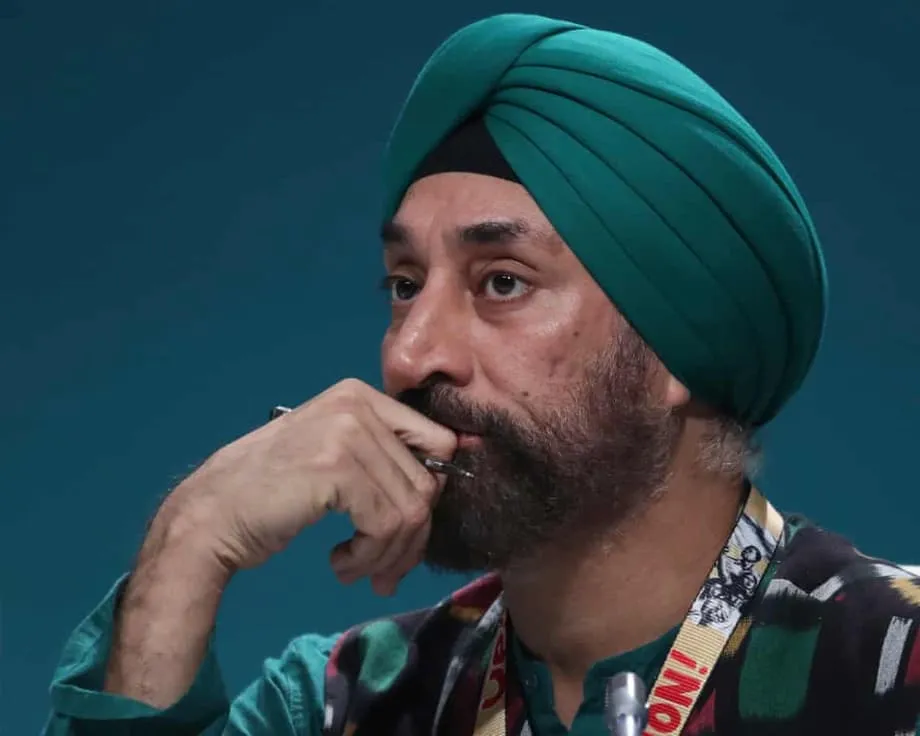
India's Enforcement Directorate has raided the homes and offices of climate campaigner Harjeet Singh and his wife, Jyoti Awasthi, over allegations that their organisation received nearly $667,000 in foreign funding to promote an international agreement to phase out coal, oil and gas. The agency says the campaign could threaten India's energy security and economic development. The couple deny wrongdoing and say the money was legitimate income from consultancy services.
Contents
- Rs 6 Crore in Foreign Payments at the Centre of Climate Probe
- What Investigators Say the Money Was For
- Why the ED Cites Energy Security
- What the Fossil Fuel Treaty Would Seek
- Singh and Awasthi Defend Their Company's Work
- Travel to Pakistan and Bangladesh Comes Under Scrutiny
- How the Events Fit Together
- Climate Finance Is at the Heart of the Disagreement
- Foreign Funding Rules Put Civil Society Under Pressure
- What the Raids Mean for Environmental Debate
- What to Know
The investigation centres on Satat Sampada Private Limited (SSPL), which Singh and Awasthi founded to work on sustainable development and climate action. The Enforcement Directorate (ED), a financial investigation agency under the Ministry of Finance, alleges that the company presented itself as a business marketing organic produce while using foreign money to influence domestic policy discussions.
Singh was arrested following the operation, but the immediate reason was an allegation involving liquor bottles held beyond limits permitted under local excise laws, rather than the financial allegations. A district court in Ghaziabad granted him bail the following day.
The raids also reached the residence of Sanjay Vashisht, director of the Climate Action Network South Asia. The ED has not publicly confirmed details concerning his case.
As of January 8, 2026, the dispute brings together three issues: how an Indian company accounts for payments from abroad, whether those payments supported a climate campaign, and how authorities view advocacy for a global fossil fuel agreement. It has unsettled India's environmental community and prompted concerns about the space available for civil society in the world's largest democracy.
What Investigators Say the Money Was For
The ED suspects that SSPL received approximately Rs 6 crore in suspicious foreign inward remittances since 2021. Foreign inward remittances are payments arriving from outside India. Investigators say the payments were classified as consultancy charges or sales of agricultural products and came from organisations including the Climate Action Network and Stand.Earth.
The agency alleges that these foreign organisations themselves received money from NGOs placed in a prior reference category, including Rockefeller Philanthropy Advisors. Under the rules described in the investigation, individuals and organisations need specific permission from the Ministry of Home Affairs to receive funds from designated donors in that category.
Investigators say they checked filings made abroad by the organisations sending the money. The ED claims those records indicate that the payments were intended to advance the Fossil Fuel Non-Proliferation Treaty (FFNPT) agenda in India, rather than pay for legitimate business activities.
Singh and Awasthi give a different explanation for the same transactions. They say SSPL supplies consultancy services like other companies and that its earnings from those services are lawful business revenue. The dispute therefore concerns both the purpose of the payments and how the company described them.
The ED's allegations go beyond financial accounting. Investigators argue that a campaign to end fossil fuel use could affect national policy choices, restrict resources needed for development and expose India to proceedings in international courts.
Why the ED Cites Energy Security
The ED says India needs access to fossil fuels to support economic growth and lift millions of people out of poverty, even as the country pursues renewable energy. Its concern is that adoption of the proposed treaty could limit the use of coal, oil and gas while creating legal risks in international forums.
The Enforcement Directorate set out that position in a press release, referring specifically to the International Court of Justice (ICJ):
While presented as a climate initiative, its adoption could expose India to legal challenges in international forums like the international court of justice (ICJ) and severely compromise the nation's energy security and economic development.
Energy security, in this dispute, means India's ability to obtain the energy it needs for households, businesses and development. The agency presents the treaty campaign as a potential constraint on that ability. Supporters of the proposal describe international cooperation and support for developing countries as central to the agreement they want.
Those competing positions place a policy disagreement inside a financial investigation. The ED is examining whether foreign payments financed advocacy that it considers harmful to national interests. Singh and Awasthi maintain that their work is legitimate and that their climate positions are consistent with India's calls for greater support from wealthy countries.
What the Fossil Fuel Treaty Would Seek
The Fossil Fuel Non-Proliferation Treaty Initiative is a global campaign for a binding international agreement to stop exploration for new fossil fuel reserves and manage a worldwide transition away from coal, oil and gas. A binding agreement would create commitments for participating countries, rather than simply express a shared ambition.
The proposal draws a parallel with nuclear non-proliferation, the effort to prevent the spread of nuclear weapons. Its supporters argue that unchecked expansion of fossil fuels poses an existential threat to humanity and requires coordinated international action.
Eighteen national governments have endorsed the initiative. They include the Pacific Island countries Vanuatu and Tuvalu, as well as Colombia and Pakistan. The World Health Organization, the European Parliament and hundreds of cities and subnational governments have also backed it. Kolkata is among the supporting local governments in India.
Tzeporah Berman, founder and chair of the FFNPT Initiative, defended the proposal in a statement. She said it sets out the principle of common but differentiated historical responsibilities for the climate crisis. In plain terms, that means countries share responsibility for addressing climate change, while their different contributions to the problem and their circumstances matter.
Berman said the proposal is intended to support developing countries, including India, through international cooperation, economic diversification and technology transfer. Economic diversification means expanding the range of activities that support an economy. Technology transfer means sharing the tools and knowledge needed for the transition. Her position is that the treaty should help countries meet development needs rather than penalise them for those needs.
Singh and Awasthi Defend Their Company's Work
Harjeet Singh and Jyoti Awasthi rejected the allegations in a statement released through Satat Sampada, describing them as "baseless, biased, and misleading." They said they established the organisation in 2016 using their savings and loans secured against their home.
The couple said the company's consultancy and management services grew naturally in 2021, after Singh left his employment to concentrate on its work. They maintain that the foreign payments reflected those services and that SSPL operates as a legitimate business.
Singh has spent more than two decades working on international climate policy. He said he has repeatedly praised India's exceptional progress in renewable energy and has argued that developed countries must provide more financial support to help developing countries move towards cleaner energy.
In an interview, Singh rejected the ED's allegation that he was influencing government decisions. The veteran climate campaigner also said authorities were failing to recognise the common ground between his advocacy and India's international position:
I have never worked with the government," Singh stated. "Unfortunately, the Indian government is unable to understand the viewpoint of civil society and activists like us, who are actually in line with what the government is saying.
Singh and Awasthi say they have fully cooperated with investigators and supplied all relevant information and documentary evidence. They have asked media organisations to report responsibly and avoid speculation, while expressing faith in due process and the rule of law.
Their defence combines a financial explanation with a policy argument. They say the company earned its income through real work, and that advocating support for developing countries is compatible with India's own demands in global climate negotiations.
Travel to Pakistan and Bangladesh Comes Under Scrutiny
ED officers also examined trips Singh made to Pakistan and Bangladesh in 2025. They questioned how the visits were funded and alleged that, while in Bangladesh, he met people unrelated to the stated purpose of his trip during a period of protests against India.
The scrutiny of those visits extends the investigation beyond company payments to Singh's international contacts. The agency's focus reflects government sensitivity to foreign influence in domestic policy matters, particularly when campaigners work through networks that operate across national borders.
Singh's work has involved international NGOs, including ActionAid and the Climate Action Network. He has been a familiar presence at United Nations climate negotiations, where he has advocated for the rights of the Global South, the developing countries whose needs and responsibilities are central to arguments over climate funding.
Unnamed ED officers quoted publicly have indicated that other activists "whose climate campaigns may be inimical to India's energy security" are also under scrutiny. The warning points to a possible expansion of the investigation and has increased concern among environmental campaigners about the consequences of working with international organisations.
How the Events Fit Together
The company's history, changes to foreign funding rules and recent climate negotiations span several years. The main dates and events are:
- 2016: Singh and Awasthi say they founded Satat Sampada with their savings and loans secured against their home.
- 2020: India passed the Foreign Contribution (Regulation) Amendment Bill, tightening restrictions on donations from abroad to civil society groups.
- 2021: The couple say SSPL's consultancy and management work expanded after Singh left his employment. The ED's allegations concern foreign payments received since that year.
- 2021: Climate activist Disha Ravi was arrested on sedition charges over her support for farmer protests.
- COP28 in Dubai: Countries agreed to transition away from fossil fuels in energy systems in a "just, orderly and equitable manner."
- 2025: Singh travelled to Pakistan and Bangladesh, visits subsequently scrutinised by the ED.
- COP30 in Belem, Brazil: Singh praised India's demands for stronger action by wealthy nations. The investigation reportedly began on intelligence received during the summit.
- Following the raids: Singh was arrested over an alleged breach of liquor possession limits and received bail from a district court in Ghaziabad the next day.
The timeline shows how the investigation overlaps with established business activity, tighter rules on foreign funding and an international debate over who should pay for the move away from fossil fuels. Singh's arrest over liquor possession added a separate legal issue to the financial inquiry.
Climate Finance Is at the Heart of the Disagreement
At COP28 in Dubai, countries agreed for the first time to move away from fossil fuels in energy systems in a "just, orderly and equitable manner." The agreement acknowledged the need for developed countries to increase climate finance and support for developing countries, recognising differences in their capabilities and historical responsibilities.
Climate finance is money intended to help countries respond to climate change and shift towards cleaner development. In this story, the argument over funding has two levels: the international support India seeks for its energy transition, and the foreign payments its investigators are examining within a climate advocate's company.
At COP30 in Belem, Brazil, Singh praised the Indian government for turning pressure back onto wealthy countries. He argued that meeting the target of limiting warming to 1.5C requires the Global North, the wealthy countries central to that funding debate, to reach net zero much earlier than its current targets. Net zero means balancing emissions released with emissions removed.
The investigation into Singh reportedly began on the basis of intelligence received during that same COP30 summit. The timing places his praise for India's negotiating position alongside official scrutiny of his advocacy at home.
India's participation in discussions about climate finance and fossil fuel transitions continues against this domestic dispute. Treaty supporters stress assistance and fairness for developing countries. The ED stresses the risks it sees for energy access, economic development and national decision making.
Foreign Funding Rules Put Civil Society Under Pressure
The raids come amid increasing pressure on NGOs and other civil society groups under Prime Minister Narendra Modi's administration. The government has tightened regulation of foreign funding, including through the Foreign Contribution (Regulation) Amendment Bill passed in 2020.
Almost 17,000 licences allowing organisations to receive foreign funding have been suspended in recent years, leading to the closure of many civil society organisations. Critics argue that the restrictions are often used against groups that challenge government policies or work on sensitive issues such as environmental protection and human rights.
Disha Ravi's arrest in 2021 on sedition charges for supporting farmer protests drew international condemnation. Nearly five years later, she remains on bail under conditions that prevent her from travelling abroad. Her case forms part of the concern now surrounding the scrutiny of Singh and other climate campaigners with international connections.
The warning that more activists may be investigated could discourage environmental advocacy. For organisations that depend on foreign funding or international partnerships, the issue reaches beyond one company's records to the practical ability to continue their work.
What the Raids Mean for Environmental Debate
Global Witness, an organisation that monitors environmental and human rights abuses, condemned the raids as an attempt to stifle dissent. International organisations and human rights groups have criticised the action, while activists argue that access to foreign funding is vital for independent organisations seeking to hold governments accountable and advocate sustainable policies.
India is vulnerable to climate impacts and relies on civil society participation in work at the community level. That work includes adaptation, which helps people cope with climate effects, and mitigation, which reduces the emissions driving climate change. Campaigners fear that pressure on climate justice organisations could weaken India's environmental goals over the longer term.
The use of national security arguments alongside financial compliance allegations has also drawn concern. Environmental advocates fear that campaigning for changes consistent with global scientific consensus, including reduced dependence on fossil fuels, could be framed as acting against the national interest.
The dispute leaves a sharp divide over the same campaign. The ED sees potential risks to India's energy supply, development and legal position. Singh, Awasthi and treaty supporters present their work as legitimate advocacy for a transition supported by international funding, technology and recognition of developing countries' needs.
What to Know
- The ED alleges that Satat Sampada received approximately Rs 6 crore, nearly $667,000, in suspicious foreign payments since 2021 to promote the Fossil Fuel Non-Proliferation Treaty.
- Harjeet Singh and Jyoti Awasthi deny wrongdoing and say the payments were legitimate consultancy income.
- Singh was arrested over alleged liquor possession beyond permitted limits and was granted bail in Ghaziabad the following day.
- The residence of Climate Action Network South Asia director Sanjay Vashisht was also raided.
- The treaty initiative seeks an international agreement to stop new fossil fuel exploration and manage a transition away from coal, oil and gas. It has support from 18 governments, the WHO, the European Parliament and local governments including Kolkata.
- The ED cites risks to energy security and development; treaty supporters say the proposal would provide cooperation and support for developing countries.
- Almost 17,000 foreign funding licences have been suspended in recent years, contributing to wider concern about pressure on Indian civil society.