A nation hooked on dawn delivery faces a safety reckoning
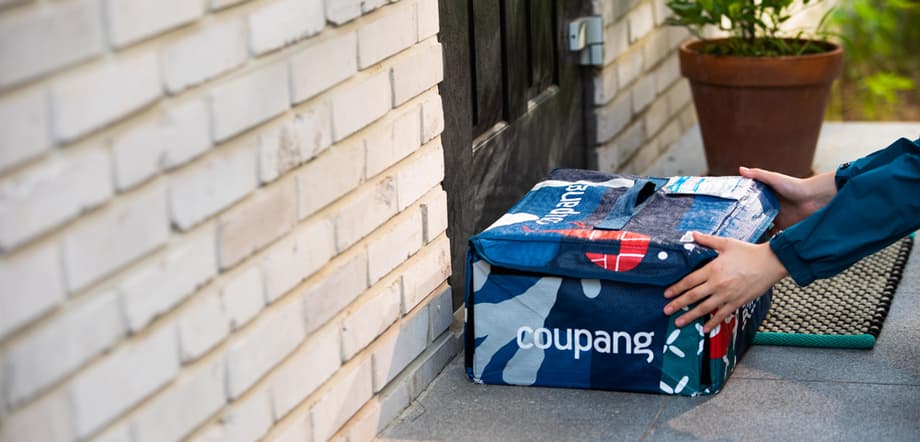
South Korea’s overnight delivery system has set an expectation that groceries, school supplies, and essentials ordered late in the evening will be waiting at the doorstep before sunrise. This convenience now sits at the center of a heated public debate after a labor union, during a government led dialogue, suggested discussing limits on deliveries between midnight and 5 a.m. to address health risks for night shift workers. The proposal was not a demand for a ban, yet headlines and social media spun it that way. The backlash was swift, with parents, small businesses, and night owls bracing for a service they rely on to disappear.
- A nation hooked on dawn delivery faces a safety reckoning
- How overnight delivery became an everyday habit
- The workforce behind the speed
- A spike in tragedies and a battle over blame
- Did unions call for a ban
- What science says about night work
- Possible ways to protect workers without turning off the lights
- What companies and the state are doing now
- Consumer power in shaping the market
- What to Know
At the center of the system is a vast logistics network built to fulfill orders that often arrive before 7 a.m. The country’s largest player, Coupang, offers a subscription called Rocket Wow for about 7,900 won per month. By industry estimates, it has more than 14 million subscribers, a base that approaches one third of the population. The network reaches major cities and smaller communities, including Jeju Island. Millions have woven the speed into daily routines, which explains why any hint of change triggers anxiety.
For many families, the service is more than a timesaver. It fills a gap when late work hours and childcare leave little room for errands. One working parent explained how the rhythm of her household depends on it.
Seo Min jung, a 37 year old mother in Bundang, described her nightly ritual before lights out.
“Every night, I place my order after putting my kids to bed. By the time we wake up, the groceries are at the door. I do not know how I would manage mornings without it.”
Labor leaders say they never asked to switch this off. They want a structured conversation about how to keep workers safe who make that speed possible. Kang Min wook, who represents Coupang delivery workers in a major union, said the suggestion was one idea among many.
“It was a starting point for negotiation, not a line in the sand. As soon as the word limit was mentioned, we were framed as trying to take something away from the public. Even discussing worker safety feels impossible.”
How overnight delivery became an everyday habit
Over the last decade, ecommerce turned South Korea into a culture where late night ordering is a norm. Subscribers pay a small monthly fee and gain access to early morning drop offs for groceries, diapers, stationery, and household goods. Delivery windows align with the morning rush so that breakfast, lunch kits, and school items arrive before families head out. The footprint has expanded beyond greater Seoul, and islands and smaller cities now benefit from timed morning runs.
Small business owners say dawn delivery functions like a just in time warehouse. When supplies run short, they can restock before opening without closing the shop or paying extra for emergency runs. That has helped restaurants and cafes stay nimble in a tight labor market and dense urban cores.
Park Jin woo, a cafe owner in central Seoul, framed the service as his backup inventory room.
“For our cafe, if I realize at 11 p.m. that we are out of paper cups or syrup, I just order it and it is here before opening. I cannot afford to shut down for two hours to go buy inventory. This is faster than any wholesaler.”
Academic researchers who study platform work say consumer dependence is real. The schedules of dual income households and solo operators leave little slack. They see the public reaction as rooted in daily survival, not entitlement.
Professor Lee Seung yoon of Chung Ang University described the grip of convenience in plain terms.
“I get it. It is like having an extra, on demand pantry or warehouse outside the home or your business. People use it because their schedules are packed and their livelihoods can depend on it.”
The workforce behind the speed
Behind the pre dawn arrivals are crews of drivers, sorters, and warehouse teams who work through the night. Many drivers are classified as independent contractors, not employees. That classification excludes them from core protections like limits on hours, legally required breaks, and guaranteed overtime premiums. Warehouse workers often face intense cutoffs. Orders placed before midnight have to be picked, packed, and routed in a narrow window so that drivers can load before their routes start.
Recent research by a team including Professor Lee and public health expert Kim Seung seop at Seoul National University found most overnight delivery drivers work more than 60 hours per week. Reports of sleep disorders and depression were three to four times the rates seen among the average Korean workforce. In a survey of more than one thousand night delivery workers, indicators of suicidal ideation were elevated. Many respondents said delivery work is their main job, not a side hustle.
Health agencies have long warned about chronic night work. The International Agency for Research on Cancer, part of the World Health Organization, classifies night shift work as probably carcinogenic to humans (Group 2A), reflecting evidence that long term circadian disruption can increase cancer risk. The strain of overnight work also ties to cardiovascular stress, metabolic disorders, and higher injury rates. A public note on the medical evaluation is available from the agency here.
Professor Kim challenges the idea that worker preference for night shifts should settle the policy question.
“It is not really about preference. It is about survival. People adapt to difficult jobs because better options are not available. That should not be the baseline for labor policy.”
A spike in tragedies and a battle over blame
Individual cases have brought the risks into public view. In one case that sparked national outrage, a 41 year old courier named Jeong Seul gi died of a heart attack in 2024 after weeks of long hours, including nights. The government workers compensation agency later recognized his death as work related. A text he sent days earlier captured the pace and pressure he felt on the job.
“I am running like a dog.”
During the pandemic, a wave of courier deaths from apparent overwork brought sustained scrutiny to the industry. Couriers described days that stretched from early morning to late evening with little time for meals, breaks, or recovery. Pay was often tied to delivery counts, with penalties for delays. Even with public attention and some promises of change, unions say hours and overnight duties have crept back as ecommerce volumes surged.
The risks are not limited to medical stress. Traffic safety is a constant worry. A recent fatal crash during a dawn route on Jeju Island underscored how fatigue and darkness can combine on the road. In late autumn, separate incidents at logistics centers, including deaths of fixed term night workers, again raised questions about staffing levels, break times, and basic health management on overnight shifts.
Senior officials have responded with tougher rhetoric around occupational safety. The President has called for stronger legal protections for night shift workers and singled out overnight operations as an area where new approaches may be needed, including stricter standards for recognizing industrial accidents and enforcing wage premiums for night work.
“People who lack power and resources often work in dangerous environments. Please make sure they receive special protection.”
Did unions call for a ban
The flash point came when a parcel workers union, during the first meeting of a government led social dialogue council, suggested that stakeholders consider limiting deliveries between midnight and 5 a.m. to reduce fatigue. The suggestion was a discussion item, not a demand. Within a day, public chatter turned it into a ban. The pushback was emotional, framed by headlines and posts warning of chaos if the early morning routine disappeared.
Union leaders say the mischaracterization derailed the conversation before it started. The union argues that any workable approach will involve trade offs, including adjusting workloads, enforcing rest periods, or experimenting with time windows, without shutting down dawn delivery outright.
Kang Min wook of the Coupang division emphasized that point.
“We are not saying dawn delivery must end. We are saying the workers who make it possible deserve to stay alive and healthy. There are many ways that could be addressed through negotiation.”
Many drivers, however, contest the need for time limits. A survey by the Coupang Partners Alliance, a group of subcontracted delivery agents, reported that 93 percent of respondents opposed restrictions on dawn delivery. Drivers cited less traffic at night, higher pay, and control over their schedules as the main reasons they prefer working those hours.
Consumer voices have entered the debate. A National Assembly petition opposing a possible ban gathered thousands of signatures after rumors spread online. Parents argued that overnight delivery is essential for families that return home late and need breakfast groceries or school items before morning. Government officials say there is no plan to restrict dawn delivery at this time, and that discussions will continue within the social dialogue framework.
What science says about night work
Medical literature draws a clear line between occasional night duty and routine night work. The human body follows a circadian rhythm, a roughly twenty four hour cycle tied to light and dark. Regular overnight work can disrupt that rhythm, which affects sleep quality, hormone balance, and immune function. Over time, the disruption is associated with elevated risks of cardiovascular disease, metabolic syndrome, depression, and certain cancers.
For drivers and warehouse teams, sleep debt and circadian disruption also play out in real time. Errors increase when the body expects sleep. Drowsy driving raises the odds of collisions, especially in the hours before dawn. In warehouses, repetitive motions under time pressure can magnify injuries if muscles and joints do not recover between shifts.
Health experts often recommend guardrails rather than blunt bans. These include predictable scheduling, limits on consecutive night shifts, sufficient rest windows between shifts, and pay premiums that recognize added risk. Access to sleep health screening and counseling can help workers catch problems early. In practice, those measures only work if they are binding and backed by transparent data on hours, breaks, and workloads.
Possible ways to protect workers without turning off the lights
The question many in South Korea are asking is how to keep early morning delivery available while reducing the health and safety toll. Stakeholders across labor, business, and government have floated options that balance access and safety.
Make rest and hour limits real
Contracts can require guaranteed rest periods and caps on consecutive overnight shifts. Mandatory minimum gaps between shifts would reduce chronic sleep loss. Regulators can set a ceiling on the number of parcels or stops per route in night hours, adjusted for distance and building type. A simple principle can guide the rulebook: only as fast as safety allows.
Pay for the risk, and let prices steer demand
South Korean law provides a 50 percent wage premium for night work for employees. Many drivers, however, are classified as independent contractors and do not receive the premium. Extending night pay standards to dependent contractors would recognize the risk and can reduce the pressure to pack in unmanageable volumes. On the demand side, modestly higher fees for overnight delivery, especially on busy nights, could nudge some orders into later morning windows without cutting off access.
Use scheduling to rotate, not concentrate
Companies can build schedules that rotate overnight duty to avoid concentrating chronic night work on a small group. Workers who want nights can opt in, but rotation would ensure fewer people are exposed continuously. Rotation can be paired with protected days off so that recovery is real, not theoretical.
Limit speed contests inside warehouses
Warehouse policies that tie pay or evaluation too tightly to speed tend to push people to skip breaks and take risks. Setting safe processing targets, enforcing break times, and improving ergonomics for picking and packing help prevent injuries. When order cutoffs are realistic, the chain downstream is safer too.
Build safer night routes
Route planning can reduce fatigue with shorter night routes, more frequent micro breaks, and safer parking practices near apartment blocks. Telematics that detect drowsy driving should trigger immediate rest, not discipline. Municipalities can help by designating safe loading zones for night hours and improving lighting around high volume buildings.
Require transparency and shared responsibility
Accurate reporting of hours, rest, incidents, and route workloads is essential. Authorities can require platforms and subcontractors to share data, with penalties for manipulation. Joint liability across the logistics chain would prevent parent companies from avoiding responsibility for safety by outsourcing.
Give consumers informed choices
Shoppers respond to clear options. Apps can present delivery windows with safety information and small discounts for later slots. Labels like low impact night delivery could certify that the route meets rest, volume, and pay standards. Many consumers will choose a slightly later arrival if they know it protects workers.
What companies and the state are doing now
Korea’s government has convened a social dialogue body that brings together unions, logistics firms, consumer groups, and policymakers. The council’s goal is to find enforceable measures that align worker health with reliable service. Previous agreements have targeted long hours, with discussions now turning to nighttime workloads and rest windows. Officials say they will not force a shutdown of dawn delivery, and instead will focus on practical safeguards.
Companies have rolled out improvements after periods of public scrutiny. They cite hiring sprees, reorganized workflows, and wellness support. Unions and worker advocates counter that changes are uneven and often short lived. When order volumes spike, pressure and hours climb back up. The recent deaths of night workers and a fatal crash on a dawn route reinforced calls for binding standards rather than voluntary pledges.
Regulatory attention on major platforms has intensified in other areas too, including personal data protection. A recent large scale breach at a leading retailer prompted an emergency government response and investigations into safety controls. While separate from labor, the episode signaled that authorities expect stronger governance from platforms that now serve a majority of households.
Consumer power in shaping the market
Consumers helped build the new standard for speed, and they can influence how it evolves. Many parents and small businesses say they cannot give up overnight delivery. A balanced approach does not require that. It does require acknowledging the human limits on the other side of the app. If shoppers accept small fees for night windows, choose later morning slots when possible, and support companies that meet safety benchmarks, market pressure can move the system toward healthier practices.
Public attitudes have shifted before. During a surge in courier deaths a few years ago, residents left notes and snacks for drivers that said it is okay to be late. That message can coexist with a modern logistics network. Early morning delivery can remain a feature of Korean life while adopting guardrails that keep drivers and warehouse teams safe enough to do the work over a career, not just a season.
What to Know
- A union suggestion to discuss limits between midnight and 5 a.m. was not a demand for a ban, yet rumors triggered a backlash.
- Coupang’s Rocket Wow program has more than 14 million subscribers, showing how embedded dawn delivery is in daily life.
- Many night drivers are independent contractors and lack protections like hour limits, mandated breaks, and night pay premiums.
- Research shows most night delivery drivers work more than 60 hours weekly and face higher rates of sleep disorders and depression.
- Health agencies classify night shift work as probably carcinogenic, and medical literature links chronic night work to higher risks of injury and disease.
- Drivers are divided: a large survey from a subcontractor group found 93 percent opposed restrictions, citing pay and less traffic at night.
- Recent deaths during dawn delivery and at logistics centers renewed calls for binding safety standards and better rest guarantees.
- Government officials say no plan exists to restrict dawn delivery now, as a social dialogue process explores practical safeguards.
- Policy options include enforceable rest windows, rotation of night duty, night premiums for dependent contractors, safer routing, and transparency on hours.
- Consumer choices, including willingness to pay modest night fees or choose later slots, can help keep the service while improving safety.